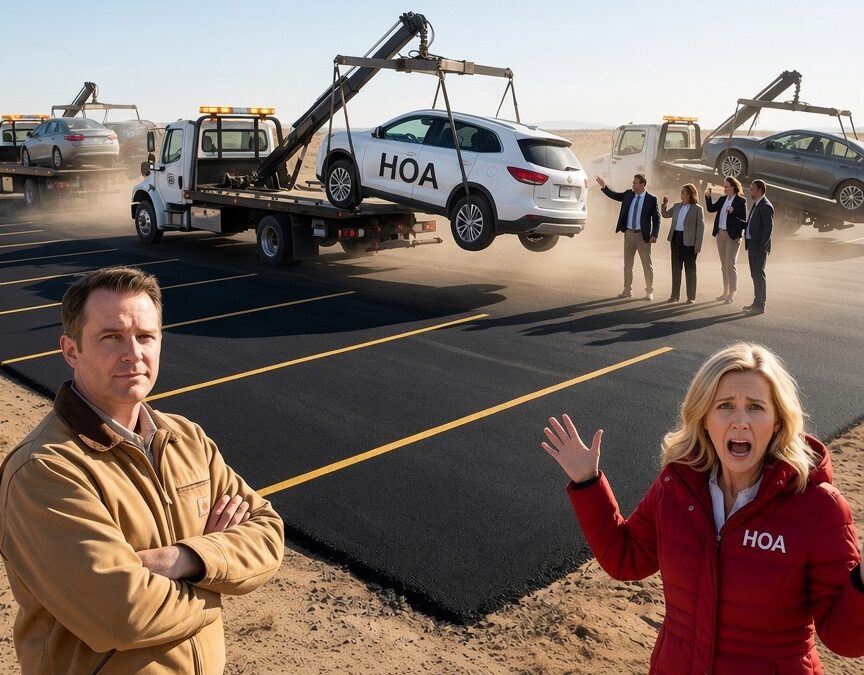
“Did the board know about the drainage problem?”
Cynthia answered immediately.
“No.”
I took the memorandum from my folder.
“Then why did your executive-session notes discuss the runoff maps before construction?”
Cynthia reached toward it.
“That document is confidential.”
“Is it authentic?”
“That’s not the point.”
“It seems like the point to me.”
People began talking.
One resident asked why the board had spent emergency funds on parking.
Another wanted to know who approved the drainage design.
A third demanded the contractor’s name.
Cynthia tried to regain control.
“This is turning into a spectacle.”
“No,” I told her. “It’s turning into a public discussion.”
She looked at me with open hatred.
“You’re enjoying this.”
I shook my head.
“No. I live downhill.”
That evening, I returned home and found a message on my answering machine.
A man’s voice.
Unfamiliar.
“You need to stop making trouble for Silver Ridge.”
No name.
No explanation.
I saved the recording.
Then I fed Boone, heated leftover stew, and went back to the maps.
The next week, the cracks widened.
By mid-March, the southern shoulder had settled visibly.
The asphalt was no longer level with the adjoining ground.
Mud seeped from beneath it every afternoon as temperatures rose.
I measured a diagonal crack fourteen feet long.
At its widest point, the opening exceeded two inches.
I photographed it, recorded the measurement, and notified the county.
The same afternoon, Mara called.
“I’ve got something.”
I set down my notebook.
“Go ahead.”
“Mountain Crest Civil Group billed Silver Ridge for retaining materials that don’t appear in the supplier records.”
“How much?”
“We’re still tracing it. More than three hundred thousand dollars in questionable charges so far.”
I looked toward the damaged lot.
“That would explain a lot.”
“There’s more. Bradley Pierce’s firm received consulting payments from an entity connected to Mountain Crest during the approval period.”
I went quiet.
Mara continued.
“Don’t jump ahead. We’re examining whether the payments were legitimate.”
“Understood.”
“And Elias?”
“Yes?”
“Stay away from that southern edge.”
I looked at the crack.
“I’ve been careful.”
“Your definition of careful worries me.”
She wasn’t wrong.
I had spent so much of my life studying failing roads that I sometimes forgot I wasn’t twenty-five anymore.
That night, I found Claire’s old yellow raincoat hanging in the mudroom.
She’d worn it while helping me repair fences in spring.
I hadn’t moved it since she died.
I stood there longer than I meant to.
Claire had always been better with people than I was.
She could tell a man he was wrong without making him feel foolish.
I tended to skip that part.
“You’d know how to handle Cynthia,” I said quietly.
Boone watched me from the doorway.
Then he came over and rested his head against my leg.
I scratched behind his ears.
“Yeah,” I said. “I miss her, too.”
The emergency HOA meeting was held two days later.
Every chair in the clubhouse was occupied.
Residents stood along the walls and crowded the entrance.
Cynthia wore a dark green blazer and spoke from behind a wooden podium.
She began with a prepared statement about responsible development, infrastructure investment, and the importance of avoiding speculation.
People listened for about three minutes.
Then a man near the fireplace stood.
“Why is the county warning posted?”
Cynthia referred to routine inspections.
Another resident asked about the survey stakes.
She called it a misunderstanding.
Then Rebecca Nolan stood.
I’d seen Rebecca several times around Silver Ridge. She and her husband had moved there the previous summer.
“My husband parks in that lot,” she said. “We have two children. I want to know whether it’s safe.”
Cynthia looked toward Pierce.
He approached the podium.
“The HOA is cooperating with relevant agencies.”
Rebecca didn’t sit.
“That wasn’t my question.”
A murmur moved through the room.
I remained near the back until somebody asked about the missing drainage reinforcement.
Then I stepped forward.
“I have copies of invoices showing charges for materials that may not have been installed.”
Pierce immediately objected.
“Mr. Mercer has no standing to make financial accusations during an HOA meeting.”
“I’m not making an accusation. I’m asking where the materials went.”
I placed the invoices on a table.
Residents crowded around.
A woman with reading glasses examined one page.
“Wait. This came out of our reserve account?”
Daniel Hurst sat near the wall.
His face had gone pale.
Cynthia saw him looking at the invoices.
“Daniel,” she said sharply.
He stood.
“I told the board we needed another engineering review.”
The room fell quiet.
Cynthia stared at him.
“Sit down.”
“No.”
His voice shook.
“We were rushing the project. I said so.”
Pierce moved toward him.
“Daniel, you should speak with counsel before making statements.”
But Daniel was looking at the floor.
“I didn’t think it would get this bad.”
Rebecca turned toward him.
“Then why did you move the survey markers?”
He looked up.
For one awful second, he seemed unable to breathe.
Then he pushed past the chairs and left.
Cynthia struck the podium with her palm.
“This meeting is adjourned.”
Nobody moved.
A man near the front shouted, “You can’t just adjourn because we asked questions!”
Another demanded the financial statements.
Someone else wanted the county inspector brought in.
I looked around the room.
These weren’t villains.
They were homeowners.
People who had saved money, taken mortgages, and trusted a board to manage common property.
Some had defended Cynthia because they believed challenging the HOA would make their neighborhood look bad.
Now they were discovering that looking bad was the least of their problems.
Outside, the snow had turned to cold rain.
When I left the clubhouse, the southern edge of the parking lot had dropped another inch.
Three days later, Daniel disappeared from Silver Ridge.
His truck was gone.
His house was dark.
Cynthia told residents he was taking personal leave.
I suspected he’d finally found a lawyer who understood the seriousness of his situation.
That Thursday, Denise called.
“I found your file.”

