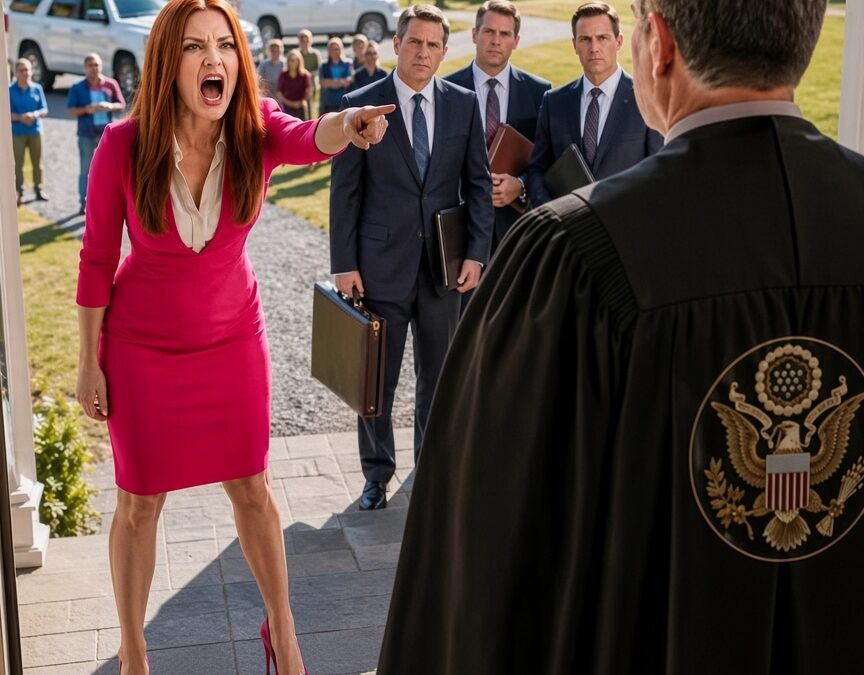
After reviewing the surveys and historical records, the board authorized its attorneys to negotiate dismissal of the quiet title claim and acknowledge the established boundary.
Karen insisted on a formal agreement.
The settlement confirmed that the association claimed no ownership interest in the disputed strip, required the removal of unauthorized survey materials, and prohibited further entry without permission.
It also addressed legal costs and the damage caused by the attempted demolition.
The court approved the agreement.
My land remained mine.
The criminal investigation produced a more complicated result.
Evidence eventually supported charges against individuals involved in the preparation and submission of falsified boundary documents.
Vance Holt became a central subject of the investigation.
Public filings later showed that prosecutors were examining whether certain corporate payments and development-related actions had crossed the line from aggressive business conduct into criminal misconduct.
I won’t pretend every allegation was proved.
Some questions remained contested.
Some proceedings took longer than anyone expected.
But the attempt to use false boundary information to claim my property had been exposed, and the people responsible could no longer hide behind the HOA.
As for the three attorneys, their consequences were less theatrical than Victoria might have imagined.
Brennan withdrew from representing the association after the new board changed its position.
Mercer disclosed the potential professional conflict and removed herself from the matter.
Ashford’s firm negotiated through Karen and cooperated with the court’s requirements.
I did not seek to punish them through my judicial office.
Their professional obligations were matters for the appropriate authorities, not for me to settle privately.
And I had already arranged to avoid participating in matters where my personal involvement could compromise impartiality.
There was one thing, however, that none of them could undo.
They’d treated a man in work boots as though he was too ignorant to defend himself.
And they’d learned, in the most public way possible, how dangerous that assumption could be.
By autumn, the fence was repaired.
Sam Prescott supervised the restoration of the disturbed monuments.
Gil came over to help me replace several damaged cedar posts.
We worked through a cool Saturday morning, digging holes and stretching wire while the cattle watched from the other side.
Around noon, Gil leaned against the fence and took a drink of water.
“Never thought I’d see that woman lose an election,” he said.
“People eventually get tired of being threatened.”
He nodded.
“Funny thing about that.”
“What?”
“Most of us weren’t afraid of her. We were afraid of what fighting her would cost.”
I thought about Tammy’s shoebox.
The fines.
The letters.
The people who’d paid money they didn’t owe because they couldn’t afford to challenge the association.
“You’re right,” I said.
Gil screwed the cap back onto his water bottle.
“That’s why what happened matters.”
We finished the fence before sunset.
When I stepped back to inspect the line, I saw the pasture stretching west toward the ridge.
The barn stood where my father had built it.
The creek followed the same bend it had followed when I was a boy.
The old hickory marked the northern corner.
Nothing looked particularly remarkable.
That was the point.
The land didn’t need to become something else to be valuable.
It already was.
A few weeks later, Claire arrived with news I hadn’t expected.
She’d been speaking with Tammy and the new Ridgefield board about expanding access to large-animal veterinary care in the county.
Emergency farm calls were expensive.
Some families delayed treatment because they couldn’t afford the travel fees.
Claire wanted to establish a small veterinary outreach facility near the county road, with funding for emergency services to farmers who needed assistance.
The board had agreed to contribute to a charitable fund.
Several homeowners had offered additional donations.
Claire sat across from me at the kitchen table and explained the proposal.
“We’d use a small building near the east entrance,” she said. “Nothing fancy. An exam area, storage, equipment, and space for a mobile unit.”
“Sounds useful.”
“Tammy thinks we can have it running by spring.”
“Good.”
Claire hesitated.
“There’s something else.”
I looked up.
“They want to name the fund after Mom.”
I didn’t answer.
Claire reached into her bag and pulled out a printed design.
At the top were the words:
ANN CALLAWAY RURAL VETERINARY FUND.
Below them was a simple drawing of a barn, a horse, and a cow.
I stared at the paper.
Ann had loved animals.
She’d once spent an entire night in the barn helping a premature calf survive.
She’d been the one who insisted we keep a stray dog that appeared on the porch during a thunderstorm.
She’d volunteered at the county animal shelter and quietly paid veterinary bills for neighbors who were struggling.
The fund was exactly the kind of thing she would have supported.
“Dad?”
I cleared my throat.
“Your mother would have loved this.”
Claire reached across the table and took my hand.
For a while, neither of us spoke.
Then she smiled.
“She’d also tell you to fix the upstairs bathroom faucet.”
I laughed.
A real laugh.
The kind I hadn’t managed in a long time.
“It’s still leaking,” I admitted.
“I know.”
We sat there laughing until Claire had to wipe her eyes.
The first cold morning of November, I walked the eastern fence alone.
Frost covered the grass.
The cattle were gathered near the hay feeder, waiting impatiently for breakfast.
I stopped beside the old hickory and rested one hand on the nearest cedar post.
My grandfather had stood somewhere along this same line when the first survey was completed.
My father had worked here.
Ann had walked these pastures beside me.
Claire had grown up chasing calves through the tall grass and coming home with mud on her knees.
I thought about Victoria standing in her expensive shoes, telling me the land had already been sold.
I thought about the check she’d dropped in the dirt.

