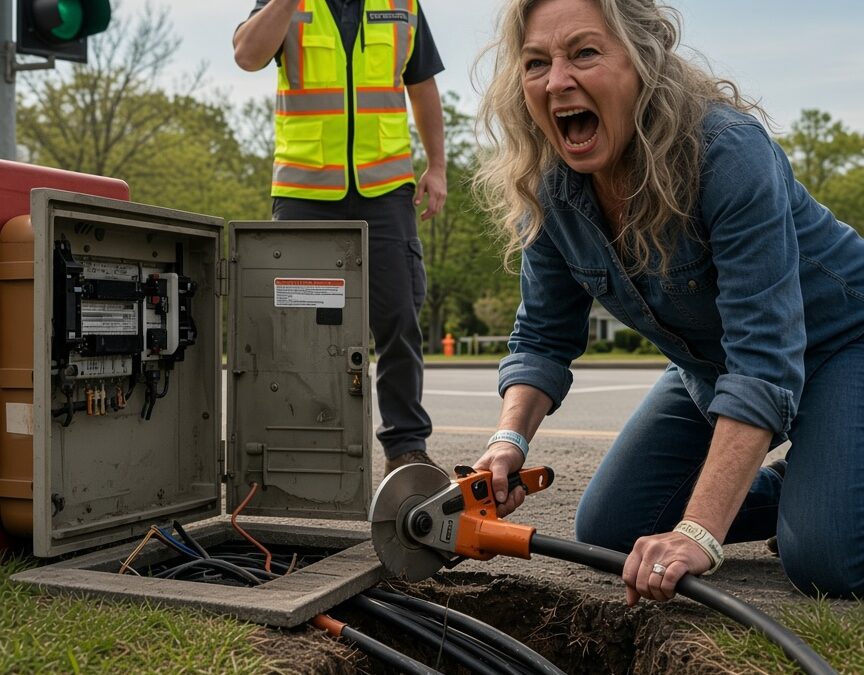
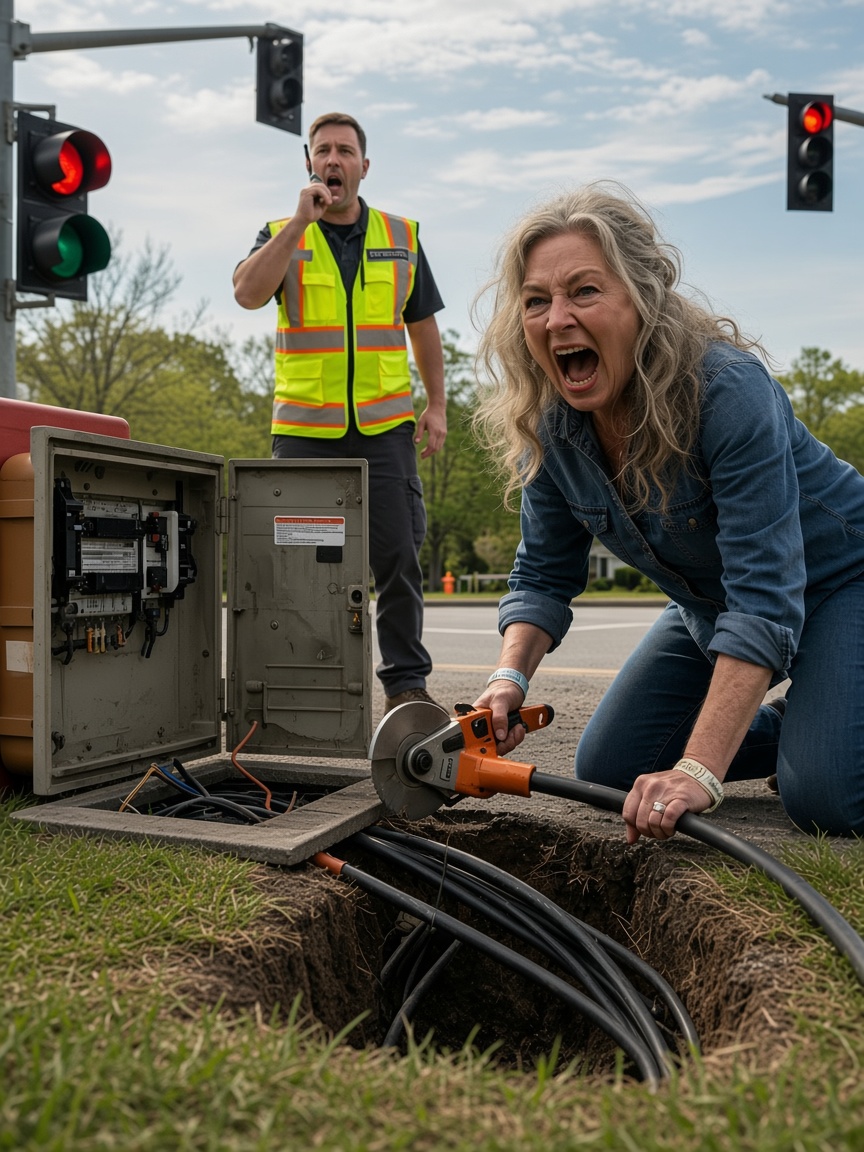
## Part 1: My Retirement Hobby Became Brenda Davidson’s Favorite Neighborhood Target
The first rule of early retirement is to find a hobby. My former colleagues at Omnilink bought sailboats, joined golf clubs, or developed an alarming interest in expensive bicycles. I built a computer system in my garage that helped keep an entire town moving.
My name is Alex Henderson. I was forty-eight when I left Omnilink with enough money to stop worrying about paychecks, and apparently not enough common sense to stop solving other people’s technical problems.
My garage consumed 11.7 kilowatts under normal load. It contained several racks of servers, a wall of monitors, industrial ventilation, and enough backup equipment to make a commercial electrician ask uncomfortable questions.
To most people, it looked excessive.
To me, it was a perfectly reasonable retirement project.
Unfortunately, I lived in Whispering Pines, a subdivision where reasonable was whatever Brenda Davidson decided it meant.
Brenda was president of our homeowners association. She treated the position as though the governor had appointed her to protect civilization from improperly positioned trash cans.
Our houses were variations of the same beige design. Mailboxes matched. Garage doors came in approved shades of off-white. Brenda once sent a warning to the Peterson family because their new roses were, in her opinion, too red.
She called it maintaining standards.
I called it competitive boredom.
My property was 114 Maple Lane. Brenda lived close enough to inspect my driveway from her upstairs window, which she did with remarkable dedication.
I had four security cameras mounted around my property, concealed in ordinary-looking birdhouses. They covered my driveway, side yard, garage entrance, and the public-facing approach to the house.
One Tuesday morning, I watched Brenda examine the Petersons’ roses while consulting a little booklet.
“Too much crimson,” I muttered. “Somebody’s getting a letter.”
My neighbor Dave would have appreciated that observation.
Dave was a software developer who lived next door and shared my opinion that a neighborhood should not require written authorization for flowers.
He was also one of the few people who understood what I actually did in my garage.
The town’s traffic-control system was old, unreliable, and badly overdue for replacement. Elm and Main was particularly troublesome. During the evening commute, a mistimed signal could back traffic up for several blocks.
After three near collisions at that intersection, I approached the city traffic commissioner with a proposal.
I would fund and maintain a supplementary monitoring and control system, working with Public Works, until the city could afford a proper modernization.
It took meetings, engineering reviews, a dedicated communications connection, and more paperwork than my original retirement agreement.
Eventually, the arrangement was approved.
My equipment monitored traffic conditions and helped the city system adjust signal timing. The municipal controllers retained their own safety rules and could revert to independent operation if my connection failed.
I wasn’t secretly controlling every traffic light in town. I was providing a technical service the city desperately needed.
And I loved it.
That morning, a heavy logging truck approached Elm and Main. My system recognized the slower-moving vehicle and requested a slightly longer green interval within the city’s approved timing limits.
The truck cleared the intersection. Cars behind it kept moving.
Beautiful.
Then my email chimed.
The weekly HOA bulletin had arrived.
I opened it with the same curiosity I usually reserved for software error logs.
There were reminders about trash containers, lawn maintenance, and the Petersons’ suspicious roses.
Then came the fourth item.
Residents were warned that unusual electrical consumption, persistent mechanical humming, and disturbances to neighborhood utility infrastructure could violate Bylaw 28, Section F: Utility Decorum.
I read that phrase twice.
“Utility decorum?”
Brenda had invented a category of electrical etiquette.
My garage ventilation produced a faint hum. My roof had a satellite dish. And Brenda had spent months asking whether I was operating some kind of illegal business.
There was no mystery about her target.
I archived the bulletin in a folder named Brenda Chronicles.
Then I returned to the traffic monitors.
I assumed she would eventually find something else to complain about.
I was wrong.
A week later, a certified letter arrived while I was outside meeting Gus, the contractor handling my geothermal installation.
Gus was a broad-shouldered man with weathered hands, a permanent squint, and an unlit cigar that seemed attached to his lower lip.
He was surveying the side yard before installing underground pipes that would improve the cooling efficiency of my equipment.
His dusty pickup sat in my driveway.
The mail carrier handed me the envelope.
“Certified,” Gus observed.
“From the HOA.”
“That bad?”
“Depends how much paper she used.”
I opened it.
The letter ordered me to cease all work immediately.
According to Brenda, I was conducting unauthorized industrial operations and preparing an illegal excavation. The HOA intended to fine me $200 per day until the property was restored.
Attached were photographs of Gus’s truck and a tape measure lying on the grass.
Gus examined them.
“Industrial operation?” he said. “I haven’t even dug the trench.”
“Apparently your truck is heavy equipment.”
He looked at his pickup.
“Been called worse.”
The letter cited two specific provisions of the HOA covenants.
That was Brenda’s first serious mistake.
I had spent twenty years building systems that depended on exact rules. If someone wanted to fight me using documentation, I was comfortable with that.
“Should I send the crew home?” Gus asked.
“Not yet. Give me until tomorrow.”
He studied my expression.
“You’re enjoying this.”
“Not nearly as much as I’m going to.”
That afternoon, I reviewed the covenants line by line.
Bylaw 19 required approval for certain landscaping modifications. But Bylaw 22 contained a later amendment permitting qualified green-energy improvements, subject to applicable approvals.
My geothermal project fell within that category.
I already had the necessary city permits.
The supposed industrial operation was a residential utility improvement being performed by a licensed contractor.

