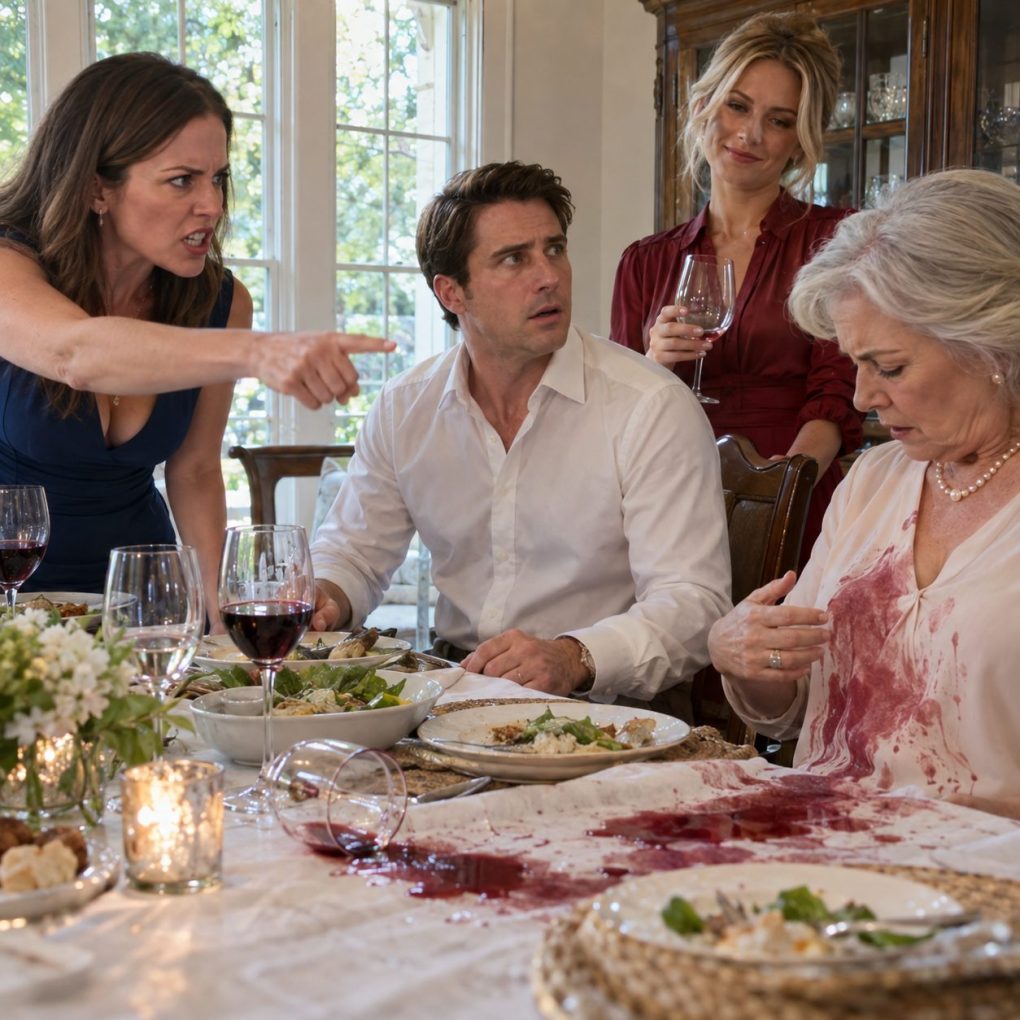
“By signing a letter he’d never seen?”
Daniel didn’t answer. He looked at the envelope in Dad’s hand, and for the first time I understood why he’d arranged the dinner. He wanted my parents to accept the obligation after the bank had already received their names.
At home, Dad photographed the letter and sent his dispute to Ms. Ellis. I emailed her my own statement about the license and the consent form. Mom changed out of her dress while I sat at her kitchen table, shaking too hard to hold my phone steadily.
She came back carrying a small notebook. “Your father kept asking why Daniel was so interested in our house,” she said. “I wrote down the dates.”
There were three calls from Daniel in two weeks. On one, he’d asked how much they still owed on their mortgage. On another, he’d offered to help them refinance. My parents had refused each time and hadn’t told me; they hadn’t wanted to put me in the middle of a fight.
“I wish you’d told me,” I said.
“I know,” Mom replied. “We thought saying no was enough.”
That night I called Daniel from their living room. Dad listened beside me. I asked him to tell me exactly how my license got into the application.
“I took a picture when you left your wallet on the counter,” he said quietly. “I was going to ask you to support the business. I shouldn’t have sent it before we talked.”
“And my signature?”
A long silence followed. Then he said, “I typed your name on a form. I thought I could replace it later if you agreed.”
I told him I was ending the call. I saved the voicemail he’d left earlier about the dinner, along with screenshots of his texts asking me to persuade Dad. Dad wrote down what Daniel had said while we could still remember his words.
The next morning, I met a divorce attorney. She advised me on protecting my accounts and arranging to collect my things without being alone with Daniel. My parents spoke with an attorney of their own about the loan papers. Both attorneys wanted us to keep the original letter and communicate with the bank in writing.
Vanessa called me that afternoon. I almost ignored her, but Dad nodded for me to answer.
“I owe your parents an apology,” she said. “I thought the letter was real. Daniel told me they had agreed and were backing out because they didn’t like our family. I wanted to embarrass them into admitting it.”
“You poured a drink on two people because of something he told you.”
“Yes.” Her voice cracked. “I did. And that’s on me.”
I asked about the photo. She said Daniel had shown her the letter on his laptop while complaining about my parents. When he blamed her at dinner, she’d found the picture in her camera roll. She offered to send it to Dad and to tell Ms. Ellis what she’d seen. I gave her the bank’s contact information, but I told her to ask my parents herself if she wanted to apologize.
She called them. Mom accepted the apology without pretending it was all over. Vanessa also spoke with the bank. Carol sent me a text, saying it was all a family matter. I didn’t reply.
Two days later, Ms. Ellis confirmed in writing that the disputed application had been withdrawn. The bank would retain the records and contact my parents if further review required anything. My parents checked their credit reports and followed their lawyer’s advice regarding privacy protection. They felt relieved, although my father still jumped whenever an unknown number called.
I went back to our apartment with my brother and grabbed my clothes, my work laptop, and the documents my lawyer had listed. Daniel was sitting on the sofa. He looked smaller than he had at dinner.
“I had no intention of letting her hurt them,” he said.
“You see them covered in alcohol and you laugh along with everyone.”
“I didn’t laugh.”
“She stayed still. She tried to get her father’s letter. That’s something I’ll remember forever.”
He asked if we could go for marriage counseling. I told him I had already filed for divorce. The news made him cry, but that didn’t change what he had done with my identification papers or how he treated my parents.
A few months later, the divorce was officially finalized. My parents kept their house, and I rented an apartment nearby. One Sunday, my mother brought over the dress she had worn that evening. The dry cleaner had removed most of the stains, leaving only a faint pink mark near the hem.
“I’ll continue wearing it,” she said.
For the first time, I laughed about anything at dinner that night. Then I hugged her. Those five minutes couldn’t save my marriage. They only showed me who would stand up and help my parents when they needed them, and who would sit idly by.

