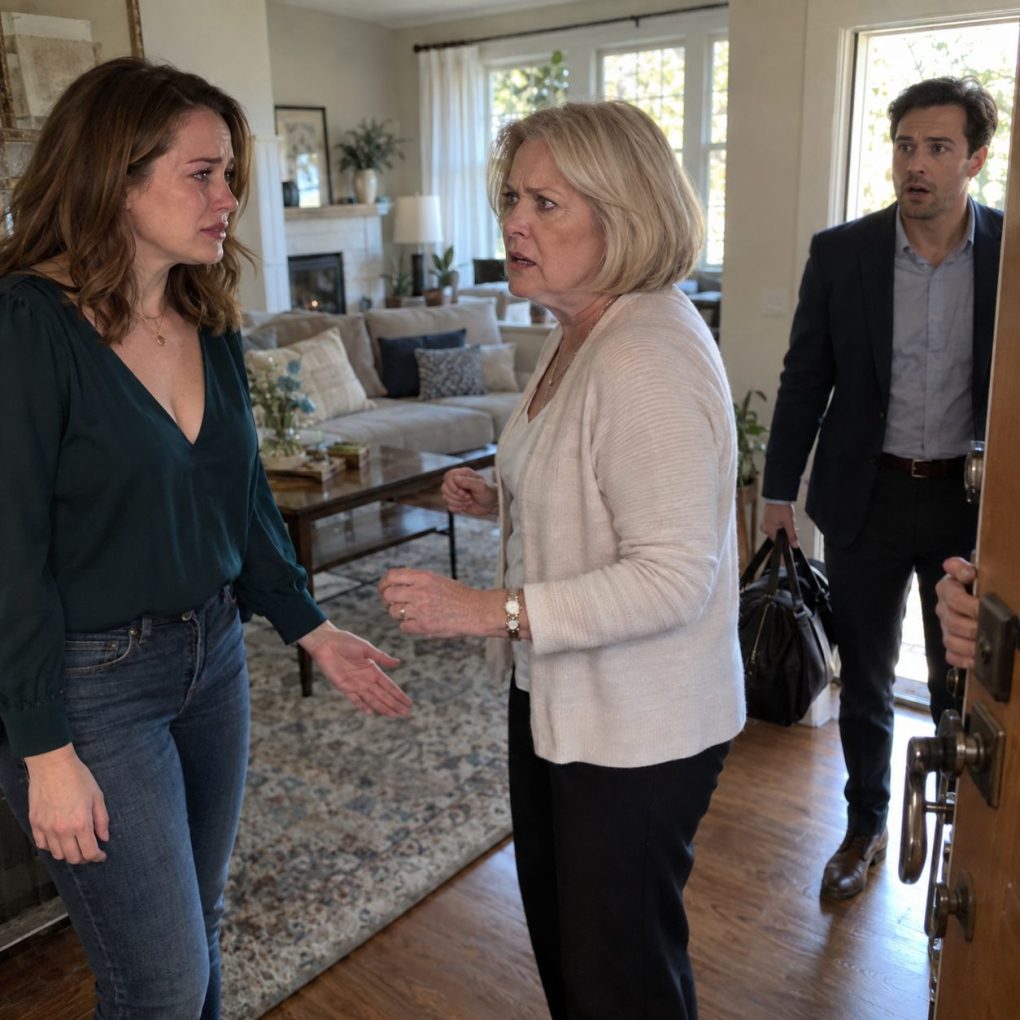
Ellie needed a grandmother who didn’t frighten her. I wanted to say it loudly enough for the neighbors to hear. Instead, I sent copies of the email, the statement, and my recording to myself. Daniel photographed every page on the table.
Then he called the police nonemergency line. He explained that Linda had entered with an emergency key, taken Ellie’s records, and admitted forging my signature. An officer was being sent. Daniel also asked Linda to put her key on the table. She did, furious that he had called anyone.
While we waited, she changed her story three times. First she said the school had asked her to gather documents. Then she said I had signed the pickup statement and forgotten. Finally, she said Daniel should thank her for making a plan before “something happened.”
“What exactly was supposed to happen?” Daniel asked.
Linda looked toward Ellie’s room. “I wasn’t going to leave her with someone who turned her against me.”
The officer arrived and took our accounts separately. He couldn’t undo the complaints or decide custody in our living room, but he collected copies of the documents and gave us a report number. When Linda admitted making the signature on my statement, he told her to stop explaining and recorded her words. He asked her to leave. Daniel watched her go.
At six the next morning, the school principal answered Daniel’s call. Linda had emailed the pickup statement the previous afternoon. The school had not accepted it as a change to Ellie’s authorized pickup list; its staff were waiting to confirm it with us. Daniel asked that Linda be removed from every contact form, and we both put the request in writing. We gave the principal the report number and copies of the disputed documents.
There was more. The principal told us Linda had been asking about Ellie’s attendance and requesting meetings about our home. She had presented herself as someone Daniel wanted involved. The principal had declined to share private records without our permission, but Linda had kept pressing.
Daniel ended the call and sank into a chair. “I gave her the emergency key. I told her which school Ellie attends. Every time you said she was crossing a line, I said she meant well.”
I sat across from him. “She used that trust. But Ellie and I needed you to listen before today.”
“I know.” He didn’t argue or ask me to comfort him. “I’m sorry.”
That afternoon, we met a family law attorney. She read the supposed guardianship authorization and called the law office named in the email while we sat with her. The office confirmed it had received a document through its public intake address, but no attorney had filed anything in court or advised Linda that she had guardianship. It had sent a routine reply asking for identification and a consultation. Linda had labeled the attachment “Emergency guardianship documents” when she forwarded it, hoping the subject line would scare us.
That was the twist I hadn’t expected: she had no order, no appointment, and no legal right to take Ellie. She had tried to make us believe she did while building a file of complaints against me. Our attorney helped us send a written correction to the office and preserve the original emails. She advised us on reporting the forged statements and on what to do if Linda appeared at the house or school again.
We changed the locks. Daniel removed his mother from our accounts and emergency contacts, checked his email recovery settings, and stopped sharing our family calendar with her. I kept the original recording and sent the school only what it needed. We kept Ellie’s worst afternoon private.
Linda called that night. Daniel put the phone on speaker with my permission.
“You’re letting her cut me out,” Linda said.
“You scared Ellie. You forged our names,” he answered.
“I was trying to protect her.”
“Then why did you tell her to say her mother scared her?”
Silence. Then Linda said, “I thought you’d choose your daughter.”
“I am.” Daniel ended the call.
Over the following weeks, the investigator assigned to our report asked for the original files, the forged pages, and the messages from the false email account. Linda was interviewed. Our attorney warned that an investigation could take time. The school confirmed in writing that Linda had no pickup permission. Ellie’s teacher agreed to call us directly about any concern instead of letting anonymous claims define our daughter.
Daniel had one difficult conversation with Ellie. He apologized for telling her Grandma was just strict when she had said she was afraid. Ellie asked whether he would believe her next time. He said yes, and he showed it by listening without interrupting. We arranged counseling for her and let her decide when she wanted to talk.
One evening, she put her backpack by the front door and asked who would pick her up after school the next day.
“Me,” Daniel said. “Or Mom. We’ll tell you beforehand.”
She nodded, then went to finish her drawing. It was a small moment, but it was the first time in weeks she had asked the question without crying.
Linda never got the control she had been reaching for. Whatever happened with the investigation, the story she told about our family no longer stood unchallenged. Daniel had heard her for himself. We had the documents, the recording, and a school that knew the truth. Most of all, Ellie had two parents who finally answered her fear together.

