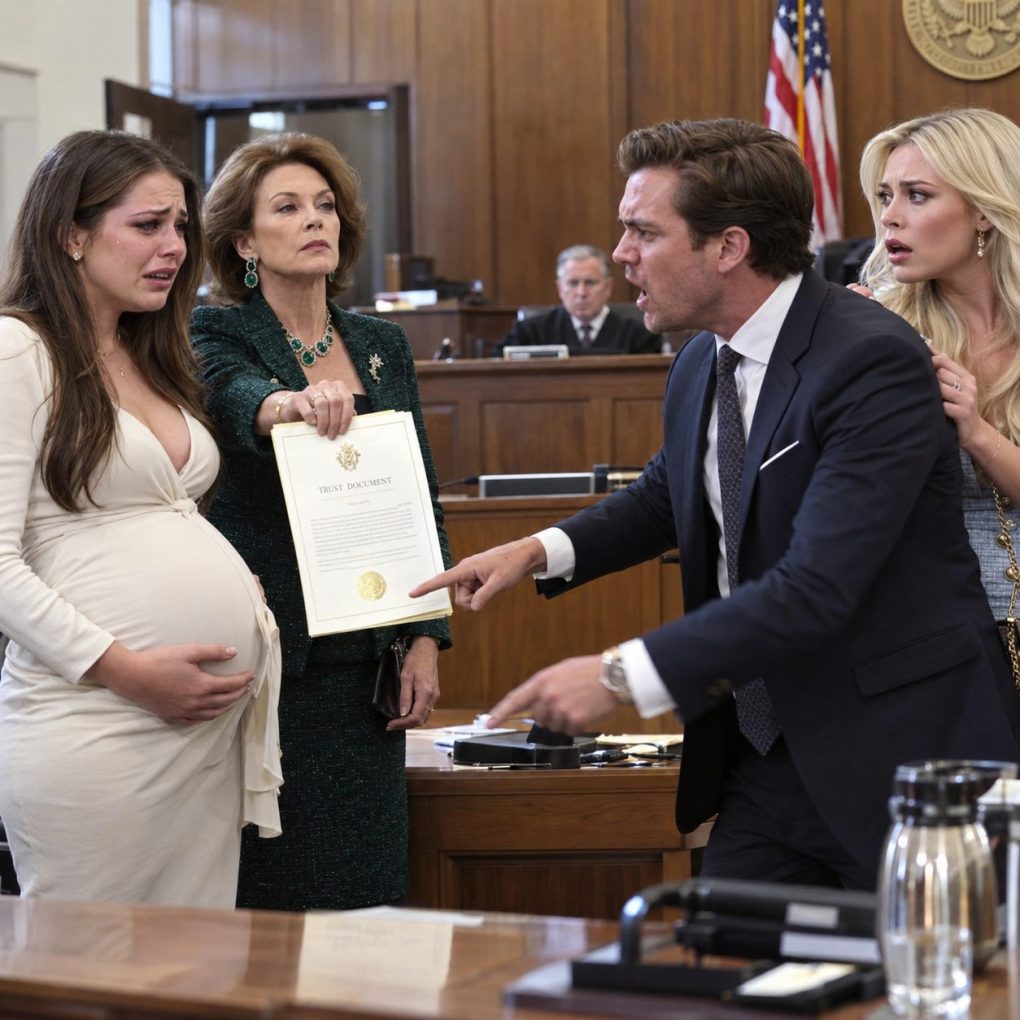
My mother crouched beside me. “You don’t have to forgive me,” she said. “But let me tell you what happened.”
When my grandfather died, the family trust had passed to me as its sole beneficiary. My mother managed the paperwork until I could take over. Six years earlier, after I married Daniel, the trustees noticed someone using my identity to request beneficiary information. They blocked the request. My mother confronted Daniel, and he told me she was trying to control my marriage.
I remembered that argument. He had stood between us while we yelled, looking wounded each time I turned toward him. By the end of the night, I had told my mother to leave.
“Why didn’t you show me proof?” I asked.
“I tried. You returned the envelope unopened.” She wiped her cheek. “Then I convinced myself that giving you space was the only way you might come back.”
It was a terrible mistake. It was also true that I had returned the envelope. Both things hurt.
Rachel interrupted gently. “We need to focus on today. The trust documents show your ownership, but the judge will decide temporary support from the actual financial records. The recording and messages speak to credibility. We’ll ask the court to preserve the remaining funds and refer the disputed transfers for investigation.”
My mother nodded. “And I’ll arrange somewhere for you to stay.”
“I’ll choose where,” I said.
“Of course.”
Back inside, Rachel submitted the bank records, the full recording, and Vanessa’s messages. Daniel’s attorney reviewed them, then asked to withdraw his earlier claim that I had consented to the transfers. The judge allowed him to correct the record but made clear that the sworn statement would remain part of the file.
Daniel tried to interrupt. “She’s worth billions. She doesn’t need support from me.”
“You don’t decide that by taking money from an account,” the judge said. “And your argument about an unborn child does not belong in a custody ruling today.”
After questioning both sides, she ordered Daniel to provide full financial disclosures, barred either of us from disposing of disputed marital assets, and set a prompt hearing on temporary support. She directed counsel to send the account records to the appropriate investigators. She made no custody order, because our daughter had not yet been born.
The result wasn’t the instant victory my mother’s arrival had seemed to promise. Outside, Daniel could still call me. He could still hire a lawyer and challenge every claim. And the trust, enormous as it was, could not erase the months I had spent afraid in my own home.
But for the first time, I was leaving with my own lawyer, a safe place to sleep, and evidence Daniel could not talk away.
Vanessa caught up with us on the courthouse steps. “I’m sorry,” she said.
I looked at her. “You called my daughter yours.”
Her eyes filled. “He told me you were abandoning her. I should have asked you.”
“Yes,” I said. “You should have.”
I walked on. Forgiving her was not a price I owed for telling the truth.
Over the following weeks, the bank restored the transferred funds while investigators reviewed how Daniel had kept using the card after his authorization ended. The financial case moved separately from our divorce. Vanessa gave a statement about the edited recording and the messages. Daniel stopped sending me demands once Rachel told his attorney to direct all communication through her.
My mother and I did not become close overnight. We met for coffee, argued about the lost six years, and sometimes sat in silence. She showed me the letters she had written and never sent. I told her that wealth had never been the thing I needed from her. I had needed her to keep knocking, even when I was angry.
“I know,” she said. “I should have.”
Our daughter, Grace, was born three weeks early, red faced and loud enough to fill the delivery room. My mother was there because I invited her. Daniel was not. When he later asked for parenting time, the court considered the evidence and arranged supervised visits while the case continued. My lawyer explained that his betrayal alone did not erase his parental rights. I understood. Grace’s safety mattered more than any courtroom speech.
Months later, the divorce was finalized. Daniel repaid the disputed funds under a settlement, and the court issued a parenting plan with conditions tied to his conduct. The trust remained mine and outside his reach. Its value had shocked him, but its money had never made me a mother.
One evening, I found Grace asleep against my mother’s shoulder. The emerald necklace lay untouched in its box on the table. My mother saw me looking and smiled.
“Someday it can be hers,” she said.
“Someday,” I answered. “For now, she has us.”
And for the first time in years, I believed that was enough.

