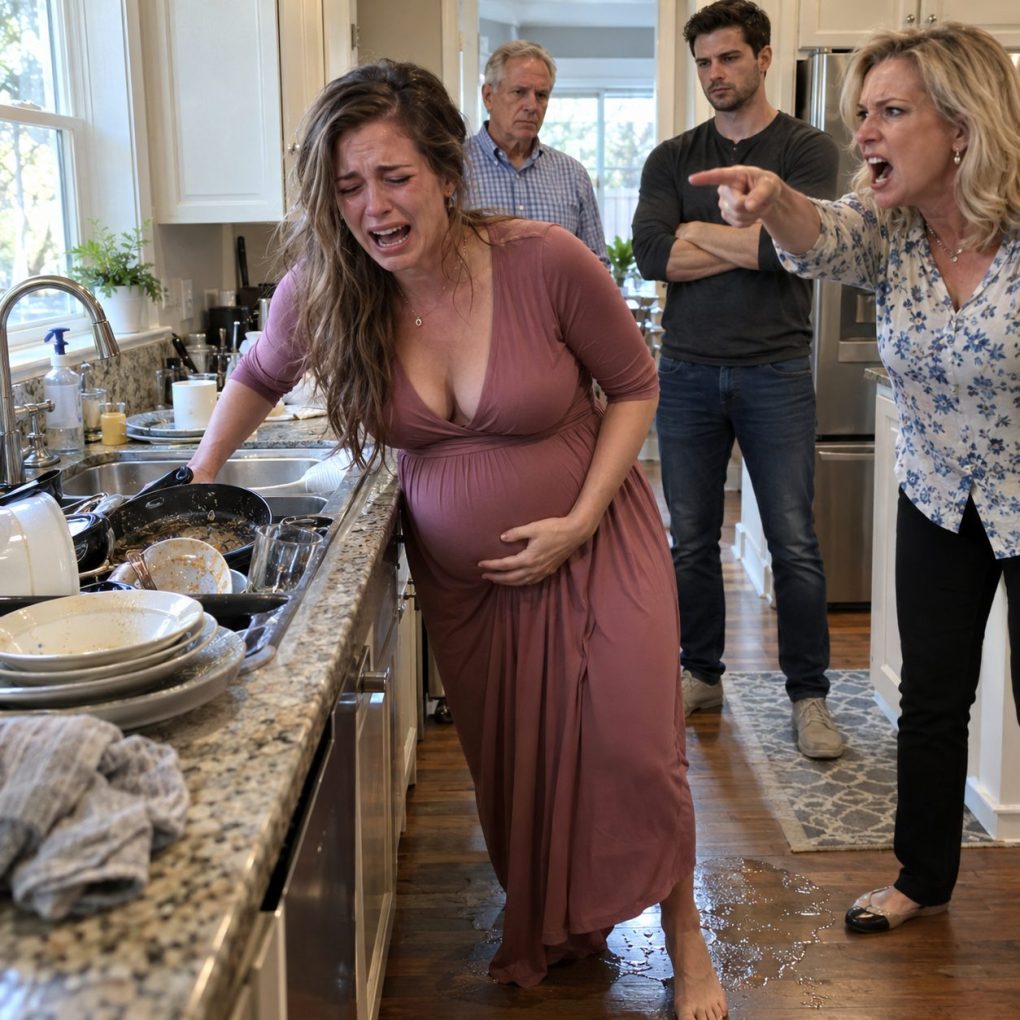
I signed the consent form with a trembling hand. Before they took me to the operating room, I asked the nurse to call Tess. I needed somebody to know where I was who would tell me the truth.
My daughter, Nora, was born by emergency C-section. I heard her cry once, a thin sound that vanished behind the doctors’ voices. She needed help breathing and went straight to the NICU. I couldn’t follow until I was stable. Lying in recovery, I stared at the empty space beside my bed and imagined what morning would have looked like if Tess hadn’t called.
Tess arrived with my bag and the recording. She asked if I wanted to listen then or wait. I chose to listen.
Her phone had caught the moment I called from the kitchen. Elaine’s voice came through clearly: “She can wait. Don’t let her turn this into an ambulance scene after my party. Tell them she’s resting.”
Then Daniel said, “What if something’s wrong?”
“You know where her phone is,” Elaine answered. “Keep her away from it until she stops making a fuss.”
I stopped the audio. Daniel had known where my phone was. He had stood in the doorway while I tried to reach it. Those were choices he’d made while I asked him for help.
Tess told me why she’d started recording. Earlier that evening, when I said my back hurt, Elaine had laughed and told the guests I was looking for an excuse to abandon the dishes. Tess had been about to confront her. The water breaking happened seconds later, and she kept the camera running in her hand.
“I should have stepped in sooner,” Tess said.
“You called,” I told her. “You got us here.”
A nurse came to take me to Nora. She was small under a white blanket, with a breathing tube taped against her cheek. The nurse showed me where to place my hand so I could touch her without disturbing the equipment. Nora curled her fingers around one of mine. I cried then, quietly, because she was here and because she had come so close to being born in that kitchen.
Daniel arrived at the unit later. The staff asked me privately whether I wanted him let in. I said no. He left messages instead: first an apology, then a plea that I not “split the family over one terrible night.” I saved them. Tess sent me the original video file and kept her own copy. I also asked for the ambulance record and the hospital’s notes about what I’d reported when I arrived.
The next day Daniel finally told me the rest by text. He had called 911 when I complained of pain during the party, frightened by how pale I’d become. Then his mother convinced him he was overreacting. He told the dispatcher I no longer wanted help without ever asking me. He wrote that she’d assured him my symptoms were normal. He hadn’t asked a doctor. He hadn’t asked me.
I replied once: “I said I needed the hospital. You heard me.”
I spoke to the hospital social worker about going home safely with Nora. Tess could stay with a friend, and my friend Maya offered me her guest room after discharge. With the social worker’s help, I made a plan for collecting my things without going back to the house alone. I also gave the recording and the call details to the police when I was ready to make a report. They took my statement; I didn’t need an instant arrest to know what had happened.
Elaine sent one message saying that family matters should stay inside the family. I didn’t answer. Daniel asked if he could visit Nora, and I told him any arrangements would have to be made separately, after I had legal advice and a chance to recover. I wasn’t going to decide our daughter’s future while she still needed help breathing.
Over the following days, Nora grew stronger. First she needed less oxygen. Then I got to hold her against my chest, wires and all. Daniel’s messages stopped after I told him I was staying elsewhere and intended to separate. Tess visited between school and dinner, bringing stories about ordinary things because she understood I needed those too.
When Nora was finally discharged, Maya drove us home. I carried my daughter through a door that opened when I reached it. I set her carrier down, checked that she was breathing, and sat beside her for a long time.
I had spent that night in the kitchen begging people to believe me. In the NICU, I learned I could ask a question and receive an answer. I could say no and have it respected. Nora couldn’t speak yet, but when she needed help, I would listen the first time.

