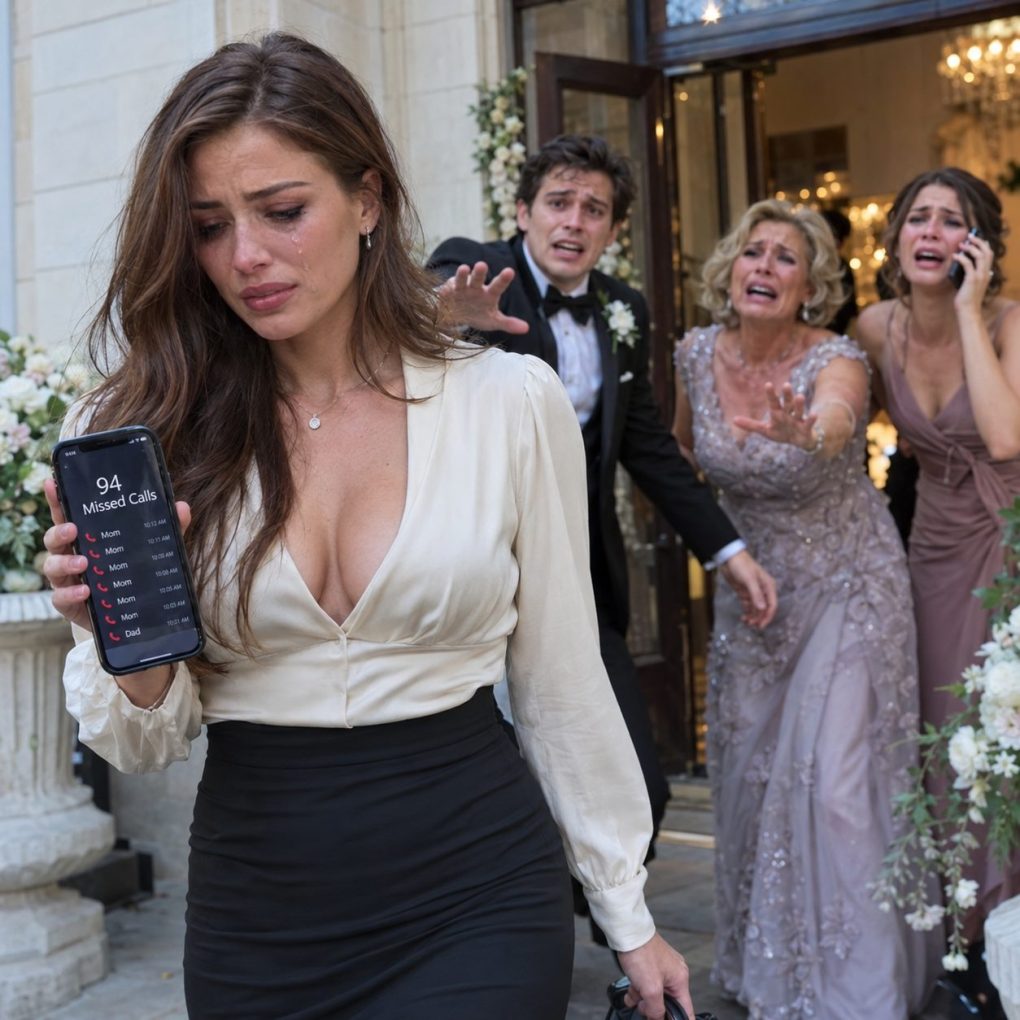
“Please tell me you haven’t signed anything,” a woman said. “I’m the venue manager. Your name is on the payment guarantee.”
Three days earlier, my brother, Aaron, had called me.
“Please, don’t come to my wedding.”
“Why?”
He laughed. “I don’t want people to know you’re just a cleaner.”
I used to clean offices at night, that’s true. I also owned a small company with eleven employees. Aaron knew that. He just liked my version of life, which made him feel superior.
Our mother held the phone. “We’re going to tell you that you’re dead. Never contact us again.”
Then I sat in my parked car and cried until the steering wheel went blurry. Then I believed them. I sent back the invitation, muted the family chat, and went to work.
On the morning of my wedding, my sister Emily called six times before breakfast. By noon, I had received 94 missed calls from her and our parents. The messages were almost identical: Please don’t do this.
I didn’t do anything. At least, I think I didn’t do anything.
Later, my office manager forwarded an email from the wedding venue. The email contained a bill for $28,400 and a scanned copy of a form with my company name on it. According to the form, I had promised to pay all outstanding wedding expenses.
My signature is at the bottom. That’s not my signature.
I called the event venue immediately. The manager, Denise, asked me to come in with my ID and documents proving who could sign on behalf of my business. I drove there with the company papers and stopped outside when I saw Aaron’s photo on the display board at the entrance.
Denise met me by the lobby door. Her face was tense when I showed her the original signature on my driver’s license.
“And there’s more,” she said, opening the file in her hand. “This isn’t the only document your brother gave us.”
She turned the page toward me. At the top was my mother’s name. Below, in capital letters, was the word: DEATH NOTICE.
I thought my family was just lying to get me out of the wedding. But the documents in Denise’s file show they exploited that lie for a much more serious purpose.
I stared at the notification until the words no longer seemed real.
The paperwork stated that I had passed away nine months prior. My mother had signed as the person reporting the death, and Aaron had attached it to the request to remove my name from the event venue’s guest list and to direct any inquiries regarding my company through him.
“Has anyone verified this yet?” I asked.
Denise looked uncomfortable. “Our coordinator flagged it this morning. That’s why I called the number on your company’s website instead of the one he wrote here.”
The invoice explained the rest. Aaron had booked extra rooms, upgraded the bar, and promised the final balance would be covered by my business if his card failed. His card had failed that morning.
“I never agreed to this,” I said.
“I understand. We’re reviewing the paperwork. The wedding won’t be canceled because you showed up, but we can’t charge your company on this form.”
Through the lobby windows, I saw Emily running toward us, phone in hand.
“Please,” she said, breathless. “Mom says you’ll ruin everything if you talk to the bride.”
“Did you know about the guarantee?”
She shook her head. “I knew about the death story. Aaron told Claire’s family you died before they met him. I thought he was ashamed of your job. I didn’t know there were papers.”
My chest hurt worse than it had during the call. Emily had known for months and said nothing.
Across the hall, a woman in a white dress appeared with two bridesmaids. Claire. She looked between Emily and me.
“Who is she?” Claire asked.
Emily opened her mouth. Nothing came out.
My mother hurried over and gripped Claire’s arm. “She’s a former employee of Aaron’s. There’s a billing mistake. Go back inside.”
Claire pulled away. “Aaron told me his sister died.”
Denise held up the notice. Claire read it, then looked at my face. The resemblance to Aaron was hard to miss.
“My name is Rachel,” I said. “I’m his sister. I’m alive.”
Claire’s expression changed from confusion to horror. Then Aaron came out of the ballroom, still wearing his boutonniere.
“Rachel,” he said quietly. “You were supposed to stay away.”
Denise stepped between us. “We need to discuss the signature on this guarantee.”
Aaron glanced at the document, then at his bride. “I can explain.”
Claire held out her hand. “Then give me your phone.”
He didn’t move.
“Your phone, Aaron.”
He unlocked it with a trembling thumb. Claire opened a message thread with her father. The latest message, sent just minutes earlier, read: Rachel agreed to cover the balance. Don’t mention her to Claire until after the ceremony.
Claire looked up. “My father already paid you eighteen thousand dollars toward this wedding. Where did it go?”
Aaron’s eyes moved to our mother. She whispered, “Don’t answer that here.”
Claire heard her. So did Denise.
“Answer me,” Claire said. “Dad transferred you eighteen thousand dollars. Why is this venue asking your sister to pay?”
Aaron reached for her elbow. She stepped back.
“Not in front of everyone,” he said.
“You brought everyone into it when you told them your sister was dead.”
Her father, Mr. Bennett, had followed her into the lobby. He stopped beside the wedding display, listening. Aaron’s face went pale.
I wanted to leave, but my business name was on the guarantee. Eleven employees depended on it.
“Denise,” I said, “please make a copy of everything Aaron submitted. My lawyer will need it.”
Aaron’s head snapped toward me. “You’d call a lawyer over a misunderstanding?”
“You signed my name.”
“I was going to pay it back.”
“That isn’t a misunderstanding.”

