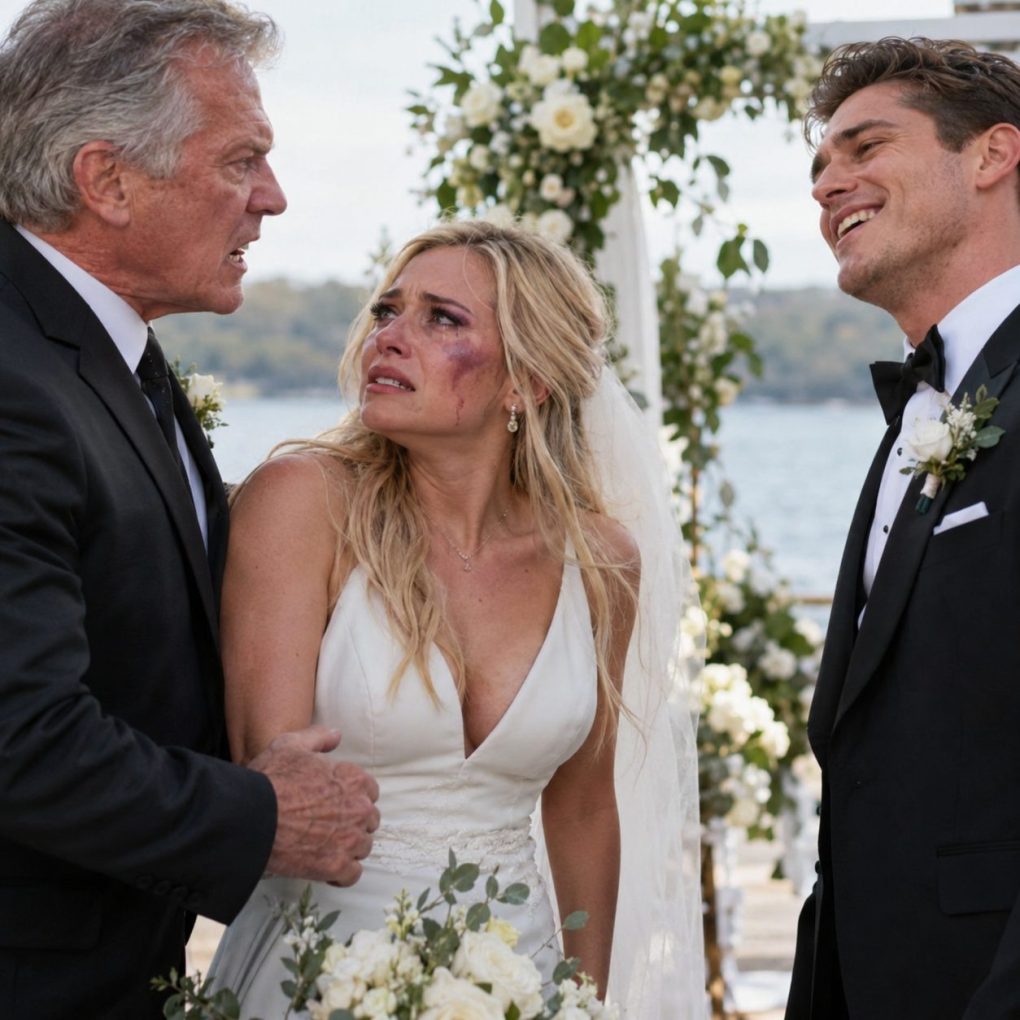
His lawyer, Rachel Kim, arrived twenty minutes later. She read the pages at the table and asked for my phone. The message inviting me to meet the “planner’s assistant” had come from Diane’s number. Rachel photographed it, along with the time stamp and the photocopy of my license. The woman in the lobby had been working for Diane, though we didn’t yet know her name.
“How did you get a copy of my signature?” Dad asked Diane when security brought her back to the doorway.
“From the printer,” she said quietly. “You emailed Grant an estimate for the wedding programs. Your signed purchase order was attached.”
Dad went pale. He remembered sending it. Diane had copied his signature from a real business document and placed it on the guarantee. My supposed witness signature had been copied from a form I’d signed at the rehearsal dinner for a seating change. I remembered Diane taking the form away before I could throw it out.
Grant shook his head. “You said it was a bridge loan. You said Harold knew.”
“You brought me his documents,” Diane shot back. “And you knew why I needed Emily’s signature.”
Grant looked at me. “I didn’t know she would forge it.”
“You knew you hit me,” I said. “You knew you wanted me to sign that trust paper anyway.”
He had no answer.
Rachel asked Diane about the deadline. Diane owned several event venues, including the one hosting our wedding. Her company had borrowed money for renovations, but two locations had lost major bookings. Payments were overdue. A private lender had given her until eleven-thirty to provide additional security for a new loan. She planned to use my future trust interest as part of the proposal and Dad’s business as the immediate guarantee. The marriage was meant to make her claim over our finances seem less suspicious to the lender. It still would not have made the forged signatures lawful.
“Why this morning?” Dad asked.
“They wanted the originals before the next payment was due,” Diane said. “I thought you’d both go along once the guests were here.”
I looked at the folder. Last night, when I refused the trust assignment, Grant had hit me. This morning, he had tried to hide my face and get me through the ceremony. Diane had continued submitting papers with signatures she knew we had not given. Their plan depended on our being too embarrassed to stop a wedding in front of two hundred people.
I took Dad’s phone and called the police myself. I told the dispatcher about the assault and the papers. When officers arrived, I showed them the bruise, the message from Diane, and the photographs Rachel had taken. The makeup artist told them what Grant had said when he entered the suite. She had also seen him grab my wrist.
Grant insisted he had not forged anything. The officers listened, then asked him to step into the hall. One of them photographed the red marks on my wrist. They took statements from all of us and collected copies of the documents. Rachel told us the lender would need to investigate its own application and that the bank’s hold did not settle everything. There would be follow-up calls, records to review, and probably months of uncertainty. I was grateful she said it plainly.
Then the hotel manager asked what he should tell our guests.
For a moment I almost let Dad speak. He had protected me in the suite, and I wanted to hide behind him. But everyone downstairs had been invited to watch me promise my life to Grant. They deserved to hear from me that I wasn’t doing it.
I walked into the ceremony room with Dad at my side. I still wore the dress. I had wiped off the makeup over my cheek because I couldn’t bear to keep covering what Grant had done.
“The wedding is canceled,” I said into the microphone. A hush moved across the room. “Grant hurt me. I’m safe now, and I’m leaving with my father. Please give us privacy.”
I didn’t tell them about the loan. Rachel was handling the records, and I wasn’t going to turn my wedding into a public argument with Diane. Some guests looked shocked. A few began to cry. My best friend, Maya, came up the aisle, put her arm around me, and walked me out through a side door.
In the following weeks, Dad’s bank confirmed that his company had not guaranteed Diane’s debt. The lender withdrew the application after reviewing the disputed documents. Police continued investigating the forgery, and I gave them the original seating form when Maya found a photo of me signing it at dinner. Grant was charged for assaulting me; the case over the documents took longer. I got a protective order and moved my things out while he was away, with Maya beside me.
Dad never bought a venue or ruined anyone’s business. He simply refused to let them use his name, his company, or me. Diane’s debts remained hers to answer for.
One evening, I found the wedding dress folded in its garment bag. I had expected to hate it. Instead, I remembered walking into that room and speaking for myself, bruise visible, voice steady enough to finish the sentence.
Dad asked what I wanted to do with it. “I don’t know yet,” I told him. Then I zipped the bag and closed the closet. For the first time in months, the next decision could wait until I was ready.

