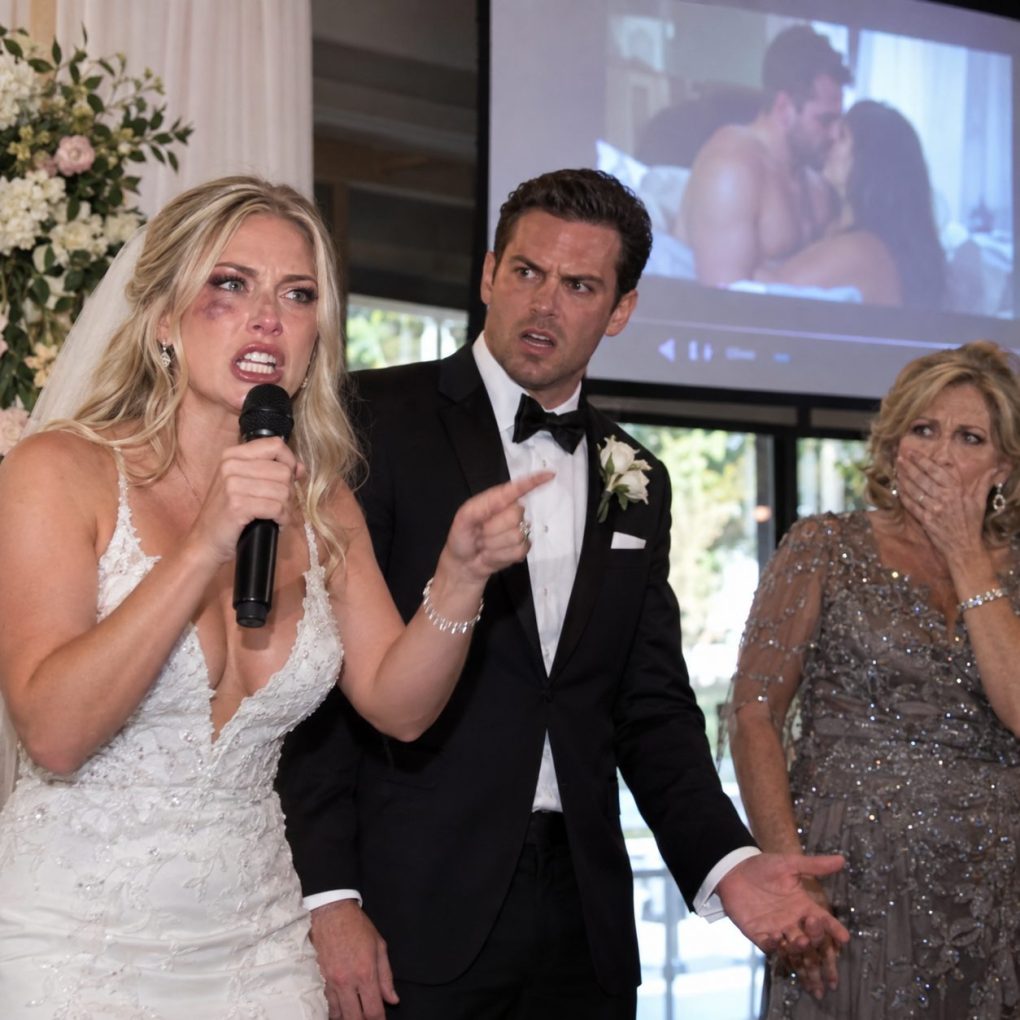
Grant told the officers we had argued and that I had fallen against a cabinet. I watched one officer play the footage and then ask him to wait apart from me. Grant’s expression changed when he realized I could hear his account and knew what the camera showed.
Leah took me to an urgent care clinic. The doctor examined my eye and gave me a written record of the injury. I had nearly canceled the appointment that morning because I thought someone might recognize me in my wedding dress. Now I wished I had gone sooner.
That evening, I stayed at Leah’s apartment. My unworn wedding ring sat on her kitchen table while she called the attorney she had met that morning.
Attorney Kim had already reviewed the invoices and statements Leah found. She told me to change my account passwords, alert the bank to the disputed payments, and preserve every original record. She would help me report the transfers. She was careful about one point: the video showed what happened in the office, and the records raised serious questions about the money, but sorting out every payment would take time.
I appreciated hearing the truth in plain language. My mother had spent months telling me everything was fine.
We went to the bakery the next morning before opening. Rosa and Marcus were waiting outside. They had come because my mother still had a key and access to the bookkeeping computer. With the bank on the phone and the attorney guiding us, I removed her access to the business accounts. A locksmith changed the office lock while Leah copied the financial files.
Then I sat with Rosa and Marcus at the flour-dusted worktable and told them what I knew.
“I’m checking every account,” I said. “I can’t promise there won’t be problems. I can promise I’ll tell you what I find.”
Marcus asked if payroll was safe. I opened the account with him beside me. The next payroll was covered. I had never been so relieved to see an ordinary number on a screen.
My mother came in through the front door an hour later. She stood among the customers, holding the folder she had tried to make me sign at the wedding.
“I didn’t know he would hit you,” she said when I met her outside.
“I believe you,” I said. “You saw that he had.”
She nodded. It was the first thing she had admitted without an excuse.
She told me she had begun taking money after falling behind on debts she had hidden from me. At first, she moved small amounts and changed entries in the books. When Grant helped prepare records for my taxes, he spotted them. She thought he would tell me. Instead, he offered to put invoices through his company so the withdrawals looked like business expenses. He kept a share.
“Why did you want me to marry him?” I asked.
“Because he said he would tell everyone if you left him.”
I felt sick. She had been afraid I would lose the bakery and discover what she had done. Grant had used that fear, and she had let me walk toward him anyway.
“The papers in my bag?”
“Account access,” she said. “He wanted you to sign so he could move money himself.”
I looked through the bakery window. Rosa was helping a customer choose a cake. For months, I had thanked my mother for keeping the business running while money disappeared behind my back.
“I’m giving all of this to the attorney,” I said, taking the folder. “You need to tell her everything.”
My mother asked if I would speak to her afterward. I said I didn’t know.
In the following weeks, Attorney Kim helped me document the transfers and file a report. My mother gave investigators the bookkeeping records and the messages Grant had sent her. The bank reviewed the payments, and my accountant rebuilt the books from receipts and statements. It was slow, expensive work. Some of the money was recovered, but not all of it. I cut costs, took extra orders, and made payroll each week.
Grant was charged in connection with the assault. The financial investigation continued separately. He sent one message claiming I had destroyed his life. I saved it for my attorney and did not answer.
My mother accepted responsibility for the money she had taken. She began repaying what she could under a written agreement. I had no interest in calling that forgiveness. When she asked to meet, I agreed to sit with her once at Kim’s office. I told her I could see she was sorry, but I could not trust her with my home, my business, or another decision about my life. She cried. I let the silence stand.
Months later, Leah found the small box that held my wedding invitations. I kept one for a while, looking at the date and wondering how close I had come to signing those papers. Then I put it away. I didn’t need the invitation to remember what happened.
On the first anniversary of the canceled wedding, the bakery was open. Rosa brought me a slice of lemon cake from the display case, and Leah came by after work. We sat together until the last customer left.
I still had a faint mark near my eye. I touched it sometimes without thinking. That night, when Leah asked how I was, I told her the truth: I was tired, the business was recovering, and I was glad I had taken the microphone.

