“Entonces creo que es correcto”, dijo Jenna.
Michael estuvo de acuerdo.
Según el plan sucesorio, heredarían la casa, el equipamiento, los ahorros y demás bienes, con disposiciones diseñadas para respetar los compromisos de conservación.
El terreno en sí permanecería protegido.
Cuando terminamos el papeleo, Boone trajo los documentos finales a mi cocina.
Los colocó junto al billete de dólar enmarcado.
“A tu abuelo le habría gustado esto”, dijo.
“I hope so.”
“Most people spend their lives trying to acquire property. You’re making sure yours still serves a purpose after you’re gone.”
I signed.
Then we went fishing.
That spring, Emily called with another surprise.
A regional publisher wanted to turn the HOA dispute into a book.
I told her I wasn’t interested.
She laughed.
“Hank, you haven’t even heard the offer.”
“I don’t need to.”
“It’s substantial.”
“Still no.”
A few days later, she called again.
“What if the publisher contributed the advance to an agricultural scholarship fund?”
That got my attention.
We eventually reached an arrangement that allowed the story to be developed with proper fact-checking and legal review while directing a fifty-thousand-dollar contribution toward a scholarship endowment in Patty’s memory.
I named it the Patricia Briggs Memorial Agricultural Scholarship.
The fund was designed to support Nebraska students pursuing agriculture, soil science, agricultural engineering, or environmental studies.
The first recipient was Louisa Herrera.
She was seventeen, the daughter of agricultural workers, and planned to study agricultural engineering.
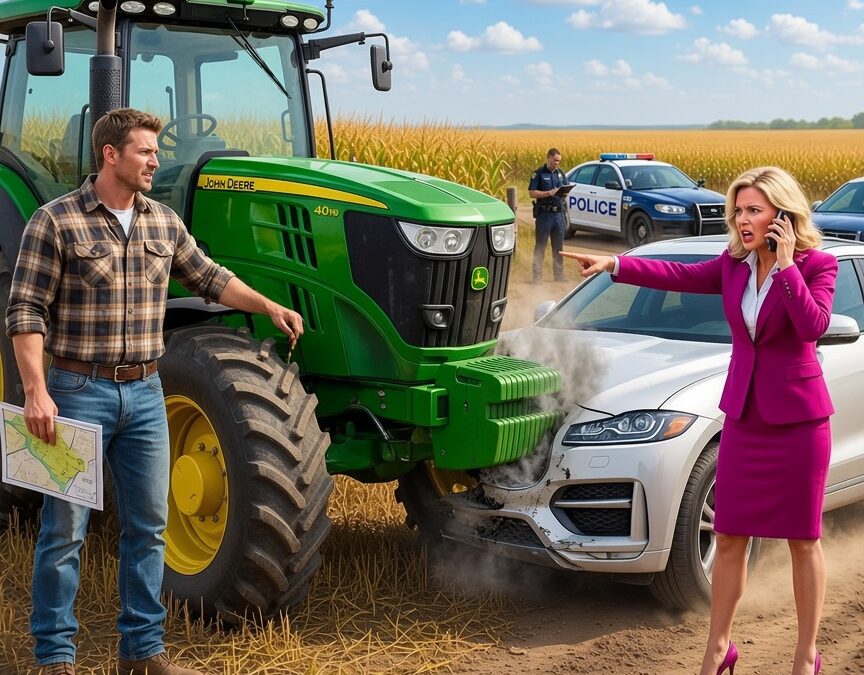
At the award ceremony in May, she stood beside the field where Moren had crashed her Mercedes.
Louisa wore a blue dress and held her scholarship certificate with both hands.
When it was her turn to speak, she looked nervous.
Then she began talking about her parents.
They had worked long seasons helping bring crops to market. She’d grown up watching them come home exhausted, their clothes dusty, their hands rough from labor.
She wanted to develop technology that helped farms use less water, reduce waste, and improve productivity.
“I want people who work hard growing food to have better tools,” she said. “And I want those tools to be affordable.”
I listened from the front row.
Her ideas were practical, ambitious, and grounded in experience.
Afterward, she approached me.
“Mr. Briggs, thank you.”
“Your work earned this.”
She looked across the fields.
“My parents said you donate a lot of your harvest.”
“My wife started that.”
“She sounds like she was a good person.”
“She was.”
Louisa hesitated.
“Do you think I could come back sometime and learn more about your equipment?”
“Anytime.”
She smiled.
And I realized something.
For months, I’d measured the conflict with Moren in letters, legal bills, inspections, and damage estimates.
But none of those numbers captured what actually mattered.
The land could keep feeding people.
It could teach people.
It could provide habitat for wildlife and opportunities for young farmers.
Protecting it meant protecting those possibilities.
By the following harvest, Prairie Meadows had changed.
Vikram still called occasionally about shared road maintenance, drainage, and other legitimate neighbor concerns.
We didn’t always agree.
Sometimes he wanted work done sooner than I could manage during planting season.
Sometimes I complained about subdivision traffic blocking access for agricultural machinery.
But we talked.
We checked the facts.
We found solutions.
Eso era todo lo que había querido desde el principio.
Russell y yo plantamos una franja de flores silvestres autóctonas a lo largo del límite que compartimos con nuestra propiedad.
En verano, la zona estaba repleta de abejas y mariposas.
Tim Brennan me ayudó a reemplazar el techo dañado de mi granero.
Denise comenzó a encargarse de la preparación de mis impuestos.
Varios residentes de Prairie Meadows participaron como voluntarios durante la siembra y la cosecha.
Un ingeniero jubilado llamado Robert se presentó todos los sábados durante casi dos meses.
Tenía sesenta y ocho años y no había trabajado en una granja desde su infancia.
Una tarde, estábamos reparando un tramo de la tubería de riego cuando él se sentó sobre sus talones y miró al otro lado del campo.
“Mis abuelos se dedicaban a la agricultura en Iowa”, dijo.
“¿Es correcto?”
“Pasé allí todos los veranos hasta que cumplí dieciséis años.”
Cogió un puñado de tierra.
“Había olvidado cuánto echaba de menos esto.”
Le entregué una llave inglesa.
“Entonces, serás bienvenido de nuevo el próximo sábado.”
Él se rió.
“Esperaba que dijeras eso.”
Emily Tran continuó cubriendo el caso mientras se resolvían los últimos asuntos legales.
Sus reportajes le valieron el reconocimiento, y posteriormente pasó a desempeñar un papel de investigadora a nivel estatal.
Una tarde, pasó por la granja para entrevistarme sobre conservación.
Después, nos sentamos en el porche a tomar té helado.
—¿Te arrepientes alguna vez de haberte involucrado? —preguntó.
“¿En qué?”
“Toda la pelea.”
Reflexioné sobre la pregunta.
“Lamento no haber tomado en serio esa primera carta.”
“¿Por qué?”
“Porque supuse que las tonterías desaparecerían si las ignoraba.”
“¿Y aprendiste algo?”
“Lleva un registro. Sé consciente de lo que posees. No permitas que la confianza de otra persona reemplace las pruebas reales.”
Ella lo anotó.
“¿Algo más?”
Miré hacia el jardín de Patty.
“La mayoría de la gente no es tu enemigo, incluso cuando están convencidos de que tú lo eres.”
Emily bajó la pluma.
“Esa es una buena frase.”
“No me hagas parecer más sabio de lo que soy.”
Ella sonrió.
“Voy a tratar de.”
Esa tarde, después de que ella se marchara, caminé por el límite sur.
Ya no eran necesarios los marcadores de nivelación de color naranja a intervalos de veinticinco pies, aunque los monumentos oficiales permanecieron.
El campo volvió a tener un aspecto normal.
Las mazorcas de maíz se extendían en hileras rectas, moviéndose suavemente con la brisa.
Más allá de la valla, podía oír a los niños jugando en Prairie Meadows.
Alguien estaba asando la cena.
Un perro ladró.
No hubo discusiones a gritos, ni fotógrafos escondidos cerca del gallinero, ni cartas amenazantes esperando en mi buzón.
Simplemente una granja al lado de un barrio residencial.
Tal y como debía ser.

