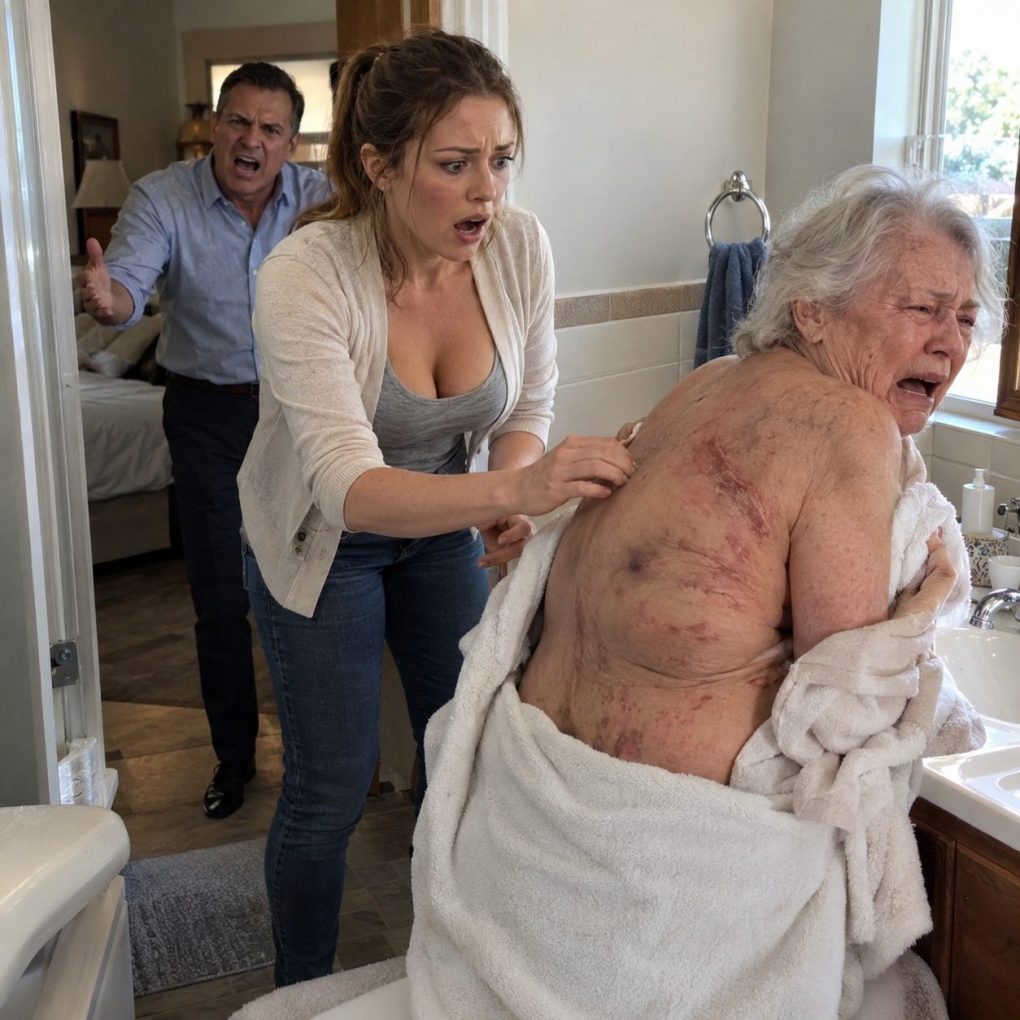
Later, Claire explained why she had contacted our agency. Three years earlier, she had discovered Daniel was moving money out of their mother’s accounts. She confronted him, and he claimed Evelyn had authorized the transfers. Soon afterward, Claire received messages from her mother’s phone accusing her of stealing and demanding she stay away. During visits, Daniel answered the door. Once, Evelyn herself told Claire to leave. Claire had never forgotten how frightened her mother looked.
“He was standing behind you,” Evelyn said. “He told me what would happen after you left if I said the wrong thing.” Claire had continued sending letters and had requested wellness checks. Daniel always stayed nearby, and Evelyn denied being hurt. Eventually, Claire stopped arriving unannounced but kept trying to reach her. Last week, Daniel sent a bill for psychiatric care and demanded money. That was when Claire decided someone outside the family needed to see Evelyn alone.
The first assault happened over a deed. Daniel wanted his mother to transfer the house to him before Claire could question her finances further. Evelyn refused. He pressed a hot metal cooking utensil against her back, then took her to urgent care and described a kitchen accident. Terrified, she repeated his explanation. The injury healed, but he kept threatening another burn. Later, he struck her across the back whenever she resisted. No caregiver had seen beneath the nightgown.
Bathing had become the one thing she could still refuse. “I thought if they saw, he would know I’d told,” she explained. “So I screamed until they stopped.” Daniel turned those screams into evidence against her. He supplied the history during appointments and called her fear paranoia. Some visits were brief video calls with him sitting beside her. Medication made her drowsy, and her hesitation sounded like confusion. Nobody had yet gathered the separate pieces into one account.
The hospital social worker contacted adult protective services, and officers recorded Evelyn’s account privately. Her injuries were photographed with her permission. The doctor requested earlier records and documented what the examination showed; nobody promised one interview would erase every diagnosis. Evelyn agreed to remain for treatment while a safe discharge was arranged. Claire stayed in the chair beside her bed. When a nurse offered pain relief, she explained it first and waited for Evelyn to answer.
Daniel’s paperwork began falling apart that afternoon. Claire had never signed permission for any placement. She produced the message in which he had demanded payment, including the document he claimed was awaiting her signature. The version in his folder already carried her name. His guardianship request still required a judge’s decision; the deadline he had presented to everyone as inevitable was an evaluation appointment he had arranged. He had counted on fear and exhaustion to stop anyone asking questions.
With Evelyn’s permission, Claire helped an attorney obtain bank statements and correspondence. The records showed transfers into Daniel’s account and payments benefiting him. Letters from Claire were later found unopened among papers in his study. Investigators also obtained messages he had sent from Evelyn’s phone while she was elsewhere. Each discovery supported part of what she had said. The case took months, but the hearing scheduled that week went forward with new evidence. Daniel did not become her guardian.
Evelyn moved into Claire’s spare bedroom after leaving the hospital. She chose that arrangement herself and accepted help from a different caregiving team. Recovery was uneven. A dropped pan could send her shaking into a corner. She apologized whenever she needed assistance. Claire sometimes cried after her mother fell asleep, grieving the years they had lost. Neither pretended one reunion had repaired everything. They began with small choices: breakfast, an open door, and a phone Evelyn kept within reach.
I visited one Sunday after my shift. Evelyn asked me to help wash her hair, then stopped beside the bathroom. “My back, too,” she said. I showed her the cloth and waited. This time, she didn’t grip the curtain. She talked about the roses she wanted to plant at Claire’s house. When I finished, she touched my wrist. “You stopped when I asked,” she said. “That’s why I let you try again.” I had to look away before I cried.
Daniel eventually pleaded guilty to charges involving the abuse and financial theft. The forged paperwork became part of the evidence against him. Evelyn received restitution under the court’s order, although recovering the money took longer than anyone wanted. Her house was sold at her request, and the proceeds remained hers. At sentencing, she read a statement without looking toward her son. “You taught me to be afraid of my own voice,” she said. “I’m using it today.”
On the anniversary of the day she left that house, Claire brought out a cake. Evelyn handed me the first slice. Then her phone rang, and she picked it up herself.

