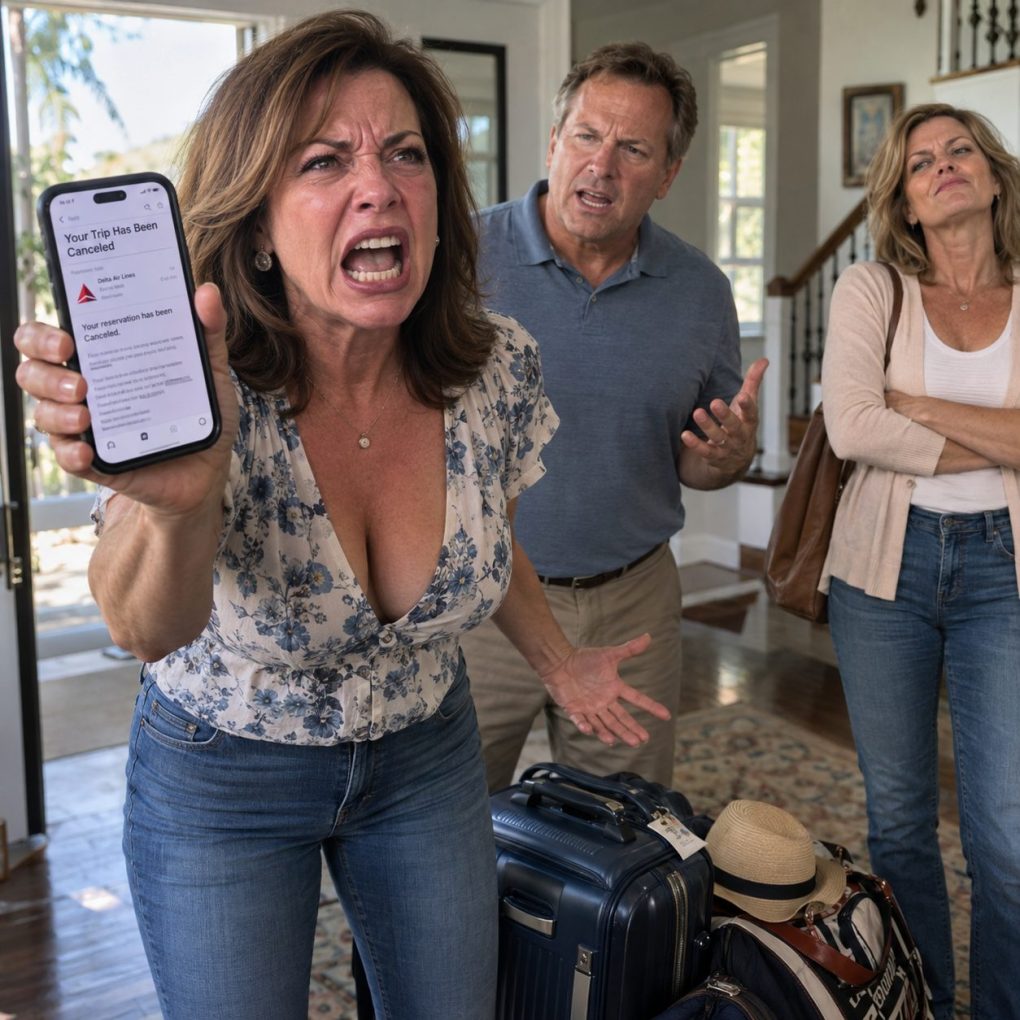
His car backed out of the driveway so fast that Julia had to run to catch it. I gave the dispatcher the license plate. Claire canceled her conference and drove to her mother’s house. I begged her to wait for the officers before going in.
For twenty minutes, I watched a dot on my phone: Claire’s shared location, parked down the block from Eleanor’s. She called when the patrol cars arrived.
“Mom’s okay,” she said. “David’s here. The officers are talking to both of them.”
I sat on the floor beside our packed suitcase. My hands shook as I searched our messages from the last six weeks. Mark had asked me for a copy of my driver’s license “for the rental.” He’d used that excuse before the trip was even booked. Another message asked me to take Eleanor to the bank because he was busy. When I said Eleanor seemed confused and offered to make an appointment so Claire could come too, he dropped the subject.
Claire called back. Eleanor wanted to speak to me privately. She said David had come over after she received a bank alert. He insisted it was a mistake and offered to sort it out. When Claire’s code reached Eleanor’s phone, David took the phone to “read the message better.” He hadn’t threatened her or locked her in. He had simply kept telling her that she was mistaken until she no longer trusted what she’d seen.
“I was afraid I’d caused it,” Eleanor said.
“You didn’t.”
At the bank’s fraud line, Eleanor and Claire reported the pending transfer. The bank blocked it and restricted online access while they reviewed the account. The code alone had not completed the transfer; another confirmation was required. That was why Mark had been so desperate for Claire to cooperate.
The officers said Eleanor was safe and took everyone’s statements. They could not settle a financial dispute on the doorstep. Eleanor agreed to stay with Claire while the bank investigated.
The next morning, I met them at a branch. A bank manager walked us through the account history with Eleanor’s permission. Over two months, smaller transfers had gone to a checking account Eleanor didn’t recognize. The $86,400 request had been submitted from the same newly registered device. The bank opened a fraud claim and gave Eleanor copies of the records to share with investigators.
Then came the part I hadn’t expected. David had not been taking money for himself. He had discovered the smaller transfers a week earlier and confronted Mark. Mark told him he was repaying a business debt and would put it all back after the trip. David believed him long enough to help get Eleanor’s phone that night. He claimed he was there to stop her from freezing everything before Mark could fix it.
Claire stared at him. “You saw the alerts and told none of us?”
David looked at the floor. “I thought I could keep Mom from finding out.”
“She already knew something was wrong,” I said. “You made her doubt herself.”
He had no answer.
The trip had been Mark’s escape plan, though he never used that word. Julia had booked time off from work. Mark had kept the route and the rental car, put her on the first hotel reservation, and canceled only the bookings made under my email. He needed me at home so Claire wouldn’t be free to check on Eleanor in person. Taking the kids also made it harder for me to leave or ask questions. He thought ten days away would buy him time to find money before the bank’s next statement arrived.
I learned that from Julia, who called me that afternoon. She said Mark had told her we were separated and that Eleanor had willingly lent him money. When he sped away from my house, he’d admitted the transfer was being challenged. Julia had gotten out at a gas station and taken a rideshare home. She offered screenshots of his messages. I accepted them and passed them to the investigator assigned to Eleanor’s report.
Mark called twice. I let both calls go to voicemail. The second message was an apology wrapped around a request: could I persuade Eleanor to say the transfers were loans?
I saved the recording. Eleanor listened once and said, “No.”
Over the following weeks, the bank investigated the earlier transactions. Some money was recovered; some was not. Eleanor and Claire gave their records to the police, and Mark hired an attorney. I didn’t promise Eleanor a particular outcome. I helped her change her passwords, replace her cards, and arrange for Claire to receive alerts. She made those decisions herself.
I filed for divorce. When Mark finally came by for his clothes, Claire stayed with me. He looked at the suitcases in the hall and said, “I didn’t think one trip would end us.”
“One trip didn’t,” I said. “You decided what I would do, lied to your sister, and used your mother’s savings.”
He carried his bags to the car without another word.
A month later, Claire asked whether I still wanted to see the Southwest. Her kids were spending the weekend with their dad. Eleanor had a standing Sunday lunch with a friend, and the three of them had made their plans without assigning me a role in them.
I booked a road trip. On the morning I left, Eleanor called to wish me a safe drive. She didn’t ask when I’d be back or what I could do for anyone while I was gone.
For the first time in thirty years, the only name on the reservation was mine. I turned the key and went.

