The folder explained the rest. Daniel and Melissa had debts I knew nothing about: unpaid credit cards, a failed online business, and loans taken to keep that business alive. Selling the house seemed like a way out. But the title search revealed the trust’s ownership. Their buyer’s attorney required valid authorization from the trustee. That was when Daniel began pretending to speak for me. When Rachel questioned his paperwork, he promised to bring an original signed document.
Instead, they tried to bully me into signing a page that purported to replace the trustee with Daniel. It would not have accomplished that under the trust’s terms, Rachel explained, but it might have helped them mislead a buyer or another lawyer. The beneficiary request was equally worthless. Melissa could not redirect Emma’s inheritance with a homemade form. The papers were tools for deception, not a secret way around the protections my husband and I had established.
“They expected you to be frightened enough to cooperate,” Rachel said. I looked at the photographs of my face. “They were right about the frightened part.” She pulled her chair closer. “Being frightened doesn’t make them entitled to your signature.” I cried then. Not over the money. Over the little boy I had once carried home after he fell off his bicycle. I had spent that entire evening comforting him. Last night, he had stepped on my hand.
Daniel came to the hospital that afternoon. Staff kept him outside the unit, and Rachel met him in the waiting area. He wanted me to withdraw my statement. He said Melissa had panicked. He said I had lost my balance. Then he asked whether the house restrictions could be lifted if he apologized. Rachel came back alone. “You don’t have to speak to him.” I asked her to carry one message: “He can start by telling the truth.”
Emma’s aunt, Beth, brought her to see me after arrangements were cleared with the people handling her safety. My granddaughter stopped at the doorway when she saw the bandage. “I didn’t hide it,” she whispered. “The folder. I left it on the table.” I opened my arms. She climbed beside me carefully, trying not to touch my bruises. “You did nothing wrong,” I told her. “None of this belongs to you.” She pressed her cheek against my shoulder and finally cried.
Beth stayed after Emma went to get a snack. She told me Melissa had described me for months as forgetful and difficult. “I believed her,” Beth admitted. “I should have called you.” That was the part I had missed. They had been building an explanation before they ever hurt me. A confused mother. An accidental fall. A concerned son who needed control. Their story might have worked on someone who had not seen the camera footage or examined the paperwork.
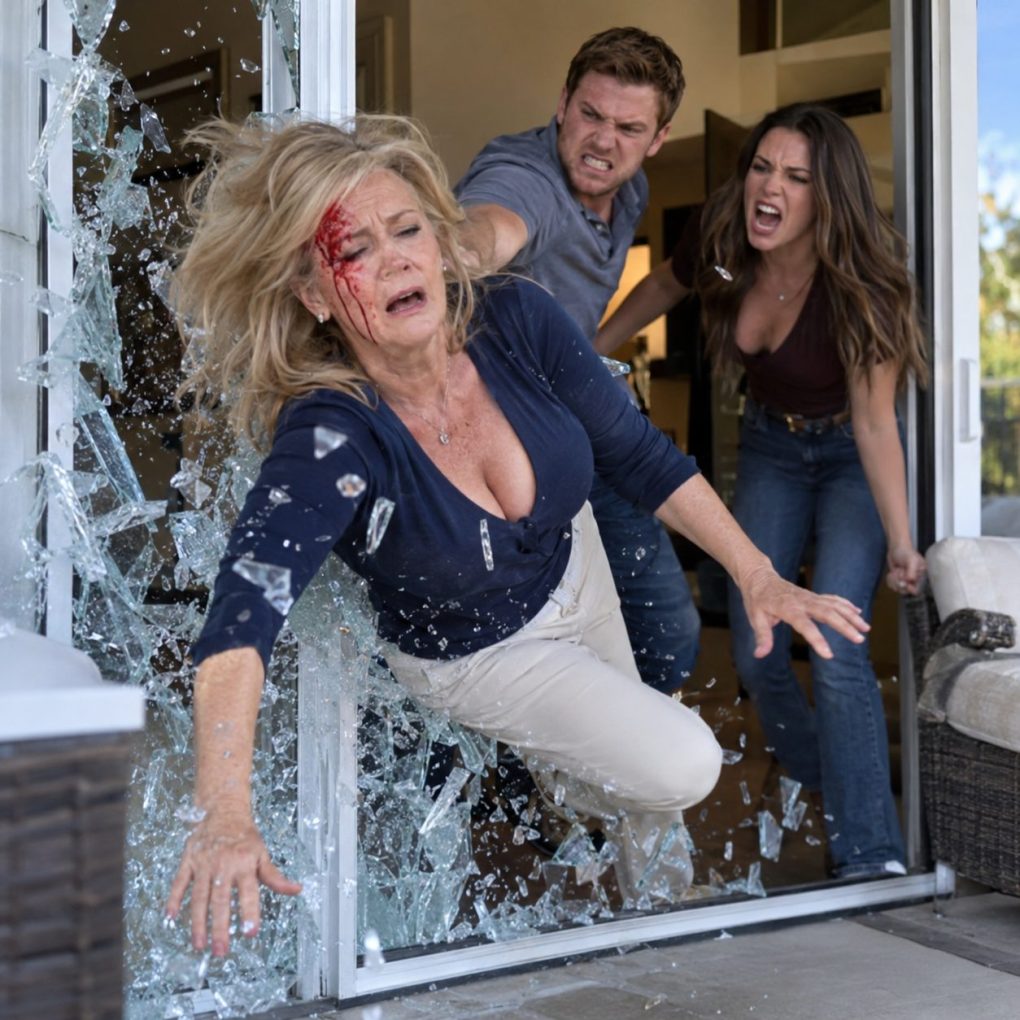
The weeks afterward were slow, practical, and painful. Investigators collected the original files and contacted the buyer. The buyer had never met me and had been told I approved the sale. Daniel had copied my signature from an old permission slip for Emma’s school. His email account contained the altered medical letter. The camera showed both shoves, my fall, and his foot pinning my hand. There was no need to ask a nine-year-old to prove what adults had done.
The trustee began the required process to end their occupancy. They were not thrown onto the street overnight; notices were served, attorneys responded, and deadlines passed. Eventually they surrendered the keys under a written agreement. The house was sold later through the proper channels, and the proceeds stayed in the trust. I moved into a small place near Beth and Emma, with an ordinary front door and a porch where my granddaughter could leave her sneakers.
Months later, Daniel and Melissa entered guilty pleas to charges arising from the assault and forged documents. Their sentences differed according to their roles and records, but both faced court supervision, restitution, and restrictions on contacting me. Emma’s living arrangements were handled separately. Beth became her guardian with court approval. I paid for tutoring and counseling through permitted trust distributions. Money could make her days more secure. It could not erase what she had heard through that broken doorway.
Daniel eventually sent a letter through Rachel. For once, he did not ask about the house or the trust. He wrote, “I knew you hadn’t fallen. I said it anyway.” I read that sentence several times. It was the first honest thing he had given me since that night. I kept the letter, but I did not invite him over. An admission mattered. So did the months of work still ahead of him, and my right to decide whether I ever wanted contact again.
On my next birthday, Emma brought a cake she had decorated with Beth. The frosting leaned to one side. She stood in my kitchen, holding the plate with both hands, and asked where I wanted it. “Right here, sweetheart.” She set it down, then hugged me. No documents waited beside it. Nobody wanted my signature. We ate cake from mismatched plates, and I laughed without checking the doorway. I had protected twenty-one million dollars. What I finally got back was a home where I could say no and still be safe.

