A word that would unravel every lie, every secret, and every bit of control they thought they had over me. To understand why that one word mattered so much, you have to understand my childhood. It wasn’t a nightmare in the way you see in movies.There were no monsters under the bed. The monsters sat right at the dinner table with me. They just smiled at my brother.
My brother Luke was the golden boy. He was 2 years older, and from the moment he was born, he could do no wrong. He was the son, and I was the little planet that quietly orbited him, cold and unnoticed.
My parents weren’t cruel in a loud way. Theirs was a quiet, steady cruelty of indifference. I was an afterthought, a piece of furniture in the house they built for their perfect son.
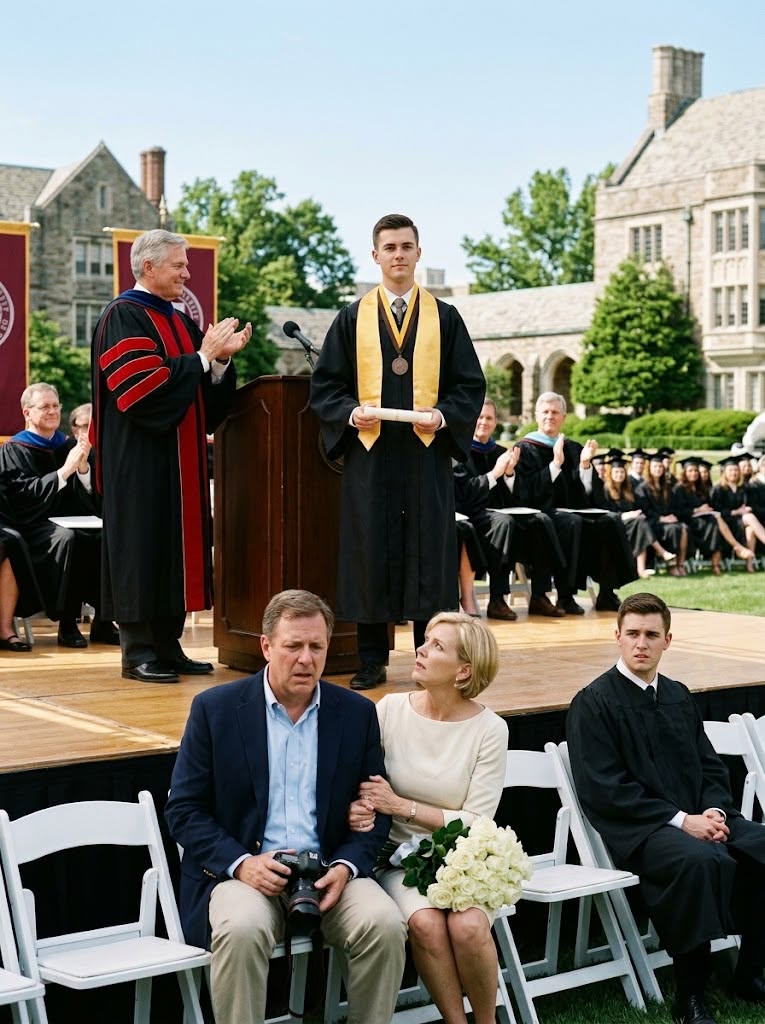
I remember our birthdays. We were both born in June, just a week apart, so we always had to share a party. When I was 8, I wanted a Barbie Dreamhouse more than anything in the world.
I circled it in the toy catalog. I left hints. I prayed for it.
Luke wanted a new BMX bike. On the day of our party, all our relatives gathered in the backyard. There were two big boxes wrapped in shiny paper.
My dad wheeled out the bike first.
“For the champ,” he boomed, and everyone cheered as Luke hopped on, his face glowing.
He was royalty. Then my mom handed me my box. It was heavy, but not dreamhouse heavy.
I tore it open. Inside was a complete hardback set of the Encyclopedia Britannica.
“For your schoolwork,” my mom said, smiling a thin, polite smile. “It’s important to be smart.”
I looked at the boring leatherbound books and then at Luke doing wheelies on the lawn. And I understood.
He got joy. I got responsibility. He was celebrated for being him.
I was told to be better. Even the cake, a big sheet cake from the grocery store, said Happy Birthday, Luke in big blue letters, with a tiny and Hannah squeezed in at the bottom, almost falling off the edge.
This was the pattern for everything. When Luke got a B+ in algebra, my dad took him out for steak to celebrate his hard work.
When I brought home a report card with straight A’s, my dad glanced at it and said, “Well, don’t get a big head. School is easy for girls.”
He handed it back to me without another word and went back to watching TV. I would stand there, the paper feeling worthless in my hand, my heart sinking just a little bit more.
I learned early on that my achievements were not currency in this house. Only Luke’s mattered.
Our home was a museum of his accomplishments. The mantelpiece was crowded with his football trophies, his swimming ribbons, his debate team plaques. My things were kept in my room.
I won a statewide poetry competition in 10th grade. I was so proud. I came home with a small trophy and a certificate.
“That’s nice, dear,” my mom said, her eyes already scanning the mail. “Find a place for it in your room.”
There was no space for me on the mantle. There was no space for me in their world.
The emotional neglect was constant, like a low hum in the background of my life. My dad would spend hours in the yard with Luke, teaching him how to throw a perfect spiral. He never once asked me to join.
He never offered to help me with my softball pitch, even though I was on the school team. When I asked him for help with my science project, he sighed and said, “Hannah, I’m busy. Go ask your mother.”
My mother, in turn, would say, “Don’t bother your father. He had a long day. Just figure it out yourself.”
Figuring it out myself became the theme of my life. I learned to be quiet. I learned to be invisible.
I did my homework. I did my chores. I stayed out of the way.
I thought that if I was perfect enough, if I caused no trouble at all, they would eventually have to see me. They would run out of reasons to praise Luke and would finally turn to me.
So, I tried harder. I cleaned the kitchen without being asked. I got a part-time job and bought my own clothes so I wouldn’t be a financial burden.
I never, ever talked back. It made no difference. They didn’t want a perfect daughter.
They just didn’t really want a daughter at all.
One of the most painful memories was from when I was 16. I had a terrible case of the flu. I was shivering with a high fever, aching all over.
I called for my mom from my bed. She came to the door, stood in the doorway, and said, “It’s just the flu, Hannah. Take some Tylenol. I have to take Luke to his football practice.”
She didn’t come in. She didn’t feel my forehead. She didn’t bring me a glass of water.
She just closed the door and left. I lay there for hours, feeling completely and utterly alone.
I remember crying, not from the physical pain, but from the chilling realization that if I were truly in trouble, no one would come for me. I was not a priority.
I was an inconvenience.
Luke wasn’t mean to me. That was the tricky part. He wasn’t a bully.
He was just as indifferent as they were. He lived in the bubble of their praise and never looked outside of it. He took it all for granted.
The new cars, the expensive trips, the constant attention. He didn’t see me sitting in the shadows because he never thought to look.
Why would he? He was the son.
As I got older, I started to build walls around my heart. I stopped showing them my report cards. I stopped telling them about my friends or my small victories.
What was the point? Sharing my life with them was like throwing stones into a deep, dark well. There was no splash, no echo, just silence.
The silence taught me not to expect anything. It taught me that their love was a finite resource, and it had all been given to Luke.
There was none left for me. That was the simple, heartbreaking truth of my childhood.
I grew up in a house full of people, but I was always, always alone.
Leaving for college was like taking my first full breath of air after a lifetime of being underwater. For the first time, I wasn’t Luke’s little sister. I was just Hannah.
I made friends who saw me, who listened to what I had to say, who celebrated my successes. I started to build a life, a real one, on my own terms.
A small hopeful part of me thought that maybe the distance would change things with my family. Maybe they would miss me. Maybe they would finally see the empty space I left behind.
I was wrong. The indifference just got easier for them.
I was the one who always made the effort. I called every Sunday, a ritual I stuck to with pathetic devotion.
The conversations were always the same. I’d ask my mom how she was doing.
“Oh, you know, same old,” she’d say, her voice distant, the sound of the television always louder than her words.
I’d ask about Dad.
“He’s in the garage,” she’d reply.
She never offered to go get him. Then she’d spend 10 minutes giving me a detailed, glowing report of Luke’s life.
Luke got a promotion. Luke bought a new car. Luke was dating a wonderful girl from a good family.
“What about you, Hannah? How’s school?” she would finally ask, as if remembering a chore she’d forgotten.
I’d start to tell her about a class I loved or a project I was proud of. And I could hear her losing interest.
“Mhm. Oh, that’s nice, dear. Well, your brother is coming over for dinner, so I have to go start the roast.”
The call would end every single week. I was a box to be checked.
Despite the emptiness of those calls, I kept trying. I sent thoughtful gifts for birthdays and anniversaries. I sent a beautiful bouquet for my mom on Mother’s Day.
I got a text. Thanks.
I sent my dad a rare signed book by his favorite author for his birthday. I never heard if he even received it.
For Luke, I sent a gift card to his favorite restaurant. He used it to take his girlfriend out, and I only knew because she posted a picture on Instagram thanking him for the wonderful dinner.
That was how I found out about most things, social media. It was a window into the family life I wasn’t a part of.
The exclusions started small, a cousin’s engagement party. I saw pictures of my parents and Luke all dressed up, smiling with the happy couple. When I called my mom to ask about it, her voice was full of fake surprise.
“Oh, honey, I’m so sorry. It was also last minute, and we just assumed you’d be too busy with your exams to make the drive.”
I hadn’t had exams for a month. But I didn’t call her on the lie.
I just said, “Oh, okay,” and swallowed the hurt.
Then the betrayals got bigger.
The summer after my junior year, I found out they went on a family vacation to Hawaii. A full 10-day trip. I found out because my aunt, my mom’s sister, posted an album on Facebook titled Aloha Collins Family Fun.
There they were. My mom, my dad, Luke, and his girlfriend, all wearing leis, smiling on a beach at sunset.
There were pictures of them at a luau, on a boat tour, hiking to a waterfall. The caption read, “So wonderful to have the whole family together.”
The whole family.I stared at that picture for a long time. My fingers traced the screen over their smiling faces.
I wasn’t just forgotten. I was erased.
I felt a cold, sick feeling in my stomach. I had spent that summer working two jobs to save money for my final year of school, eating ramen noodles in my tiny dorm room, feeling lonely and isolated.
And they were in paradise without a single thought for me. This time I had to say something.
I called my mom, my voice shaking.
“I saw the pictures from Hawaii,” I said, trying to keep my tone even. “It looked beautiful.”
There was a long pause on the other end of the line.
“Oh,” she said, her voice suddenly stiff. “Yes, it was a nice trip. Luke’s girlfriend, Tiffany. Her parents have a time share there, and they invited us all.”
“They invited you all?” I asked, the words feeling like glass in my mouth. “Why didn’t anyone tell me?”
Her sigh was heavy, impatient.
“Hannah, don’t be so dramatic. It was a trip for couples. Tiffany’s parents were there, and we were there, and Luke and Tiffany were there. You would have been the odd one out. You would have felt awkward.”
“I’m not a child,” I said, my voice rising despite my efforts to control it. “I’m your daughter. I think I could handle not having a date. I just… I would have liked to have been asked.”
“Well, it wasn’t my decision,” she said sharply, her tone defensive. “It was Tiffany’s family’s invitation. It would have been rude to ask to bring an extra person. You’re overreacting. It wasn’t a big deal.”
It wasn’t a big deal.
Her words hung in the air between us. My complete exclusion from my own family was not a big deal.
I didn’t have the energy to fight. I just said goodbye and hung up the phone.
I sat in my room and cried until I had no tears left. That was the day I stopped hoping. Hope was a dangerous, stupid thing.
It was an open door for more pain. I decided to close it.
After I graduated, I moved to a city a few hours away for a job. I didn’t stop contacting them completely. That felt too much like a final defeat.
But I pulled back. I called once a month instead of once a week. I sent generic cards instead of thoughtful gifts.
I was learning to match their energy. But even with my new lower expectations, they still found ways to hurt me.
There was the big family reunion at my grandparents’ house that I only heard about from a cousin afterward.
“We all missed you, Hannah,” she said cheerfully over the phone. “Why didn’t you come?”
The excuse this time, my mom said she sent me an email, but it must have gone to my spam folder. I checked.
There was no email.
Every exclusion was a fresh cut. I was living with a thousand paper cuts, and I was starting to bleed out.
I built a good life for myself. I had a job I was good at, a nice apartment, a close circle of friends who had become my real family. But the wound of my own family’s rejection never quite healed.
It was a constant dull ache in my chest. I accepted that I would never be their priority. I accepted that Luke would always come first.
But I still thought, naively, that I was at least on the list.
I thought I was still technically family.
This past year leading up to that Christmas, the silence was different. It was heavier, more absolute. I hadn’t heard from any of them since a brief awkward call on Thanksgiving.
It felt like the final thread connecting us was about to snap.
The holiday season is supposed to be about warmth and togetherness. For me, it had always been a season of anxiety. It was a time for forced smiles and feeling like a ghost at my own family’s table.
But this year, there wasn’t even an invitation to be a ghost.
December arrived and my phone remained silent. In previous years, there would have been a half-hearted call from my mom in the first week.
“So, what are your plans for Christmas, Hannah? We’re having dinner on Christmas Eve if you want to come.”
It was always framed as an option, never a warm invitation, but it was something. This year, there was nothing.
The days ticked by. My friends asked me what I was doing for the holidays.
“Oh, I’ll probably drive down to my parents’ place,” I’d say, the lie tasting like ash in my mouth.
I couldn’t bring myself to admit that my own family didn’t want me. It felt too shameful, like a personal failure.
I bought them gifts. I spent a whole Saturday at the mall, carefully picking out a cashmere scarf for my mom, a new set of grilling tools for my dad, and a leatherbound journal for Luke.
It was a stupid hopeful act. I wrapped them beautifully and put them in a box ready to be mailed, but I couldn’t bring myself to send them.
Who was I sending them to? What was the point?
The box sat by my front door, a monument to my own denial.
Christmas Eve arrived. My apartment building was filled with the sounds of other people’s joy. I could hear laughter from next door, the faint sound of Christmas carols from the apartment below.
The air in the hallway smelled like cinnamon and pine. My apartment smelled like nothing.
I spent the evening watching old movies, a bowl of popcorn in my lap. I scrolled through social media and immediately regretted it.
Luke’s girlfriend, Tiffany, had posted a photo. It was a picture of my family’s dining room table, perfectly set for a feast.
My parents were there, Luke and Tiffany were there, and my aunt and uncle were there. Everyone was raising a glass, their faces bright with holiday cheer.
The caption read, “Christmas Eve with the best family a girl could ask for. Love.”
I stared at the empty chair at the end of the table. The one that should have been mine.
They hadn’t forgotten. They had simply replaced me.
I turned off my phone. I couldn’t look anymore. I crawled into bed, the sound of their laughter still echoing in my head.
I told myself it didn’t matter. I told myself I was better off alone than with people who made me feel alone.
But it was a lie. It hurt. It hurt so much it felt like a physical ache deep in my bones.
Christmas morning dawned, gray and cold. I woke up feeling hollowed out.
There was no excitement, no magic. It was just another lonely day.
I made myself a cup of coffee and sat on my couch, wrapped in a blanket. I stared out the window at the empty street.
For a few hours, I managed to keep the sadness at bay. I even allowed a tiny, ridiculous sliver of hope to creep back in.
Maybe they would call. Maybe my mom would wake up feeling guilty and reach out. Maybe it was all a big misunderstanding.
Around 11:00 a.m., my phone buzzed on the coffee table. My heart did a stupid little leap.
I reached for it, my hand trembling slightly. It was a message from my dad.
My dad never texted me first. This had to be it.
This had to be the apology. I unlocked the screen.
His name was at the top, and underneath it was the message. It wasn’t an apology. It wasn’t an explanation.
It wasn’t even a Merry Christmas. It was six words.
Christmas is better without you.
I read the words once, then twice, then a third time. The letters seemed to blur together. The air left my lungs in a single silent gasp.
It was so much worse than silence. Silence I could explain away. I could tell myself they were busy, that they forgot.
But this… this was intentional. This was a statement.
This was a deliberate act of cruelty sent on a Christmas morning, designed to inflict the maximum amount of pain. And it worked.
My hands started to shake. The coffee cup rattled in its saucer. I put it down before I dropped it.
The feeling in my chest wasn’t sadness anymore. It was something colder, sharper.
It was the feeling of something shattering into a million pieces. For 28 years, I had been trying. I had been swallowing my pain, making excuses for them, quietly begging for their love.
I had played the part of the forgotten daughter, hoping that one day they would remember me. In that single moment reading that text, I finally understood.
They hadn’t forgotten me. They knew exactly who I was, and they had made their decision.
They didn’t want me. The story I had been telling myself, that I wasn’t good enough, that I needed to try harder, was wrong.
This wasn’t about me. This was about them, about their casual cruelty, about their inability to love the daughter they had.
Something inside me broke. But it wasn’t my spirit. It was the chain, the long, heavy chain of hope and obligation and childish love that had bound me to them for my entire life.
With those six words, my father had not broken me. He had set me free.
The pain was immense, but underneath it, for the first time, there was a flicker of something else. A cold, hard resolve.
I was done. I was done begging. I was done being their victim.
I sat on my couch for what felt like a long time, just staring at the message on my phone. The initial wave of shock and pain washed over me, and when it receded, it left behind an unnerving calm.
The tears that had burned my eyes earlier were gone. My hands had stopped shaking. The frantic, desperate part of my brain that always scrambled to find an excuse for their behavior was finally, blessedly silent.
There was no excuse for this. This was not a misunderstanding. It was a declaration.
My dad expected a certain reaction from me. He knew the Hannah I used to be.
That Hannah would have dissolved into tears. She would have called her mom hysterical, asking what she did wrong. She would have sent a long, rambling text back to him, full of pain and confusion, pleading for an answer.
He sent that text to wound me, yes, but also to confirm his power over me. He expected me to crumble. He expected me to beg.
I looked around my quiet apartment. It was mine. I had paid for it with my own money.
The pictures on the wall were of my friends, people who chose to be in my life, people who loved me without condition. The life I had built, I had built it myself, not just without their help, but in spite of their neglect.
I had survived them. I was stronger than they ever knew.
And then a memory surfaced. It was faint at first, like something from a dream.
I was about 12 years old, sitting at the top of the stairs, listening to my parents argue in the kitchen below. They were talking about money, something they did often.
But this time, my name came up.
“We can’t touch that,” my mom had said in a hushed, urgent voice. “That’s Hannah’s. Your father was very clear about that in the will.”
“He was an old fool,” my dad had snapped back. “What does a girl like Hannah need with that kind of money? Luke is the one with the future, with a family to build. It’s a waste sitting there. We’re his parents. We know what’s best.”
The conversation had faded as they moved into another room. At the time, I didn’t understand it.
Hannah’s money.
I assumed they were talking about a small savings bond my grandfather had bought me. It didn’t seem important.
My grandfather, my dad’s dad, had passed away when I was 10. He was a kind, quiet man who always had a Werther’s Original in his pocket for me.
He was the only one who ever seemed to really see me. He’d look at me with his clear blue eyes and say, “You’ve got a good head on your shoulders, Hannah girl. Don’t let anyone tell you otherwise.”
Now, sitting on my couch on Christmas morning, that memory came back with stunning clarity. It wasn’t a small savings bond.
My grandfather was a wealthy man. He had built a successful construction company from the ground up, and he had been very, very clear in his will.
I stood up, my movement slow and deliberate. I went to the closet in my spare bedroom, where I kept a small fireproof lock box.
Inside were my important documents, my birth certificate, my passport, and a thick manila envelope my grandfather’s lawyer had given me after he died. My parents had dismissed it at the time.
“Just some legal nonsense, Hannah,” my dad had said, waving a hand. “I’ll handle it.”
I had never opened it. I trusted him.
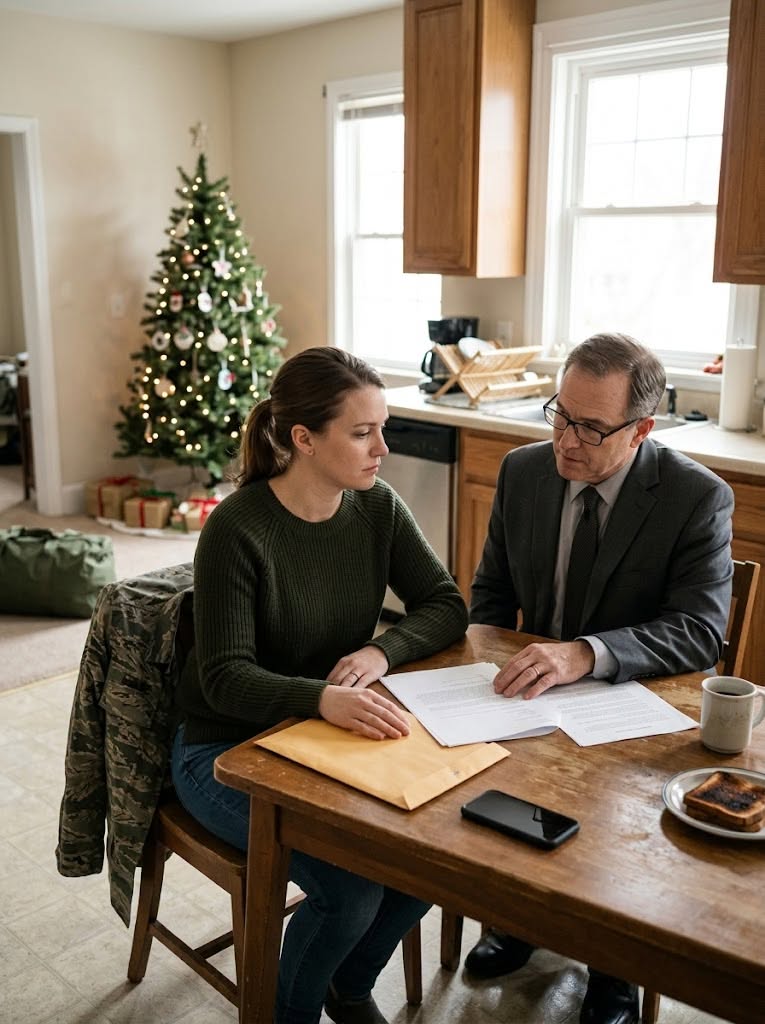
I took the box to my kitchen table, my heart beating a slow, steady rhythm. I opened the lock and pulled out the envelope.
The paper was old and soft. My name was written on the front in my grandfather’s shaky but elegant handwriting.
I broke the seal. Inside was a copy of his last will and testament, along with a detailed breakdown of a trust he had established for his grandchildren, for Luke and for me.
The language was dense and full of legal terms, but a few phrases leaped off the page.
To be divided into equal shares, one from my grandson Luke Collins and one from my granddaughter Hannah Collins.
The principal of my granddaughter’s share shall be held in trust and managed by her legal guardian, my son, Robert Collins, for her benefit.
The appointed guardian holds a fiduciary duty to act solely in the beneficiary’s best interest, preserving the principal until she reaches the age of 30 years, at which time full control shall be transferred to her.
I read it again.
Equal shares. Fiduciary duty. Full control.
At age 30. I would be 30 in less than two years.
For years, my father had been the legal manager of my inheritance, an inheritance that, according to the documents, was substantial, far more than I had ever imagined, and he had a legally binding duty to protect it for me.
A cold fury settled in my stomach. All the pieces clicked into place.
The new cars for Luke, the expensive vacations I wasn’t invited on, their comfortable lifestyle, which always seemed a little too grand for my dad’s salary.
They hadn’t just been excluding me emotionally. They had been stealing from me financially.
They had been using Hannah’s money to fund the perfect life for their perfect son, assuming the quiet, forgotten daughter would never be smart enough or brave enough to find out. They thought I was too broken, too desperate for their love to ever question them.
I looked back at my phone, at my dad’s cruel message still glowing on the screen.
Christmas is better without you.
He wasn’t just pushing me away. He was discarding me.
He thought he was done with me. He thought I was worthless.
He had no idea how valuable I actually was.
My fingers hovered over the keyboard. I thought about all the things I could say.
I could list all the ways they had hurt me. I could accuse them of stealing. I could scream at them through the phone.
But I remembered what my grandfather used to say. The loudest person in the room is usually the weakest.
I didn’t need to be loud. My power wasn’t in screaming. It was in the truth.
It was in the documents sitting on my kitchen table. They had forgotten who I was and whose granddaughter I was.
So, I didn’t plead. I didn’t ask why. I didn’t show them my pain.
I typed one single word. A word that held all my anger, all my resolution, and all my newfound power. A word that told them the game was over.
Lawyer.
I hit send. Then I leaned back in my chair.
The silence in my apartment was no longer lonely. It was powerful. It was the calm before a storm I had just created.
And for the first time in my life, I was the one holding the lightning.
After hitting send on that one-word text, I didn’t move. I just sat at my kitchen table. The legal document spread out before me like a map to a new world.
The secret they had forgotten wasn’t just about the money. It was about my grandfather.
They had forgotten the kind of man he was, and in doing so, they had forgotten the kind of woman he had raised me to be, even in his absence.
My father saw my grandfather as an old-fashioned man, a relic from a time when a handshake meant more than a contract. He was wrong. My grandfather was sharp, methodical, and he did not suffer fools, especially when it came to his family’s future.
The trust he built was a fortress, and the documents in front of me were the blueprints. As I read through them again, this time more slowly, I realized he had anticipated my father’s greed.
He had anticipated Luke’s entitlement. He had built in protections for me, clauses and conditions that my father had either ignored or, in his arrogance, assumed I would never be smart enough to understand.
A section titled discretionary distributions laid out the strict rules under which my father as trustee could access the funds for my benefit before I turned 30. It was for major life events, college tuition, a down payment on a first home, significant medical emergencies, or the seed money for a viable business.
It was not a slush fund. It was not an allowance for his favored child.
My mind started to work like an accountant’s ledger. I pulled out a notebook and a pen, my movements calm and precise. I drew a line down the middle of a page.
On one side, I wrote approved expenses. On the other, known withdrawals.
Under approved expenses, I wrote college tuition. My grandfather’s trust had paid for my entire education.
My parents had framed it as a gift from them, a burden they were shouldering.
“You have no idea how much we’re sacrificing for you to go to that school, Hannah,” my mom would say over the phone, her voice heavy with martyrdom.
It was a lie. It had cost them nothing. They were taking credit for my grandfather’s generosity.
The realization was sickening. Then I moved to the other column, known withdrawals.
The list grew quickly. I thought back to the year after Luke graduated. He got a brand new Ford Mustang, a deep glossy black.
He claimed he got an amazing deal through a friend. I remember my dad puffing out his chest at family gathering, saying, “The boy’s a natural negotiator, a real chip off the old block.”
I Googled the market price for that car that year. It was nearly $40,000. Luke was working an entry-level job.
There was no way he could have afforded it. I wrote down Luke’s Mustang, approximately $40,000.
Then there was the kitchen renovation. Two years ago, my mom became obsessed with the home makeover show.
Suddenly, their perfectly fine kitchen wasn’t good enough. She needed granite countertops, a farmhouse sink, and a six-burner gas stove. My dad complained about the cost for weeks.
But then, miraculously, the money appeared. The renovations went ahead. Tiffany posted a dozen pictures of my mom posing in her new kitchen, beaming.
I added it to the list. Kitchen remodel, approximately $50,000.
And Hawaii, the couple’s trip I was excluded from. I did a quick search for flights to Maui first class during peak season.
I estimated the cost of the hotel or resort fees, the fancy dinners I saw in their photos, the boat trip, the helicopter tour.
It was a conservative estimate, but I wrote it down. Hawaii vacation, approximately $25,000.
The list went on. There were the smaller things, the constant steady bleeding of my inheritance, Luke’s series of failed startups, a T-shirt company, a dropshipping business, a podcast that he always seemed to have seed money for, the expensive watches my dad had started wearing, the designer handbags my mom carried.
Each one was a theft. Each one was a betrayal.
Not just of me, but of my grandfather’s final wishes. They had been living a lie.
And I was the one funding it.
They weren’t just neglecting me. They were actively profiting from my existence while simultaneously telling me I was worthless.
The cruelty of it was breathtaking. The sheer audacity.
They had looked me in the eye at holidays, handed me a token $20 gift, and told me to be grateful, all while they were systematically draining the future my grandfather had secured for me.
The document that sealed their fate was the one that detailed the trustee’s legal obligations, fiduciary duty. I typed the term into my laptop. The definition that came back was simple and damning.
A fiduciary duty is the highest standard of care in law. It means the person entrusted with your money must act with undivided loyalty solely in your best interest.
They cannot use their position for personal profit. They cannot mismanage the assets. A breach of this duty was a serious offense with severe legal consequences.
My father had not just breached his duty, he had shattered it. He had treated my trust fund like his personal piggy bank.
For years, I had felt like I was going crazy. I felt their dismissal of me was a reflection of my own inadequacy.
I had internalized their narrative that I was too sensitive, too dramatic, too difficult. But sitting there with the evidence in black and white, I saw the truth.
Their neglect wasn’t a passive act born of favoritism. It was an active strategy.
They needed me to be small. They needed me to be quiet and broken and desperate for their approval.
Because a daughter who felt worthless would never demand to see the bank statements. A daughter who felt like a burden would never question where the money was coming from.
My father hadn’t just left me money. He had left me the truth.
And my family, in their greed, had forgotten one crucial detail. I was my grandfather’s granddaughter.
I had his quiet patience, his methodical mind, and his unshakable sense of right and wrong. They had assumed I was my mother’s daughter, someone who would quietly accept a lesser role.
They had forgotten the steel in my spine. And that was the secret, the real secret that was about to cost them everything.
The hours after I sent that text were the strangest of my life. I expected an immediate explosive response, a torrent of angry calls, a barrage of demanding text.
But for a long time, there was only silence. It was a different kind of silence than the one I was used to.
It wasn’t the empty, neglectful silence of being forgotten. This was a heavy, charged silence, buzzing with unspoken panic.
I could almost feel it through the phone, the shock, the confusion, and the dawning, sickening realization on the other end.
The old Hannah would have been a wreck. She would have been pacing the floor, chewing her nails, her stomach in knots.
She would have been consumed with regret and fear, already composing an apology in her head. But the old Hannah was gone.
I stood up from the kitchen table, folded my grandfather’s documents neatly, and placed them back in the envelope.
I went to the living room and turned on some music. I made myself a sandwich for lunch. I washed my plate and put it away.
With each normal, mundane act, I felt my power growing. I wasn’t waiting for their world to fall apart. I was simply continuing with mine.
My calm was my new weapon.
Around 2:00 p.m., my phone buzzed. It was a text from my mother.
That’s a horrible thing to say on Christmas, Hannah. Your father is very confused. Please call me.
I read the message and a small, cold smile touched my lips.
Confused.
That was the word she chose. Not hurt, not angry, confused.
It was the first move in a familiar game of gaslighting. She was positioning me as the aggressor, the one who was being cruel and confusing.
I looked at the message, took a deep breath, and set my phone face down on the counter. I did not reply.
20 minutes later, another buzz. This time it was Luke.
Seriously, lawyer? What is wrong with you? Dad sent one stupid text and now you’re trying to ruin the whole family. You are always so dramatic.
Always so dramatic.
Their favorite line. It was the phrase they used to dismiss any legitimate emotion I ever had.
It was the weapon they used to make me doubt my own sanity. But it didn’t work anymore.
The words were hollow. I knew I wasn’t being dramatic.
I was being precise. I left his message unanswered as well.
My silence was a brick wall they had never encountered before. They were used to me being a sponge, absorbing their insults and their neglect, getting heavier and sadder, but never fighting back.
Now, their words hit the wall and bounced right back at them, useless. They didn’t know how to handle it.
The calls started an hour later. First, my mom.
Her name flashed on the screen. I watched the phone vibrate, the sound jarring in the quiet room. I let it go to voicemail.
A minute later, a notification popped up. A new message.
I waited a few minutes before listening. Her voice was strained. A high-pitched performance of a concerned mother.
Hannah, honey, it’s Mom. Please, please call me. I… I don’t know what you meant by that message, but it has your father terribly upset. You know how he gets. It was just a stupid joke. A terrible, terrible joke. He didn’t mean it. Please, please don’t do this. It’s Christmas.
A joke.
I thought about the word. A joke is meant to be funny. A joke is not a dagger you slide into your own daughter’s heart on Christmas morning.
Her voice wasn’t filled with remorse for my pain. It was filled with fear of the consequences.
Next, Luke called. I let his call go to voicemail, too.
His message was short and sharp.
Hannah, pick up the damn phone. I swear you’re being a spoiled brat. You have no idea what’s going on. Call Mom and Dad and apologize for upsetting them.
Apologize for upsetting them.
The entitlement was staggering. He lived in a world where my father’s cruelty was just a stupid text.
But my one-word response was a family destroying catastrophe. He saw me as the problem because for his entire life, I had been the designated problem.
Finally, my dad called. I stared at his name, my heart giving a single hard thump.
This was the man whose approval I had craved my entire life. The man who had just told me that the world was better without me in it.
I let the call ring and ring and ring until it finally fell silent. His voicemail was clipped, authoritative, the voice of a man who was used to being in charge and was quickly losing control.
Hannah, this is your father. This has gone on long enough. You will call me back immediately. We need to talk about this… this misunderstanding.
Misunderstanding, joke, dramatic.
They were cycling through their entire playbook, and none of it was working.
I spent the rest of the afternoon, not in fear, but in preparation. I opened my laptop and started researching. I looked up the best trust and estate lawyers in my city.
I read reviews. I made a list of three top firms, noting their phone numbers and office hours. The first business day after the holiday, I would be ready.
My silence wasn’t passive. It was the quiet, focused work of a general preparing for battle.
I had spent my whole life talking, trying to explain my feelings, trying to make them understand. I had used thousands of words, and they had never listened.
Now I had used one word, followed by silence, and I had their complete, undivided attention.
The power dynamic had shifted. They were the ones who were confused, who were desperate, who were waiting by the phone.
I was the one who was calm, who was in control, who knew exactly what was coming next. Silence had become my sanctuary, my strategy, and my greatest source of strength.
The day after Christmas should have been quiet. It should have been a day for leftovers and relaxing.
For my family, it was a day of escalating panic. Their attempts to break my silence became more frantic, more desperate.
They were like shipwreck survivors thrashing in the water, and I was on a distant shore, watching them calmly.
The texts started early, a long, rambling paragraph from my mom about the importance of family and forgiveness, specifically my forgiveness of them. She wrote about how my grandfather would have wanted us to stick together.
The irony was so thick, I could have choked on it. My grandfather would have wanted them to honor his will, not plunder it.
Luke sent a picture of my mom, claiming she had been crying all night because of me.
“Look what you’re doing to her,” the text read.
It was a classic manipulation, an attempt to weaponize my own empathy against me. The old Hannah would have been shattered by that photo.
The new Hannah saw it for what it was, a pathetic, staged plea. I didn’t reply to any of it.
I made my coffee, went for a run, and started taking down my Christmas decorations. I was cleansing my space, getting ready for a new year, a new life.
The real turning point came just after noon. My phone rang with an unknown number.
Usually, I would ignore it, but a feeling in my gut told me to answer. I took a breath and accepted the call.
“Am I speaking with Ms. Hannah Collins?” a man’s voice asked.
It was smooth, professional, and devoid of emotion.
“This is she,” I said, my voice steady.
“Miss Collins, my name is Arthur Davies. I am an attorney with the firm Davies Gable and Finch. I am representing your father, Robert Collins. He has asked me to reach out to you to arrange a meeting or a discussion about certain financial matters he believes there may be a misunderstanding about.”
I closed my eyes. A wave of pure, unadulterated victory washed over me.
It was real. I hadn’t imagined it.
My one-word text had sent them running straight to their lawyer. They weren’t just scared of my anger anymore. They were scared of my legal rights.The misunderstanding wasn’t about the text message. It was about the trust fund.
They had just shown their entire hand. This was the moment of truth.
I could have stumbled. I could have let my voice shake.
But I thought of my grandfather, of his quiet strength. I channeled him.
“Thank you for the call, Mr. Davies,” I said, my tone as cool and professional as his. “I appreciate you reaching out. I am currently in the process of retaining my own counsel. They will be in touch with you shortly to schedule a conversation.”
There was a brief, almost imperceptible pause on the other end of the line. I had responded in a way he hadn’t expected.
He had expected to speak to a hysterical, emotional daughter, not a calm, resolute woman who was already a step ahead.
“Very well,” he said, his tone slightly clipped. “We will await their call.”
“Have a good day, Mr. Davies.”
And I ended the call.
I leaned against my kitchen counter, the phone still in my hand. A laugh escaped my lips. It started as a small chuckle, but it grew until I was laughing out loud.
A sound of pure relief and vindication.
I didn’t have a lawyer yet, but I would.
And they knew it.
The fallout had finally landed where it was supposed to, right at their feet. For years, I had borne the emotional consequences of their actions.
I had carried the weight of their neglect, their favoritism, their cruelty. Now, for the first time, they were being forced to face the consequences themselves.
Later that evening, my dad sent one final text. The bluster was gone. The anger was gone.
It was just one sentence.
Hannah, please don’t do this.
It was the first time in my life I had ever heard him plead for anything. He wasn’t pleading for me or for our relationship.
He was pleading for himself. He was pleading for the comfortable life he had built with my money.
I read the text and I felt nothing. No pity, no anger, not even satisfaction. It was like reading a message from a stranger.
He had wanted a Christmas without me. He was about to find out what a life without my inheritance felt like.
I deleted the message and went back to my quiet, peaceful evening. The storm was no longer mine to weather.
The next morning, I was on the phone at 9:01 a.m. I called the first law firm on my list.
I was put through to a woman named Eleanor Vance. She specialized in trust and estate litigation. Her voice was sharp, intelligent, and empathetic.
I told her my story in a condensed, factual version. I told her about the trust, the fiduciary duty, and the text message that started it all.
She listened without interruption. When I was finished, there was a pause.
“Miss Collins,” she said, her voice firm. “From what you’ve told me, this is a gross and egregious violation of fiduciary duty. I’d like to see the documents as soon as possible.”
We met 2 days later. I walked into a high-rise office building, feeling a strange mix of nervousness and resolve.
Eleanor was in her 50s with a no-nonsense demeanor that I found incredibly comforting. I spread the documents from my grandfather on her large mahogany desk.
She read through them, her expression becoming grimmer with each page.
“He set this up like a fortress to protect you,” she said, looking up at me over her glasses. “And your father drove a bulldozer right through the front gate.”
For the next hour, she laid out the plan. My revenge would not be loud or dramatic. There would be no shouting matches or tearful confrontations.
My revenge would be quiet, methodical, and devastatingly effective. It would take the form of paperwork.
The first step was a formal letter from Eleanor to Mr. Davies demanding a full and complete accounting of the trust from the day my father took control of it.
Every penny in, every penny out, with receipts.
The second step was to file a petition with the probate court to immediately freeze all assets in the trust, preventing my father from withdrawing another dime.
The third step was to formally remove him as trustee for his breach of duty.
“They will fight,” Eleanor warned me. “They will try to claim the withdrawals were for your benefit. They will try to paint you as an ungrateful daughter.”
“I know,” I said. “But they don’t have the proof because it never happened. I have the proof.”
I slid my notebook across the desk, the one with the list of cars, vacations, and home renovations.
Eleanor smiled.
“Yes, you do.”
The legal process was slow, but with every step, I felt lighter. Eleanor’s first letter sent a shock wave through their camp.
Mr. Davies responded with a blustering letter of his own, but it was full of legal posturing and no substance.
The petition to freeze the assets was granted by a judge almost immediately. I imagined my father getting the news that his personal ATM was shut down.
The begging from my family started again, but this time it was different. It was a desperate pleading of cornered animals.
My mom left long, tearful voicemails about how they would lose their house, about how this would destroy their reputation. My brother sent me furious texts accusing me of being selfish and greedy.
It’s just money, Hannah, he wrote. It’s just money.
It was so easy for him to say. He was the one who had reaped all the benefits.
He didn’t understand that it was never just about the money. It was about the lies. It was about the decades of being told I was less than while they secretly used my inheritance to prove it.
I followed Eleanor’s advice and responded to none of it. My silence was my shield. The legal system was my sword.
The accounting, when it finally came, was even worse than I had imagined. It was a disaster of sloppy bookkeeping, blatant lies, and unjustifiable expenses.
They had spent hundreds of thousands of dollars on themselves. The case was open and shut.
They had no defense, and they knew it. Their lawyer called Eleanor with a settlement offer.
They would agree to have my father removed as trustee. They would agree to repay a portion of the money over time.
Eleanor’s response was swift.
No.
She countered with our terms. My father would be removed as trustee effective immediately.
A neutral corporate trustee, a bank, would be appointed to manage the fund until I turned 30, and they would have to repay a significant lump sum.
Not all of it, as that would have bankrupted them, but enough to be a serious, life-altering consequence. This would be achieved by forcing the sale of assets they had acquired.
Assets like a certain Ford Mustang and equity from a house with a very expensive kitchen.
They had two weeks to accept the terms, or we would proceed with a lawsuit that would make all of this public. They accepted the day before the deadline.
I went to Eleanor’s office to sign the final papers. As my pen moved across the page, I didn’t feel a rush of triumphant glee.
I felt a profound sense of peace. It was over.
The fight was done. My quiet revenge was complete.
I never had to raise my voice. I never had to confront them.
I simply presented the truth and let the consequences unfold.
They wanted a Christmas without me. Now, because of their greed, they would have to face a future with less.
That wasn’t my vengeance. That was poetic justice.
I spend my holidays differently now. This past Christmas, my apartment was filled with light and laughter.
I bought my own tree, a big beautiful fir, and decorated it with ornaments that meant something to me. I invited my friends, the family I had chosen, for a potluck dinner.
We ate, we drank, we exchanged small, thoughtful gifts. The air was warm with genuine affection and respect.
There was no tension, no hidden meanings, no competition for love. There was just joy.
I still have the text from my father saved on my phone. I look at it sometimes not to feel the pain, but to remember how far I’ve come.
That cruel message was meant to be the final word, the ultimate act of dismissal that would break me for good.
But he miscalculated. He didn’t break me. He freed me.
His cruelty was the catalyst that forced me to find my own strength, to uncover the truth, and to reclaim my life. In a strange, twisted way, his attempt to discard me was the greatest gift he ever gave me.
Sometimes revenge isn’t about shouting from the rooftops or plotting someone’s downfall. Sometimes the most powerful revenge is silence. It’s one word that changes the rules of the game.
It’s choosing to build your own beautiful life out of the rubble of the one that was denied to you. It’s choosing yourself.
And if you’ve ever been cut off, silenced, or made to feel invisible by the very people who were meant to love you, know this. You are not powerless.
Your voice matters, even if it’s just one word. If this story hit home, make sure to like, subscribe, and drop a comment about where you’re watching from.
More stories of betrayal, justice, and quiet triumph are coming.
If you came here from Facebook because Hannah’s story pulled you in, please go back to the Facebook post, hit Like, and comment exactly this phrase: Respect. That small action means more than it seems. It helps support the storyteller and gives the writer real motivation to keep bringing you more stories like this.