I was finishing paperwork in my office when my phone buzzed. I glanced down. Dad. I hadn’t spoken to him in almost 3 months.That wasn’t unusual. Our relationship had always been strained. Growing up, my younger brother Kevin was the center of my father’s universe. Kevin could do no wrong.
If Kevin got a C in school, Dad praised his effort. If I got an A, Dad asked why it wasn’t an A+. When Kevin wrecked a truck at 17, Dad called it a mistake. When I came home 15 minutes after curfew at 16, I was grounded for a month.
The favoritism wasn’t subtle. Everybody saw it. My mother saw it. Our neighbors saw it.
Even Kevin saw it. But nobody ever challenged my father, least of all me. By the time I turned 18, I had learned an important lesson. You can’t force someone to love you fairly.
So, I joined the Navy and built my own life. The distance helped, at least most of the time. I looked at the text message. Then, I opened it.
My stomach immediately tightened. The first line read, “I’m leaving the house, the cars, and everything to your brother.” I blinked. Then came the second message. Oh, and I already emptied the trust fund your mother left you.
Haha. I stared at the screen for several seconds. I couldn’t breathe. Not because of the house.
Not because of the cars. I honestly didn’t care about those things, but my mother’s trust fund. That got my attention. My mother had died 22 years earlier.
Breast cancer. She was only 47. I was 16. Kevin was 13.
The day before she passed away, she squeezed my hand in her hospital room. She looked weak, fragile, but her eyes were sharp. Clear, determined. Sarah, she whispered.
One day you’ll understand why I made certain arrangements. I didn’t know what she meant. Not then. Years later, after I joined the Navy, a lawyer contacted me.
That’s when I learned my mother had created a trust. Most of the details remained confidential. The attorney simply told me that everything was protected and that my mother had planned carefully. I trusted her, so I never worried about it until that text message.
I read it three times, then four. Finally, I replied with a single word. Okay, that was it. No argument, no threats, no anger, just okay.
A few minutes later, another text arrived. That’s all you have to say. I ignored it. Then another.
Your brother deserves it more. Ignored. Then another. You always thought you were better than us.
Ignored. Finally, silence. I slipped the phone into my pocket and went back to work. At 5:00, I drove home.
The entire way, memories kept surfacing. My father laughing with Kevin. My father teaching Kevin to drive. My father helping Kevin buy his first business.
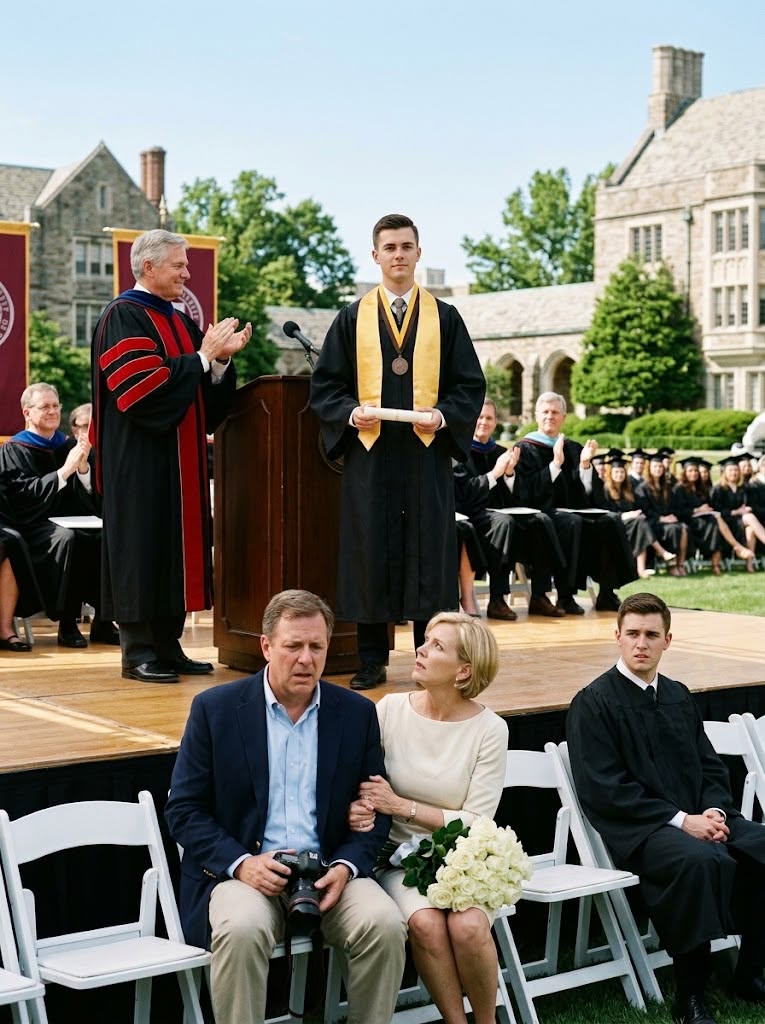
My father showing up for Kevin’s baseball games. I couldn’t remember him attending a single event for me. Not one. Even when I graduated from officer candidate school, my mother would have been there, but she was already gone.
That evening, I sat alone in my apartment. I opened a small fireproof box I kept in my closet. Inside were old documents, letters, legal papers, and a sealed envelope with my mother’s handwriting. I hadn’t looked at it in years.
My fingers trembled slightly as I opened it. Inside was a short note. Sarah, if you’re reading this, someone has probably violated the trust. Don’t panic.
Everything was designed to protect you. Trust the documents. Trust the attorney. And trust yourself.
Love always, Mom. I felt tears sting my eyes. Even after 22 years, I still missed her. I missed her wisdom, her warmth, her ability to see through people, especially my father.
Beneath the letter sat several legal documents. I reviewed them carefully. Then I noticed something, a clause, a very specific clause. I read it twice, then a third time, and suddenly everything made sense.
My father hadn’t stolen the trust fund. Not legally. What he had done was much worse. He had triggered protections he didn’t even know existed.
For the first time all day, I smiled. Not because I wanted revenge. Not because I wanted my father to suffer, but because my mother had anticipated this exact situation decades earlier. She knew him.
She knew what he was capable of, and she had prepared accordingly. That night, I sent a single email. The recipient was my mother’s attorney. One sentence.
Please call me regarding the Mitchell Trust. he replied 20 minutes later. First thing tomorrow morning, I slept peacefully. Meanwhile, several miles away, my father and Kevin were apparently celebrating.
They thought they had won. They thought the money was theirs. They thought I was powerless. They had no idea what was about to happen.
At exactly 5:47 a.m., my phone rang. Dad, I answered and immediately heard panic in his voice. Then came the words that opened this story. The bank and the police just called.
I looked out the window at the rising sun. A new day was beginning, and for the first time in 20 years, the truth was finally catching up with my father. At 7:00 that morning, I sat in my apartment with a fresh cup of coffee and waited for the call. My father’s frantic messages kept appearing on my phone.
Call me now. This is your doing. They froze my account. Kevin’s account, too.
For the first time in years, I ignored every message. Not out of spite, out of discipline. 20 years in the Navy had taught me something important. When people panic, the worst thing you can do is panic with them.
At precisely 7:15, my phone rang. The caller ID displayed a familiar name. Robert Hansen, my mother’s attorney. He had to be nearly 80 by now.
I answered immediately. Mr. Hansen. Sarah, he said warmly.
It’s been a long time. It has. There was a brief pause. Then his tone became serious.
I received your email. I figured you would, and I reviewed the trust documents before calling. I already knew what he was going to say. Still hearing it from him felt different.
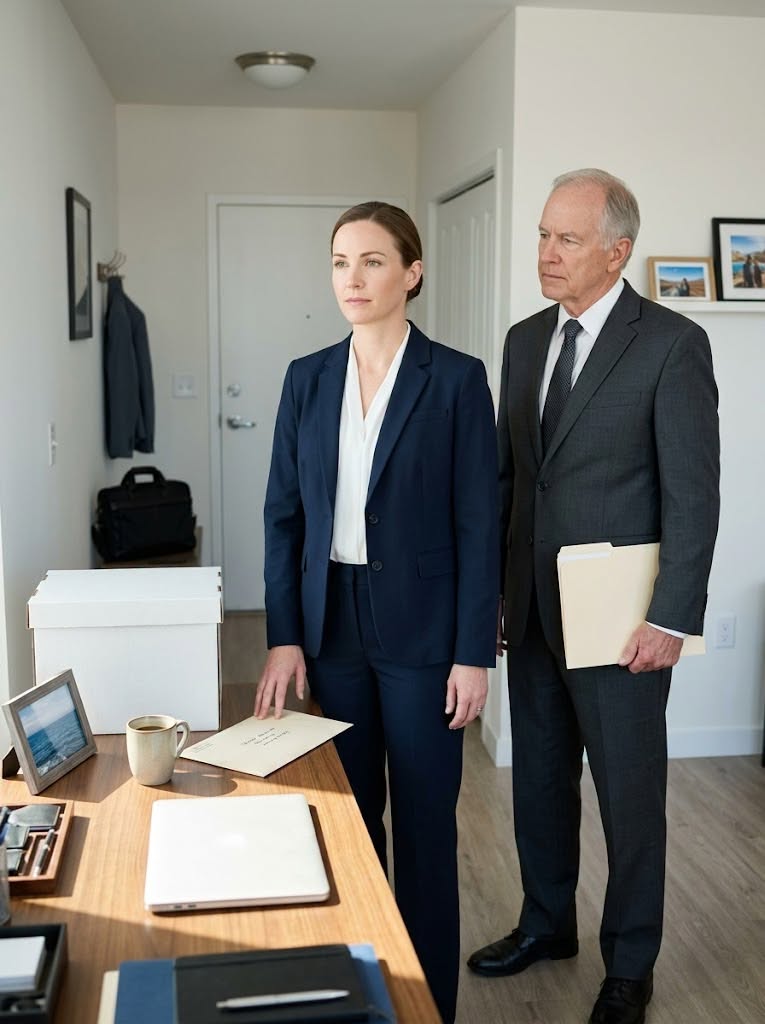
Sarah, he said quietly, “Your father may have committed a felony.” I leaned back in my chair. Outside traffic was beginning to build on the nearby road. For some reason, the ordinary sounds of morning made the conversation feel even more surreal. “Can you explain everything?” I asked from the beginning.
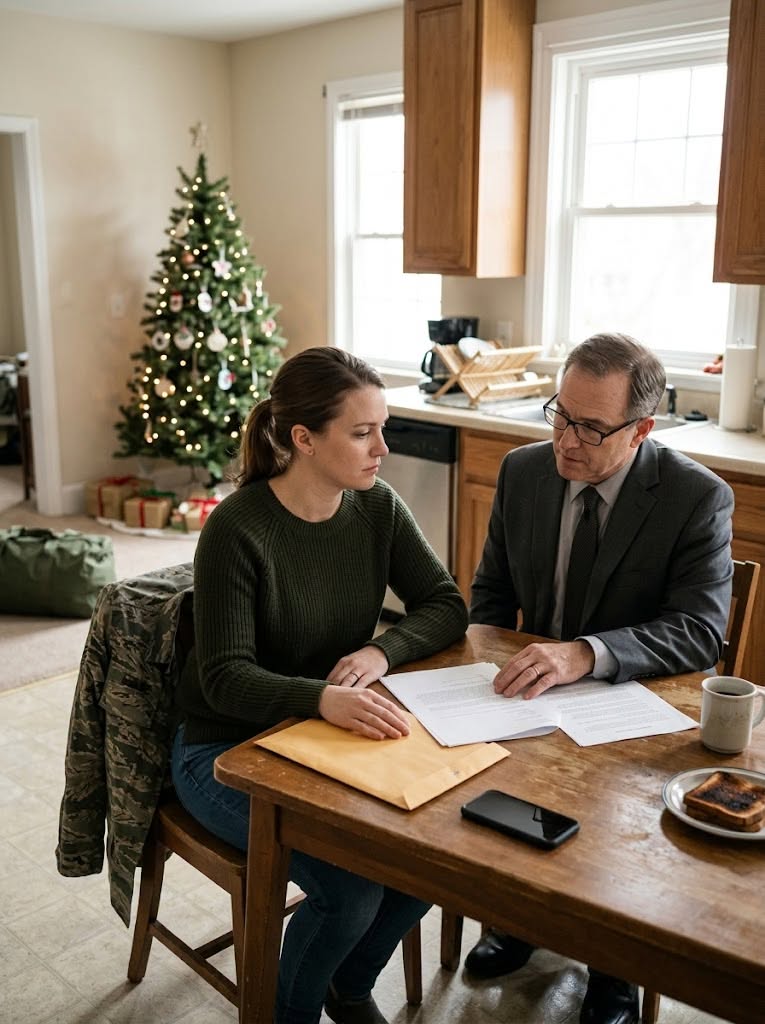
“Of course.” And for the next hour, Robert told me a story I had never fully known. A story about my mother, a story about my father, and a story about how one woman had spent the final months of her life protecting her children from a danger she knew was coming. Years before my mother’s cancer diagnosis, my parents had already begun drifting apart. Not publicly, not in a way neighbors could see, but privately.
My father had developed habits. Bad habits. small gambling trips at first, then larger ones, risky investments, loans, credit card debt, money problems that seemed to appear from nowhere. Whenever my mother confronted him, he always had an explanation, a temporary setback, a misunderstanding, a business opportunity.
But the explanations never quite matched reality. One day she started keeping records, bank statements, credit card statements, loan paperwork, and eventually she discovered something troubling. My father wasn’t merely making mistakes. He was hiding things, important things, large things.
According to Robert, the discovery frightened her. Not because she was worried about herself, because she was worried about Kevin and me. She knew that if something happened to her, my father would have complete control over the family’s finances, and she didn’t trust him. That realization led her to create the trust.
Not an ordinary trust, a very carefully designed one. As Robert explained the details, I finally understood why the paperwork had always seemed so complicated. My mother had worked with estate planners, financial advisers, tax attorneys, people who specialized in protecting family assets. The trust was designed specifically to prevent misuse.
My father had been named a trustee, but only a limited trustee. His authority was restricted. Every major action required compliance with specific legal requirements. Certain transactions triggered automatic reviews. Certain withdrawals required documentation and certain violations generated mandatory reports.
What exactly happened? I asked. Robert sighed. Your father apparently believed he had direct ownership.He didn’t. No, not even close. I shook my head slowly. My father had always acted as though everything belonged to him.
The house, the savings, the investments, even things my mother had purchased herself. Apparently, he had convinced himself that the trust belonged to him, too. “How much trouble is he in?” I asked. “That depends.”
On what, whether this was ignorance or intentional fraud? I almost laughed. Ignorance wasn’t my father’s problem. Greed was.
After hanging up, I drove to the base. The morning felt strangely peaceful. The Chesapeake Bay shimmered beneath a bright blue sky. Sailboats moved slowly in the distance.
For a moment, I found myself thinking about my mother again. She loved the water. She used to tell me that the ocean revealed people’s character. “Storms don’t create weakness,” she’d say.
“They reveal it.” “Back then, I never understood what she meant. Now I did.” By lunchtime, Kevin finally called.
I considered ignoring him. Then I answered, “Sarah.” His voice sounded nervous. Not angry.
Not arrogant. Nervous. What happened? I don’t know.
Don’t do that. I’m serious. Then why did the bank freeze everything? I remained silent.
Kevin sighed. For once, can you just talk to me? There was something different in his voice. Something I hadn’t heard before.
Fear. Not fear of me. Fear of reality. The golden child was finally discovering that being favored doesn’t protect you from consequences.
Kevin, I said calmly. Did Dad tell you where the money came from? What do you mean the trust money? Mom left it.
To who? Silence. Then I don’t know exactly. Another long pause followed.
I could practically hear him thinking. That alone was unusual. For most of his life, Kevin accepted whatever my father told him. Questioning Dad simply wasn’t something he did.
At least not until now. Sarah, he finally said, are we in trouble? We Interesting.
For years, everything had been divided into us and you. Now, suddenly, it was we. I don’t know, Kevin. You’re not helping.
I can’t help if I don’t know the facts. That answer frustrated him. But it was honest. After ending the call, I returned to work.
The afternoon passed slowly. Meetings, reports, routine tasks, normal life continuing while my family was falling apart. Around 4:00, my phone buzzed again. This time, it was a text from my father.
A very different text. No insults, no accusations, just one sentence. Please call me. I stared at the screen.
Growing up, I couldn’t remember my father ever saying please to me. Not once. I didn’t respond. An hour later, another message arrived.
This one from Kevin. Dad’s really scared. I set the phone down. For a moment, I felt something unexpected.
Sadness. Not satisfaction. Not triumph. Sadness.
Because none of this had to happen. My mother had given my father every opportunity, every warning, every chance. And somehow, he still chose greed. That evening, I returned home and opened the fireproof box again.
I studied the documents more carefully. The trust wasn’t merely protecting money. It was preserving accountability. My mother had anticipated every possible shortcut, every possible manipulation, every possible betrayal, and she had prepared for them all.
Near the bottom of the folder, I discovered another note I had never noticed before. Written in my mother’s familiar handwriting were seven simple words. The truth arrives slowly, but it arrives. I read the sentence three times.
Then I smiled because somewhere across town, investigators were already following the truth, and they were finding things my father never expected anyone to see. Just before bed, Robert Hansen called again. His voice sounded graver than before. Sarah.
Yes. We received preliminary records and there was a pause. Then he delivered the news. The investigators found something.
What? The money isn’t actually gone. I sat upright. What do you mean?
They traced most of it. Where your father moved it to where Robert took a breath, then said the words that changed everything into accounts connected to your brother. Suddenly, this wasn’t just about my father anymore. And for the first time, I wondered whether Kevin truly knew what had happened or whether he was about to become the second victim of my father’s greed.
I barely slept that night. Not because I was worried, because I was thinking about Kevin. For most of my life, I’d viewed him as part of the problem. The favored son, the golden child, the one who always received what I never did.
But as I lay awake staring at the ceiling, I kept asking myself the same question. Did Kevin actually know? or had Dad used him the same way he’d used everyone else. The next morning, I arrived at Naval Station Norfolk before sunrise.
The parking lot was still dark. A cool breeze drifted in from the water. For a few minutes, I sat inside my truck and watched the first light appear over the horizon. The Navy teaches you to focus on facts, not assumptions, not emotions.
Facts. And the fact was simple. I didn’t yet know how involved Kevin had been, so I refused to judge him. At least not yet.
I was halfway through my first cup of coffee when my phone rang. Robert Hansen again. Good morning, Sarah. You sound busy.
I am. His voice carried an energy I hadn’t heard before. Something was moving fast. What happened?
The bank completed part of its review. I sat down and they’ve identified multiple unauthorized transfers. I closed my eyes. There it was.
The first real confirmation. Not rumors, not speculation, evidence. How many transfers? Several.
Over what period? Months. That surprised me. Months.
I had assumed my father emptied the trust in one dramatic move. Apparently not. According to the bank records, he’d been moving money gradually. Small amounts at first, then larger amounts.
Always staying below reporting thresholds. Always trying to avoid attention. A strategy that probably would have worked if not for one thing. Greedy people rarely know when to stop.
The text message had triggered everything. His decision to brag about it had created a paper trail nobody could ignore, Robert continued. The investigators are now reviewing additional records. What kind?
Property records, tax records, trust documents. I felt a chill. This was growing bigger, much bigger. Sarah, I need to ask something.
Go ahead. Did your father ever pressure you to sign anything? I thought for a moment, then remembered about 6 years earlier during a deployment. Dad had called unexpectedly.
He wanted me to sign paperwork related to the family house. At the time, he claimed it was routine. I had refused, mostly because I was halfway around the world and didn’t like signing documents I hadn’t reviewed. He’d been furious.
We didn’t speak for months afterward. I told Robert about it. His silence lasted several seconds. That’s important.
Why? We found references to those documents. My stomach tightened. What kind of references?
We don’t know yet. That answer worried me more than if he had simply told me. Unknown problems are usually worse than known ones. After hanging up, I tried focusing on work, but my mind kept drifting.
Back to childhood, back to family dinners, back to the countless times Dad praised Kevin while criticizing me. The memories came in waves. One stood out more than the others. I was 18.
A week before leaving for Navy boot camp, Mom had already passed away. Dad and Kevin were sitting at the kitchen table. I remember Dad looking directly at me. You’ll be back.
What? The Navy? I don’t think so. He laughed.
You won’t last 6 months. I lasted 20 years. Funny how life works. Around noon, my phone buzzed.
Kevin, I answered. His voice sounded exhausted. Sarah, what’s going on? Dad’s losing it.
I didn’t respond. He keeps saying the bank made a mistake. Did they? No.
That single word caught my attention. No. No. His voice cracked slightly.
For the first time in my life, Kevin sounded defeated. I saw some of the records and he lied. I leaned back in my chair. What did you find?
More silence. Then the transfers. My heart sank. Not because I was shocked.
Because I wasn’t. Part of me had expected this. What about them? They went into accounts connected to me.
I waited. I didn’t know. There it was. The sentence I’d been wondering about.
The question that had kept me awake. Kevin continued speaking fast now, like someone trying to empty years of confusion. I swear, Sarah, I didn’t know where the money came from. Dad told me it was part of Mom’s estate.
He said she wanted me to have it. I closed my eyes. Of course he did. That’s exactly what Dad would say.
The problem with lifelong favoritism is that eventually the favored child starts believing it. Kevin wasn’t just spoiled. He’d been conditioned, manipulated, used. The realization made me sad.
Not angry. Sad. Kevin. Yeah.
Do you believe him now? No. The answer came immediately without hesitation. No, I don’t.
For several moments, neither of us spoke. Then he asked something unexpected. Did Mom really leave that money to you? The question hurt more than it should have because it revealed something.
Even after all these years, he genuinely didn’t know our mother’s wishes. He’d spent so much time listening to Dad that he’d never learned who Mom really was. Kevin. Yeah.
Mom loved us both. I know. Then start there. He didn’t answer, but I could hear him breathing, thinking maybe for the first time in years.
That afternoon brought another surprise. A detective called me directly. Nothing dramatic, nothing like television, just a calm, professional conversation. He explained that investigators were gathering information, reviewing documents, establishing timelines, following procedures, the ordinary mechanics of accountability.
Before ending the call, he said something that stuck with me. Most financial cases aren’t solved by brilliant detectives. They’re not. No.
How are they solved? People get greedy. I almost laughed. That certainly described my father.
By evening, news had begun spreading through our hometown. Small towns have their own communication systems, church groups, coffee shops, neighbors talking across fences. People notice things and people talk. Apparently, word of the frozen accounts was already circulating.
Dad hated that. For years, he’d cared deeply about appearances. Now, appearances were slipping away, and there was nothing he could do to stop it. When I arrived home, another surprise awaited me.
A voicemail. Dad. I almost deleted it. Instead, I listened.
His voice sounded older, smaller, not angry, not arrogant, just scared. Sarah. A long pause. Then I think I made a mistake.
I stared at the phone. For nearly 40 years, those might have been the hardest words my father had ever spoken. Not because they fixed anything. They didn’t.
But because they represented the first crack in the wall he’d spent decades building. I saved the message, then set the phone aside. A few minutes later, Robert called again. Sarah, you have news?
I do. Good news or bad news? Interesting news? I smiled.
Let’s hear it. The investigators completed another review and they traced most of the missing trust funds. I sat forward. All of them.
Nearly all. Can they recover it? Most likely. Relief washed over me.
Not because of the money, because of what the money represented. My mother’s wishes, her legacy, her faith in me, Robert continued. There’s something else. What?
The investigators found additional documents. What kind? His voice grew serious. The house.
I froze. What about it? The ownership records don’t match what your father has been claiming for years. For a moment, the room felt completely silent.
Then Robert delivered the sentence that changed everything. The house may not belong to your father at all. For several seconds after Robert ended the call, I simply sat there. The house may not belong to your father at all.
The sentence echoed through my mind. Growing up, that house had been the center of our world. A white two-story home outside Richmond, a wraparound porch, an old oak tree in the front yard, a vegetable garden my mother loved. Every Christmas, every birthday, every family memory seemed connected to that place.
And now I was learning that my father may have spent years pretending he owned something that legally wasn’t his. I called Robert back immediately. What exactly did you find? The deed history.
And it appears your mother made changes shortly before her death. I felt my pulse quicken. What kind of changes? Complicated ones.
Try me. Robert chuckled softly. You always did sound like your mother. I smiled despite myself.
Mom had been the calm one. The planner. The person who thought three moves ahead. Dad reacted.
Mom prepared. The property was placed into a trust structure before she died. Yes. And Dad knew.
That’s the interesting part. The silence that followed answered the question before Robert spoke. He probably never fully understood what she did. That sounded exactly like my father.
He hated paperwork. Ignored legal details. Signed documents without reading them. Meanwhile, Mom read everything twice, sometimes three times.
I remembered countless evenings watching her sit at the dining room table with stacks of papers spread around her. At the time, I thought she was simply organized. Now I realized she was protecting us, even from things we didn’t yet understand. After ending the call, I sat quietly in my office.
Outside my window, sailors moved between buildings. Vehicles came and went. The base operated with its usual efficiency. normal life, steady life, the kind of life I’d built for myself.
A life completely separate from family drama. Yet somehow, the past had found me anyway. Around noon, Kevin called. This time, I answered immediately.
His voice sounded different. Not fearful, not defensive, tired, deeply tired. Sarah, hi. I found something.
I leaned back. What? Dad’s office. That got my attention.
My father had a small office attached to the family house. For years, nobody was allowed inside. Even Kevin rarely entered. What did you find?
Boxes. What kind of boxes? Records. My stomach tightened.
Financial records. Yeah. He laughed bitterly. Lots of them.
For the next 15 minutes, Kevin described what he’d discovered. Bank statements, loan documents, tax notices, past due notices, letters from attorneys, documents stretching back years. some over a decade old. My father had kept everything and hidden everything.
The picture that emerged wasn’t pretty. His financial problems had started long before Mom died. Long before I joined the Navy, long before Kevin became the golden child. The debt, the bad investments, the gambling losses, the borrowing.
It had all been there waiting beneath the surface like a crack in a dam slowly growing larger. Waiting for the day everything would break. Sarah. Yeah, I think Mom knew.
The sadness in his voice caught me off guard. I think she knew all of it. I looked out the window. A transport aircraft moved slowly across the sky.
She probably did. Kevin was quiet for a long moment. Then he asked, “Why didn’t she leave him?” The question lingered.
I honestly didn’t know. Maybe she hoped he’d change. Maybe she wanted to protect us. Maybe she loved him despite his flaws.
Life is rarely simple, especially marriages that last decades. I don’t know, Kevin. Neither do I. Another silence.
Then, can I ask you something? Sure. Did you hate me growing up? I wasn’t expecting that.
Of all the questions he could have asked, that wasn’t one of them. I thought carefully before answering. No, really, really. But Dad always I know what Dad always said.
Kevin stopped talking. I continued. I was angry sometimes. Okay.
I was hurt sometimes. Okay. But I never hated you. His breathing grew heavier.
Emotional. Controlled. But emotional. Because I think I hated you.
The honesty stunned me. Not because it was cruel. Because it was vulnerable. Kevin had spent his entire life playing a role.
The favorite son. The chosen child. The winner. Now the mask was finally coming off.
Why? I asked gently. He laughed. a sad laugh.
Because Dad made everything a competition. I closed my eyes. There it was. The truth.
Not just about money, not just about inheritance, about family. Dad hadn’t simply favored Kevin. He had divided us. Every compliment given to Kevin came with criticism of me.
Every success I achieved became proof that I thought I was better. Every disagreement became a battle. And children believe what they’re taught, especially when they’re young, especially when the lessons come from a parent. I thought Mom loved you more.
The confession broke my heart because I’d spent years believing the opposite. For a moment, neither of us spoke. Then Kevin quietly said, “Maybe Dad lied to both of us.” I stared at the floor.
“Maybe. No.” He definitely had. Later that evening, Kevin drove to Norfolk.
The trip took nearly 2 hours. When he arrived, I barely recognized him. Not physically. Emotionally, he looked exhausted, older, as though the previous week had aged him years.
In his hands, he carried a large cardboard box. What’s that? He said it carefully on my kitchen table. I found it in the attic.
I opened the lid. My breath caught. Letters, dozens of them. Some addressed to Kevin, some addressed to me, some addressed to Dad.
Every single one written in Mom’s handwriting. For a moment, neither of us moved. It felt as though she were standing in the room with us. Kevin picked up one envelope.
His hands were shaking. I haven’t read any. Neither have I. Maybe we should.
I nodded slowly. The first letter I opened was addressed to me. Inside was a message written just months before her death. The words were unmistakably hers.
Warm, wise, loving, and as I read, tears filled my eyes. Not because of what she wrote about me, but because of what she wrote about Kevin. She loved him deeply, completely, exactly as much as she loved me. The same truth appeared in letter after letter.
There had never been a favorite child. Not for Mom, only for Dad. By the time we finished reading several letters, the sun had disappeared. Darkness filled the apartment.
Kevin sat quietly across from me, his eyes red, his face pale. Years of assumptions were collapsing around him. Finally, he looked up. Sarah.
Yeah, I owe you an apology. I wasn’t ready for that conversation yet. Not tonight. Not while both of us were still trying to process everything.
So, I simply nodded. We’ll talk. He nodded back, then reached into the box. There’s one more thing.
What? A letter. To who? He handed it to me.
The envelope was sealed. Across the front in my mother’s handwriting were six words for Frank. Open only when everything falls apart. And suddenly I realized my mother had been preparing for this moment all along.
The envelope sat in the middle of my kitchen table. Neither Kevin nor I touched it. For several minutes we simply stared at it. The room was quiet except for the soft hum of the refrigerator.
Outside a few cars passed on the street below. Ordinary sounds. Normal sounds. The kind of sounds that somehow felt strange when your entire understanding of your family was changing.
Kevin finally broke the silence. Do you think she knew this would happen? I looked down at the envelope. The handwriting was unmistakable.
Careful, neat, deliberate. My mother’s handwriting. The handwriting of a woman who never wasted words. I think she hoped it wouldn’t happen.
Kevin nodded. Yeah, but I think she prepared just in case. That sounded more like Mom. She wasn’t cynical.
She wasn’t suspicious, but she was realistic. When cancer entered her life, she had faced it directly. When financial problems appeared, she addressed them. When she saw weaknesses in people she loved, she didn’t pretend those weaknesses didn’t exist.
She planned around them. That was her gift. Finally, I picked up the envelope. The paper felt fragile.
22 years old, yet somehow still carrying her presence. Kevin swallowed hard. Should we? I nodded.
Carefully, I opened it. Inside was a four-page handwritten letter. At the top were the words, Frank. I took a deep breath and began reading aloud.
The first page wasn’t angry. That surprised me. After everything we had learned, I expected anger. Instead, the letter was filled with sadness.
My mother wrote about the early years of their marriage. The small apartment where they started. The old pickup truck they couldn’t afford to repair. The nights they sat together dreaming about the future.
The years when they were partners, real partners. As I read, I realized something that had never occurred to me before. My father hadn’t always been the man I knew. At some point, something had changed.
Or perhaps something hidden had slowly grown stronger. The second page became more difficult. Mom wrote about trust, not money. Trust itself.
The kind that holds families together. The kind that disappears one small decision at a time. She described discovering financial secrets, hidden debts, broken promises, conversations that never happened because my father refused to have them. Yet even then, she wasn’t cruel.
Not once. Instead, she wrote something that made both Kevin and me sit silently for nearly a minute. Frank, I never feared losing money. I feared losing you to your pride.
I looked up from the page. Kevin was staring at the table. His eyes glistened. I understood why.
The sentence felt painfully true. For years, Dad had chosen pride over honesty. Pride over accountability, pride over family, and now everything was collapsing because of it. I continued reading.
The third page addressed Kevin and me, not directly, but through Dad. Frank, if you’re reading this, then our children are probably hurting. Please remember that they are not opponents. They are not competitors.
They are brother and sister. Don’t make them carry burdens that belong to us. Kevin covered his eyes with one hand. For a long moment, neither of us spoke.
Then he whispered. She knew. I nodded. She knew.
Mom had seen exactly what was happening. the divisions, the comparisons, the favoritism, the damage, and she’d understood the cost long before either of us did. The final page was the hardest because it wasn’t written for us. It was written for him, Frank.
If everything has fallen apart, then something went very wrong. Maybe you ignored advice. Maybe you believed you could fix things later. Maybe you convinced yourself that nobody would ever know.
But truth has a way of surviving. And when it arrives, I hope you choose honesty. Not for me, not for yourself, for Sarah and Kevin. Please don’t leave them fighting over things that never mattered as much as they do.
I hope one day you value your family more than your pride. Love, Margaret. When I finished reading, the apartment felt impossibly quiet. Neither of us moved.
Neither of us spoke. 22 years had passed since Mom wrote those words, and somehow they described our current situation perfectly. Finally, Kevin wiped his eyes. I spent my whole life believing Dad.
I didn’t answer because there wasn’t really anything to say, he continued. I thought he favored me because I deserved it. His voice cracked. I thought you were distant because you wanted to be.
I looked at him. For the first time in years, I wasn’t looking at the golden child. I was looking at my little brother. The same kid who used to chase fireflies in the backyard.
The same kid who cried when Mom died. The same kid who had spent years trapped inside a story somebody else created. I’m sorry, Sarah. The words came quietly, sincerely.
No excuses, no qualifications, just an apology. And somehow that made it more powerful. I should have asked questions. I nodded.
Maybe I should have defended you. Maybe I should have called more. That one made me smile. Definitely.
For the first time that evening, Kevin laughed. A real laugh. Small, but real. The tension eased.
Not completely. Some wounds take years to heal, but it was a beginning. The next morning brought another development. Robert Hansen called again.
The legal process was moving quickly, much more quickly than my father expected. The trust funds were being recovered. The unauthorized transfers had been documented. The property records were being reviewed, and prosecutors were evaluating their options.
The reality was becoming impossible for Dad to ignore. By afternoon, Kevin received a call from him. The conversation lasted less than 5 minutes. When Kevin hung up, he looked shaken.
What happened? He cried. I stared. What?He cried. I had never seen my father cry. Not when Mom died. Not when he lost businesses.
Not when relatives passed away. Never. Yet. Apparently, he was crying now.
What did he say? Kevin sat down. He said he doesn’t know how everything got this bad. I closed my eyes.
The sad part was that I believed him, not because he was innocent, because self-deception becomes powerful over time. People tell themselves stories, then they tell those stories for so many years that eventually they believe them. Dad probably genuinely didn’t understand how he ended up here. He simply couldn’t see the thousands of choices that led him to this moment.
That evening, another call came. This one directly from Dad. I considered letting it go to voicemail. Instead, I answered.
For several seconds, neither of us spoke. Then I heard something I never expected. Fear. Not fear of prison.
Not fear of money. Fear of losing his family. Sarah. His voice sounded older than I remembered.
Smaller. We need to talk. I stared out the window. The sunset painted the sky orange and gold.
For years, I had imagined this moment. A confrontation. An apology. An explanation.
Now that it was finally here, I felt surprisingly calm. When I asked. A long silence followed. Then my father answered, “Whenever you’re ready.”
And for the first time in decades, I heard humility in his voice. Real humility, not performance, not manipulation. Something genuine. Something my mother had waited years to hear.
Something that might have arrived too late or perhaps just in time. 3 days later, I drove to Richmond. The meeting place surprised me. Dad hadn’t chosen a lawyer’s office.
He hadn’t chosen a restaurant. He hadn’t chosen the family house. He chose the cemetery, specifically my mother’s grave site. The moment Kevin told me where Dad wanted to meet, I understood why.
There are some places where people find it harder to lie. This was one of them. The afternoon was warm. A light breeze moved through the trees.
Birds chirped somewhere nearby. The cemetery looked peaceful, almost timeless. Kevin arrived first, then me. Dad came last.
For a moment, I barely recognized him. In less than 2 weeks, he seemed to have aged 10 years. His shoulders were slumped. His hair looked grayer.
The confidence that had defined him for decades was gone. Not diminished. Gone. We stood silently beside Mom’s headstone.
No one spoke. No one seemed to know where to begin. Finally, Dad looked down at the engraved letters bearing her name. Then he spoke.
I should have listened to her. His voice cracked. The words hung in the air. Simple, honest, painful.
Nobody interrupted. For nearly a minute, he simply stood there staring at the stone. Then he looked at me. I’m sorry, Sarah.
I waited. Not because I wanted him to suffer. Because apologies matter. And real apologies require truth, he continued.
I stole from the trust. There it was. No excuses, no explanations, no blaming lawyers, no blaming banks, just truth. I kept telling myself I’d put it back.
His eyes filled with tears. I always thought I’d fix everything before anybody noticed. I nodded slowly because that was exactly how many bad decisions happen. Not through evil, through rationalization, one compromise, then another, then another, until eventually a person wakes up surrounded by consequences.
Dad took a deep breath. I favored Kevin. Kevin looked down. Dad continued.
I told myself I was helping him. His voice broke, but I wasn’t helping him. He turned toward my brother. I was hurting both of you.
For the first time, Kevin began crying openly, not dramatic tears. The quiet tears of a grown man finally confronting reality. I know, Kevin whispered. Dad wiped his eyes.
Then he looked back at me. I was proud of you. The sentence surprised me. For a moment, I genuinely thought I’d misheard him.
What? I was proud of you. His voice trembled. The Navy, the promotions, the deployments, everything.
I stared at him. Anger would have been easier. Resentment would have been easier, but confusion that was harder. If you were proud of me, I asked quietly.
Why did you spend 20 years acting like you weren’t? The question landed heavily. Dad looked away. Toward the trees, toward the sky, anywhere but at me.
Finally, he answered, “Because every time I looked at you,” he stopped, swallowed hard, then continued. “You reminded me of your mother.” The answer hit me like a wave. Not because it excused anything. It didn’t.
But suddenly I understood something. Mom had been organized, disciplined, responsible. Everything Dad struggled to be. And every time he looked at me, he saw those same qualities.
Instead of inspiring him, they reminded him of his failures. So he pushed me away. It was a terrible choice, a selfish choice, but it finally made sense. Nobody spoke for several moments.
Then Kevin quietly said, “Mom would have hated this.” We all smiled sadly because it was true. She would have hated every part of it. The lies, the fighting, the division, the greed, everything.
A week later, the legal matters were finalized. The results were serious but fair. Most of the trust funds were recovered. The remaining amounts were repaid through negotiated settlements.
The property records were corrected. Ownership issues were resolved. Several transactions were reversed. Most importantly, prosecutors agreed that full cooperation and restitution made criminal prosecution unnecessary.
Dad still faced consequences, financial consequences, professional consequences, personal consequences. But he wasn’t sent to prison. And honestly, by that point, prison wasn’t what I wanted. Accountability mattered.
Justice mattered. But destruction didn’t. Mom had never wanted destruction. She wanted truth.
Weeks later, the family house was sold. Not because anyone forced it, because all three of us agreed. The place carried too much history, too much pain, too many memories. The proceeds were distributed according to the trust.
Fairly legally, exactly as mom intended. For the first time in my life, fairness entered the conversation. Not favoritism, not manipulation. Fairness.
Months passed. Life slowly settled. Dad downsized into a smaller home. Kevin returned to work.
I continued serving in Norfolk. Something unexpected happened during those months. We started talking. Not about money, not about legal cases, about ordinary things, baseball, weather, family recipes, stories about mom, the kinds of conversations normal families have.
One Sunday afternoon, nearly a year after the text message that started everything, Kevin and Dad drove to Norfolk for dinner. Nothing special, just dinner. We sat around my table laughing about old stories. At one point, Dad looked around the room, then quietly smiled.
“You know something?” “What?” Kevin asked. Dad shook his head.
I almost lost all of this. Nobody responded because we all knew he wasn’t talking about money. He was talking about us. The family he’d nearly destroyed.
The family that somehow survived. Not perfectly, not magically. But honestly, after they left that evening, I stood alone on my apartment balcony. The sun was setting over the water.
Golden light reflected across the bay. For a long time, I thought about mom, about her trust, about her letters, about her wisdom. The greatest gift she left wasn’t money. It wasn’t property.
It wasn’t legal protection. It was perspective. She understood something many people never learn. Money reveals character.
It doesn’t create it. Greed reveals itself. Integrity reveals itself. Love reveals itself.
Eventually, the truth reveals itself, too. My father learned that lesson the hard way. My brother learned it painfully. And I learned something as well.
Forgiveness isn’t pretending something never happened. Forgiveness is choosing not to let the worst chapter become the entire story. If you’ve ever experienced favoritism, betrayal, or family conflict, I hope this story reminds you that accountability and compassion can exist together. Sometimes people deserve consequences.
Sometimes people deserve second chances. And occasionally, if they’re willing to tell the truth, they deserve both. If this story touched your heart, take a moment to think about the people you love. Life moves faster than we realize.
Conversations left undone can become regrets, and forgiveness offered today may become tomorrow’s greatest gift. Thank you for spending this time with me. If you’d like to hear more stories about family resilience, justice, and second chances, I’d be honored if you shared this story with someone who might need it and joined us again for another journey. Until next time, take care of yourself and the people who matter
If you came here from Facebook because this story caught your attention, please go back to the Facebook post, tap like, and comment exactly “Great read.” That small action means a lot. It helps support the storyteller and gives the writer more motivation to keep bringing you more stories like this.