## Part 2: Hidden Bank Transfers Reveal Years of Carefully Disguised Family Lies
The next morning, I spread four years of bank statements across my dining table, but before I touched a highlighter, I found myself remembering the sister I’d once trusted. Lauren was three years younger than me, the girl who crawled into my bed after nightmares and made ridiculous jokes when my college boyfriend broke my heart. I hadn’t grown up hating her. Somewhere along the way, however, loving Lauren had become indistinguishable from financing whatever she wanted.
When I was twenty-six, my mother called because Lauren needed $800 for an apartment deposit, and I sent it without hesitation. Three months later, Lauren posted photographs of an expensive Chicago weekend while insisting she’d never promised to repay me promptly. At twenty-nine, I lent her another $2,000 for dental work, only to discover she’d spent it on cosmetic veneers. Each time I questioned her, my parents reminded me that I had a stable career and Lauren had more difficulties.
Then Mason was born, and our family created an emergency fund.
At Christmas, Dad contributed $2,000, Mom added $1,500, and I deposited $3,000. The account was opened jointly under Mom’s, Lauren’s, and my names, with the clear understanding that it would cover emergencies such as medical expenses and necessary car repairs. Lauren promised to contribute when her finances improved. Over the following four years, she’d deposit exactly $300.
I kept adding $400 or $500 whenever my skating program allowed it. I wasn’t wealthy, but private lessons and competition coaching provided enough to support Owen and me comfortably. My ex-husband, Ben, a high school science teacher, shared parenting responsibilities without drama, and we lived simply. Whenever I hesitated about supporting the account, Mom repeated, “You’re doing well, Megan. Your sister needs us.”
Sitting at my table that Sunday, I finally calculated what that generosity had cost.
I’d deposited $22,400 over four years, while my parents together had contributed another $5,800. Legitimate emergencies for my parents totaled $4,730, but withdrawals connected directly to Lauren came to $13,955. There were transfers for rent, daycare, repairs, and supposed medical expenses, along with mysterious amounts of $475, $830, $1,250, and $2,100. One $700 withdrawal carried the explanation “PLEASE.”
Then I found $1,780 labeled “Mason dental.”
I remembered Mom saying Mason needed a crown, so I messaged Lauren to ask how his tooth was doing. “What tooth?” she replied, followed by an awkward explanation that the problem had somehow been resolved. When I called Mom, her voice sharpened the moment I mentioned the transaction. “Megan, why are you digging through old expenses?”
“Because I’m the person paying for them,” I answered. “Did Mason actually have dental work?”
“Your sister was behind on things.”
“What things?”
“Why are you making everything so ugly?”
I stared at my highlighted statements, realizing she wasn’t surprised by the withdrawals. She was surprised I had started asking questions.
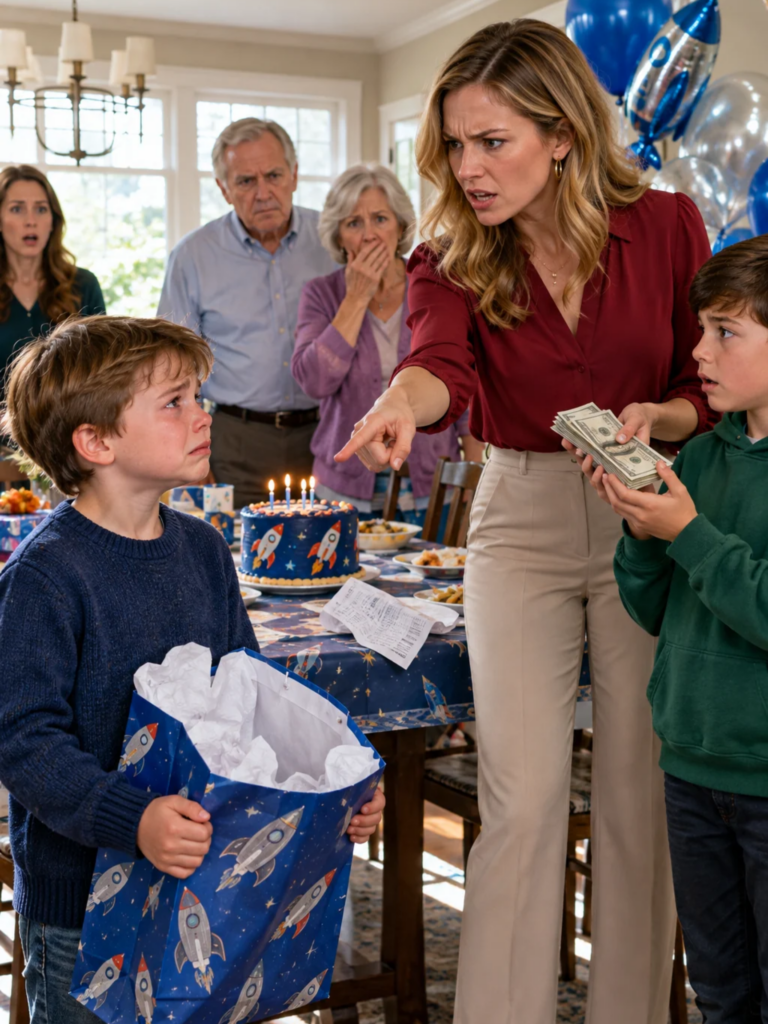
Ben arrived shortly afterward to drop off Owen, who was staying with him that weekend, and noticed the paperwork covering my table. I told him everything, including what Lauren had said to our son. He removed his glasses, cleaned them carefully, and asked whether Owen had understood the insult. “Enough to ask if he deserved birthday presents,” I answered, watching his expression harden.
When Ben examined the transactions, he tapped the page with one finger. “Megan, this isn’t an emergency fund anymore,” he said. “It’s Lauren’s checking account, and you’re financing it.”
On Monday, I visited our bank to request a complete transaction history. A banker named Priya, wearing bright red glasses, examined the account and asked whether I also wanted copies of its recurring payments. I hadn’t authorized any recurring payments. She turned her monitor toward me, and my stomach tightened.
Lauren’s rent, $1,650 each month, had been automatically withdrawn for fourteen months. Her car insurance, another $312 monthly, had been coming out for nine months. Both arrangements had been established through Lauren’s access to the account. I sat there remembering every time Mom had assured me Lauren was finally becoming financially independent.
“There’s something else,” Priya said, opening another record. “An application was submitted three weeks ago for a $10,000 overdraft line of credit.”
I stared at her. “Against our savings?”
“Yes. It was declined because the required account-holder verification wasn’t completed.”
“And who submitted it?”
“The request originated through your sister’s online access.”
I gathered the documents with hands that weren’t nearly as steady as I’d hoped. Lauren hadn’t simply been accepting help. She’d attempted to create another $10,000 in borrowing capacity using an account she barely supported.
As I left the bank, I realized the birthday present had only exposed the first layer of a much larger deception.
## Part 3: A Secret Salon Investment Unravels My Sister’s Financial Deception
Tuesday morning, I watched thirteen-year-old Ava miss four attempts at a double axel before she skated toward me, furious with herself. “You’re opening your shoulder because you’re afraid of the landing,” I told her, and she returned to the ice determined to prove me wrong. Her next attempt wasn’t beautiful, but she stayed upright. Watching her celebrate, I realized I’d spent years helping Lauren survive bad landings without ever questioning why she kept making the same mistakes.
That afternoon, I called Derek, Lauren’s ex-husband, and asked about Mason’s new hockey skates. “I bought those myself on October twenty-sixth,” he said immediately. “Two hundred eighty-nine dollars, at the rink’s pro shop.” When I explained Lauren’s story about Owen’s birthday gift, Derek went silent before admitting she’d separately asked him for $400 toward the same skates.
We compared other requests she’d made. There had been $600 for a school technology fee that actually cost $40, $800 for a hockey tournament Derek had already paid for, and $500 for winter clothing he’d purchased himself. Several requests matched withdrawals from the family account. Lauren had been collecting money from multiple people for the same expenses.
“Why does she need so much extra money?” I asked.
“Because of the salon, probably.”
“What about the salon?”
Derek hesitated. “Megan, she quit working there in May.”
For six months, Lauren had told us she’d been promoted to senior stylist and was working thirty hours every week. In reality, she’d left after a disagreement with the owner and was seeing occasional clients at home. Derek thought our mother already knew. I hung up realizing he was probably right.
Wednesday morning, while I was coaching at the rink, Lauren finally discovered the emptied account.
THE ACCOUNT IS EMPTY.
Her message arrived at 8:06 a.m.
I waited until my student finished her routine, then replied, “Now you know how Owen felt.”
My phone lit up with calls and furious messages demanding I return the family money. When Lauren wrote that I had no right to take it, I answered with one question: “How much of it was yours?” She stopped texting long enough for Dad to call, and I answered him immediately.
I explained Owen’s birthday, the unauthorized rent payments, and the attempted overdraft application. Dad listened without interrupting until I mentioned that Lauren’s rent had been coming from the account for fourteen months. “Fourteen months?” he repeated, his voice suddenly strained. “Your mother told me we’d helped her twice.”
That evening, Dad came to my house carrying a folder filled with his personal bank statements. Mom had also been quietly transferring hundreds, sometimes more than a thousand dollars, from their household checking account to Lauren. Then he showed me three credit card charges from a business called North Star Beauty Collective: $1,800, $2,400, and another $2,400.
“Your mother says Lauren invested in a salon,” he told me, staring down at the papers. “I didn’t know we were paying for it.”
Over the next two days, the truth finally emerged. Lauren had committed $12,000 toward a commercial salon suite with two other stylists and still needed $18,000 for equipment, renovations, insurance, and operating expenses. She had been using family funds for living expenses while directing other money into the business, and the fake reimbursement requests helped cover the shortfall. Her attempted $10,000 credit application was meant to close the remaining gap.
But the ugliest discovery concerned Owen.
Lauren had purchased the $164.37 LEGO space station and returned it three days later, when she was $173 short on a plumbing payment for the studio. Mason’s skates had nothing to do with it. My sister had taken back a little boy’s birthday present to help pay for a shampoo sink, then invented a story designed to make him feel guilty.
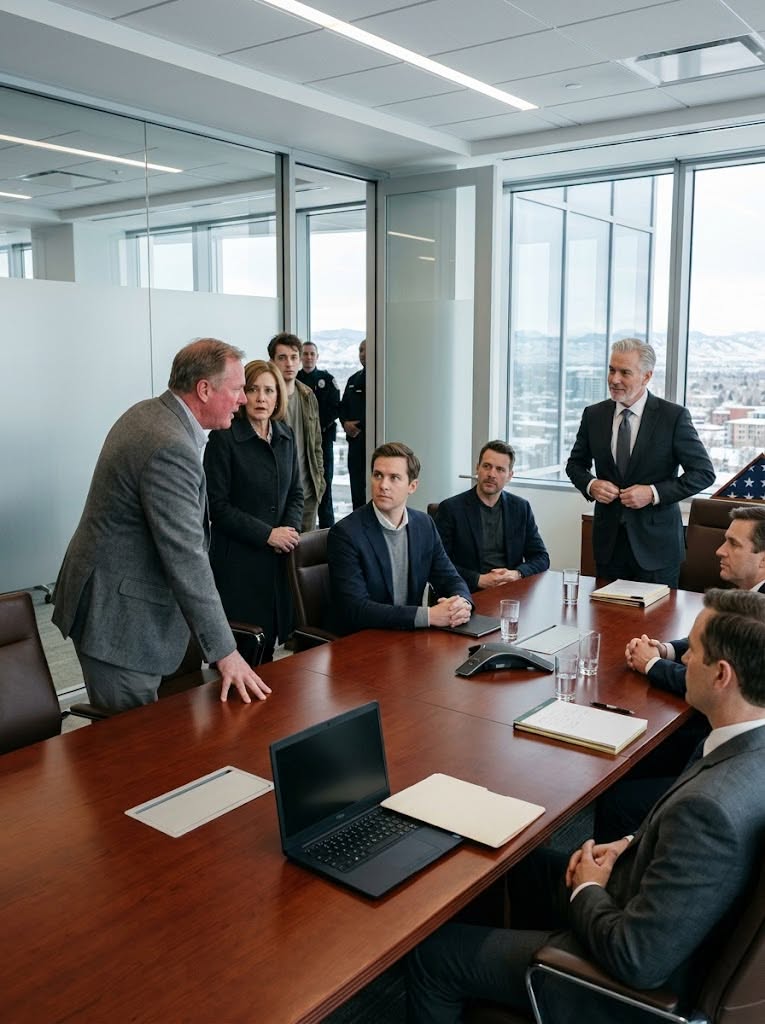
Sunday evening, I sat across from Lauren at our parents’ dining table, with Owen safely at Ben’s house. Mom had prepared pot roast, but nobody seemed hungry. Lauren arrived late, threw her purse onto a chair, and accused me of humiliating her when her automatic rent payment bounced. I placed the bank statements beside my plate and asked whether Mason had really needed $1,780 in dental treatment.
She couldn’t answer.
I moved through the technology fee, hockey tournament, and winter clothing expenses while Dad watched her face. Finally, Lauren snapped, “It all went to Mason eventually!”
“No,” I said, placing the salon documents beside the statements. “It went into your business.”
Mom rushed to defend her. “She was trying to build something for herself, Megan.”
Dad turned slowly toward his wife. “With money Megan earned?”
“I was going to replace it when the studio opened,” Lauren insisted.
“With what?” Dad asked.
No one spoke.
Then I laid down the overdraft application. Mom’s face drained when she saw the $10,000 request; even she hadn’t known Lauren had attempted that. Lauren pushed back her chair, insisting she would never have borrowed the full amount, but Dad stopped her with a quiet question.
“If the business failed, which of us were you planning to tell first?”
She stared at the table.
For the first time in my life, nobody offered Lauren a way out of answering.
## Part 4: One Painful Boundary Finally Teaches My Family What Love Means
I turned toward Mom, who sat twisting her napkin between her fingers. “Do you know what Owen asked me after his birthday dinner?” I said, and when she shook her head, I told her he’d asked whether he deserved presents. Her eyes filled immediately, but I wasn’t finished. “You kept telling me Lauren needed help, and I kept helping, but somehow my child became the person you thought could afford to lose something.”
“You’ve always been okay, Megan,” Mom whispered.
I stared at her. “That doesn’t mean I never needed anyone to stand up for me.”
Lauren finally admitted she’d been angry with me and had taken that anger out on Owen. She couldn’t explain why she’d believed humiliating a seven-year-old was acceptable, but for once, she didn’t try to make it someone else’s fault. When she followed me into the hallway afterward and asked how she was supposed to pay her rent, I told her to speak honestly with her business partners, find additional work, and sell the expensive SUV. “You’d really let me fail?” she asked, her voice breaking.
“I don’t want you to fail,” I answered, opening the front door. “I’m just not paying to prevent it anymore.”
The following two months were uncomfortable, but something finally changed. Lauren sold her SUV, bought a used Honda CR-V, and confessed her financial situation to her salon partners. Her ownership share dropped from one-third to twenty percent, and she accepted additional work at another salon to support herself. Mom stopped giving her money, although Dad frequently had to remind her by saying nothing more than, “Linda.”
I divided the $23,600 into two accounts: $18,000 for emergencies affecting Owen and me, and $5,600 toward his education. Then I bought the exact LEGO space station Lauren had returned, wrapped it in blue paper covered with silver rockets, and placed it beneath our Christmas tree. Owen shrieked when he opened it, hugged the box against his chest, and spent three days building it with me searching the carpet for missing pieces.
At Christmas dinner, Lauren found Owen playing with Mason beside the tree. She knelt beside him and apologized for what she’d said, admitting she’d punished him because she was angry with me. Owen listened carefully before reminding her, “You said I didn’t deserve presents.”
“I was wrong,” she answered, tears slipping down her cheeks.
“And you stole my space station.”
“I returned it,” Lauren said quietly.
“That’s stealing with extra steps.”
For the first time in weeks, she laughed through her tears. Then Owen handed her a tiny LEGO astronaut and invited her to help finish the station. It wasn’t an instant repair of their relationship, but it was a beginning.
Lauren’s studio opened in February, and she worked harder than I’d ever seen her work. In March, she called to complain that commercial garbage collection cost $240 a month, and we ended up laughing like sisters again. Eight months after Owen’s birthday, she repaid the $164.37 she’d taken from his gift, labeling the transfer “Space program restitution.” We didn’t attempt to untangle every old family withdrawal, but the shared account was permanently closed.
Dad mailed me a check for $4.94, my share of the remaining $14.82.
I kept it on the refrigerator.
A year later, Owen celebrated his eighth birthday at the skating rink. Lauren arrived with Mason and handed him a wrapped remote-controlled Mars rover, making a point of showing me the receipt. Owen tore it open, squealed with excitement, and immediately invited Mason to drive it. Within minutes, they’d crashed it into a trash can, and Lauren laughed so hard she had to lean against the rink boards.
Later, I watched her help the boys rescue the rover while Dad attempted to skate backward nearby. Mom stood beside me without offering anyone money, and I realized how much had changed. My sister still owned only twenty percent of her studio, but she was earning every bit of it.
That night, Owen placed the Mars rover beside his LEGO space station, where a tiny plastic dinosaur had somehow taken command. When I asked why the dinosaur was running everything, he shrugged and said, “Because he wants to.”
“Is he qualified?”
“Nope.”
I laughed, kissed the top of his head, and went into the kitchen. Dad’s $4.94 check was still pinned to the refrigerator beside Owen’s birthday photograph, where Lauren was laughing, Mason was grinning, and Dad was desperately gripping the rink boards.
For once, everyone in that picture was standing on their own feet.
THE END.
All characters and events in this story are fictional, created for storytelling and entertainment purposes. Thank you sincerely for reading. Your feedback and support are invaluable and motivate me to continue sharing more stories with you.