The nursing home called me at 4:17 p.m.
“Are you Evelyn Parker’s granddaughter?”
“Yes. Why?”
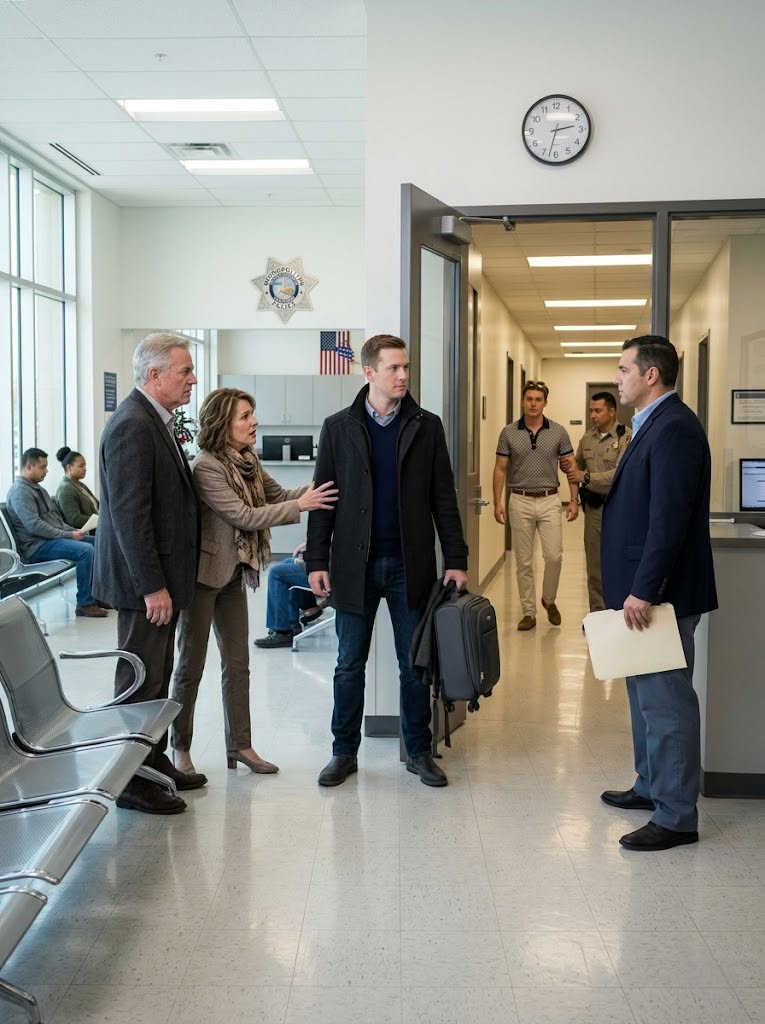
“Your grandmother was left here three hours ago. Her suitcase is in our lobby. The people who brought her said they were taking her to lunch. They never came back.”
My stomach dropped.
That morning, my parents had called me like everything was normal. They said they were taking Grandma Evelyn out for lunch because she “needed a change of scenery.”
Grandma was eighty-two, sharp-minded, stubborn, and fiercely independent. She hated nursing homes.
I drove 190 miles.
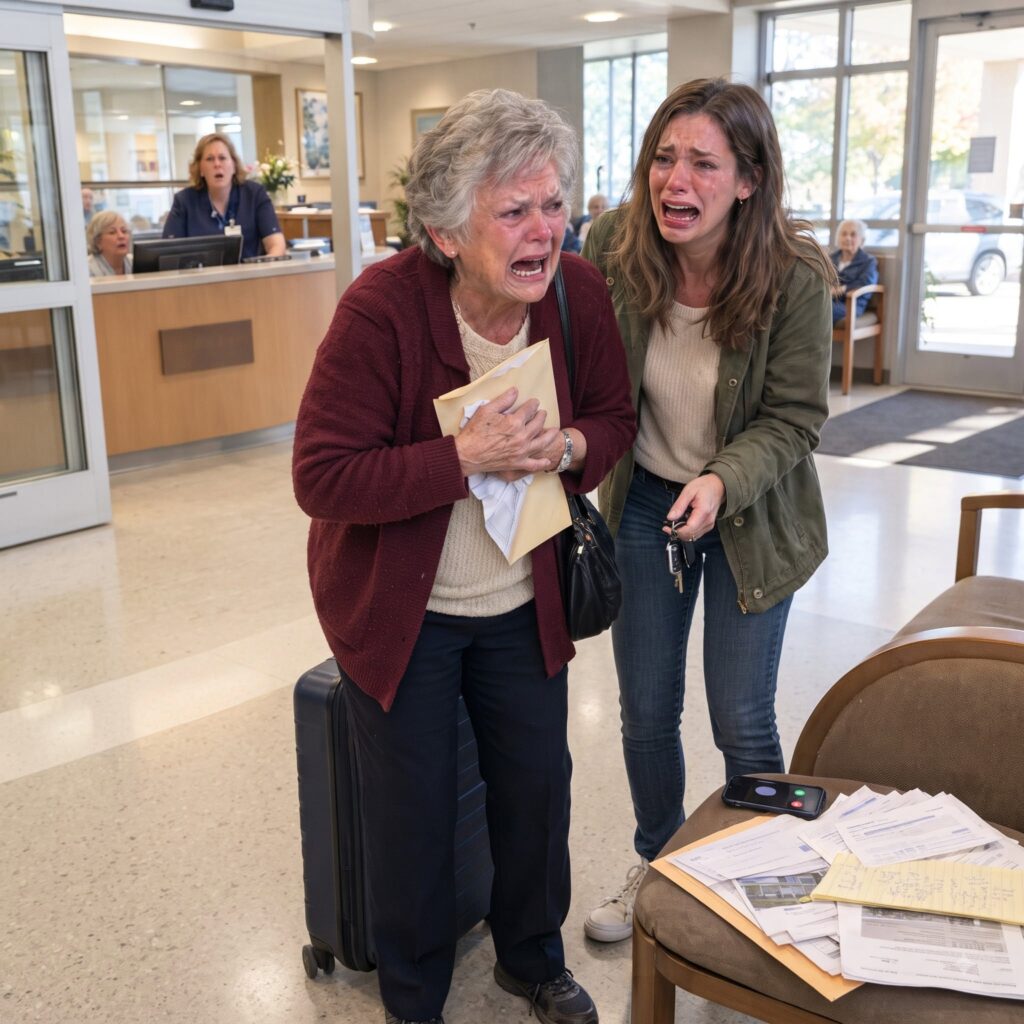
When I arrived, Grandma was sitting beside her suitcase, holding her purse tightly. The receptionist quietly told me, “She’s been waiting for someone to return.”
I knelt beside her.
“Grandma, what happened?”
She looked at me for several seconds.
Then she stood.
“I’m ready to go.”
I loaded her suitcase into my car. She climbed into the passenger seat, buckled her seatbelt, and stared straight ahead.
I started the engine.
“Should I call Mom and Dad?”
Grandma immediately shook her head.
“Don’t call them.”
Her voice was quiet.
But there was something in it I had never heard before.
Fear.
She watched the road through the windshield.
“I’ll tell you where to drive.”
For twenty minutes, she said nothing.
Then she pointed ahead.
“Take the next exit.”
I did.
“Now turn left.”
I glanced at her.
“Where are we going?”
Grandma opened her purse and pulled out a folded envelope.
“I found this in your parents’ house yesterday.”
My hands tightened around the steering wheel.
“What is it?”
She looked at me.
“And before you open it, you need to promise me one thing…”
Teaser:
Grandma had been abandoned with a suitcase, but that wasn’t the part that frightened me most. The envelope in her purse contained something my parents never expected her to find—and suddenly, her decision to stay silent made sense.
“And before you open it, you need to promise me one thing…”
Grandma held the envelope against her chest.
“Promise me you won’t call your parents until I tell you.”
I stared at her.
“Grandma, they left you at a nursing home.”
“I know.”
“You have to let me call them.”
“No.”
Her answer was immediate.
I pulled into a quiet parking lot.
“Then tell me what’s going on.”
Grandma finally handed me the envelope.
Inside was a bank statement, a photocopy of a property document, and several pages covered with handwritten notes.
I recognized the address first.
It was Grandma’s house.
The one she had owned for more than thirty years.
My eyes moved to the bank statement.
There were withdrawals I had never seen before. Large ones.
“Grandma…”
“I didn’t make those withdrawals.”
My chest tightened.
She explained that she had noticed the strange transactions two weeks earlier. When she asked my mother about them, Mom told her the money was being used for “household expenses” and promised to explain later.
But Grandma checked again.
The amounts kept growing.
Then yesterday, she found the property document in my parents’ home office.
Someone had apparently prepared paperwork involving her house.
“But I never signed this,” Grandma whispered.
I looked at the signature.
It looked like hers.
Almost.
“What did you do?”
“I confronted your mother.”
Grandma’s hands trembled.
“She told me I was confused. Your father said I was imagining things. Then they brought me to that nursing home.”
“So they knew you found out.”
Grandma nodded.
Then she said something that made my stomach turn.
“They didn’t just leave me there.”
I looked at her.
“What do you mean?”
“They had already called the facility earlier this week.”
She explained that my parents had been discussing moving her there permanently. They had apparently told the staff Grandma needed more care than she could manage at home.
“But the nursing home refused to admit me without proper paperwork and my consent,” Grandma said. “That’s when your parents became angry.”
She opened her purse again.
There was one more document inside.
A letter from an attorney.
Grandma looked directly at me.
“I met with him yesterday.”
My heart started pounding.
“He told me something about your parents that I didn’t know.”
“What?”
She looked toward the highway.
“I wasn’t the only person they had been taking money from.”
Before I could ask another question, her phone rang.
The screen showed my mother’s name.
Grandma stared at it.
Then she turned the phone face down.
“We need to get to the attorney before they do.”
“We need to get to the attorney before they do.”
I pulled back onto the highway.
For the next hour, Grandma told me everything.
The attorney she had met was named David Reynolds. She had known him for years through a local senior center, but she had never needed his services until recently.
Two weeks earlier, Grandma had gone to her bank to ask about a charge she didn’t recognize.
That single question opened a much larger problem.
Several withdrawals had been made from an account that my parents had access to because Grandma had once trusted them to help with bills.
At first, the amounts were small.
Then they became larger.
Some payments had gone toward household expenses. Others had gone toward credit cards and personal debts that had nothing to do with Grandma.
Grandma had confronted my mother.
Mom denied taking anything.
Dad said Grandma was getting confused.
That answer bothered Grandma more than the missing money.
She knew exactly what she had spent.
So she requested copies of her recent statements.
Then she found something else.
A property document involving her house.
The house was worth far more than anything she kept in her checking account.
My parents had apparently been exploring a way to use the property to solve their financial problems.
They had told Grandma they were helping her organize her estate.
But the paperwork suggested something different.
They wanted control.
Grandma had not signed the final documents.
That was the part my parents didn’t know.
She had taken the papers, compared the signature with older documents, and brought everything to David.
He immediately told her not to confront anyone again until the records could be reviewed.
But Grandma made one mistake.
She told my mother that she had spoken to an attorney.
The next morning, my parents suddenly announced their “lunch trip.”
They packed Grandma’s suitcase.
They drove her to the nursing home.
And they left.
They apparently expected the facility to take over from there.
Instead, the staff called me.
And that was the moment their plan began falling apart.
When we reached David’s office, he was waiting.
He looked relieved when he saw Grandma.
“You came.”
Grandma nodded.
“I brought my granddaughter.”
David invited us inside.
He spread the documents across his desk.
Then he showed me something I hadn’t seen before.
It was a copy of an email from my father.
The message had been sent to a financial company asking about using Grandma’s property as security for a loan.
My father had written that Grandma was “unlikely to object.”
I stared at the screen.
“They were going to borrow against her house?”
David nodded carefully.
“That appears to be what they were attempting to arrange. But there is an important distinction.”
He pointed to the paperwork.
“The transaction was not completed.”
Grandma exhaled.
For the first time since I had picked her up, her shoulders relaxed.
“They didn’t get the house,” she whispered.
“No,” David said. “They didn’t.”
But there was another problem.
The questionable withdrawals were still there.
David explained that we would need the bank to investigate the transactions and determine exactly who authorized them.
He also recommended that Grandma immediately revoke my parents’ access to her accounts, update her legal documents, and document everything that had happened at the nursing home.
Grandma agreed.
Then she looked at me.
“I was afraid they would make me feel like I was the problem.”
I reached across the desk and took her hand.
“You’re not.”
She looked down.
“I kept thinking maybe I was becoming forgetful.”
“You remembered enough to find the paperwork.”
A small smile appeared.
Then David received a phone call.
It was the bank.
The investigation had already begun.
Several transactions were being reviewed, and the bank had temporarily restricted further withdrawals while it verified authorization.
That evening, my mother called again.
This time, I answered.
“Where is Grandma?” she demanded.
“She’s safe.”
There was a long silence.
“Put her on the phone.”
Grandma shook her head.
I said, “You left her at a nursing home.”
“We were trying to help her.”
“You told her you were taking her to lunch.”
“We thought she needed more care.”
“Then why didn’t you stay?”
My mother had no answer.
Dad eventually got on the phone.
He sounded angry.
“You have no idea what you’re talking about.”
I almost argued.
But Grandma gently took the phone from my hand.
Her voice was calm.
“I know exactly what happened.”
Silence.
“I know about the withdrawals.”
Another silence.
“I know about the house.”
Nothing.
“And I know you tried to leave me somewhere you thought I couldn’t get out of.”
My father finally said, “Mom, that’s not fair.”
Grandma replied, “Neither was abandoning me.”
Then she ended the call.
Over the following weeks, the bank reviewed the questionable transactions. Some were determined to have been authorized for legitimate household expenses, but others were not. The disputed amounts were handled through the bank’s investigation process, and my parents were required to provide documentation.
The property paperwork was also reviewed.
Because Grandma had never completed the transaction, her house remained hers.
She changed her financial authorizations.
She updated her estate documents.
And she made one decision that surprised everyone.
She moved—not into a nursing home, but into a small assisted-living community she chose herself, after visiting several places and deciding what she actually wanted.
“I’m not moving because they told me I should,” she said.
“I’m moving because I choose to.”
That sentence became her new favorite.
As for my parents, things did not magically return to normal.
There were difficult conversations.
There were apologies.
There were also consequences.
Grandma refused to give them control over her finances again.
She didn’t cut them out of her life completely, but she established boundaries they could no longer ignore.
Months later, I asked her why she had trusted me enough to drive 190 miles without telling me what was happening.
She smiled.
“Because you came.”
I reminded her that anyone would have come.
She shook her head.
“No. Not everyone listens.”
Then she looked toward the parking lot.
“I knew when you arrived that I didn’t have to pretend anymore.”
That was the part I remembered most.
Not the suitcase.
Not the bank statements.
Not even the house.
It was the fact that an eighty-two-year-old woman had been made to doubt her own voice by the people she trusted most.
And yet, when she finally needed someone, she still knew exactly who to call.
My parents thought leaving Grandma at that nursing home would make the problem disappear.
Instead, it led me straight to her.
And Grandma’s suitcase didn’t contain the life they thought they had abandoned.
It contained the beginning of the truth.
The envelope she had carried out of my parents’ house became the first piece of evidence.
Her refusal to stay silent became the second.
And the simple decision to get into my car and say, “Don’t call them. I’ll tell you where to drive,” changed everything.