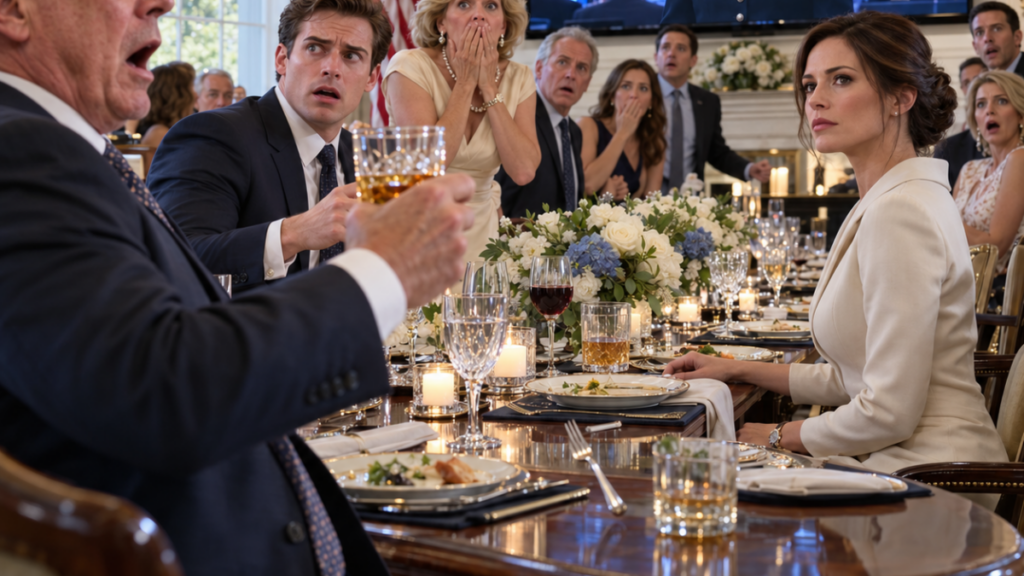
Mi padre alzó su copa por mi hermano y luego dijo que yo había servido “a mi manera”. Me quedé callado… hasta que CNN interrumpió: “Última hora: La coronel Tess Fairbanks, la soldado que detuvo el mayor ciberataque de Estados Unidos”. Su copa de bourbon tembló. Ryan palideció y mamá no pudo decir ni una palabra.
En su fiesta de jubilación, mi padre elogió a mi hermano mayor como el orgullo de la familia, y luego redujo mis once años de servicio militar a cinco palabras descuidadas. Ocho segundos después, todos los teléfonos del patio trasero de mi abuela se iluminaron con la misma alerta de CNN, y de repente sesenta invitados se enteraron de algo que mis propios padres jamás se habían molestado en saber sobre mí. Pensé que esa humillación había terminado. No tenía ni idea de que mi hermano ya había robado algo mucho más peligroso que la atención, ni de que mi padre lo había ayudado a hacerlo.
### Parte 1
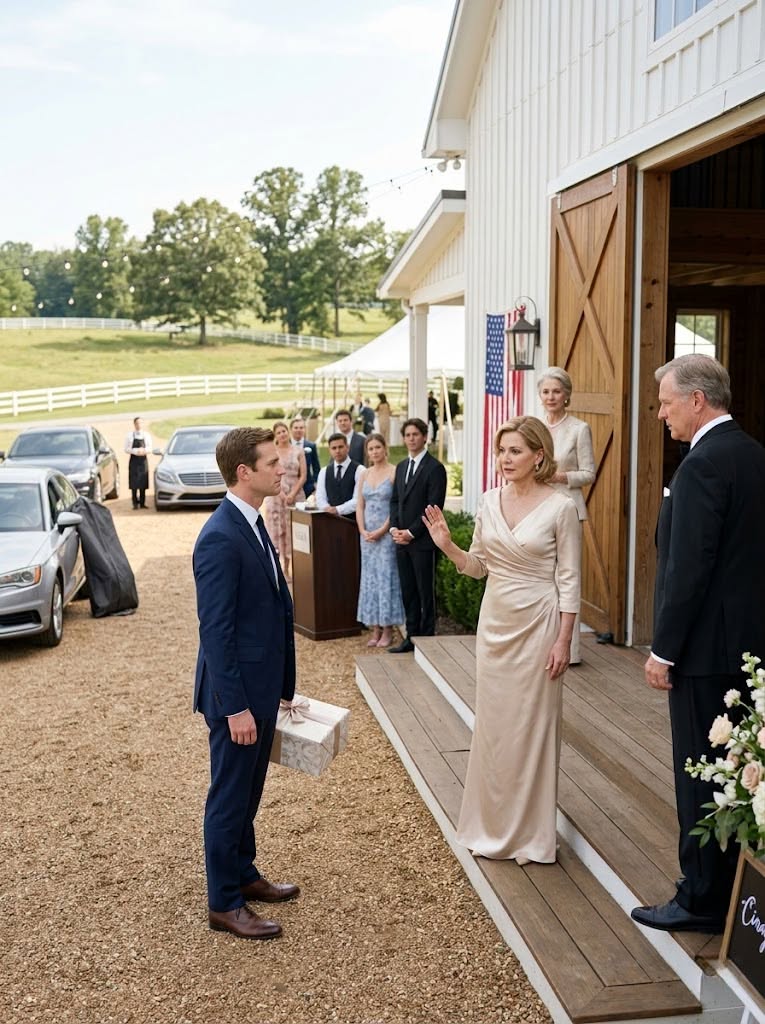
Mi padre alzó su vaso de bourbon bajo las guirnaldas de luces que colgaban de los robles de mi abuela, y las conversaciones en el patio trasero se desvanecieron casi al instante. Era el último sábado de agosto, todavía hacía suficiente calor en Savannah como para que el aire se me pegara a la piel incluso después del atardecer, y unos sesenta familiares, vecinos, exoficiales y amigos de la familia se habían reunido para celebrar los treinta años de servicio militar del coronel Daniel Whitmore. Yo estaba de pie cerca del fondo, con unos pantalones cargo desteñidos, botas desgastadas y el jersey gris con el que había dormido durante mi vuelo desde Washington, mientras mi hermano mayor, Evan, ocupaba el centro del césped con una camisa de lino blanca, con un aspecto tan impecable como si lo hubieran colocado allí para una fotografía de revista.
—Quiero reconocer a quienes le dieron sentido a esta vida —anunció papá, bajando el tono de voz al tono firme y autoritario que siempre usaba cuando tenía público. Sus ojos se dirigieron directamente a Evan—. Mi hijo, el comandante Evan Whitmore, un hombre que lleva el nombre de esta familia con honor, disciplina y la determinación que enorgullece a un padre.
Los aplausos resonaron en el césped antes de que papá terminara de hablar. Evan bajó la cabeza con modestia, sonriendo lo justo para parecer humilde sin que nadie se percatara de su satisfacción, y mi madre, Linda, se llevó una mano al pecho como si estuviera presenciando una ceremonia de premios en lugar de un brindis informal en el jardín. Vi a mi padre recorrer la multitud con la mirada, finalmente fijarse en mí cerca de la mesa de bebidas y dudar lo suficiente como para que algo frío se instalara detrás de mis costillas.
“Y mi hija, Mara”, dijo. “Ella sirve a su manera. Estamos orgullosos de sus decisiones”.
That was it. No rank, no assignment, no mention of the eleven years I had worn the same country’s uniform he had built his identity around, and not even enough eye contact to suggest he understood why his words might sound strange to anyone who knew what I actually did. He turned back toward Evan while scattered polite applause died almost immediately, and someone near the grill laughed at a joke I didn’t hear.
I wrapped my fingers around a sweating glass of water and pressed my thumbnail against the plastic until it bent. For one ridiculous second, I was twelve again, standing in our kitchen with a letter announcing my acceptance to Georgia’s residential science program while Mom searched the counter for Evan’s soccer schedule. I remembered her saying, “That’s wonderful, sweetheart,” without really looking up, and then asking whether I had seen his cleats because he had practice at six.
Evan’s achievements had always entered our family like fireworks. Mine arrived like utility bills—acknowledged, processed, and immediately forgotten. When he earned a B-plus in calculus, Dad took him to a steakhouse; when I won a statewide mathematics competition, Dad asked whether I could help Evan study for his next exam.
I had spent most of adulthood convincing myself that I was too old to care anymore. I had survived training, deployments, sleepless rotations, impossible deadlines, hostile rooms, and enough institutional politics to know that approval was rarely distributed according to merit. Yet one careless sentence from my father still found the exact twelve-year-old bruise I had spent two decades pretending no longer hurt.
Then the phones began chiming.
My cousin Hannah’s screen flashed first. Her husband’s followed, then another phone near the buffet, then two more near the patio, and finally my grandmother’s tablet chimed from beside a platter of cornbread. Through the open kitchen window came the amplified voice of a television anchor my aunt had left playing inside.
“…the Department of Defense confirmed this evening that Army Colonel Mara Whitmore served as the lead architect of the federal cyber-defense framework credited with preventing what officials describe as one of the most extensive attempted infrastructure disruptions in recent American history…”
No one moved.
I heard my own name travel through my grandmother’s kitchen window and float into a yard where my father had just described me as a woman who merely “served in her own way.” Dad’s hand tightened around his bourbon glass. My mother’s smile vanished, and Evan stared toward the house with the stunned expression of someone hearing a language he suddenly realized everyone else understood.
The anchor continued, explaining that the program—known publicly by the sanitized name Project Northstar—had protected interconnected payment systems, emergency communications, transportation networks, and hospital infrastructure during a coordinated digital attack earlier that year. The details were intentionally vague, as they had to be, but my name was not vague. Neither was my rank.
Colonel Mara Whitmore.
Lead architect.
Eleven years of service condensed into facts my family had apparently needed cable television to deliver.
Someone whispered, “Mara?”
I placed my water on the nearest folding table.
I didn’t smile. I didn’t wait for congratulations, and I absolutely did not turn toward my father to watch him rearrange his understanding of me in real time. I slipped through the side gate, walked around Nana’s house, and sat on the old wooden porch swing where Evan and I had spent summer evenings as children.
The party behind the house struggled back to life in awkward fragments. I could hear chairs scraping, conversations restarting too brightly, and my aunt raising the television volume instead of lowering it. The porch smelled of sun-warmed wood and jasmine, and somewhere beyond the neighboring houses a lawn sprinkler clicked rhythmically in the dark.
I was thirty-two years old.
My father had needed CNN to tell him I existed.
The screen door creaked behind me about two minutes later, but the footsteps were too light to be Dad’s. Nana came out carrying two glasses of iced tea, lowered herself beside me, and handed me one without asking permission.
“Well,” she said after a long silence. “That was uncomfortable.”
Despite myself, I laughed.
.
Nana bumped her shoulder against mine. “You want me to tell you your father meant well?”
“No.”
“Good. Because I’m too old to lie that badly.”
I stared toward the dark street. “He didn’t know.”
“No,” she said. “He didn’t.”
That hurt worse than deliberate cruelty would have. Hatred requires attention; indifference requires almost none.
Before I could answer, the screen door opened again.
This time it was Evan.
He stepped onto the porch without the confident grin he had worn in the backyard. His jaw was tight, and his phone was clutched in one hand, the screen still glowing with the news alert.
“You should have told us,” he said.
I looked up at him.
“Told you what?”
“That this was going public.”
Something in his tone made me stop breathing for half a second. Not surprise, exactly, and not pride or even embarrassment.
Concern.
.
The kind of concern people show when a locked door unexpectedly opens.
I studied my brother’s face. “Why would that matter to you?”
His eyes flicked toward Nana.
Then back to me.
“It doesn’t,” he said too quickly.
That was the first moment I knew something was wrong.
And for once, being overlooked meant I was the only person watching closely enough to see it.
### Part 2
I left Savannah the next morning before my parents woke up. Nana packed biscuits into a foil-wrapped bundle and stood barefoot on the porch while I loaded my suitcase into the rental car, and she didn’t ask me to stay for breakfast or wait for Dad to explain himself. She simply kissed my cheek and said, “Drive like everybody else is stupid,” which was the closest my grandmother ever came to expressing fear.
My phone had accumulated thirty-seven messages overnight. Most were from relatives who had apparently discovered an urgent interest in my career after seeing my name on television, while three were from Dad and seven were from Mom, each increasingly emotional as she moved from “We need to talk” to “Please don’t punish us for not knowing what you never told us.” Evan had sent only one: Call me before you speak to anybody.
I deleted his message.
On Interstate 95, with pine trees sliding past beneath a washed-out morning sky, I kept thinking about the phrase before you speak to anybody. Evan had never cared who I spoke to, and he had certainly never cared enough about my work to tell me how to discuss it. For most of my career, he referred to my specialty as “computer stuff.”
The irony was almost funny because there had been a time when I would have given anything for my family to ask questions. At eighteen, fresh from basic training and desperate to prove that leaving home had not meant abandoning anyone, I had sent money back to Savannah every month. Five hundred dollars when I could manage it, sometimes more after bonuses, convincing myself that I was helping repair Nana’s roof, cover summer electricity costs, and handle the ordinary emergencies my mother always described as temporary.
Then Mom called one Tuesday afternoon and spent five minutes telling me how incredible Evan looked in his new suit. I was twenty-one, living on oatmeal and cafeteria coffee because I had transferred almost everything extra in my checking account back home. When I finally asked what suit she meant, she cheerfully explained that they had used my latest transfer to buy him a designer outfit for interviews in Washington.
“You know how competitive those Navy positions are,” she said.
I remembered staring at the wall of my tiny apartment. “You used the money I sent for the roof?”
“He’s your brother, Mara. Family helps family.”
I didn’t argue. Arguing would have required believing she might understand if I explained it correctly.
I simply stopped sending money.
Three weeks later, Dad called. He didn’t ask whether I was angry or struggling, and he certainly didn’t ask whether I had been skipping meals to send those transfers. His first question was whether something was wrong with my bank account.
That phone call changed me more than any fight could have.
The money I kept bought running shoes that didn’t destroy my feet, a mattress that didn’t sag in the middle, groceries that contained actual vegetables, and eventually a weekend at the Outer Banks with three women from my unit. I remember sitting on a weathered porch with cheap wine in my hand, laughing so hard at a story about a disastrous training exercise that my stomach hurt, and realizing I had spent years confusing silence with loneliness.
Sometimes silence is what freedom sounds like when nobody is demanding something from you.
My career accelerated after that. I moved into cyber operations, first as an analyst and later as a planning officer specializing in vulnerabilities across interconnected civilian and defense systems, and somewhere along the way I met Colonel Leah Voss. Leah was compact, precise, and incapable of wasting language; she could make a roomful of senior officers reconsider their assumptions merely by asking, “What evidence supports that?”
The first time she read the preliminary architecture that would eventually evolve into Project Northstar, she sat across from me for nearly twenty minutes without speaking. Then she placed the folder on her desk.
“Where did you learn to think like this?”
I considered giving her the professional answer about training and experience.
Instead I said, “Probably around twelve. Nobody listened, so I learned to check everything twice.”
The corner of her mouth moved.
“Good,” she said. “Let’s make sure that stops.”
She became the first senior officer who treated my career as something worth protecting rather than something useful when convenient. She carried my work into rooms my rank couldn’t access, challenged people who tried to dilute my authorship, and called after late meetings to tell me what had actually happened instead of feeding me sanitized summaries.
Then there was Sergeant First Class Gabriel Ortega.
Gabriel came from El Paso, possessed a dry sense of humor capable of surviving almost any disaster, and had the irritating habit of knowing when I was tired before I admitted it. We spent two years working sixty-hour weeks together, eating vending-machine sandwiches and arguing about contingency pathways while fluorescent lights buzzed over our heads.
One night, after nearly twenty-two hours on site, he handed me terrible gas-station coffee and asked, “You okay?”
“The system is stable.”
“Didn’t ask about the system.”
I looked at him.
He lifted one shoulder. “I asked about you.”
Nobody in my family had asked that question sincerely in years.
So I answered.
I told Gabriel more than I intended to about Evan, my parents, the money, the birthdays forgotten and ceremonies missed, and the strange exhaustion of having a family that praised sacrifice while treating mine as background noise. He listened without interrupting, fixing, minimizing, or telling me I should forgive anyone because blood was blood.
When I finally stopped talking, Gabriel crushed his empty cup and tossed it into a trash can several feet away.
“People who underestimate quiet women,” he said, “always look offended when it becomes expensive.”
The cup missed the trash can completely.
I laughed until a security guard stared at us.
That became one of my favorite memories because it taught me something I should have learned earlier: family is not necessarily the group that knows you longest. Sometimes it is the person sitting beside you beneath fluorescent lights at two in the morning, drinking horrible coffee and asking whether you are okay when nobody else remembers to.
By the time Northstar entered its final development phase, Leah, Gabriel, and I trusted one another completely. We worked for weeks without meaningful days off while an evolving digital threat tested multiple federal systems, and the effort required dozens of teams whose identities would never appear in newspapers. When the immediate danger ended, Leah shook my hand in a secure conference room and said, “History will know who built this eventually.”
I didn’t care whether history knew.
At least, I thought I didn’t.
Four months later, Gabriel appeared in my office carrying his coffee so carelessly that it sloshed onto his hand.
“You need to see something.”
The expression on his face turned my stomach before he even opened his laptop.
On the screen was my brother.
Evan sat beneath studio lights in his Navy dress uniform, facing a national television anchor with perfect posture and practiced humility. The segment’s title referred to an American officer behind a groundbreaking defense initiative.
I expected him to discuss Navy cyber readiness.
Instead, he began describing Project Northstar.
My Project Northstar.
He explained its layered response architecture, the sequence of threat escalation, the sleepless decision-making, and the pressure of knowing one mistake could affect millions of civilians. Some details were public enough to discuss, but his phrasing was familiar—so familiar that I could hear my own voice beneath his.
The anchor called Evan a quiet national hero.
He lowered his eyes.
“I was just doing my job.”
Gabriel stood beside me without moving.
I watched my brother accept credit for my work before millions of viewers.
Then I reached for my phone.
And called my father.
### Part 3
Dad answered before the second ring. I could hear a television in the background and the familiar creak of his leather recliner, and for one absurd moment I imagined a version of the conversation in which he would be horrified on my behalf. I imagined him demanding to know what Evan had done, offering to call him immediately, maybe even saying the words I had wanted since childhood: I believe you.
Instead, when I asked, “Did you know?” my father became silent.
That silence told me everything.
“Dad.”
“He needed visibility.”
My fingers tightened around the phone. “Visibility for what?”
“His career has stalled, Mara. You know how these promotion cycles work.”
I stared at Gabriel’s laptop, where the interview continued silently with captions moving beneath Evan’s face. “He is describing my operation.”
“He contributed to the broader defense community.”
“He was never assigned to Northstar.”
“You’re being literal.”
“I’m being accurate.”
Dad exhaled loudly, the sound of a man inconvenienced by someone else’s insistence on facts. “You already have the work, Mara. You have your position. Evan needed something that showed strategic leadership.”
I almost laughed because the alternative was throwing the phone through a wall. “So he stole mine?”
“He built on your foundation.”
“He has never been inside our operations facility.”
“Don’t make this bigger than it is.”
The sentence landed harder than anything else he had said.
My father had used some variation of those words my entire life. Don’t make it a competition when Evan received celebrations I didn’t; don’t make it about money when he spent what I sent home; don’t make everything personal when my accomplishments disappeared while his smallest success became family mythology.
I looked at Gabriel.
He had turned away to give me privacy, though we both knew there was none left.
“Did you give him information?” I asked Dad.
Another pause.
“Nothing classified.”
“That wasn’t my question.”
“Mara, be careful.”
The warning in his voice was subtle, but I heard it.
“Did you give Evan information about Northstar?”
“I discussed your career with my son.”
“Your other child.”
“Don’t start.”
I closed my eyes. “Goodbye, Dad.”
“Mara—”
I ended the call.
Gabriel waited several seconds before turning around. “How bad?”
“Bad enough that I need to document this conversation.”
That was the professional answer. The personal answer was that a final door had closed inside me.
For years I had told myself my parents favored Evan because they understood him better, because his career resembled Dad’s expectations, because family patterns become habits nobody examines. What I heard on that call was different: Dad knew Evan had taken credit for my work and considered it reasonable because he believed my success was a family resource available for redistribution.
I was not his daughter in that equation.
I was inventory.
Twelve days later, an administrative suspension arrived.
I found the letter waiting inside a secure envelope on my desk on a rainy Tuesday morning. Effective immediately, my operational access was restricted pending review of a potential unauthorized disclosure of sensitive program information, and the order carried the signature of General Caleb Hargrove.
I read it four times.
Hargrove had disliked me since I had challenged a contractor assessment two years earlier and forced his office to acknowledge a vulnerability they had already described as resolved. He never openly retaliated, because men at his level rarely needed to be obvious, but invitations disappeared, briefing opportunities shifted, and twice I discovered that my recommendations had been presented to senior leadership without my name attached.
Gabriel read the suspension and went pale.
“This doesn’t make sense.”
“It makes perfect sense.”
“You think the television interview triggered this?”
“I think somebody wants the question to become how Evan knew what he knew instead of why he was pretending it was his.”
That evening, rain slapped sideways against my apartment windows while I sat at my kitchen table with coffee growing cold beside the suspension letter. I opened a yellow legal pad and drew three columns: access, motive, sequence.
I did not write resignation.
I wrote names.
At 7:40 p.m., someone knocked.
Leah stood outside in a dark raincoat, carrying a waterproof messenger bag. She stepped inside without ceremony, placed the bag on my kitchen table, and began removing folders.
Printed email chains.
Meeting notes.
Access logs.
Copies of draft presentations.
Her own signed statements about my role in Northstar.
I stared at her. “How long have you been collecting this?”
“Two months.”
“You expected this?”
“I expected somebody to try something.”
“Why didn’t you tell me?”
“Because suspicion without evidence would have distracted you, and I wanted evidence.”
That was Leah: no comforting lie when an uncomfortable truth would do.
She tapped one folder. “You didn’t build Northstar alone, Mara, and you’re not going to defend it alone.”
Twenty minutes later, Gabriel arrived carrying another file.
He had traced a series of informal inquiries from Navy personnel requesting sanitized procedural information connected to our program. Individually, none looked particularly suspicious; together, they formed a pattern leading toward one officer who had worked with Evan.
“These started almost three months before the interview,” Gabriel said.
I flipped through the pages.
“That means he planned it.”
“Yes.”
My stomach tightened.
Stealing credit during an interview was one thing. Preparing a false public narrative for months was another.
Then Leah removed one final document from her bag.
“This arrived through a source this afternoon.”
It was a written assessment concerning my reliability.
The author was my father.
Daniel Whitmore had described me as emotionally volatile, prone to resentment, resistant to authority when personally challenged, and potentially willing to place individual recognition above institutional interests. He had sent the assessment to someone affiliated with Hargrove’s office less than two weeks before my suspension.
I read the final paragraph twice.
Leah watched me carefully. “Mara?”
I felt strangely calm.
My father had not merely defended Evan.
He had created a reason to discredit me in advance.
Dad had spent my childhood forgetting my achievements.
Now he had remembered me precisely long enough to help erase them.
And for the first time, I stopped wondering whether he loved me less than my brother.
I started wondering how far he had gone.
### Part 4
The next three months changed the shape of my life. My operational credentials remained suspended, my name disappeared from meetings I had once led, and every morning I entered an office where people tried too hard not to stare. Nobody openly accused me of leaking information, but suspicion has a sound of its own—the conversations that stop when a door opens, the careful wording in emails, the sudden preference for copying legal counsel on matters that had previously required two sentences.
Leah told me not to react.
“Facts first,” she said.
So I built the record.
Gabriel mapped every request for Northstar-related information that could be connected indirectly to Evan. Leah reconstructed the development timeline from my earliest proposals through final authorization, while I organized drafts, timestamps, briefing notes, version histories, and written objections I had submitted at every critical stage.
The deeper we looked, the clearer the architecture became.
Evan had not independently reconstructed Northstar from public information. He had received enough internal material to reproduce the language and strategic narrative convincingly, while General Hargrove’s office had quietly encouraged public-affairs staff to place him in front of journalists as a visible military voice on cyber defense.
What we still lacked was the connection.
That arrived through Naomi Price.
Naomi was a national-security journalist I had met nearly two years earlier during a background interview about women entering cyber operations. She was patient, skeptical, and irritatingly good at asking one more question after everyone else thought the conversation had ended.
Her encrypted message was only six words.
We need to talk in person.
We met at a quiet coffee shop in Arlington on a Saturday afternoon. Naomi arrived wearing jeans, carrying no visible recorder, and slid into the booth opposite me with the expression of someone who already knew more than she intended to reveal.
“I’ve been tracking the media push around your brother,” she said.
I kept my hands around my coffee cup. “Why?”
“Because it was too clean.”
“What does that mean?”
“One officer appears from nowhere with perfect talking points, immediate producer access, and a heroic narrative attached to a program he was never publicly associated with. Journalists are cynical people, Mara. Anything that convenient makes us nervous.”
She opened her laptop.
There were email references from inside the Defense communications structure, production notes, scheduling records, and summaries of conversations between Evan’s public-affairs contact and representatives linked to Hargrove. Nothing individually proved a conspiracy, but taken together, the pattern was difficult to dismiss.
Then Naomi showed me a message discussing “positioning Commander Whitmore as a credible external-facing representative for the Northstar success story.”
My mouth went dry.
“Why him?”
Naomi me miró. “Porque Hargrove necesitaba una historia de éxito asociada a su gestión, y tu hermano necesitaba visibilidad”.
“¿Y yo?”
“Te estabas volviendo un estorbo.”
Giró ligeramente el portátil.
En otro mensaje se hacía referencia a mis críticas anteriores a un contratista vinculado a la oficina de Hargrove y se describían las “posibles complicaciones si Whitmore se convierte en la narrativa pública dominante”.
Whitmore.
Durante varios segundos me pregunté a cuál de nosotros se refería el escritor.
Entonces lo entendí.
A mí.
Pasé mi infancia aprendiendo que Evan podía volverse más importante simplemente entrando en una habitación. Ahora, ese mismo patrón familiar se había trasladado a mi vida profesional: yo hacía el trabajo, él recibía la noticia.
Naomi cerró el ordenador. “Puedo publicar.”
“Aún no.”
Me observó. “La mayoría de la gente en tu posición querría que esto se hiciera público mañana”.
“Quiero que esté correcto mañana.”
Una leve sonrisa apareció en su rostro. “Por eso te llamé”.
La investigación oficial se amplió dos semanas después. Mi abogada, Claire Donnelly, me aconsejó que dejara de hablar directamente con cualquier persona relacionada con el caso, incluida mi familia, así que bloqueé a Evan y solo me comuniqué con mi madre mediante mensajes cortos para confirmarle que estaba bien.
Papá nunca intentó disculparse.
En cambio, envió un correo electrónico.
Mara, esta situación se ha descontrolado. Sean cuales sean los errores cometidos, ventilar asuntos familiares en público causará un daño irreparable. Tu hermano tiene una carrera y unos hijos que mantener. Te ruego que reflexiones más allá de tu enojo.
Lo leí una vez.
Luego lo guardé en la carpeta de evidencias.
No porque el mensaje demostrara que se había cometido alguna irregularidad.
Porque me demostró algo.
Incluso ahora, la preocupación de papá era el daño que Evan pudiera sufrir como consecuencia de las circunstancias, no el daño que yo ya había sufrido por la traición.
Mi suspensión se convirtió en objeto de una discreta controversia interna después de que Leah presentara objeciones formales. Varios oficiales que habían trabajado en Northstar proporcionaron declaraciones que confirmaban mi autoría, y un analista civil de alto rango presentó notas archivadas que documentaban decisiones que yo había tomado antes de que Evan pudiera haber sabido de la existencia del proyecto.
La presión se desplazó hacia arriba.
Entonces Claire me llamó una tarde.
“Habrá una investigación del Congreso.”
Me recosté en mi silla. “¿Público?”
“Parcialmente.”
“¿Cuando?”
“Noviembre.”
Miré por la ventana de mi oficina las ramas desnudas que se movían con el viento. “¿Quién testificará?”
“Tú.”
Mi pulso se ralentizó en lugar de acelerarse.
Claire continuó: “Hargrove comparecerá. Es posible que se llame al personal de comunicaciones. Se le ha solicitado a su hermano que proporcione los registros”.
“¿Y mi padre?”
“Es probable que su informe escrito pase a formar parte del expediente.”
Esa noche, volví a casa andando en lugar de coger el tren. El aire se había vuelto gélido y cada semáforo reflejaba en rojo el pavimento mojado mientras pensaba en Savannah, en el patio trasero, en el vaso de bourbon de papá y en cómo la fiesta se había quedado en silencio cuando CNN pronunció mi nombre.
En aquel entonces, pensé que ser reconocido solucionaría algo.
Ahora comprendía que el reconocimiento no era lo importante.
The record was.
Because applause disappears the second people stop clapping.
A record remains.
Three days before the hearing, Gabriel knocked on my office door holding a newly recovered chain of messages. He closed the door behind him, placed the pages on my desk, and said, “You should probably sit down.”
I read the first page.
Then the second.
The final message had been sent from Evan to my father.
Thanks for the background on Mara. Hargrove says it gives them what they need.
I looked at Gabriel.
The room seemed to tilt.
Until that moment, part of me had still believed Dad’s letter might have been naïve interference.
Now I knew it had been requested.
And my brother had thanked him for it.
### Part 5
The hearing took place on a Thursday morning beneath a sky the color of old steel. I arrived before sunrise, because I had learned years earlier that arriving early is one of the few reliable ways to reduce uncertainty, and sat in a quiet office with Claire while she reviewed questions we had already rehearsed dozens of times. My dress uniform felt heavier than usual, not physically, but because every ribbon represented years my family had treated as scenery.
“Do not argue with Hargrove,” Claire reminded me.
“I know.”
“Do not argue with your brother.”
“I know.”
“And if somebody asks about your father—”
“I answer the question.”
She studied me for a second, then nodded. “Exactly.”
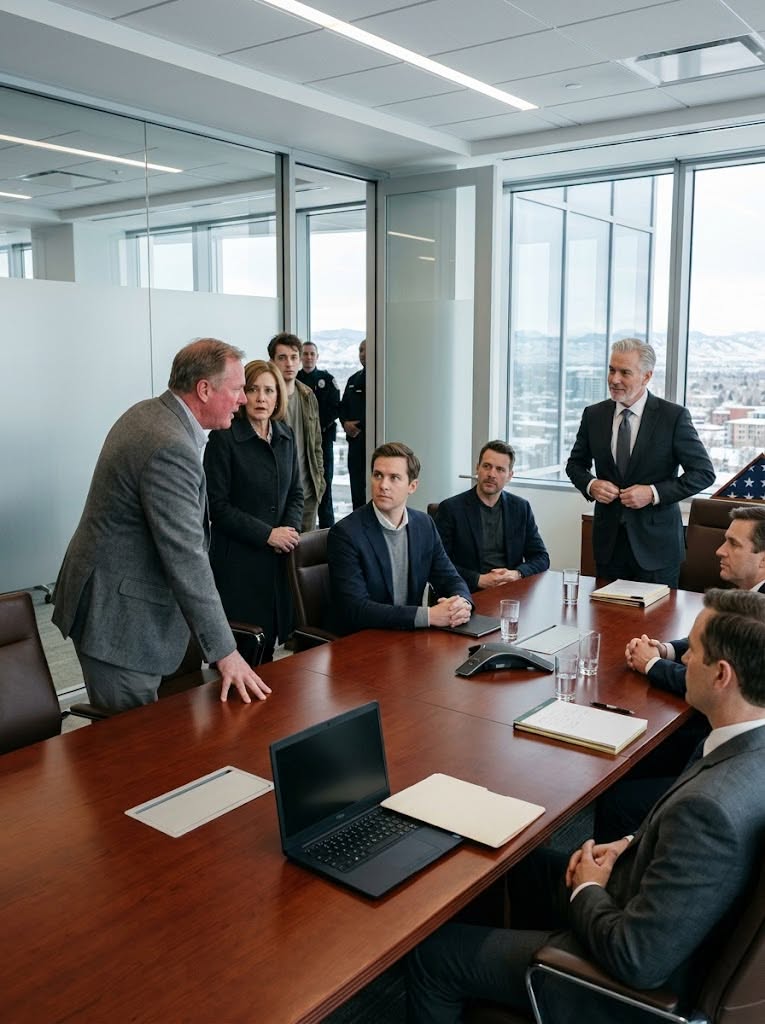
When I entered the hearing room, the public gallery was already filling. Evan sat three rows behind the witness area in Navy dress uniform, his face pale but controlled, while Mom occupied a seat two rows farther back with both hands clasped around her purse.
Dad was absent.
Of course he was.
General Hargrove sat with legal counsel, glasses low on his nose, projecting the exhausted patience of a man who expected bureaucracy to rescue him from accountability. Leah waited along one wall, and Gabriel stood near the rear doors where witnesses and staff moved in and out.
The committee chair opened the session.
When my turn came, I took an oath, sat beneath lights far brighter than I expected, and placed both hands flat on the table.
I did not begin with my father.
I began with dates.
The earliest Northstar architecture draft had been created eighteen months before Evan’s first documented inquiry. I explained my role, the team structure, the authorization pathway, and the separation between technical authorship and senior oversight, carefully avoiding protected information while establishing exactly who had developed what.
Then came the records.
Version histories.
Meeting minutes.
Leah’s memoranda.
Gabriel’s access logs.
The logs mattered because they established something elegantly simple: Evan had never been credentialed for our facility, never assigned to our team, and never participated in the decision-making process he had described on television as though he had personally lived it.
A staff attorney played a short clip from Evan’s interview.
His voice filled the chamber.
“We had nights when every option felt dangerous…”
La grabación se detuvo.
Abrí uno de mis documentos informativos originales.
La frase aparecía casi palabra por palabra.
Otro clip.
Otro pasaje que coincide.
En el cuarto ejemplo, nadie necesitó que yo explicara el patrón.
Evan se quedó mirando al suelo.
A continuación, el equipo de Claire presentó los registros de comunicaciones.
La oficina de Hargrove había discutido la creación de una narrativa pública en torno a Northstar antes de que el éxito del programa pudiera atribuirse por completo a fuentes abiertas. La conexión de Evan con asuntos públicos ofrecía a un condecorado oficial de la Armada que podía hablar con soltura en televisión, mientras que Hargrove se beneficiaba de la cobertura que vinculaba la operación con el liderazgo estratégico bajo su influencia de mando.
No se trataba de una conspiración cinematográfica.
Era algo más común y, por lo tanto, más creíble.
Personas que se utilizan unas a otras.
Evan quería ascender.
Hargrove quería reconocimiento.
Resultaba un inconveniente porque yo tenía el derecho más claro a la obra.
Entonces apareció la carta de mi padre.
El presidente del comité me preguntó si lo reconocía.
“Sí.”
“¿Quién lo escribió?”
“Mi padre, el coronel retirado Daniel Whitmore.”
Un murmullo recorrió la galería.
Mantuve un tono de voz firme.
La silla me pidió que describiera su significado.
Podría haber dicho que me rompió el corazón.
Podría haber explicado cada cumpleaños olvidado, cada premio escolar eclipsado por Evan, cada dólar desviado, cada conversación en la que aprendí que ser útil era la forma más segura de seguir siendo bienvenida.
En cambio, dije: «La carta ofrecía una caracterización personal que podría usarse para interpretar un desacuerdo profesional común como evidencia de inestabilidad emocional».
“¿Tu padre estaba cualificado para realizarte una evaluación psicológica?”
“No.”
“¿Tenía acceso a información sobre tu comportamiento en el lugar de trabajo?”
“No.”
¿Era consciente de que la evaluación podría afectar a una revisión de seguridad en curso?
Miré hacia Evan.
Su rostro había cambiado.
—Sí —dije—. Las pruebas indican que lo era.
El mensaje apareció en la pantalla.
Gracias por la información sobre Mara. Hargrove dice que les proporciona lo que necesitan.
Mamá hizo un pequeño ruido detrás de mí.
No me di la vuelta.
El presidente del comité se inclinó hacia adelante. «Coronel Whitmore, ¿está usted afirmando que su suspensión administrativa fue una represalia y no una medida de seguridad legítima?»
Elegí cada palabra con cuidado.
“Afirmo que las pruebas demuestran que personas con incentivos personales y profesionales coordinaron información que influyó en la revisión antes de que se me diera la oportunidad de responder.”
La habitación quedó en silencio.
“¿Cree que su historial de servicio se convirtió en garantía?”
Pensé en papá en Savannah diciéndome que no hiciera las cosas más de lo que eran.
—Sí —dije—. Eso es lo que indican los registros.
El abogado de Hargrove objetó varias caracterizaciones durante su testimonio esa misma tarde. Hargrove insistió en que las decisiones se habían tomado de buena fe, describió la coordinación con los medios como algo rutinario y sugirió que la entrevista de Evan simplemente reflejaba una comprensión general de los conceptos de defensa que podían ser objeto de debate público.
Entonces, un miembro del comité preguntó por qué las comunicaciones internas se referían a controlar “el asunto de la autoría de Whitmore”.
Hargrove dejó de hablar.
Por primera vez en todo el día, vi miedo.
No tener pánico.
El cálculo ha fallado.
Varias horas después, fuera de la sala de audiencias, bajé las escaleras del Capitolio, donde me esperaba un viento helado y un cielo pálido de la tarde. Gabriel apareció a mi lado sin decir palabra, con las manos en los bolsillos del abrigo.
Un minuto después, Leah se unió a nosotros con tres cafés de máquina expendedora.
Tomé uno.
Sabía fatal.
“Algunas tradiciones merecen ser preservadas”, dijo Gabriel.
Me reí en voz baja.
Los periodistas se agolpaban cerca de los escalones inferiores, gritando preguntas a los abogados y funcionarios. Nadie se nos acercó de inmediato, y agradecí ese extraño momento de tranquilidad.
Entonces mi teléfono vibró.
Un mensaje de texto de mamá.
Tu padre quiere saber si entiendes lo que le has hecho a esta familia.
Lo miré fijamente.
Gabriel vio mi cara pero no preguntó nada.
Escribí una frase.
Entiendo perfectamente lo que dejé de permitir que esta familia me hiciera.
Entonces bloqueé el número.
Por primera vez desde mi infancia, no me pregunté si papá se enfadaría.
Me pregunté por qué alguna vez había creído que su ira era algo que yo podía controlar.
### Parte 6
Las consecuencias llegaron de forma gradual, no dramática. No hubo una sola tarde en la que la justicia descendiera del cielo, ni una confesión televisada, ni una escena satisfactoria en la que Evan o el general Hargrove lo admitieran todo. Las instituciones siguen adelante con memorandos, revisiones, reuniones de asesores, decisiones de personal y declaraciones cuidadosamente elaboradas, diseñadas para decir lo suficiente sin decir demasiado.
Cuatro semanas después de la audiencia, Hargrove anunció su jubilación.
No hubo ninguna ceremonia importante.
La condecoración pendiente de Evan fue retirada mientras la Marina iniciaba su propia investigación administrativa sobre sus declaraciones públicas y el uso de información relacionada con Northstar. Varios meses después, me enteré por canales profesionales de que había sido reasignado a un puesto de logística en Norfolk.
No lo llamé.
Envió tres correos electrónicos.
El primero culpó a Hargrove.
El segundo culpó a papá.
El tercero finalmente me mencionó.
Mara, sé que crees que te robé algo, pero estaba intentando labrarme una carrera en un sistema que premia la visibilidad. Tú ya tenías credibilidad. Pensé que tomar prestada tu historia no cambiaría lo que ya habías logrado.
Leí la frase dos veces.
Tomando prestada la historia.
Incluso después de todo, Evan no fue capaz de usar el verbo correcto.
Él lo había tomado.
Esa noche redacté una respuesta, la borré, redacté otra y también la borré. Por la mañana comprendí que no existía combinación de palabras capaz de generar empatía hacia alguien que había creído durante treinta y cinco años que mis logros eran suficientes para redistribuirlos.
Así que no envié nada.
Dos meses después de la audiencia, mi madre me llamó desde un número que yo no había bloqueado.
Casi me negué.
En cambio, respondí.
Su voz sonaba más débil de lo que recordaba.
“Encontré algo que te pertenece.”
Esperé.
“Me gustaría devolverlo.”
“¿Qué?”
“Por favor, baje.”
Estuve a punto de decir que no. Savannah ya no tenía casi nada que me interesara, pero la abuela me llamaba con frecuencia y el invierno había empeorado su artritis, así que accedí a visitarla en enero.
Mamá me esperaba en el porche de la abuela cuando llegué.
La casa lucía exactamente igual que en la fiesta de jubilación de papá, solo que los árboles estaban desnudos y el césped donde sesenta invitados habían estado estaba seco por el invierno. No había guirnaldas de luces, ni mesas de banquete, ni aplausos.
Mamá sostenía una caja de zapatos.
Me lo entregó sin intentar abrazarme.
Dentro estaba mi carta de nombramiento del ROTC, ligeramente amarillenta en los bordes. Debajo había una fotografía mía a los dieciocho años, después del entrenamiento, entrecerrando los ojos por la luz del sol con una sonrisa tan amplia que apenas reconocía a la persona que había sido.
Al fondo estaba mi primera Medalla al Mérito del Ejército.
Todavía en su estuche.
Lo levanté con cuidado.
“¿Dónde fue esto?”
“El garaje.”
La miré.
—En una caja de almacenamiento —susurró.
Por supuesto que sí.
Años antes, la medalla había sido enviada a la dirección de mis padres mientras yo me mudaba entre diferentes destinos laborales. Nadie mencionó haberla recibido.
“¿Qué etiqueta tenía la caja?”
Los ojos de mamá se llenaron de lágrimas.
“Estacional.”
Se me escapó una risa antes de poder controlarla.
No porque algo fuera gracioso.
Porque era demasiado perfecto.
Mi primer reconocimiento militar pasó años junto a las decoraciones navideñas.
Mamá se tapó la boca.
“Lo lamento.”
Observé su rostro y sentí algo inesperadamente complejo. La ira seguía ahí, pero junto a ella reinaba el agotamiento, y debajo de ambos, el dolor por una relación que había fracasado tan repetidamente que incluso las disculpas parecían cosa del pasado en lugar de algo útil.
—Debería haberlo visto —dijo ella.
“Sí.”
“Debería haberte visto.”
“Sí.”
Ella se estremeció, pero yo ya no quería andarme con rodeos para proteger a la verdad, a personas que nunca me habían protegido de ella.
“Yo seguía pensando que tu padre tenía más criterio debido a su carrera”, continuó. “Y Evan necesitaba más porque las cosas eran más difíciles para él. Tú siempre fuiste tan capaz”.
“Esa se convirtió en la excusa.”
“Lo sé.”
“El niño que sobrelleva bien el abandono no necesita menos cuidados.”
Mamá bajó la mirada.
“Ahora lo sé.”
Volví a colocar la medalla en su estuche y puse la caja en la barandilla del porche, entre nosotros.
La cortina delantera se movió.
Papá estaba dentro.
Podía sentir su presencia sin verlo.
Mamá notó mi mirada. “Quiere hablar”.
“No.”
“Pronto-“
“No.”
“Está avergonzado.”
“Esa es una emoción que él debe controlar.”
“Perdió amigos después de la audiencia.”
La miré.
Enseguida se dio cuenta de lo que había dicho.
“¿Quieres decir que hubo consecuencias?”
Sus hombros se hundieron.
“Sí.”
La puerta principal permaneció cerrada.
Por un instante, una parte de mí deseó que papá saliera de todos modos. Anhelaba la confrontación que mis versiones más jóvenes habían ensayado miles de veces: que finalmente admitiera su error, que yo pronunciara un discurso perfecto, que se produjera un reconocimiento imposible entre nosotros.
Pero la vida real rara vez ofrece discursos que reparen décadas.
A veces, una puerta cerrada es simplemente una puerta cerrada.
Cogí la caja de zapatos.
“Me llevo estos.”
Mamá asintió.
“No lo perdono.”
“Entiendo.”
“I’m not asking you to leave him either. That’s your life.”
Tears slipped down her cheeks.
I touched her hand briefly.
Not reconciliation.
Not absolution.
Just acknowledgment.
Then I walked down the porch steps.
Dad never came outside.
I never entered the house.
As I reached my car, Mom called my name.
I turned.
“He did watch the hearing.”
I waited.
“All of it.”
I looked at the front window once more.
“Good,” I said.
Then I drove away.
That was the last time I returned to Foresight Drive.
### Part 7
Six months later, I received an offer from the National Defense University for a senior fellowship in cyber operations. The position carried less operational authority than my previous assignment but offered something I had never expected to want: the chance to build a program instead of merely survive inside one. After eleven years of running toward emergencies, designing defenses, and arguing with people who considered foresight pessimism until a crisis proved otherwise, teaching felt almost radical.
I accepted.
My new office had an ordinary window overlooking trees rather than secure corridors, and on the first morning I sat behind a desk with no classified folders stacked beside it and wondered whether I had made a terrible mistake. Then twelve officers arrived for the inaugural cohort of a mentorship initiative I had spent months designing.
They changed my mind within ten minutes.
They came from different services and backgrounds, but I recognized something familiar in nearly all of them: sharp eyes, controlled posture, and the wary competence of people accustomed to being underestimated. Some had been the only women on technical teams; others had watched ideas dismissed until repeated by someone more senior, and several had already learned the dangerous professional habit of making themselves useful without making themselves visible.
I named the program the Meridian Initiative.
Leah had once told me that people who spend enough time working in darkness need a reliable line from which to measure where they are. A meridian is a reference point, a structure that helps you orient yourself when everything else shifts.
On the first day, I stood before the group and decided not to give them the speech everyone expected.
I did not tell them to be resilient.
I had grown suspicious of that word.
Too often, resilience is praised by people who benefit from somebody else enduring what should have been stopped.
Instead I said, “Being overlooked is not evidence that you have less value. Sometimes it is evidence that the room has poor vision.”
Several faces lifted.
“Your responsibility is not to spend your entire career repairing other people’s perception. Build good work. Document it. Protect your team. Give credit accurately. And understand that a record matters because memory becomes political the second someone benefits from remembering events differently.”
A young captain named Tessa Nguyen raised her hand.
“What if somebody takes the credit before the record catches up?”
La habitación quedó en completo silencio.
Durante medio segundo, vi a Evan bajo las luces del estudio.
Luego papá bajo los robles.
Sonreí levemente.
“Entonces aprendes a documentarlo todo antes de necesitar la documentación.”
Algunas personas se rieron.
—Hablo en serio —continué—. Fechen sus borradores. Confirmen las decisiones por escrito. Mantengan registros autorizados de sus contribuciones. Compartan el crédito generosamente, pero nunca confundan la generosidad con la renuncia a la autoría.
Otro agente preguntó: “¿No es eso cínico?”
“No.”
Reflexioné sobre la pregunta.
“El cinismo parte de la premisa de que todo el mundo te traicionará. La preparación, en cambio, consiste simplemente en aceptar que alguien podría hacerlo.”
Después de clase, Gabriel llamó desde Texas, donde se había trasladado a un puesto de formación más cerca de su familia. Escuchó mientras le describía al grupo y luego dijo: «Mírate, corrompiendo a los jóvenes con sistemas de archivo».
“Prefiero el término ‘memoria institucional’”.
“Parece más caro.”
Antes de finalizar la llamada, preguntó, como siempre hacía: “¿Estás bien?”.
Esta vez respondí sin dudarlo.
“Sí.”
Y lo decía en serio.
Leah nos visitó varias semanas después. Había sido ascendida y llegó diez minutos tarde con dos cafés, uno de los cuales tenía un sabor sospechosamente mejor que cualquier otro que hubiera comprado durante nuestros años de actividad.
—Te has ablandado —le dije.
“El rango conlleva privilegios.”
Recorrimos el aula después de que los estudiantes se marcharan.
“Has construido algo bueno”, dijo ella.
Esas palabras tuvieron un impacto diferente al que jamás habrían tenido los elogios de mi padre.
No porque la aprobación de Leah reemplazara la suya.
Porque finalmente comprendí que el reconocimiento de una sola persona no debería tener el peso suficiente para definir el valor de otra.
Mi oficina fue acumulando objetos poco a poco.
Una pequeña planta que, según un estudiante, sobreviviría incluso a mi descuido. Una copia enmarcada de la primera página oficial del concepto Northstar. Una fotografía que Nana me envió desde Savannah, en la que aparece sosteniendo triunfante un tomate enorme.
Luego llegó un paquete de Gabriel.
Dentro había una fotografía de un ejercicio conjunto realizado tres años antes. Gabriel y yo estábamos de pie junto a estantes de equipo provisionales, ambos exhaustos y cubiertos de rotulador borrable, sonriendo a la cámara como si la falta de sueño fuera un juego.
En el reverso, con su letra apretada, había escrito:
Prueba de que estuvimos aquí.
La coloqué junto a la carta de cita enmarcada que encontré en la caja de zapatos de mamá.
La carta que había pasado años en un garaje indicaba “almacenamiento estacional”.
Mi nombre aparecía en ambos.
Mi nombre real.
No es el nombre que mi padre olvidaba durante sus discursos.
No era el nombre que Evan tomaba prestado cuando le convenía.
No es el nombre que Hargrove intentó reducir a un problema de personal.
Mara Whitmore.
Una tarde, casi al final del semestre, recibí un mensaje de Nana.
Tu padre preguntó por el programa Meridian.
Me quedé mirando la pantalla.
Entonces apareció otro mensaje.
Le dije que lo buscara en Google.
Me reí tan fuerte que el oficial de la oficina de al lado llamó a mi puerta para asegurarse de que estaba bien.
Era.
Más que bien.
La curiosidad de mi padre llegó años tarde para convertirse en amor, pero por una vez no sentí la necesidad de apresurarme a abrirme paso. No le envié artículos, fotografías ni explicaciones.
Él podría conocerme de la misma manera que lo hizo en su fiesta de jubilación.
Desde fuera.
Porque el acceso a mi vida ya no era un derecho de nacimiento.
Era algo que la gente se ganaba simplemente presentándose.
Y finalmente dejé de dejar la puerta abierta para gente que nunca lo hacía.
### Parte 8
La primera promoción de Meridian se graduó la primavera siguiente. No hubo una ceremonia multitudinaria, solo un auditorio luminoso, varias filas de familiares y compañeros, y doce oficiales con una postura más erguida que el día de su llegada. Los vi cruzar el escenario uno por uno y sentí un orgullo que no había experimentado durante Northstar, porque este logro no requería ningún secreto.
Después, Tessa Nguyen se detuvo a mi lado.
Había aceptado un nuevo puesto al frente de un equipo de planificación técnica.
—¿Sabes lo que hice? —preguntó ella.
“¿Qué?”
“Documenté la negociación.”
Me reí.
Ella sonrió. “Todas las responsabilidades. Todas las líneas de autoridad. Todo lo que prometieron.”
“Bien.”
“Y copié a las personas adecuadas.”
“Aún mejor.”
Ella se puso seria.
“Cambiaste mi forma de pensar sobre el crédito.”
Consideré corregirla.
En cambio, dije: “Solo asegúrate de cambiar la forma en que lo das”.
Eso importaba más.
Con el tiempo, Northstar se convirtió en un caso de estudio entre muchos en el ámbito de la formación militar profesional. Mi papel permaneció en el expediente oficial después de que la investigación me exonerara, y la suspensión administrativa desapareció de la narrativa que se utilizaba al hablar de mi trayectoria profesional.
Pensé que la reivindicación se sentiría con más fuerza.
No lo hizo.
Fue como despertarse una mañana y darse cuenta de que una máquina que había estado zumbando en la habitación de al lado durante años finalmente se había apagado.
Evan nunca volvió a mi vida.
Tres años después de la audiencia, me enteré por mi madre de que había dejado el servicio activo y había aceptado un puesto de consultor. Al parecer, le iba bien: estaba casado, criaba a sus hijos y aún era capaz de entrar en cualquier lugar con la seguridad de quien espera que la luz lo ilumine.
No sentí casi nada.
Eso me sorprendió.
Durante años, me había imaginado que la sanación significaría perdonarlo, volver a enfrentarme a él o, finalmente, escuchar una disculpa lo suficientemente sincera como para enmendar algo.
En cambio, la curación parecía algo irrelevante.
Su vida continuó en otro lugar.
El mío también.
Mi madre y yo desarrollamos una relación cautelosa, aunque en términos diferentes. Hablábamos de vez en cuando, sobre todo de la abuela, y dejó de insistirme en que me reconciliara con mi padre después de que le dijera claramente que si lo hacía, nuestras conversaciones terminarían.
Ella respetó el límite.
Eso importaba.
Dos años después de la audiencia, mi padre me envió una carta manuscrita a mi oficina.
Reconocí su letra antes de abrirlo.
Inmediatamente,
He dedicado mucho tiempo a pensar si una explicación serviría de algo. Creo que no. Favorecí a tu hermano. Me convencí de que necesitabas menos porque pedías menos, y usé tu fortaleza como excusa para prestar atención a otra cosa. Cuando Evan pidió ayuda, lo ayudé sin preguntar a quién podía perjudicar. Cuando escribí esa carta, me dije que lo estaba protegiendo a él y a la familia. Estaba equivocada.
La carta continuaba en otra página.
Él no me pidió que lo perdonara.
Eso fue lo más inteligente que escribió.
La doblé y la guardé en un cajón.
Nunca respondí.
Algunas personas podrían considerarlo cruel.
No.
El perdón no es una compensación que las víctimas deban pagar tras recibir una disculpa adecuada. Papá tenía derecho a arrepentirse de lo que hizo, a cambiar su forma de vida y a convertirse en una mejor persona.
Tenía derecho a no participar en esa transformación.
Nana falleció plácidamente el invierno siguiente, a los ochenta y nueve años. Fui a Savannah para el funeral, aunque me alojé en un hotel en lugar de en la casa familiar. La iglesia estaba llena de vecinos, primos lejanos y gente que la recordaba como la mujer que repartía guisos durante los huracanes y que una vez ahuyentó a un mapache de su porche con una escoba.
Papá estaba sentado al otro lado del pasillo.
Parecía mayor.
Cuando terminó la ceremonia, nuestras miradas se cruzaron.
Ninguno de los dos se movió de inmediato.
Entonces me dedicó un leve asentimiento.
Lo devolví.
Eso fue todo.
Afuera, bajo los robles cubiertos de musgo español, mamá me abrazó y Evan se quedó a unos metros de distancia junto a su familia. Me miró una vez, pero me giré para ayudar a una anciana amiga de la abuela a bajar las escaleras de la iglesia.
Ya no tenía nada que demostrar enfrentándome a ninguno de los dos.
Las personas que amaba ya estaban a mi alrededor.
Leah había viajado hasta allí para asistir al servicio religioso.
Gabriel había llegado en avión desde Texas.
Dos antiguos compañeros de Meridian aparecieron sin avisarme de que venían, uno de ellos con un café tan malo que supe inmediatamente que Gabriel había elegido ese sitio.
Mientras estábamos juntos en el estacionamiento, comprendí por qué la tristeza no se sentía vacía.
Nana tenía razón años atrás cuando se negó a justificar el comportamiento de papá.
Las personas demuestran su amor a través de la atención.
No es mi intención.
No es genética.
Atención.
¿Quién se da cuenta cuando desapareces de una habitación?
¿Quién pregunta si estás bien en lugar de si aún eres útil?
¿Quién recuerda tus victorias antes de que la televisión se lo diga?
De vuelta en Washington, retomé la docencia.
La Iniciativa Meridian se amplió de doce a veinticuatro oficiales y luego abrió una segunda vía para analistas cibernéticos civiles. Añadimos acuerdos de mentoría, estándares de documentación de autoría y requisitos formales de patrocinio para que los profesionales más jóvenes no dependieran por completo de si alguien influyente se fijaba en ellos.
En el quinto aniversario de Northstar, di una conferencia ante un auditorio abarrotado sobre la memoria institucional.
Nunca mencioné a Evan.
Apenas me mencioné a mí mismo.
En cambio, hablé sobre cómo las organizaciones pierden talento cuando confunden la competencia silenciosa con la tolerancia ilimitada. Expliqué que los líderes tienen la responsabilidad de saber quién hizo el trabajo antes de que comiencen los aplausos, porque el reconocimiento no es un lujo ceremonial: moldea las carreras, la autoridad, la financiación, la confianza y quién recibe la siguiente oportunidad.
Cuando terminó la conferencia, cientos de personas se pusieron de pie.
Por un instante, aquel sonido me recordó al patio trasero de mi padre.
Su vaso de bourbon.
Evan bajo las luces de guirnalda.
Mi propio nombre quedó reducido a una frase vaga antes de que la televisión aclarara la situación.
Pero el recuerdo ya no duele de la misma manera.
Esa noche, me quedé solo en mi oficina después de que todos se marcharan.
La fotografía de Gabriel reposaba junto a mi carta de nombramiento.
Prueba de que estuvimos aquí.
Pensé en la chica de dieciocho años de aquella vieja foto de entrenamiento, con el sol en los ojos, sonriendo porque creía que el éxito algún día haría que su familia la viera. Deseé poder decirle que pasaría años intentándolo, y que un día finalmente comprendería que el problema nunca había sido el brillo de sus logros.
Algunas personas simplemente deciden dónde mirar.
Mi padre eligió a Evan.
Durante la mayor parte de mi vida, traté esa decisión como un veredicto.
No lo fue.
Era información.
Apagué la lámpara de mi oficina, tomé mi abrigo y caminé hacia el pasillo. A través de las paredes de cristal del aula, aún podía ver las notas de la sesión de la tarde y las sillas vacías donde se sentaría mañana otra generación de oficiales.
Mi teléfono vibró.
Un mensaje de Tessa.
Salió la lista de ascensos. Lo logré.
Debajo había otra línea.
Lo documenté todo.
Sonreí.
Felicidades, Coronel, escribí.
Entonces salí a la fría noche.
Años atrás, bajo unos magnolios en Savannah, mi padre había brindado por el niño que, según él, llevaba su nombre correctamente. Ocho segundos después, un presentador de televisión pronunció el mío y le tembló la mano.
Durante mucho tiempo, pensé que ese era el momento en que finalmente me haría visible.
Ahora lo entiendo de otra manera.
Siempre había sido visible para las personas dispuestas a mirar.
Leah me vio.
Gabriel me vio.
Nana me vio.
Los soldados y analistas que construyeron Northstar a mi lado me vieron.
Los oficiales que estaban sentados en mi aula me vieron.
Con el tiempo, aprendí a verme a mí misma sin necesidad de que nadie más confirmara esa imagen.
El vaso de mi padre tembló aquella noche.
No lo había hecho.
Y esa fue la diferencia que pasé media vida aprendiendo a comprender.
Él pensaba que la noticia de última hora había cambiado quién era yo.
No lo hizo.
Eso solo puso de manifiesto lo poco que sabía.
Yo no era la hija con la que brindó.
Yo nunca lo sería.
Yo fui la mujer que construyó la obra, sobrevivió al robo, corrigió los hechos y creó algo más grande que la familia que una vez le había enseñado a desaparecer.
Y cuando finalmente dejé de esperar sus aplausos, descubrí que el silencio no estaba vacío en absoluto.
Era mío.
¡EL FIN!
Descargo de responsabilidad: Nuestras historias están inspiradas en hechos reales, pero han sido cuidadosamente reescritas con fines de entretenimiento. Cualquier parecido con personas o situaciones reales es pura coincidencia.
Descargo de responsabilidad: Esta historia es ficticia y se creó únicamente con fines de entretenimiento. Los nombres, personajes, lugares y eventos son ficticios o se utilizan de forma ficticia. No se pretende representar a ninguna persona u organización real.