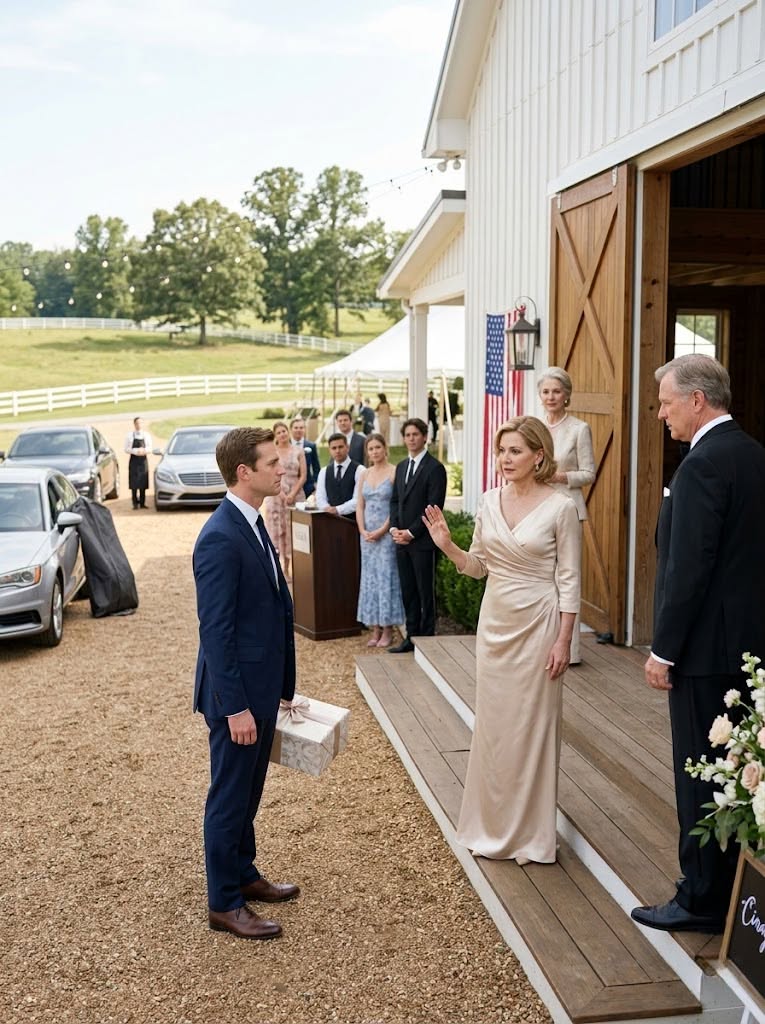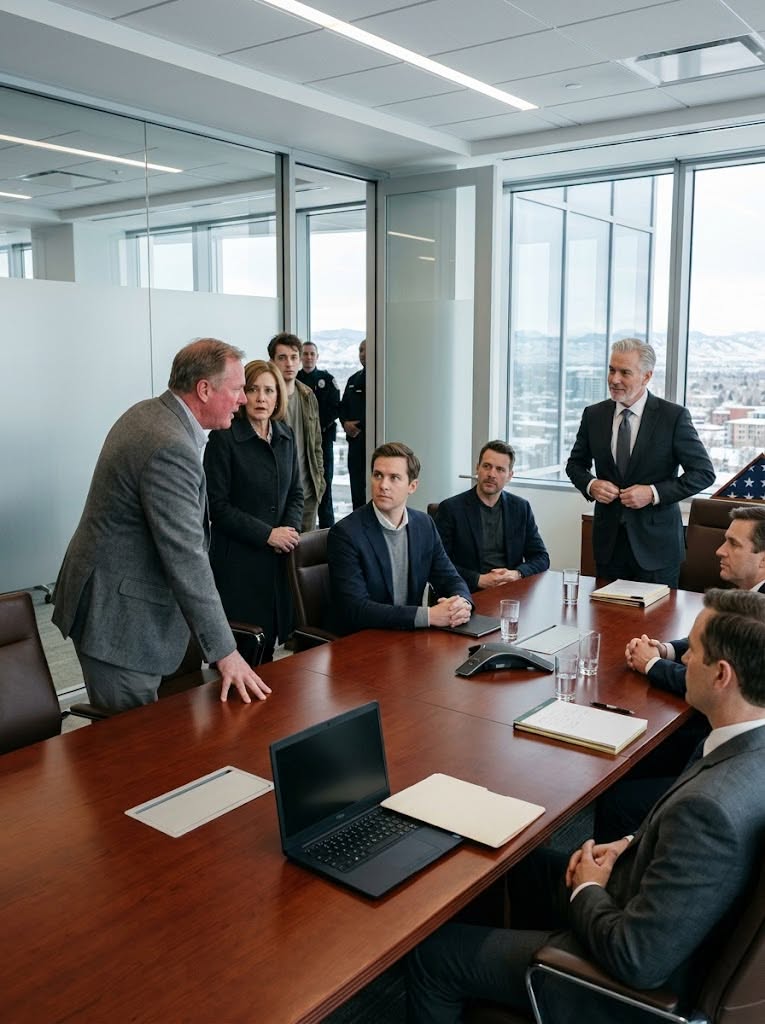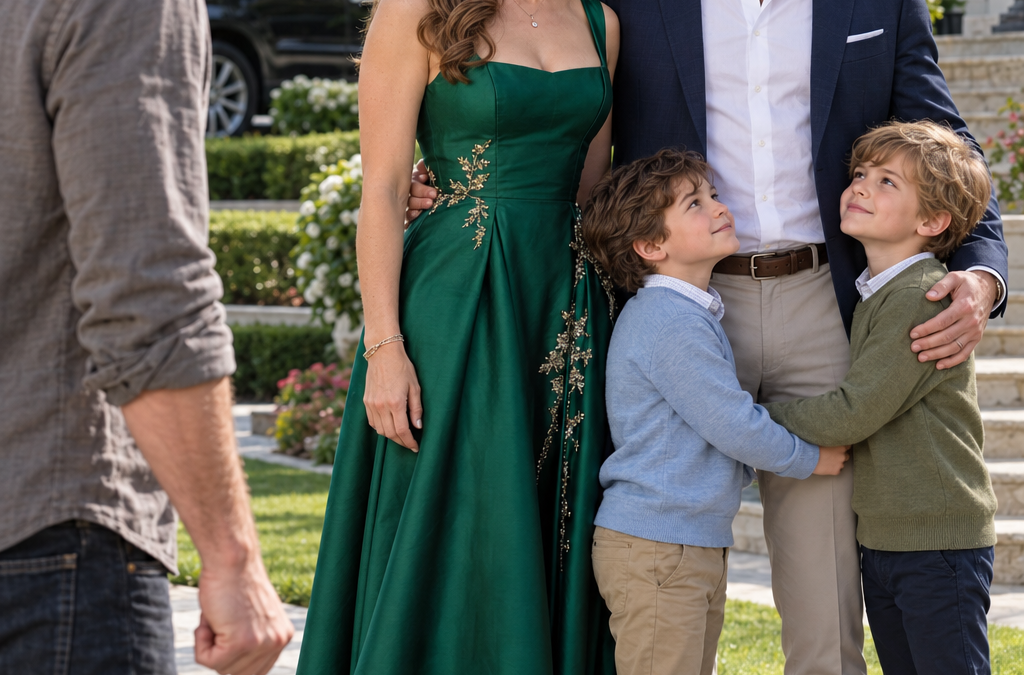
 HERE’S THE NEXT PART OF THE STORY, ENJOY !! The explosive twist and the final ending of this story !

 Thank you

“No.”
“Then we’re ahead of them.”
I didn’t understand what he meant.
I would by Sunday.
My mother summoned me to Hawthorne House Friday morning.
The message was short.
Family meeting. Ten o’clock. Don’t make this difficult.
Hawthorne House had belonged to my grandmother’s family for ninety-one years.
It sat on sixty-eight acres outside Asheville, surrounded by oak trees and fields that turned gold every October.
I learned to ride a bicycle on that driveway.
I learned multiplication at the kitchen table.
I slept beside my grandmother after my grandfather died because she hated waking up alone.
Most people in my family thought of Hawthorne House as property.
To me, it had always been evidence.
Evidence that something could survive bad years.
When I arrived, Grant’s Range Rover was already outside.
So was Lydia’s Mercedes.
My mother, Patricia, waited in the library with Uncle Russell.
Grant stood by the fireplace.
Lydia sat beside him.
Beside him.
Already.
My mother pointed to a chair.
“Sit down.”
I remained standing.
She sighed.
“Evelyn, this family has endured enough public embarrassment.”
I almost laughed.
Nobody outside that room knew anything.
Yet somehow my humiliation had embarrassed them.
“What exactly have you endured?” I asked.
My mother ignored the question.
“Grant and Lydia have admitted that their relationship developed over the past several months.”
“Developed.”
Lydia crossed her legs.
“You don’t have to make it vulgar.”
Grant looked at me.
“We were unhappy for years.”
“You forgot to mention that during dinner Tuesday.”
His jaw tightened.
My mother slapped one hand against the desk.
“This is precisely what I mean. There is no benefit in being sarcastic.”
Uncle Russell slid a folder toward me.
“We need to separate emotion from practical matters.”
There it was.
The pen.
I stared at it.
A black Montblanc resting on top of twelve pages.
Exactly as my grandmother had predicted.
Russell cleared his throat.
“Grant has been involved with Hale Architectural Millworks for almost a decade. Lydia is family. Whatever happened personally, we cannot destabilize the company.”
I looked at Grant.
He had joined our family company four years after marrying me.
I had introduced him to every executive.
I had trained him in purchasing.
I had convinced Grandma to give him a regional sales position when nobody else wanted him.
Now he folded his arms as if the place had always belonged to him.
“What are the papers?” I asked.
“A family settlement,” Russell said.
“You’ll receive two hundred fifty thousand dollars and retain your personal retirement accounts. You waive any claim related to Hawthorne House, the family trust, and Hale Millworks.”
Two hundred fifty thousand dollars.
For a house worth millions.
For a controlling interest in a company generating nearly forty million dollars in annual revenue.
For twelve years of work.
I looked at my mother.
“You think I should sign this?”
She didn’t hesitate.
“Yes.”
That hurt more than Grant.
I wish it hadn’t.
But it did.
My mother leaned forward.
“Evelyn, you have never wanted the responsibility of running Hale.”
That was a lie.
I had wanted it when I was twenty-three.
Then Dad had his stroke.
So I postponed graduate school.
I had wanted it again at twenty-six.
Then Lydia’s engagement collapsed and she moved home with thirty-eight thousand dollars in debt.
So I covered payroll at her boutique and took overtime consulting work.
I had wanted it at twenty-eight.
Then Grandma fell and broke her hip.
So I moved my schedule around her physical therapy.
I stayed.
I stayed when everyone else had something more important.
I stayed when Dad forgot my name but remembered Lydia’s.
I stayed when Grandma needed someone at two in the morning.
I stayed when the mill lost two major contracts and Russell wanted to lay off forty-three people.
I stayed when Grant said he needed one more year to build his career before we could start a family.
I stayed until staying became the reason everyone assumed I had nowhere else to go.
That was the moral arithmetic of my family.
My sacrifices had become proof that my time was worth less.
My mother pushed the pen toward me.
“You’re good at starting over.”
Lydia smiled faintly.
“Maybe this is finally your chance.”
I looked down at the settlement.
Then I remembered Samuel Whitmore’s instructions from the day before.
Do not argue.
Do not reveal the trust amendment.
Let them describe, in writing, what they believe they own.
Take copies.
Sign nothing except acknowledgment of receipt.
So I flipped to the last page.
Russell said, “Initial page nine too.”
“I’m reading.”
Grant laughed under his breath.
“For once?”
I looked up.
He stopped smiling.
At the bottom was a detachable acknowledgment confirming I had received the proposed settlement.
I signed only that.
Russell frowned.
“You missed the signature line.”
“No. I signed the part confirming you gave it to me.”
“That’s not sufficient.”
“It is for today.”
My mother stood.
“You have until Sunday evening to reconsider.”
“For what?”
“To accept reality.”
Lydia stood beside Grant.
My mother’s next sentence came almost casually.
“And since the marriage is obviously over, I think it would be healthier if you collected your remaining things from Hawthorne House this weekend.”
I stared at her.
Hawthorne House had never been my marital residence.
My grandmother had given Grant and me the east cottage on the property while our house was renovated.
After Grandma died, my mother simply began acting as though the entire estate belonged to her.
“You’re asking me to leave Grandma’s house?”
“I’m telling you.”
Grant looked almost relieved.
Lydia looked victorious.
That was when I understood the system.
Grant had betrayed me.
Lydia had replaced me.
Russell wanted my signature.
My mother wanted my silence.
Each one believed the others made their cruelty legitimate.
I picked up my copy of the settlement.
“All right.”
My mother blinked.
“That’s it?”
“That’s it.”
No tears.
No shouting.
No threat.
Grant actually smiled.
He thought he had won.
They all did.
Three days later, the locks were changed.
My clothes were put into cardboard boxes in the carriage house.
My mother sent a text.
Your things are outside. Please don’t make a scene.
I stood on the gravel driveway Sunday afternoon staring at fourteen boxes marked EVELYN in Lydia’s handwriting.
Samuel Whitmore stood beside me.
He was sixty-eight, silver-haired, and carried himself like a man who had spent four decades letting arrogant people finish talking.
“Want me to call the sheriff?” he asked.
“No.”
“Good.”
I looked at him.
“You wanted them to do this.”
“I wanted them to establish possession, intent, and exclusion without your consent.”
I stared at Hawthorne House.
Through the front windows, I could see Lydia carrying flowers into the dining room.
Grant appeared behind her.
Samuel picked up one of my boxes.
“Let them enjoy the house.”
“For how long?”
He looked at me.
“That depends on how much rope they need.”
Two weeks later, I learned I was pregnant.
Twins.
I was sitting alone in an examination room when the technician turned the monitor toward me.
“There are two.”
I laughed once because I thought she was joking.
Then I saw them.
Two tiny flickers.
Two heartbeats.
I gripped the edge of the table.
Grant and I had spent almost three years trying to have a child.
There had been appointments.
Blood tests.
Disappointment.
One miscarriage nobody in my family spoke about after the funeral flowers died.
And now, after my marriage had ended, there were two heartbeats inside me.
I cried that day.
Not because of Grant.
Because life had terrible timing and miraculous timing, and sometimes they were the same thing.
I told Grant through my attorney.
His response came through his.
He wanted a paternity test after birth.
He wanted confirmation before discussing “financial obligations.”
Financial obligations.
Not names.
Not cribs.
Not whether I was scared.
Obligations.
Samuel read the letter and asked whether I wanted to respond.
“No.”
“What do you want?”
I rested a hand on my stomach.
“To stop confusing people’s titles with their behavior.”
That was the beginning of my second life.
The first one had been built around being useful.
The second would be built around being awake.
The legal war started quietly.
That surprised my family.
They expected drama.
Instead, they received certified letters.
First, Hale Heritage Trust notified Russell that he had no authority to pledge trust assets.
Then the independent corporate trustee, Piedmont Fiduciary, demanded complete company records.
Then Samuel requested copies of every board resolution passed during the eleven months surrounding Grandma’s death.
Russell called me.
I didn’t answer.
My mother called me.
I didn’t answer.
Grant left a voicemail.
“You’re going to destroy the company just because you’re angry.”
I saved it.
Two days later, Samuel smiled when he heard it.
“Helpful.”
“What is?”
“He just admitted he associates you with authority over the company.”
The red ledger from box 317 became even more important.
Grandma had recorded everything.
Not gossip.
Numbers.
Dates.
Loans.
Board votes.
She had documented every time I personally covered employee health premiums during the recession.
Every strategy plan I wrote without taking a salary increase.
Every weekend I spent at the mill when Russell was golfing.
Every loan Lydia took from family accounts.
Every commission exception Grant received.
At the back of the ledger, Grandma had written:
They call Evelyn dependable because grateful would require admitting the debt.
That sentence almost destroyed me.
Not because Grandma had given me money.
Because she had seen me.
After years of being useful to everyone, someone had noticed the cost.
The second amendment to the Hale Heritage Trust had been signed eighteen months before Grandma’s death.
It transferred fifty-four percent of voting shares in Hale Architectural Millworks into a protected beneficiary trust for me.
Not Patricia.
Not Russell.
Not Lydia.
Me.
Hawthorne House and sixty-eight acres were held by the same trust.
My mother had inherited jewelry, personal accounts, and a lifetime occupancy license for the west wing.
Russell had inherited nonvoting shares.
Lydia had received a cash trust.
But control of the company and eventual control of Hawthorne House had been deliberately placed with me.
And Grandma had built a legal wall around it.
Any attempt by a beneficiary to transfer, disclaim, pledge, or settle trust interests required independent counsel, approval from the corporate trustee, and a thirty-day review period.
I could not have signed away the controlling shares in my mother’s library even if I had wanted to.
Yet Russell had already represented to First Carolina Bank that the “Hale family beneficiaries” had agreed to consolidate ownership.
He had attached documents.
One of them contained my signature.
Except it wasn’t mine.
Someone had copied it from the acknowledgment I signed that Friday.
Samuel laid both pages beside each other.
Same angle.
Same pressure.
Same tiny break in the E.
“Whoever did this,” he said, “was careless.”
I stared at the forged page.
Grant had once joked that I was too trusting to survive in business.
He had been right about the first part.
Once.
Not anymore.
“Will they go to prison?”
“Possibly not. Fraud cases are complicated. Civil consequences will come faster.”
“What do you recommend?”
Samuel folded his hands.
“We give them one opportunity to tell the truth.”
So we scheduled mediation.
Everyone came.
My mother wore navy.
Russell brought two lawyers.
Lydia wore the diamond earrings Grandma had left to my mother.
Grant sat beside her.
By then they were openly together.
They had even announced their engagement.
The irony didn’t hurt anymore.
It almost made things simpler.
Russell’s attorney spent forty minutes explaining why “family intent” supported his client’s management decisions.
Then he produced the supposed transfer document.
Samuel leaned toward me.
“Now.”
I looked across the table at Russell.
“Are you sure that’s the document you want to rely on?”
It was a small question.
Almost timid.
Russell’s attorney glanced at him.
Russell nodded.
“Absolutely.”
I looked at Grant.
“You too?”
He rolled his eyes.
“Evelyn, stop performing.”
Lydia whispered, “This is pathetic.”
My mother said, “Enough.”
Samuel opened his briefcase.
“Thank you.”
He placed the original acknowledgment on the table.
Then the trust amendment.
Then the bank access log.
Then a forensic document examiner’s preliminary report.
The room changed.
Russell’s attorney stopped touching his pen.
Samuel spoke calmly.
“The signature on your purported consent was digitally reproduced from Mrs. Mercer’s acknowledgment of receipt.”
Russell went pale.
“That is absurd.”
“The metadata from the company file indicates it was created on Mr. Mercer’s office computer.”
Every face turned toward Grant.
He sat perfectly still.
Lydia moved her chair two inches away from him.
It was the first betrayal inside their new alliance.
Samuel continued.
“More importantly, even an authentic signature would not have transferred Mrs. Mercer’s beneficial interest. The Hale Heritage Trust expressly prohibits such transfer without approval from Piedmont Fiduciary and independent counsel.”
My mother looked at me.
“What trust?”
For the first time in my life, Patricia Hale looked frightened of something I knew.
Samuel slid the amendment toward her.
“Your mother’s.”
My mother read the first page.
Then the second.
Then she looked at me again.
“No.”
Russell grabbed it.
“This cannot be valid.”
“It was executed eighteen months before Eleanor Hale’s death, witnessed by independent counsel and recorded with the trustee.”
Lydia’s voice became sharp.
“Fifty-four percent?”
“Yes.”
“That’s impossible.”
Samuel looked at her.
“Why?”
No one answered.
That question exposed more than any accusation could have.
Why was it impossible?
Because I wasn’t glamorous?
Because I didn’t demand attention?
Because I spent my life fixing problems instead of announcing victories?
Because they had decided the woman who carried everyone could not possibly own the road?
Samuel removed one final envelope.
“This was left with our firm by Eleanor Hale.”
My mother stared at it.
“I want to hear it.”
“It’s a letter.”
“Read it.”
Samuel did.
My grandmother’s words were not sentimental.
That was never her style.
Patricia,
If you are hearing this, there is likely a dispute.
Do not insult me by claiming I was confused.
I knew exactly what I owned and exactly what each of you did with what I gave you.
Russell understands numbers but believes rules are for other people.
Lydia understands attention but confuses it with value.
Grant understands opportunity and mistakes access for entitlement.
Evelyn understands responsibility.
For twelve years, I watched this family reward her sacrifice by asking for more of it.
The voting trust is not a gift.
It is payment long overdue.
Hawthorne is not being given to the favorite.
It is being protected for the person who protected everyone else.
If any of you attempt to pressure Evelyn into surrendering these interests while she is grieving, I instruct the trustee to suspend all discretionary distributions and conduct a full forensic review of company finances.
Do not test this.
Grandma had died nine months earlier.
And still, somehow, she had just entered the room.
My mother’s lips parted.
Russell whispered something to his lawyer.
Lydia stared at the table.
Grant stared at me.
For once, nobody told me I was being emotional.
The forensic review began the following Monday.
The fantasy collapsed quickly after that.
Russell had used company money to cover personal real-estate losses.
Not enough to destroy Hale Millworks.
Enough to remove him.
He agreed to restitution and resigned rather than fight a civil fraud claim he was unlikely to win.
My mother lost access to discretionary trust distributions for eighteen months because she had participated in the coercive settlement attempt.
She retained her west-wing occupancy rights because Grandma had written them carefully.
I honored them.
That surprised her more than revenge would have.
Lydia’s trust remained intact, but under stricter oversight.
She never forgave me for not taking it away.
People like Lydia understood punishment.
Mercy made them uncomfortable.
Grant was terminated from Hale Millworks.
The forged document was referred to investigators.
Ultimately, after cooperation, repayment, and a negotiated agreement, he avoided prison but received probation for his role in falsifying corporate records.
His engagement to Lydia lasted five months.
Apparently betrayal was romantic only while someone else was paying the mortgage.
Their breakup was spectacular.
I watched none of it.
By then, I was seven months pregnant and running Hale Millworks from a desk where my feet barely touched the floor because the twins had turned my body into occupied territory.
Grant requested visitation before the birth.
Then withdrew the request when his attorney explained that custody proceedings would require financial disclosure, parenting evaluations, and consistent attendance.
When Owen and Caleb were born six weeks early, he did not come to the hospital.
Samuel asked whether I wanted him notified again.
“He knows.”
“That wasn’t my question.”
I looked through the NICU glass at two tiny boys under warm lights.
“No,” I said. “I’m done chasing adults toward their responsibilities.”
I never lied to my sons.
They knew Grant was their biological father.
As they grew older, I told them the truth in pieces appropriate for their age.
He had made choices.
He had gone away.
None of those choices were because of them.
That was all they needed when they were four.
Later, they would need more.
I promised myself I would never turn truth into poison just because I had tasted it first.
I met Daniel Brooks when the twins were eighteen months old.
There was nothing cinematic about it.
No rainstorm.
No spilled coffee.
No instant spark.
He was the safety engineer Hale Millworks hired to redesign our finishing facility after an employee injury.
He disagreed with me during our first meeting.
Publicly.
I almost fired him.
Then I realized he was right.
“You hate that sentence, don’t you?” he asked afterward.
“What sentence?”
“That I’m right.”
“I hate how much you enjoyed saying it.”
He smiled.
Daniel was a widower.
His wife had died from cancer four years earlier.
He didn’t use grief as a credential.
He mentioned her only when it mattered.
He had no children.
He did not try to rescue me.
That may have been the first reason I trusted him.
He didn’t compliment my strength every time I was tired.
He just carried groceries when my hands were full.
He learned that Owen hated peas and Caleb would eat anything if you called it dinosaur food.
He sat on the bathroom floor with me at two in the morning when both boys caught a stomach virus.
He never asked them to call him anything.
For three years, he was Daniel.
Then, one Saturday morning when Caleb was five, Daniel was fixing the chain on a bicycle.
Caleb held the wrench.
Owen was drawing chalk roads on the driveway.
I was inside making lemonade.
I heard Caleb say it through the open window.
“Dad, is this one too big?”
Everything stopped.
Daniel didn’t move.
Neither did I.
He looked toward the kitchen window.
Our eyes met.
He didn’t smile.
He didn’t claim it.
He just looked at Caleb and said, “Try the smaller one, buddy.”
That night, Daniel told me he was worried.
“I don’t want them to feel like they’re betraying somebody.”
“Who?”
“Their biological father.”
I thought about Grant.
Then I thought about two children who had never received a birthday call from him.
“They’re five.”
“I know.”
“They’re naming the person who shows up.”
Daniel looked down.
“I just want to deserve it.”
That was the difference.
Grant thought the title belonged to him because of biology.
Daniel thought he had to keep earning it every morning.
I married Daniel the following year.
Small ceremony.
Forty-two guests.
No magazine photographer.
No ice sculpture.
No family performance.
My mother attended.
Lydia did not.
Mom sat in the second row and cried quietly when Owen and Caleb walked Daniel down the aisle.
We were not healed.
But we had stopped bleeding on each other.
Sometimes that is where healing begins.
Seven years after the night I left my husband, Hawthorne House looked different.
That was intentional.
I could have turned it into my private residence.
Instead, I converted most of the property into the Eleanor Hale Family Center.
The west wing remained Mom’s home.
The east wing became classrooms.
The old carriage house became a childcare center for Hale Millworks employees.
The south field became affordable cottages for retired workers.
A scholarship program paid for certification courses, community college, and apprenticeships.
Grandma’s trust had been worth millions.
But that was never the part that mattered most.
The money was proof.
The land was proof.
The voting shares were proof.
For one woman who had spent half her life being told that sacrifice was simply her duty, the inheritance became a written record that her labor had value.
That justice could be tangible.
That being overlooked did not mean being unseen.
On the morning the family center opened, nearly four hundred people filled the lawn.
Employees.
Former employees.
Neighbors.
Local reporters.
Owen and Caleb, seven years old and dressed in matching navy jackets they hated, ran between the folding chairs.
Daniel was helping a maintenance worker fix a crooked sign.
I stood on the porch where Grandma used to drink tea.
Samuel Whitmore, retired now, stood beside me.
“You know,” he said, “Eleanor would complain about the parking.”
I laughed.
“She would complain about everything.”
“She’d be proud.”
That one still hurt.
In a good way.
Then Samuel’s expression changed.
He looked toward the driveway.
A black sedan had stopped near the gate.
Grant got out.
I had not seen him in almost six years.
Time had changed him.
His hair was grayer.
His shoulders looked smaller.
Not physically.
Something else.
Confidence had once entered rooms before he did.
Now he seemed to wait for permission.
Daniel noticed him.
So did my mother.
The crowd did not.
Grant walked toward the porch.
I met him halfway.
“Hello, Evelyn.”
“Grant.”
His eyes moved behind me.
He saw the boys.
I watched recognition hit him.
Owen had his eyes.
Caleb had his smile.
Genetics could be cruelly precise.
“They’re big,” he said.
“They’re seven.”
He swallowed.
“I know.”
I said nothing.
“I heard about the center.”
“That’s why you came?”
“I was nearby.”
It was an obvious lie.
I let him keep it.
For a moment, we stood like two people who had once shared a bed, a mortgage, grocery lists, private jokes, fertility appointments, and plans for names we thought we would choose together.
Then Caleb came sprinting across the lawn.
Daniel had apparently finished fixing the sign.
“Dad!”
Grant turned.
Caleb ran past him.
Straight into Daniel.
Daniel caught him with one arm.
Owen followed.
“Dad, Mom says we have to do the picture before cake.”
“I did not say before cake,” I called.
“Yes, you did!”
“I said before you get frosting on your jackets.”
“That’s basically the same thing!”
Daniel laughed.
Grant didn’t.
His face had gone still.
Owen noticed him.
Children notice tension before adults believe they do.
“Mom?”
I walked over.
“This is Grant Mercer.”
Both boys knew the name.
We had never hidden it.
Caleb looked curious.
Owen looked cautious.
Grant crouched slightly.
“Hi.”
“Hi,” Owen said.
Caleb held Daniel’s hand.
Grant looked at that hand.
Then at me.
“They know?”
“Yes.”
“That I’m…”
“Their biological father? Yes.”
His face tightened.
“And they call him Dad?”
I could have been cruel.
Seven years earlier, I would have imagined a hundred perfect answers.
Now none of them interested me.
“They call Daniel what feels true to them.”
Grant stood.
“I’m still their father.”
Daniel stepped back.
He understood this was not his fight.
That was another reason the boys loved him.
I looked at Grant.
“Biologically, yes.”
“That matters.”
“It does.”
He looked almost relieved.
Then I continued.
“But biology is a fact, Grant. Fatherhood is a relationship.”
His eyes flashed.
“You kept them from me.”
“No.”
“You moved.”
“Twenty-two minutes away.”
“You never called.”
“Your attorney had my address. So did you. You withdrew your custody request. You missed their births. You ignored the certified notices. You had seven years.”
“I was dealing with everything you did to me.”
There it was.
The old instinct.
His consequence, somehow, was my action.
I looked toward Hawthorne House.
The same place where my boxes had once sat outside.
“You forged a corporate document.”
“You destroyed my career.”
“You used my signature.”
“You took everything.”
That made me laugh.
Not loudly.
Just enough.
Grant stared at me.
“You think that’s funny?”
“No.”
“Then what?”
“You still believe I took something that belonged to you.”
His jaw clenched.
“The company would have been ours.”
“Ours?”
“The family’s.”
I looked at the childcare center.
At retired machinist Harold Pierce walking beside his wife.
At twenty-three-year-old Mia Torres, whose apprenticeship scholarship had made her the first person in her family to earn a technical certification.
At my mother sitting beneath an oak tree, older and quieter than she had once been.
At Daniel kneeling to fix Owen’s shoelace.
At Caleb impatiently holding a paper plate because cake had become more urgent than adult history.
“This is the family’s,” I said.
Grant followed my gaze.
For the first time, he seemed to understand that I had not won the estate so I could become the queen of it.
I had changed what inheritance meant.
He looked back at the boys.
“Can I see them?”
“You can ask.”
His eyes met mine.
“You’d let me?”
“If you are serious, we can speak with the family counselor. We can create something appropriate for them. Slowly.”
He looked surprised.
“You don’t hate me?”
“I did.”
The answer came easily.
“For a long time.”
“And now?”
“I don’t organize my life around you anymore.”
That hurt him more.
I could see it.
Hate would have kept him important.
Indifference left him with himself.
A photographer called from the porch.
“Mrs. Brooks! We need the family!”
I turned.
Grant spoke again.
“Evelyn.”
I stopped.
“Was it worth it?”
I looked back.
“What?”
“All of this.”
He gestured toward Hawthorne.
“The lawsuits. Losing everyone. The years.”
I thought about that hotel room.
The crackers.
The brass key.
The fourteen boxes in the gravel.
The ultrasound.
Two heartbeats.
The NICU.
The nights I believed I had ruined my sons’ lives before they had even begun.
The first time Daniel stayed through a fever.
The first time Caleb called him Dad.
The first time Owen asked why his biological father had never come.
The day I signed employee profit-sharing into the Hale bylaws.
The morning my mother finally said, “I should have protected you.”
Not apologized around it.
Not explained.
Said it.
I looked at Grant.
“I lost my husband. I lost my sister. For a while, I lost my mother. I nearly lost faith in my own judgment.”
He lowered his eyes.
“So no,” I said. “None of that was worth it.”
He looked up.
“But what came after was.”
Behind me, Caleb yelled, “Mom!”
I turned.
He was standing beside Daniel and Owen on the porch.
My family.
Not perfect.
Not blood-pure.
Not built according to the plans I had at twenty-five.
But mine.
Samuel lifted his cane impatiently.
“Evelyn, some of us are old!”
I laughed.
“I’m coming.”
Grant stood alone on the lawn.
For a second, I saw the man I married.
Then I saw the man he had chosen to become.
There was grief in that distinction.
But there was freedom too.
I walked toward the porch.
Owen grabbed my left hand.
Caleb grabbed my right.
Daniel leaned toward me.
“You okay?”
“Yes.”
And I was.
Really.
Behind the photographer stood Hawthorne House.
Once, my mother had thrown my belongings onto its gravel driveway because she believed I had no claim to anything inside.
Now its doors were open to workers whose children needed daycare.
To widows who needed legal clinics.
To young people who needed tuition.
To retirees who had given forty years to the mill and deserved more than a plaque.
Grandma had not left me wealth.
Not merely.
She had left me evidence.
Evidence that unpaid labor counted.
Evidence that loyalty had value.
Evidence that silence was not surrender.
Evidence that the person everyone underestimated could still be the one holding the deed.
The photographer raised his camera.
Grant remained at the edge of the lawn.
Not excluded.
Not included.
Simply standing in the place his choices had built for him.
Caleb wrapped both arms around Daniel’s waist.
“Dad, smile.”
Daniel did.
The shutter clicked.
Years ago, Grant had watched me walk out of a bedroom and assumed the woman leaving had lost.
My sister assumed she had won him.
My uncle assumed he had secured the company.
My mother assumed she controlled the house.
They all believed possession meant victory.
They were wrong.
Because a house can be occupied by people who do not own it.
A company can be controlled temporarily by people who never earned it.
A marriage can be kept long after love has left it.
And a title can belong biologically to a man who never bothered to live up to it.
The ceremony began.
I stepped to the microphone.
In my pocket was Grandma’s brass key.
I still carried it on important days.
Not because it opened box 317 anymore.
The box was empty now.
I carried it because it reminded me of the night everyone thought my silence meant I had surrendered.
At the back of the crowd, Grant watched Owen whisper something to Daniel.
Daniel bent down.
Owen kissed his cheek.
Then the three of them laughed.
Grant looked away.
I almost felt sorry for him.
Almost.
Because losing me had been his choice.
Losing the boys had been seven years of choices.
And there are some things no inheritance, no lawsuit, no apology, and no last-minute regret can buy back once another person has spent years quietly earning them.
I placed my hand over the key in my pocket.
Then I looked across the lawn at the man who once told me to leave before I embarrassed myself.
And I wondered whether he finally understood the question I had never needed to ask until now.
“Grant… do you still think I was the one who had nowhere to go?”
THE END
Disclaimer: This story is fictional and created for entertainment purposes only. Any names, characters, places, or events are fictitious or used fictitiously. No real person or organization is intended to be portrayed.