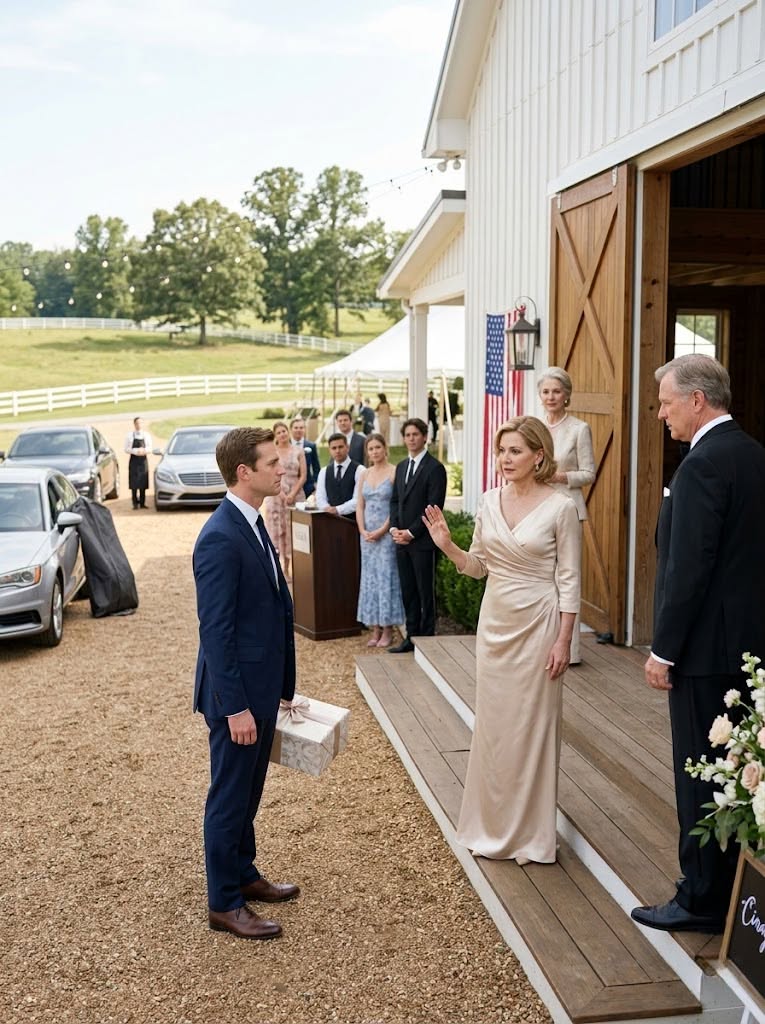
cnu My mother assigned bedrooms in my new house to all three of my sisters without asking me. To my family, I was nothing more than a walking wallet. Their belongings were already spread throughout the rooms, and they expected me to smile, stay quiet, and let them claim everything I had worked so hard to earn.
My mother assigned each of my three sisters a bedroom inside my new house without asking me.
To them, I was nothing more than the family’s walking wallet.
Their clothes already hung inside the closets. Their shoes covered my floors. Their storage bins filled rooms I had not even finished furnishing.
They expected me to smile, remain silent, and surrender everything I had spent ten years building.
So, one day before they planned to move in, I changed every lock, installed security cameras, and waited for them to arrive.
My name is Audrey Miller. I was thirty-three years old, and the property was a five-bedroom craftsman house outside Denver.
I purchased it after a decade of overtime shifts, weekend contracts, postponed vacations, and living inside a studio apartment with a refrigerator that sounded like a lawn mower whenever the motor started.
No one gave me a down payment.
There was no inheritance.
No secret fiancé.
No family loan.
Just discipline.
I worked as a systems analyst for a health-care company and completed private consulting projects at night. While my sisters traveled, upgraded phones, and changed apartments whenever they became bored, I transferred money into the same savings account every month.
I closed on the house in March.
The front door was originally dark brown, but I painted it sage green because the color reminded me of quiet mornings.
I ordered furniture slowly.
I wanted each room to have a purpose.
The upstairs bedroom with the bay window would become a guest room.
The room across from it would hold exercise equipment and books.
The smallest bedroom faced east and filled with soft morning light. I planned to turn it into an office where no one could interrupt me, borrow my charger, or appear carrying an emergency that somehow required my credit card.
That dream survived for exactly twelve days.
One Thursday evening, I stopped at the house after work and found three unfamiliar cars in the driveway.
Pink plastic storage containers had been stacked across the porch.
Two garment racks stood beside the garage.
A rolled mattress leaned against the brick column near my newly painted door.
For one stunned moment, I wondered whether the moving company had delivered someone else’s belongings to the wrong address.
Then I saw my mother standing inside the entryway holding a clipboard.
All three of my sisters were already in the house.
Brianna, the oldest, was measuring the upstairs bedroom with the bay window.
Chloe had opened every closet in the guest room and was hanging dresses by color.
Madison, the youngest, had placed a framed photograph of herself on the nightstand in the small room I intended to use as my office.
I remained in the doorway wearing my work identification badge.
“What exactly is happening?”
Mother smiled as though she had organized a pleasant surprise rather than a home invasion.
“I’ve assigned everyone a bedroom. Your sisters need stability.”
Brianna laughed.
“Stop looking so shocked, Audrey. You bought far more house than you need.”
Chloe held one of her blouses against the wall.
“Mom said you’re hardly ever home anyway.”
Madison looked around my future office.
“This room has the best natural light. I’m taking it.”
I turned slowly toward my mother.
“You gave away bedrooms inside my house?”
Her smile disappeared.
“Family does not need permission from family.”
Then Brianna said the sentence that caused the entire house to feel colder.
“She’s only a walking wallet who works for her sisters.”
All three of them laughed.
Mother did not join them.
She also did not correct her.
That silence mattered.
I looked around at the bags, clothing boxes, makeup trays, shoes, hair tools, pillows, candles, and overwhelming entitlement spread through rooms I had purchased with years of sacrifice.
I wanted to scream.
Instead, I calmly nodded.
“When are they officially moving in?”
Mother looked relieved.
She believed I had surrendered.
“Saturday morning. We hired a truck for the larger furniture.”
“All three of them?”
“Of course.”
“What about their current homes?”
Brianna folded the measuring tape.
“My lease ends next week.”
Chloe shrugged.
“My roommate situation has become toxic.”
Madison sat on the edge of the bed.
“I’m taking time away from school.”
None of them asked whether they could stay.
They spoke as though the decision had already passed through some invisible family court in which Mother served as judge and I existed only to finance the verdict.
“How long will this arrangement last?” I asked.
Mother waved one hand.
“Until everyone gets settled.”
That phrase had no end date.
In my family, temporary meant until I forced someone to leave and accepted blame for the conflict.
I had spent my entire life being the capable daughter.
When Dad left, Mother called me her dependable girl.
Dependable meant I packed lunches while Brianna slept late.
It meant I helped Chloe with homework and watched Madison after school.
When I graduated from college, my first bonus paid the deposit on Brianna’s apartment.
My credit card bought Chloe’s equipment when she decided to become a professional photographer.
I covered Madison’s tuition balance after she spent part of her financial aid on a spring-break trip.
Every time I objected, Mother reminded me that my sisters were struggling.
No one ever asked what I had sacrificed to become the person who was expected not to struggle.
I walked into the kitchen.
A packet of papers sat on my quartz counter.
“What is this?”
Mother moved too quickly.
“Nothing important.”
I picked it up.
The first page was titled Family Residential Agreement.
It listed my address and named Brianna, Chloe, and Madison as permanent family occupants.
The monthly rent was zero.
Utilities, groceries, insurance, household maintenance, and “reasonable personal needs” would be the responsibility of the homeowner.
My responsibility.
The agreement also claimed that Mother had contributed substantially to the purchase of the house and therefore retained authority to assign rooms to immediate relatives.
At the bottom was my name.
Under it was a signature that resembled mine.
I had not signed it.
My mother’s name appeared on the witness line.
So did Brianna’s.
For several seconds, I could hear nothing except the blood pounding in my ears.
“What is this?”
Mother reached for the papers.
“It’s only something we prepared so everyone can receive mail here.”
“You forged my signature.”
“Do not use ugly words.”
“What word would you prefer?”
“It is a family arrangement.”
“You wrote that you contributed to my house.”
“I supported you your whole life.”
“You raised me until I was eighteen.”
“That counts.”
“Not as a down payment.”
Brianna walked into the kitchen.
“Why do you always turn everything into an accounting exercise?”
“Because you keep spending my money.”
She rolled her eyes.
“No one is taking money from you.”
I lifted the agreement.
“This says I will pay every household expense.”
“We’ll contribute when we can.”
“When is that?”
“After we get stable.”
Chloe entered behind her.
“You make six figures. Why are you acting frightened?”
That was another family habit.
Whenever I protected something, they described me as afraid.
Whenever they wanted something, they called themselves deserving.
Madison remained in the hallway.
Unlike Brianna and Chloe, she looked uneasy.
“Mom said Audrey had agreed,” she said.
Mother’s head turned sharply.
“Madison, stay out of this.”
“I didn’t agree,” I said.
Madison looked at the framed photograph she had placed in my office.
“I didn’t know.”
Brianna laughed.
“She always says no first. Then she calms down.”
Mother folded her arms.
“That is exactly right.”
They knew my pattern.
Object.
Cry privately.
Then surrender because family silence hurt more than the sacrifice.
I placed the forged agreement back on the counter.
“Bring the rest of your things Saturday.”
Mother’s face softened.
“I knew you would understand.”
“I understand perfectly.”
That night, after everyone left, I sat alone in the empty living room.
The house no longer felt new.
Their perfume lingered in the hallway.
Hangers scraped against closet rods upstairs.
A pink storage bin blocked the office door.
I opened my laptop and examined every document they had left.
The family agreement was only the beginning.
Three days earlier, an internet provider had emailed me to confirm a request for four additional authorized users.
The electric company had received an application to place service jointly in Brianna’s and my names.
A postal notification showed that Chloe had begun redirecting mail to the house.
Madison’s school had sent an address-verification form.
Someone was not merely planning to stay.
They were building a paper trail.
If they established residency and refused to leave, removing them could become expensive, slow, and emotionally devastating.
Mother knew that.
The agreement had not been created because my sisters needed mail.
It had been created to make my consent appear unnecessary.
I called my attorney, Mara Levin.
She had reviewed my purchase contract and closing documents.
When I described what happened, she asked me to photograph every item and send her the forged agreement immediately.
“Do not destroy it,” she said.
“I want it out of my house.”
“It is evidence.”
“What about their possessions?”
“Did you invite them to store anything?”
“No.”
“Did you tell them to remove it?”
“Not yet.”
“Then we do this carefully.”
By nine the following morning, Mara had prepared written notices for each sister.
The notices stated that they did not have permission to occupy, receive mail at, modify services for, or claim residency at my address.
They had until five that afternoon to collect the belongings placed inside without authorization.
Copies were delivered electronically and by courier.
Mother called within six minutes.
“What are these ridiculous letters?”
“Written confirmation that no one lives here.”
“You told us to come Saturday.”
“I told you to bring your things.”
“Exactly.”
“I did not say they would remain.”
Her voice sharpened.
“You cannot throw your sisters’ belongings into the street.”
“I’m not.”
“You are humiliating us.”
“No one else knows yet.”
“That is not the point.”
It was always the point.
My family feared public embarrassment more than private cruelty.
I ended the call.
No one arrived before five.
Brianna sent a laughing emoji.
Chloe wrote that she was too busy.
Mother texted:
Stop performing. We will handle everything tomorrow.
At five-thirty, a licensed moving crew entered the house under Mara’s supervision.
Every item was photographed.
Every box was numbered.
Nothing was thrown away.
The crew packed the clothing, shoes, candles, toiletries, small appliances, bedding, and decorative items into three separate groups.
Everything was transported to a climate-controlled storage facility.
The first month was paid.
Each sister received written instructions explaining how to retrieve her possessions with identification.
The forged agreement remained in a sealed evidence envelope.
At seven, a locksmith arrived.
Every exterior lock was replaced.
The keypad code Mother had received on closing day was deleted.
The garage remotes were reprogrammed.
A security company installed cameras at the front entrance, driveway, garage, and back door.
Motion alerts were connected to my phone.
The following morning, I made coffee and waited.
At 8:06, the first moving truck entered the street.
At 8:08, Mother’s SUV stopped in my driveway.
Brianna arrived behind her.
Then Chloe.
Madison sat in the passenger seat of Mother’s car, looking as though she wanted to disappear.
The truck carried beds, dressers, a sectional sofa, shelving units, and enough boxes for a permanent relocation.
Mother climbed out holding the same clipboard.
She walked confidently to the front door and entered her old code.
The keypad flashed red.
She tried again.
Red.
Brianna carried a lamp toward the porch.
“What’s wrong with it?”
Mother punched the numbers harder.
“Audrey changed something.”
I activated the speaker.
“Good morning.”
All four women looked up at the camera.
“Open the door,” Mother ordered.
“No.”
Brianna put down the lamp.
“Where are our things?”
“Storage.”
For a moment, no one moved.
Then Chloe rushed toward the camera.
“You removed my clothes?”
“They are secure. The first month is paid.”
“You touched our possessions without permission!”
“You placed them inside my house without permission.”
Mother’s face hardened.
“Unlock this door before the movers begin charging for delays.”
“That is between you and the moving company.”
“You agreed to this.”
“No.”
“We have paperwork.”
“I know.”
Brianna smiled.
“Then you know we have residency rights.”
“You have never lived here.”
“We moved our belongings in.”
“You abandoned belongings after written notice.”
Mother pointed toward the windows.
“You think cameras make you powerful?”
“No. Evidence does.”
Madison stepped out of the SUV.
“Mom, where is the agreement?”
Mother did not answer.
“Where is it?” Brianna asked.
“With my attorney.”
The driveway went silent.
Mother lowered her voice.
“Open the door, Audrey. We can discuss this privately.”
“We discussed it Thursday. You told me family did not need permission.”
“You were upset.”
“I was clear.”
Chloe turned toward the moving-truck driver.
“Start unloading near the garage.”
The driver remained in his seat.
“I need authorization from the property owner.”
Mother lifted her clipboard.
“I am her mother.”
“That is not authorization.”
Brianna struck the front door with her palm.
“Stop acting like a victim.”
A motion alert marked the contact.
The camera recorded everything.
Mother took out her phone.
“Fine. I’m calling the police.”
She smiled directly at the camera.
“You’re going to explain why you illegally locked four residents out of their home.”
She called emergency dispatch and claimed that I had changed the locks while my family was moving into a residence we shared.
Ten minutes later, a patrol vehicle stopped beside the moving truck.
Two neighbors appeared on their porches.
Mrs. Hernandez from across the street stood near her mailbox pretending to organize letters that had already been delivered the previous day.
Mother hurried toward the officer.
“My daughters live here,” she said. “Audrey had a tantrum and changed the locks.”
The officer, a woman named Daniels, looked toward the house.
“Who owns the property?”
“It is a family home.”
“That was not my question.”
Mother gestured toward me through the window.
“My daughter’s name is on the mortgage because her credit was strongest.”
Another lie.
A larger one.
I opened the front door.
Mara stood beside me holding a blue folder.
Mother’s confidence flickered.
Brianna stopped recording on her phone.
I stepped onto the porch.
“This house was purchased entirely by me,” I said. “No one else lives here or has permission to enter.”
Mara handed Officer Daniels the folder.
The first section contained the deed, mortgage, closing disclosure, down-payment records, and property-tax documents.
Every page listed my name.
The second section contained photographs and inventory records showing when my sisters’ belongings were placed inside and when they were moved to storage.
The third contained the written notices denying occupancy.
The fourth held copies of the utility requests, postal change, school-verification form, and internet-account modifications.
The final section contained the forged family agreement.
Officer Daniels read it slowly.
Then she looked at Mother.
“Mrs. Miller, did Ms. Miller sign this document in your presence?”
Mother folded her arms.
“She agreed verbally.”
“That is not what the document says.”
“She was going to sign it.”
“Did she?”
Mother looked toward me.
“She always changes her mind after she calms down.”
Officer Daniels held up the paper.
“Whose signature is this?”
No one answered.
Brianna stepped forward.
“This is ridiculous. It’s not a legal lease.”
Mara looked at her.
“Then why did you submit it to the utility provider and renter’s insurance company?”
Brianna’s face changed.
“I didn’t.”
“The submissions came from an email account registered to you.”
Mother interrupted.
“We were trying to make the transition easier.”
“For whom?” I asked.
She glared at me.
“Your sisters needed a place.”
“They needed permission.”
“You have five bedrooms.”
“I have one house.”
“You are alone.”
“And still the owner.”
The officer examined the utility-transfer record.
“Ms. Brianna Miller, did you submit this request?”
Brianna looked toward Mother.
“Mom handled the paperwork.”
Mother’s mouth fell open.
“You told me to do it.”
“I told you Audrey would agree.”
“You said we needed the bills changed before Saturday.”
Chloe looked between them.
“You both knew she hadn’t agreed?”
Brianna turned toward her.
“Don’t act innocent.”
“I thought Audrey was being difficult about timing. I didn’t know the signature was fake.”
Madison began crying.
“I told you we should ask her.”
Mother snapped, “This is not helping.”
Officer Daniels raised one hand.
“Everyone needs to stop talking over each other.”
A second patrol car arrived after Mara had mentioned the suspected forged submissions.
The moving-truck driver climbed down and asked whether he was free to leave.
Mother told him to wait.
He refused.
“You represented that you had legal access,” he said. “You don’t.”
The truck drove away carrying every piece of furniture my family had expected to place inside my house.
Mother watched it disappear.
Then she turned toward me.
“You have destroyed your sisters’ lives.”
“No. I refused to let you relocate them into mine.”
Brianna pointed toward the house.
“You don’t deserve this much space.”
The sentence was so honest that even she seemed surprised.
There it was.
Not need.
Not emergency.
Resentment.
My sisters did not believe I had earned too much.
They believed anything I earned above their comfort level should be redistributed.
“You called me a walking wallet,” I said.
She looked away.
“You were joking.”
“No. You were describing the role you assigned me.”
Chloe crossed her arms.
“You’ve always helped us.”
“Help is something given voluntarily. What you planned was occupation.”
Officer Daniels informed them that no one had established residency and that the owner had clearly denied entry.
They were required to leave the property.
The suspected forged documents and account changes would be referred for investigation.
Mother began crying.
“You’re reporting your own family?”
“You created documents in my name.”
“It was for your sisters.”
“That does not make my signature yours.”
Dad had left when I was nine.
Mother spent the following years reminding us that family loyalty was the only security we had.
Yet somehow, loyalty always required something from me.
Money.
Time.
Rooms.
Silence.
Never from the others.
When the vehicles finally left, I remained on the porch.
Mara waited until the street was quiet.
“You did well,” she said.
“I feel sick.”
“That does not mean you were wrong.”
Inside, the rooms were empty again.
The black scuff from Brianna’s storage bin marked the wall near the staircase.
A hanger remained in the guest-room closet.
Madison’s framed photograph had been packed with her belongings, leaving a clean square in the dust on the nightstand.
I sat on the floor of my future office and cried.
Not because I regretted stopping them.
Because part of me had still hoped my mother would see the house and feel proud.
Instead, she had seen unused bedrooms.
My sisters had seen free housing.
No one had seen ten years of my life.
The legal investigation lasted several months.
The utility company confirmed that Mother and Brianna submitted the transfer request using information taken from my closing folder.
The renter’s insurance application included the forged agreement.
The postal change had not yet taken effect.
Madison’s school form was withdrawn before enrollment records changed.
Because no one gained entry after my refusal, no tenancy was created, and no major financial loss occurred, prosecutors approved diversion agreements rather than pursuing felony charges.
Mother and Brianna admitted submitting documents containing a copied version of my signature.
They paid my legal, security, and storage expenses.
They completed community service.
They agreed in writing not to use my name, property address, or financial information again.
Chloe was not charged.
The records showed she had not created or submitted the documents, though she had happily moved her things into my house without verifying permission.
Madison had signed nothing.
She collected her belongings from storage within two days.
Then she sent me a message.
I’m sorry. Mom told me you had agreed and were only upset because the move happened faster than expected. I should have asked you directly.
I replied:
Yes, you should have.
She answered:
I know.
That mattered.
A real apology does not demand immediate comfort.
Brianna blamed me publicly.
She posted that I had chosen a house over my sisters.
Chloe posted vague messages about successful people who forgot where they came from.
Mother called relatives and said I had suffered a breakdown after purchasing more property than I could emotionally manage.
For two weeks, my phone filled with messages.
Aunts said the house was too large for one person.
Cousins asked whether I could at least let Madison stay.
One family friend suggested I sell the property and divide the profit to prevent resentment.
I answered only once.
I sent the deed, closing disclosure, and the first page of the forged agreement to the family group chat.
Then I wrote:
This house was purchased entirely with my money. No relative contributed to it. No one received permission to move in. Any statement otherwise is false.
The calls slowed.
Facts were less entertaining than Mother’s version, but they were harder to argue with.
My sisters found other arrangements.
Brianna rented a smaller apartment after negotiating a payment plan with her former landlord.
Chloe moved in with a friend and learned that roommates expected rent on time.
Madison returned to school and took a part-time job.
No one slept outside.
No child went hungry.
The crisis that supposedly required my entire house disappeared when I refused to finance it.
Mother stopped speaking to me for seven months.
At first, the silence hurt.
Then it became peaceful.
I furnished the house slowly.
The bay-window room received a guest bed and a reading chair.
The second upstairs bedroom became a workout room.
The smallest room became my office exactly as I had planned.
I placed my desk beneath the window.
Morning light crossed the floor.
The house manuals, mortgage records, and repair estimates sat inside labeled folders.
The folder containing the forged agreement went into a locked cabinet.
Not because I wanted to live in anger.
Because forgetting patterns invites them to return.
One afternoon, Madison asked whether she could visit.
She waited on the porch after ringing the bell.
She did not try the old code.
When I opened the door, she held a small sage-green planter.
“For your office,” she said.
“Thank you.”
“May I come in?”
The question almost made me cry.
“Yes.”
She stepped inside carefully.
When we reached the office, she looked around.
“This was always supposed to be yours, wasn’t it?”
“Yes.”
“Mom said you invented that after we moved our things in.”
“She lied.”
Madison nodded.
“I’m starting to understand how often that happens.”
We sat on the floor because my office chair had not arrived yet.
She told me Mother had promised each sister something different.
Brianna had been told she could remain indefinitely.
Chloe believed I would help finance her online business.
Madison believed she could stay only through the summer.
Mother kept each promise separate because comparing them would have exposed the impossibility.
“She said you needed us,” Madison said.
“Why?”
“She said the house would feel empty and you would be embarrassed to admit you were lonely.”
I looked around the bright room.
“I bought it because I wanted quiet.”
“I know that now.”
She apologized again.
Our relationship did not return to what it had been.
It became something more honest.
Chloe contacted me months later after her friend asked her to leave for missing rent.
“I understand why you were angry,” she said.
“Do you?”
“I hated having someone tell me what I could do inside a house that wasn’t mine.”
I let the irony sit between us.
She sighed.
“Yes. I hear it.”
Brianna took the longest.
Her apology arrived almost two years later.
By then, she had been working steadily and paying her own bills.
She came to my door without luggage.
“I called you a walking wallet,” she said.
“Yes.”
“I thought it was funny.”
“It was truthful.”
She lowered her eyes.
“I resented you.”
“I know.”
“You always had money.”
“I worked constantly.”
“I know that now too.”
She looked at the sage-green door.
“Mom made it seem like your life was easier because you were good at surviving.”
“That is what she told herself so she could ask more from me.”
Brianna’s eyes filled with tears.
“I’m sorry.”
I believed she meant it.
I did not give her a key.
Forgiveness and access were separate things.
Mother’s letter arrived shortly afterward.
Audrey,
I called you dependable because it excused me from protecting you.
When your sisters struggled, I panicked. When you struggled, I assumed you would solve it.
I saw five bedrooms and believed they could repair every mistake I had allowed your sisters to make.
I knew you had not signed the agreement.
I believed pressure would make you accept it after they moved in.
That was wrong.
You were never a wallet.
You were my daughter, and I treated your strength like family property.
I am sorry.
I read the letter twice.
Then I placed it beside the forged agreement.
The apology named the truth.
That did not erase the plan.
But it created a place where a different relationship might eventually begin.
When Mother first visited again, she rang the bell and waited.
She looked older.
“I don’t have a code,” she said.
“No.”
“I understand.”
“Do you?”
“I’m trying to.”
I allowed her inside.
She walked past the bay-window room, the workout room, and the office without suggesting who else could use them.
In the kitchen, she touched the quartz counter.
“You built a beautiful home.”
“Thank you.”
There was no hidden request.
No room assignment.
No list.
That was the first peaceful conversation we had shared in years.
Three years after purchasing the house, I hosted a small dinner.
Madison came.
Chloe came with dessert.
Brianna brought flowers.
Mother arrived alone.
Each person asked before entering a room.
No one carried boxes.
No one discussed moving in.
After dinner, Brianna stood near the staircase and looked at the faint black mark I had never completely painted over.
“Is that from my storage bin?” she asked.
“Yes.”
“You could cover it.”
“I could.”
“Why haven’t you?”
I looked at the mark.
“Because it reminds me how quickly people can damage something they did not work to build.”
She nodded.
“That sounds fair.”
My family once believed five bedrooms meant I had four rooms too many.
They believed being single reduced my claim to space.
They believed my salary created obligations.
They believed my silence was permission.
Most of all, they believed I would surrender before the neighbors saw us disagree.
They were wrong.
A home does not become communal simply because relatives envy it.
An empty room is not an invitation.
Success is not a confession of excess.
And a woman does not owe away the life she built merely because she built it alone.
My mother assigned every bedroom before I had spent one night beneath the roof.
My sisters unpacked as though my decision had already been made for me.
They called me a walking wallet and laughed.
By Saturday morning, the locks had changed.
The cameras were recording.
The paperwork was preserved.
And for the first time, my no remained standing after the shouting ended.
I had spent ten years saving for a place where I could finally breathe.
The most important room was not the office, the guest room, or the bedroom with the bay window.
It was the space I created between my family’s demand and my answer.
Inside that space, I discovered something they had spent years teaching me to forget.
Everything I earned did not belong to the person who needed it most loudly.
Some of it was allowed to remain mine.
THE END.
This story is a work of fiction inspired by real events. Names, characters, locations, financial circumstances, and legal details have been altered. Any resemblance to actual people or events is purely coincidental.
Disclaimer: This story is fictional and created for entertainment purposes only. Any names, characters, places, or events are fictitious or used fictitiously. No real person or organization is intended to be portrayed.