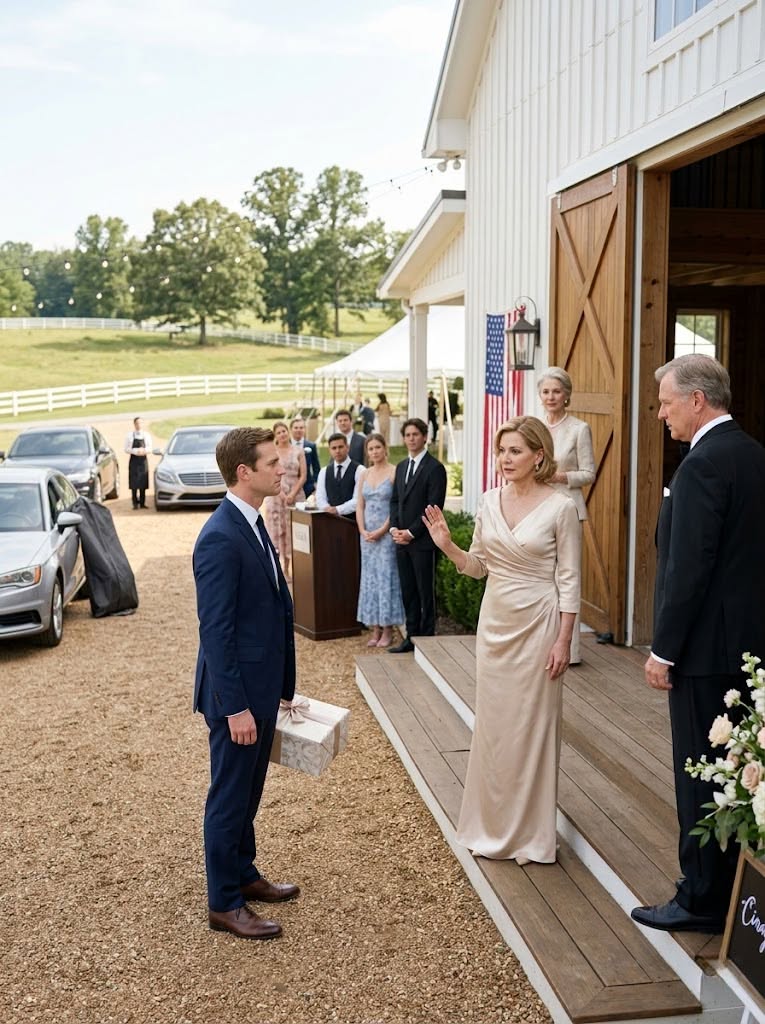
at made every one of them regret how they had treated me…
Two days after my parents offered to finance my wedding, an invoice arrived in my email.
It was not an accident.
It was not a joke.
It was a bill.
The subject line read:
Reimbursement for wedding support.
Total due: $73,418.22.
I sat at the kitchen table in my robe, staring at the screen while my fiancé, Caleb, silently read over my shoulder.
Three weeks earlier, my older sister Vanessa had walked down a marble aisle beneath imported flowers while a string quartet performed beside an enormous champagne tower.
My parents paid for everything.
The four-hundred-thousand-dollar venue package.
The custom wedding gown.
The Italian honeymoon.
The drone photography.
Even the gold-monogrammed napkins Vanessa insisted upon because, according to her, cream looked ordinary.
Dad called the entire event a gift.
Mom described it as a once-in-a-lifetime celebration.
When Caleb and I announced our engagement, they invited us to dinner and promised to provide the same support.
“We want both our daughters to feel equally loved,” Mom said, reaching across the table.
I should have recognized the lie.
But for one foolish moment, I believed her.
My name is Emily Lawson. I was thirty-one years old, and I had spent most of my life being told that Vanessa needed more because she felt things more deeply.
When she wanted dance lessons, I was told to wait another year for braces.
When she crashed Mom’s car at seventeen, my college savings covered the insurance deductible.
When she dropped out of university after one semester, our parents financed an apartment so she could “find herself.”
I finished school with scholarships, part-time jobs, and loans.
Vanessa needed reassurance.
I needed less.
That was the family story.
I was practical.
Independent.
Easy.
Those words sounded like compliments until I understood what they really meant.
Practical daughters were expected to accept disappointment quietly.
Independent daughters were charged for every kindness.
Easy daughters were punished whenever they stopped being convenient.
Caleb knew the pattern.
He had watched my mother turn small family dinners into celebrations of Vanessa’s latest achievement. He had seen Dad ask me to cover restaurant bills because Vanessa had “forgotten” her wallet.
That was why he looked uneasy when my parents offered to pay for our wedding.
“We could keep it simple,” he told them. “Emily and I were thinking about a garden ceremony with maybe forty guests.”
Dad waved him off.
“Nonsense. A Lawson wedding should look like something.”
“We don’t need something extravagant,” I said.
Mom smiled.
“Sweetheart, this is our gift.”
The word gift mattered to me.
I asked twice.
“No repayment?” I said.
Dad laughed as though I had insulted him.
“What kind of parents invoice their daughter for her wedding?”
Three weeks later, I had my answer.
The bill listed every deposit they had made.
Florist consultation: $1,800.
Venue reservation: $28,500.
Custom lighting design: $6,400.
Catering deposit: $19,750.
Stationery consultation: $2,300.
Dress appointment fee: $950.
It even included the dinner where they had offered to pay.
Planning dinner and family consultation: $412.68.
At the bottom, Dad had written:
Payment due within five business days to avoid unnecessary family conflict.
Caleb read the sentence twice.
“We can fight this,” he said.
I closed the laptop.
“No.”
He pulled out the chair beside me.
“Emily, they told us it was a gift. We have messages.”
“I know.”
“Then why would you pay?”
“Because I want the price of leaving them to be exact.”
He studied my face.
“What are you planning?”
“I’m going to pay the invoice.”
“And then?”
“Then they never get to call anything a gift again.”
That afternoon, I transferred the full amount.
It nearly emptied the savings account I had built over seven years, but I could afford it without touching our rent or emergency fund.
Then I began canceling every wedding arrangement my parents had made.
The venue kept part of the deposit.
The florist charged a cancellation fee.
The caterer refunded only sixty percent.
I accepted every loss.
The money had already become expensive.
I refused to let it become control.
Caleb called the county clerk and reserved a courthouse ceremony for the following Friday.
I bought a blue dress from a local shop.
It cost one hundred and forty dollars.
We invited eight people who had never attached conditions to their affection.
Before the day ended, I changed my phone number.
For two weeks, my parents sent messages through extended relatives.
Aunt Rebecca called to ask why I was humiliating my mother.
My cousin told me Dad had been “generous enough to front the expenses.”
Vanessa posted vague statements online about jealous women who could not tolerate seeing their sisters happy.
Mom left tearful voicemails on Caleb’s phone claiming I had destroyed the family’s joy.
Dad emailed another spreadsheet.
This one calculated the emotional and reputational damage caused by canceling the larger wedding.
Estimated family stress: $12,000.
Loss of social goodwill: $18,500.
Vendor embarrassment: $7,250.
Caleb stared at the document.
“Does he actually expect payment?”
“He expects fear.”
I saved the email but did not answer.
Our courthouse wedding took place on a bright Friday morning.
I wore the blue dress.
Caleb wore a navy suit he already owned.
My best friend, Nina, carried grocery-store flowers tied with a white ribbon.
After the ceremony, we took photographs outside beneath a maple tree.
Then the ten of us went to a small pizza restaurant.
There was no champagne tower.
No marble aisle.
No drone hovering above my head.
No one whispered about what the flowers cost.
When Caleb raised his glass, he said, “To a marriage without invoices.”
Everyone laughed.
I cried.
It was the happiest day of my life because no one attending kept a record of what love had cost them.
For six months, silence became the best wedding gift I could give myself.
I heard pieces of family news through cousins.
Vanessa returned from Italy with hundreds of photographs and new luggage she claimed had been necessary.
Dad’s consulting business was struggling.
Mom had stopped attending certain social events because people kept asking why I had canceled the large wedding.
I did not respond.
Caleb and I built a quiet routine.
We cooked together.
Paid our own bills.
Saved slowly.
On our refrigerator, I kept one wedding photograph of us standing outside the courthouse.
Whenever I looked at it, I felt relief.
Then, on a rainy Thursday night, someone began pounding violently on our apartment door.
“Open up!” Vanessa screamed from the hallway. “You selfish little witch, open the door!”
Caleb reached for his phone.
I looked through the peephole.
My sister stood outside in designer heels, mascara streaking down her cheeks, and a crumpled bank notice clutched in one hand.
Mom stood behind her, pale and trembling.
I opened the door but left the security chain fastened.
Vanessa thrust the letter toward the narrow opening.
“What did you do?”
I glanced at the document.
It was a mortgage default notice.
It did not belong to me.
It belonged to our parents.
“I don’t know what you mean.”
Mom stepped closer.
“Emily, please. Your father didn’t explain everything.”
Vanessa slapped the notice against the door.
“They used the house as collateral for my wedding.”
I looked directly at Mom.
Her eyes dropped.
Of course.
My parents had not given Vanessa a four-hundred-thousand-dollar celebration.
They had borrowed against their home, exhausted credit lines, and assumed future income would repair the damage.
More importantly, they had expected me to become part of the repair.
“What did Dad tell you?” I asked.
Mom’s hands shook.
“He said the business would recover. He thought your wedding payments would help bridge the gap.”
“My wedding payments?”
“The reimbursements.”
I almost laughed.
The plural told me everything.
They had never planned to send only one invoice.
The first bill covered deposits.
More would have followed.
Final vendor balances.
Travel.
Decorations.
Their interest charges.
Perhaps even part of Vanessa’s wedding debt disguised as equal treatment.
But I had paid once.
Then I disappeared.
No additional checks.
No emergency transfers.
No obedient younger daughter waiting to repair the fantasy.
Vanessa struck the door with her palm.
“You knew this would happen.”
“No. I knew an invoice meant I owed nothing after I paid it.”
“You canceled everything to punish us.”
“I canceled a wedding I did not choose.”
“You made Mom and Dad lose all those deposits.”
“I reimbursed every amount listed on the invoice.”
“That wasn’t enough.”
The words escaped before she could stop them.
I looked at Mom.
“How much did you expect me to pay?”
She began crying.
“Your father believed both weddings should appear equal.”
“Appear equal?”
“He wanted people to respect the family.”
“Then he should have sent Vanessa an invoice too.”
Vanessa’s expression twisted.
“Mine was different.”
I gave her a faint smile.
“Because you deserved it?”
She hesitated too long.
That was answer enough.
Caleb moved beside me.
“Emily, do you want me to call security?”
Vanessa pointed toward him.
“Stay out of this. She ruined my life.”
“No,” I said. “Your wedding planner and champagne tower ruined your life.”
“My wedding was paid for.”
“Apparently not.”
Mom lowered her voice.
“The bank is giving us ten days to cure the default or begin enforcement proceedings.”
“Then Dad needs to speak to the bank.”
“He did.”
“And?”
Her silence stretched.
Then she reached into her purse and removed another document.
“We need you to sign this. Temporarily.”
My name appeared across the top.
It was a refinancing agreement.
The proposed loan would consolidate the home-equity debt and several business obligations into one larger mortgage.
I was listed as a guarantor.
My Social Security number appeared on the second page.
My employer’s name was listed.
So was an estimate of my income.
I had provided none of it.
Caleb’s voice became cold.
“That document contains her personal information.”
Vanessa wiped her cheeks.
“Just sign it. You already paid once.”
I looked at her.
She did not hear the madness in her own request.
The invoice had not been a boundary to them.
It had been proof that pressure worked.
I closed the door.
Vanessa immediately began screaming louder.
“You cannot hide from us!”
Mom pleaded through the wood.
“Emily, please. We only need your signature.”
I called my attorney, Daniel Hart.
Daniel had reviewed the original invoice before I paid it. He had warned me that sending money might encourage further demands, but he understood why I wanted a clean record.
Now I placed him on speaker and reopened the door with the security chain still fastened.
“Mrs. Lawson,” he said, “do not ask Emily to sign anything.”
Mom became completely still.
Daniel continued.
“If Emily’s personal information was used on a loan application without her consent, we will request the lender’s complete file and report any fraudulent submission.”
Mom stopped crying.
Instantly.
That told me more than her tears ever could.
Dad had not merely drafted a form in the hope that I might agree.
He had already attempted to use my identity.
I removed the chain only long enough to take the document from Mom.
“Did Dad forge my signature?”
Her voice was barely audible.
“He said it was only to see whether you qualified.”
Vanessa turned toward her.
“Mom.”
I laughed once.
Quietly.
The final connection between us broke without drama.
“You sent me a bill for love,” I said. “Then tried to borrow against my name when your favorite daughter’s fairy tale came due.”
Vanessa’s face collapsed.
“Don’t call me that.”
“You earned it.”
“Emily,” Mom whispered, “we did love you.”
“Then why was Vanessa’s wedding a gift and mine a debt?”
She opened her mouth.
No answer came.
“Why did Dad use my personal information?”
“He was desperate.”
“Why didn’t he use Vanessa’s?”
Vanessa looked away.
I already knew the answer.
Her credit was poor.
She carried balances on several cards and had stopped making regular payments on a luxury vehicle.
I was the daughter with income, savings, and a clean financial history.
They had not chosen me because they trusted me.
They had chosen me because I was useful.
Daniel instructed me to photograph every page and preserve the original.
Caleb called building security.
Mom and Vanessa were escorted from the hallway after refusing to leave voluntarily.
Before the elevator closed, Vanessa shouted, “When they lose the house, everyone will know it was your fault.”
I watched the doors shut.
Then I returned to the kitchen and placed the refinancing agreement beside the wedding invoice.
The lender responded quickly after Daniel contacted its fraud department.
The application was frozen.
The bank preserved login records, uploaded documents, emails, and recorded calls.
Dad had submitted the application through an independent loan broker.
He used information taken from an old tax return I had once given him when he claimed he needed help verifying my status for a family insurance policy.
The signature on the preliminary authorization was not mine.
The broker had not yet completed identity verification, which prevented the loan from closing.
That detail protected me from financial liability.
It did not protect Dad from consequences.
He called for the first time three days later.
I answered only because Daniel was on the line.
Dad did not apologize.
“You had no right to contact the lender before speaking to me.”
“You used my identity before speaking to me.”
“It was a preliminary application.”
“It contained a forged signature.”
“I was trying to save the family home.”
“With my credit.”
“You are part of this family.”
“Only when a bill is due.”
His breathing changed.
“Do you understand what will happen if the bank forecloses?”
“Yes.”
“You could prevent it.”
“So could selling the house.”
“That house has been in our family for twenty-eight years.”
“And you borrowed against it for a wedding.”
“For your sister.”
“Exactly.”
Daniel interrupted.
“Mr. Lawson, all future communication regarding the loan application must go through counsel.”
Dad laughed bitterly.
“Emily has always hidden behind other people when things become difficult.”
I looked at the original invoice.
“No,” I said. “I handled difficult things alone. That is why you thought my name was safe to use.”
He ended the call.
The financial review revealed the full scale of the problem.
Vanessa’s wedding had cost approximately four hundred and thirty thousand dollars, including the honeymoon and related events.
My parents had paid less than a quarter from savings.
The remainder came from a home-equity loan, business credit lines, personal cards, and loans from two relatives who believed Dad had a large contract pending.
No such contract existed.
Dad expected the expensive wedding to impress potential clients.
It did not.
My planned wedding had been his second attempt.
He intended to use vendor deposits and reimbursements to generate cash flow while maintaining the appearance that he was giving both daughters lavish celebrations.
The $73,418.22 I paid went largely toward Vanessa’s wedding debt and overdue interest.
Very little was connected to my canceled ceremony by the time the money reached their accounts.
The invoice was technically accurate only in the narrowest sense: the listed deposits had been paid.
It concealed where my reimbursement went afterward.
When I demanded a full accounting through Daniel, Dad refused.
That refusal ended when the lender and his business creditors began asking the same questions.
My parents listed their house for sale before Christmas.
They did not lose it in a dramatic foreclosure.
The bank gave them time to sell because there was still enough equity to cover the secured debt.
The sale paid the mortgage, home-equity loan, taxes, and part of the business obligations.
What remained was much smaller than the life they had once displayed.
They moved into a two-bedroom rental on the other side of town.
Mom told relatives I had forced them out.
Dad claimed I had taken a private family matter too far.
I did not defend myself publicly.
I sent a basic factual summary to the relatives whose money had been involved.
The original invoice.
Proof of my payment.
The fraudulent loan application.
The notice confirming my information had been used without authorization.
Facts traveled more slowly than gossip.
But they lasted longer.
Vanessa was forced to sell things first.
The wedding jewelry went to a consignment dealer.
Then the designer furniture.
Then the luxury car she had driven past the courthouse on my wedding day while texting a cousin that my flowers looked cheap.
The Italian honeymoon photographs remained online for months.
Eventually, she deleted most of them.
Gregory, her husband, had known the wedding was expensive.
He had not known my parents mortgaged their home to pay for it.
Their marriage survived, but not unchanged.
For the first time, Gregory required Vanessa to contribute to their household expenses.
She found work managing events at a hotel.
The irony was not lost on me.
Dad avoided criminal prosecution through a negotiated resolution after cooperating with the lender’s investigation, admitting that he submitted false information, and withdrawing the application before funds were issued.
He paid legal costs and restitution connected to the fraud review.
His business reputation collapsed anyway.
Clients do not enjoy learning that a consultant forged his daughter’s signature while attempting to refinance debt.
Mom was not charged.
The records showed she knew about the application but had not prepared or submitted it.
Her involvement remained a moral betrayal rather than a criminal one.
For months, she sent messages through new numbers.
Family should forgive.
Your father made a mistake.
We did everything because we loved our daughters.
I answered none of them.
The word love had become too damaged in her hands.
Nearly a year after the night at our apartment, Vanessa asked to meet me.
Daniel advised me that there was no legal reason not to, so I chose a café in a public shopping center.
She arrived without designer heels.
She wore a simple coat and carried no dramatic envelope.
For several minutes, we sat in silence.
Then she said, “I really believed they loved us equally.”
I looked at her.
“They paid for your wedding.”
“And invoiced you for yours.”
“Yes.”
“I thought that meant they expected more from you because you were better with money.”
“It meant they knew I would pay.”
She traced one finger around the edge of her cup.
“Did you hate me?”
“For the wedding?”
“For all of it.”
I considered the question.
“I resented you.”
Her eyes filled with tears.
“That sounds worse.”
“It’s more accurate.”
She nodded.
“They taught me love was a spotlight,” she said. “The flowers, the dress, people looking at me.”
“They taught me love was a bill.”
Her face crumpled.
“I didn’t know about the loan against the house.”
“I believe you.”
“I did know they spent too much.”
“Yes.”
“I didn’t stop them.”
“No.”
She wiped her cheeks.
“I’m sorry.”
The apology did not erase the years.
But it contained no demand.
That was new.
We did not become close again immediately.
She did not ask me for money.
She did not pressure me to speak to Mom.
We met twice more that year.
Slowly, she began talking less about what our parents had given her and more about what it had cost everyone else.
Mom’s apology came through a handwritten letter.
Emily,
I believed Vanessa needed visible love because she was insecure.
I believed you needed less because you were capable.
I did not understand that I was giving one daughter gifts and giving the other responsibilities.
Your father and I should never have sent the invoice.
We should never have used your information.
I wanted to save our house without admitting our choices had endangered it.
I am sorry.
I read the letter twice.
Then I placed it inside a folder with the invoice and the fraudulent loan application.
On the label, I wrote:
PAID IN FULL.
Not because every emotional debt had been settled.
Because I refused to pay another one.
Caleb and I celebrated our first anniversary with paper plates and a grocery-store cake.
We ate on the living-room floor because our dining table had not yet been delivered.
Nina brought a bottle of inexpensive champagne.
There was no tower.
No imported flowers.
No monogrammed napkins.
No debt hidden beneath decorations.
Caleb gave me a small envelope after dinner.
I stared at it.
He smiled.
“This one is safe.”
Inside was a folded note.
No reimbursement required. No interest charged. No conditions attached.
I laughed so hard I cried.
A week later, Mom sent another message from an unfamiliar number.
Family should forgive.
For the first time, I answered.
Family should not invoice love.
Then I blocked the number.
My parents had believed money could turn affection into leverage.
They offered a wedding, then sent a bill.
When I paid it, they assumed I had accepted the arrangement.
They did not understand that I was purchasing something they had never intended to give me.
An exit.
The $73,418.22 did not buy flowers, food, or a reception room.
It bought clarity.
It showed me that generosity accompanied by secret expectations is not generosity.
A gift used later as evidence of debt is not a gift.
And parents who use one daughter’s financial stability to finance another daughter’s fantasy are not treating their children equally.
They are assigning roles.
Vanessa was the daughter who deserved celebration.
I was the daughter expected to pay for it.
That role ended when I canceled the wedding.
It ended again when I refused the refinancing agreement.
And it ended permanently when my parents discovered that my name, credit, and future were not family property.
Our courthouse ceremony cost almost nothing.
Yet it gave me more than their expensive wedding ever could have.
A husband who did not measure love in receipts.
Friends who came without expectations.
A marriage that began without debt disguised as flowers.
My parents sent me an invoice for wedding support.
I paid it in full.
Then I stopped paying for the privilege of being their daughter.
THE END.
This story is a work of fiction inspired by real events. Names, characters, locations, financial circumstances, and legal details have been altered. Any resemblance to actual people or events is purely coincidental.
Disclaimer: This story is fictional and created for entertainment purposes only. Any names, characters, places, or events are fictitious or used fictitiously. No real person or organization is intended to be portrayed.