My Father Mocked My 14 Years as an Army Medic in Front of My Brother’s Future In-Laws. When a Stranger Collapsed, Dad Demanded a “Real Doctor.” I Said Nothing, Started CPR, and Brought Him Back. Then the Man’s Wife Showed Us a Three-Star Army Card.
My father was still laughing about my fourteen years as an Army medic when the stranger at the next table collapsed.
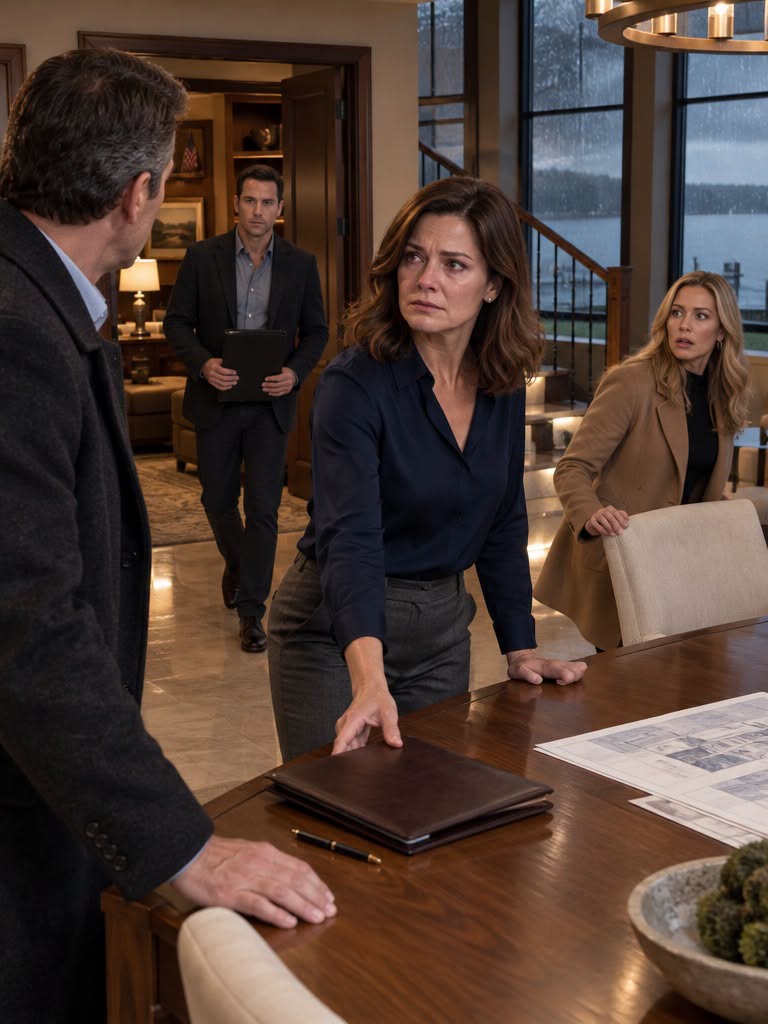
“Fourteen years changing bandages,” Richard Ortiz announced to our relatives, raising his wineglass toward me. “And Lena still acts like she went to medical school.”
A few people laughed because my father had delivered the remark like a joke. My aunt lowered her eyes to her dinner plate. Across the table, my younger brother, Travis, smiled with the relieved expression of someone who was glad the evening’s attention had shifted away from him.
His fiancée, Clare Mercer, didn’t laugh.
She sat beside him with her hands folded near her plate, looking from my father to me as though trying to decide whether she had misunderstood the remark.
She hadn’t.
I was thirty-three, a master sergeant in the United States Army, and I had spent fourteen years learning how to keep injured people alive under circumstances most civilians would never encounter.
My father still liked to describe my career as changing bandages.
I had stopped correcting him a long time ago.
The dinner was supposed to celebrate Travis and Clare’s engagement. Her parents had driven from Richmond, and Dad had reserved the private section of an expensive restaurant near Arlington. He wanted the evening to be impressive. That meant good food, expensive wine, and plenty of opportunities to tell people how successful his son had become.
Apparently, it also meant reminding everyone how little he thought of his daughter.
I kept my hands folded in my lap and waited for the conversation to move elsewhere.
Then came the crash.
A chair scraped violently against the floor. Something heavy struck the edge of a neighboring table, and a plate shattered.
I turned just as an older man slid from his chair.
His wife reached for him, but she couldn’t stop his fall. He landed awkwardly on the restaurant floor, his shoulder striking the base of the table.
She screamed his name.
Before anyone else had fully stood, I was already moving.
I crossed the distance in four steps, dropped beside him, and placed a hand near his shoulder.
“Sir, can you hear me?”
He didn’t respond.
His eyes were open but unfocused. His face had taken on a gray color, and his breathing came in irregular, ineffective gasps.
I checked his pulse.
For a moment, I felt something fast and chaotic beneath my fingers.
Then I felt nothing.
Behind me, my father said loudly, “Someone call a real doctor.”
I didn’t look back.
“Call 911,” I said. “Tell them an adult male is in cardiac arrest. Ask the restaurant for an AED.”
People began moving.
Someone pulled out a phone. A server hurried toward the host stand. Chairs scraped backward as diners tried to make room around us.
The man’s wife knelt beside him, her hands trembling so badly that she seemed unable to decide where to touch him.
I looked directly at her.
“What’s his name?”
“Malcolm.”
“Keep talking to him. Let him hear your voice, but give us room.”
She nodded, though her eyes remained fixed on her husband’s face.
“Malcolm,” she whispered. “I’m right here.”
I positioned my hands over his chest and began compressions.
The world narrowed.
The restaurant, the engagement dinner, the insulting remarks, and the people standing around us all receded into the background. There was only the patient beneath my hands, the rhythm I needed to maintain, and the time running out while his heart failed to circulate blood.
Thirty compressions.
Two breaths.
Assess.
Continue.
I had performed those movements in aircraft, on military bases, in cramped treatment areas, and in places where the ground shook beneath my knees.
Doing them on the polished floor of an expensive restaurant was different only in the details.
The purpose was exactly the same.
“Where’s the AED?” I called.
“Coming!” someone shouted.
A young man wearing a dark suit knelt across from me.
“I know CPR.”
“Good. Take over compressions on my count. Keep your arms straight and let the chest come all the way back up.”
He nodded too quickly, but he placed his hands correctly.
I counted him in and watched several compressions before turning my attention to Malcolm’s airway.
A small prescription bottle had rolled out of his jacket pocket.
Nitroglycerin.
I registered the information without allowing it to distract me from the immediate emergency.
The AED arrived in a plastic carrying case.
I opened it, exposed Malcolm’s chest, dried his skin with a cloth napkin, and positioned the pads according to the diagrams.
The machine began analyzing.
Shock advised.
“Clear.”
Malcolm’s wife still had one hand resting against his arm. I gently moved it away and checked the space around him.
“Everyone clear.”
The shock moved his body briefly against the floor.
Nothing happened.
I immediately resumed compressions.
By then, one knee of my navy dress had torn. I could feel the rough edge of the floor against my skin, but I didn’t look down.
There was a shallow cut across my palm from a broken piece of plate. I barely noticed it.
All my attention remained on Malcolm.
The young man across from me kept working when I directed him to take over, his shoulders tense with effort.
I checked the rhythm again.
The AED advised another shock.
“Clear.”
The second shock was delivered.
For a moment, Malcolm remained motionless.
Then he coughed.
It was a rough, weak sound, almost swallowed by the noise of people breathing and shifting around us.
I checked his pulse.
Thin.
Rapid.
But present.
“Okay,” I said quietly. “We have a pulse.”
His wife pressed her hands against her mouth.
I helped position him safely on his side while we continued monitoring his breathing.
Someone near the entrance announced that the ambulance was coming.
I could hear sirens now.
Malcolm’s eyes moved toward me.
He tried to speak.
“Don’t,” I told him gently. “You’re doing enough right now.”
He looked at me for several seconds, then reached for my wrist.
His grip was surprisingly strong.
At first, I thought he was simply frightened.
Then his gaze shifted to the narrow silver bracelet beneath my sleeve.
A small circular metal disc hung from it. One side bore a winged serpent and the number 27.
Malcolm stared at that disc.
Something changed in his expression.
It wasn’t ordinary gratitude.
It looked like recognition.
He tightened his grip and whispered a single word.
“Rook.”
I stopped moving for half a second.
No one in my family had ever heard that name.
Not Dad.
Not Travis.
Not even the relatives who had known me since childhood.
Rook had been my call sign aboard an Army medical evacuation helicopter.
Before I could ask Malcolm what he meant, the paramedics entered.
I moved aside enough to give them access and delivered my report.
“Witnessed collapse. No palpable pulse. CPR initiated immediately. Two AED shocks delivered. Return of spontaneous circulation after the second shock. Nitroglycerin found in his jacket. Estimated downtime under four minutes.”
The team leader listened without interrupting.
When I finished, he looked at me.
“Medical?”
“Army flight medic.”
“Critical care?”
“Yes.”
His eyes moved over the scene: the AED pads, the positioning, the notes I had written on a napkin, and the way I was still monitoring Malcolm’s breathing.
He nodded.
“Thought so.”
The paramedics transferred Malcolm onto their stretcher.
Just before they wheeled him away, he reached for my wrist again.
“Rook,” he repeated.
Then they were gone.
For several seconds, the restaurant remained almost completely silent.
The staff began collecting broken dishes. Someone picked up an overturned chair. Malcolm’s wife had gone with him in the ambulance.
I stood slowly, suddenly aware of the tear in my dress and the soreness developing in my hands.
When I turned around, almost every person in the restaurant was watching me.
My father was the first to speak.
“Well,” he said, forcing a laugh, “I guess fourteen years of bandages finally paid off.”
A few people shifted uncomfortably.
Nobody laughed.
I looked at him for a moment, then returned to our table.
That was when I understood something I should have accepted years earlier.
Even watching me help save a man’s life wasn’t enough to make my father respect the work I had chosen.
He could witness the result with his own eyes and still reduce it to a joke.
But the stranger had called me Rook.
And I couldn’t understand how he knew that name.
***
My father had always divided careers into two categories.
There were professions he could explain to his friends, and professions that embarrassed him because he didn’t understand them.
Travis had chosen a career that belonged comfortably in the first category.
He sold medical equipment.
He wore fitted suits with his initials stitched discreetly inside the cuffs. He knew the cost of sophisticated surgical robots, understood procurement contracts, and regularly had lunch with hospital administrators.
He could talk for twenty minutes about the equipment inside operating rooms.
He had never used any of it during an operation.
Dad loved introducing him.
“My son works in medicine,” he would tell people proudly.
It sounded impressive.
Travis was successful, and I never begrudged him that success. He had built a respectable career in a competitive industry.
But the distinction between selling medical equipment and treating patients had never seemed important to my father.
He valued the business card, the tailored suit, and the confidence with which Travis could describe his work.
My experience was harder to package into a dinner-table conversation.
I had enlisted at nineteen, shortly after my mother died.
Her death left our house feeling unfamiliar. Dad tried to keep everything moving according to the routines he understood, but I had begun to feel as though I was living inside somebody else’s plans.
Joining the Army gave me direction.
Dad called it an impulsive phase.
He told relatives I would probably come home once I discovered that military life wasn’t as exciting as the advertisements made it look.
When I qualified as a combat medic, he began introducing me as an ambulance driver.
When I completed the flight medic training pipeline and earned my paramedic certification, he asked whether that meant I was finally allowed to give injections.
At first, I tried to explain.
I described the medical training, the responsibilities, and the different situations we prepared to handle.
Dad listened for a few sentences before interrupting with another joke.
Eventually, I stopped trying.
Silence required less energy than explaining myself to someone determined not to understand.
By the time Travis became established in medical equipment sales, our family had settled into a comfortable version of the story.
Travis was the successful son.
I was the daughter who had spent too long in the Army and didn’t talk much about what she did.
Dad was practical.
I was supposedly too sensitive.
The more often those descriptions were repeated, the more everyone treated them as facts.
The engagement dinner had followed the usual pattern.
I arrived directly from Fort Liberty wearing my navy dress and carrying a small garment bag.
I was scheduled to report to the Pentagon the following morning and had planned my travel carefully.
Dad noticed the bag before I had even taken my seat.
“Still doing temporary assignments?” he asked.
“Something like that.”
He glanced toward Clare’s father.
“The Army keeps her busy with paperwork now.”
I let the remark pass.
What Dad didn’t know was that I had been selected for a senior enlisted position on a joint trauma readiness team.
The next morning’s briefing concerned a casualty-care initiative designed to reduce preventable deaths when evacuation was delayed.
I had spent two years helping develop its field protocols.
The work drew directly from experiences I had accumulated during my deployments, especially situations in which medical teams had to make difficult decisions without immediate access to hospitals or surgical facilities.
The briefing was not public yet.
More importantly, I had learned not to volunteer personal information to someone who would only turn it into ammunition.
So I sat down and asked about the engagement.
Clare seemed genuinely happy.
Her parents had driven from Richmond, and her mother was interested in getting to know the family Travis had talked about.
For a while, the conversation remained pleasant.
Then Dad began making jokes about my career.
He told everyone I probably inspected first-aid kits.
Travis asked whether my latest promotion came with my own stapler.
When Clare’s mother asked whether I had ever deployed overseas, Dad answered before I could speak.
“Mostly clinics, I think.”
I had deployed five times.
Dad knew about three of those deployments. Travis knew about two.
Neither had ever asked what actually happened during any of them.
Clare turned toward me.
“Were you ever on evacuation helicopters?”
“For several years.”
“That sounds terrifying.”
“It could be.”
Dad interrupted.
“She likes to make everything sound dramatic. Medics aren’t doctors. They stabilize people until the professionals arrive.”
I looked at him.
“Sometimes the professionals are hours away.”
His smile tightened.
He had always disliked being corrected in front of strangers.
Travis leaned back in his chair.
“Dad’s point is that Lena gets mysterious whenever anyone asks what she actually did.”
“There isn’t always a clean answer,” I said.
Dad gave Clare’s father a knowing look.
“See? Mysterious.”
I looked down at my plate.
The truth wasn’t particularly mysterious.
Sometimes my work meant holding pressure on a wound while a helicopter shook so hard that my teeth struck together.
Sometimes it meant preparing blood products while a patient deteriorated faster than we could reach a hospital.
Sometimes it meant keeping a frightened young soldier focused on my voice because panic could make his condition worse.
And sometimes it meant telling a pilot that we couldn’t lift yet, even when remaining on the ground placed everyone at risk.
That last decision had happened during my third deployment.
Our crew was dispatched to retrieve casualties from a joint patrol trapped beyond a flooded ravine.
The weather was terrible.
Rain and dust reduced visibility. The landing zone was narrow, and the helicopter struggled against unstable air while our pilot tried to position it safely.
The first report indicated eight casualties, with two requiring urgent treatment.
When we arrived, we discovered six patients needed immediate attention.
One had a severe pelvic injury and almost no measurable blood pressure.
Another had a penetrating chest wound.
A third was struggling to maintain an airway because of facial trauma.
We carried blood products, but not enough for everyone who might need them.
The patrol leader wanted us airborne immediately.
He understood the danger of remaining in the landing zone, and I understood it too.
But the patient with the pelvic injury was deteriorating.
I looked toward the helicopter, then back at the patient.
“If we lift now,” I told the pilot, “he arrests before we clear the ridge.”
The pilot studied the landing zone.
“If we stay, we become targets.”
“I need ninety seconds.”
There was no time for a long debate.
He gave me what time he could.
I placed a pelvic binder, initiated blood, and coordinated treatment for the other critical patients while the crew continued securing the aircraft and protecting the landing zone.
Our crew chief remained at the open door.
Rain and dust swept across the ground.
The helicopter rocked on its landing gear.
We completed the most urgent interventions and lifted with six critical patients packed into an aircraft designed to carry fewer.
One patient stopped breathing during the flight.
I still remembered the precise moment.
For months afterward, I woke at 3:17 in the morning because that time had become fixed in my memory.
The patient survived.
All six reached surgery alive.
At the time, I considered that outcome a result of the entire crew’s preparation, teamwork, and judgment.
I didn’t think of it as something that belonged to me alone.
Two years later, I learned that the patrol leader had been the son of Lieutenant Colonel Malcolm Voss.
The name meant little to me then.
I had never met his father, and I had no reason to believe he knew anything about me.
The mission eventually became known as Black Gorge.
Parts of the radio recording were later used in military aviation medicine training because it captured a difficult evacuation involving multiple critical patients, limited blood supplies, and an emergency during flight.
I never listened to the complete recording.
Nobody had told me how the final review ended.
I knew only what we had done and what the patients had survived.
Dad knew almost none of it.
He remembered that I had missed his retirement barbecue.
That had bothered him far more than any of the circumstances surrounding my deployment.
Years later, when I sat at his table listening to another round of jokes, I realized our family had created two separate versions of my career.
There was the one I had lived.
And there was the one my father preferred telling.
By staying quiet, I had allowed those versions to exist side by side.
Then Malcolm collapsed.
For a few minutes, the distance between those two versions disappeared.
My father saw what I could do.
But even that wasn’t enough to make him stop.
***
After the ambulance left, the restaurant manager approached our table.
He offered to move us into another section so the staff could clean the area where Malcolm had fallen.
I excused myself and went to the restroom.
The cut on my palm was shallow. I rinsed it carefully and checked that there was nothing embedded in the skin.
Then I looked at myself in the mirror.
My hair had come loose around my face. One knee of my dress was torn. The adrenaline that had kept me focused during the emergency was beginning to fade, leaving my hands feeling strangely heavy.
I had been through the transition before.
During an emergency, there wasn’t much room for emotion.
Afterward, it arrived in pieces.
I kept thinking about Malcolm’s pulse.
I had felt it disappear beneath my fingers.
Then, after the second shock, it had returned.
But I also knew that restoring circulation wasn’t the same thing as guaranteeing survival.
He still needed urgent hospital treatment.
I dried my hands, straightened my dress as much as possible, and returned to the dining room.
A white tablecloth covered the area where Malcolm had fallen.
The staff had cleared the broken plate.
Dinner had resumed.
Something about that ordinary scene felt wrong.
A man had nearly died only a short distance from our table, and now people were lifting their glasses and discussing dessert.
But I understood that everyone was trying to return to something familiar.
Nobody knew what else to do.
Clare’s father stood when I approached.
“You saved that man,” he said.
“We don’t know that yet.”
“He had a pulse when they took him.”
“That gives him a chance,” I answered. “He still needs treatment.”
Dad sighed.
“Lena never takes a compliment normally.”
I sat down.
“Cardiac arrest isn’t resolved because someone leaves with a pulse.”
Travis had been unusually quiet since the emergency.
Now that the attention was returning to me, he seemed determined to regain his place in the conversation.
“You were lucky the defibrillator worked,” he said.
I looked at him.
“The AED identified a shockable rhythm.”
“Right,” he said. “So the machine did it.”
Clare turned sharply toward him.
“She performed CPR for several minutes.”
“I’m not saying she did nothing.”
He reached for his wine.
Years earlier, that sentence would have made me angry enough to argue.
That night, it simply made me tired.
Dad leaned forward.
“Nobody is insulting you, Lena. This is exactly why we tease you. You turn everything into a combat story.”
“I haven’t told a combat story.”
“You don’t have to. You sit there looking like everybody else is beneath you.”
I recognized the accusation immediately.
It had followed me through countless family gatherings.
If I explained my work, I was showing off.
If I stayed quiet, I was arrogant.
If I corrected misinformation, I was too sensitive.
If I refused to argue, I was supposedly acting superior.
My silence had always been useful to Dad because he could fill it with whatever motive suited him.
Clare spoke before I could respond.
“Mr. Ortiz, she just helped save somebody’s life.”
Dad’s face reddened slightly.
“And we’re grateful. But let’s maintain perspective. She isn’t a surgeon.”
“No,” I said. “I’m not.”
He relaxed as though I had finally admitted the central weakness of my career.
He never understood that I had never claimed to be a surgeon.
I was proud of being a flight medic.
The work required a different set of responsibilities, often performed under conditions in which a surgeon could not be present.
But Dad only recognized medical authority when it came with a title he could easily explain.
A server approached our table.
“Excuse me,” she said. “I found this near the other table.”
She held out my silver bracelet.
I hadn’t noticed it was missing.
The clasp must have loosened when Malcolm grabbed my wrist during the resuscitation.
Before I could take it, Travis reached over and caught the small metal disc between his fingers.
“What’s Rook 27?”
“Give it back, Travis.”
He turned the disc over.
Three initials and a date were stamped on the reverse side.
“Your little secret-agent code?”
“It’s a crew coin.”
He inspected it.
“Looks homemade.”
“It was.”
Dad chuckled.
“Here we go.”
I reached across the table and took the bracelet from my brother.
The disc had been made from a damaged section of aircraft skin after our helicopter was retired.
Our crew chief had cut small pieces from the metal and stamped one for every member of the team.
Twenty-seven had been the aircraft number.
Rook had been my call sign.
On a chessboard, a rook moves in straight lines and holds its ground.
My crew had decided the name suited me.
I had worn that bracelet for years.
It wasn’t expensive. It wasn’t something that would attract attention in a jewelry store.
But it meant more to me than almost anything else I owned.
I fastened it carefully and slid it beneath my sleeve.
Clare’s father had been watching.
“Was that man calling you Rook?”
“Yes.”
“Did you know him?”
“I don’t think so.”
Dad waved a hand.
“He was barely conscious. He probably read it.”
The disc had been hidden beneath my sleeve before Malcolm caught my wrist.
I could have pointed that out.
Instead, I took a drink of water.
I had already spent enough of my life trying to convince my father of things that were plainly true.
The conversation slowly moved on.
Clare’s mother asked a question about wedding plans.
Travis began discussing possible venues.
Dad appeared relieved that the evening had finally returned to something he understood.
I listened without contributing much.
Then, at 10:43 that night, Malcolm’s wife returned.
***
She entered the private dining area still wearing the cream-colored jacket she had worn when her husband collapsed.
There were faint marks on the fabric from kneeling beside him on the restaurant floor.
Her hair was slightly disordered, and exhaustion showed around her eyes.
But she was standing straighter than before.
When she saw me, she stopped near our table.
“He’s alive,” she said.
Everyone stood.
“They took him into the catheterization lab. The cardiologist said getting those shocks to him so quickly made a difference.”
Relief moved through me so sharply that I had to grip the back of my chair.
Until that moment, I had been holding back the possibility of a worse outcome.
Malcolm had regained a pulse, but there had been no guarantee his heart would remain stable or that the hospital would be able to treat the underlying problem.
Knowing he had survived long enough to reach definitive care didn’t erase the danger.
But it was good news.
Very good news.
His wife crossed the room and embraced me.
I wrapped my arms around her carefully.
For several seconds, I could feel the familiar weight of an emergency returning through memory.
The sound of helicopter rotors.
The smell of fuel.
The vibration of an aircraft floor.
The long seconds spent watching a monitor and hoping a patient’s condition would improve.
Then she stepped away.
“My husband wants to know your full name.”
“Lena Ortiz.”
She looked at me more closely.
“Master Sergeant Lena Ortiz?”
I felt my father’s head turn.
“Yes.”
She let out a long breath.
“Then he did know you.”
I shook my head.
“I’ve never met him.”
“Maybe not,” she said. “But Malcolm knows your voice.”
Something in the way she said those words made me very still.
“He spent two years listening to the recording from Black Gorge.”
The restaurant seemed to shrink around me.
I looked at her.
“Black Gorge?”
She nodded.
“Our son was the patrol leader.”
For a moment, I couldn’t find a response.
I remembered that operation in fragments so clear they might have happened yesterday.
The narrow landing zone.
The rain.
The patient whose blood pressure had almost disappeared.
The argument about whether we could afford to remain on the ground.
The pilot looking toward the ridge while I tried to keep a critical patient alive long enough to survive the flight.
I remembered the patrol leader shouting that we needed to leave.
I remembered his expression when he realized we were staying.
But I had never connected him with the man who had collapsed beside our dinner table.
Malcolm Voss.
The name had been there all along.
I had simply forgotten the connection.
Dad looked between us.
“What recording?”
Malcolm’s wife turned toward him.
“The one where your daughter kept six soldiers alive.”
Travis stopped moving.
Dad blinked.
“Lena never mentioned saving six people.”
“I wasn’t alone,” I said automatically.
Her expression softened when she looked at me.
“Malcolm said you would answer like that.”
She opened her purse and removed a card.
I saw the three stars before I read the name.
Lieutenant General Malcolm Voss.
United States Army.
Retired.
Dad leaned forward to look.
His expression changed slowly, as though he was waiting for somebody to explain that he had misunderstood.
Malcolm’s wife continued.
“My husband commanded the medical readiness review that studied Black Gorge. He knows every voice on that radio recording.”
She looked toward me.
“Especially the medic who refused to abandon the landing zone before the patients were stable.”
I stared at her.
For years, I had wondered what the review concluded.
I knew some officers had questioned our decision to remain on the ground.
I knew the operation had been studied and discussed.
But I had never been told the full outcome.
And now the retired officer who had overseen that review had recognized my voice while recovering from cardiac arrest.
Dad sat down.
His chair scraped loudly against the floor.
Travis looked at the card.
“A lieutenant general?”
“Retired,” I corrected.
The distinction came automatically.
Malcolm’s wife almost smiled.
“Still Malcolm,” she said. “Always precise.”
She told me he wanted to see me once the doctors allowed visitors.
I explained that I had an important meeting the following morning but would come afterward if he was well enough.
She thanked me again.
Then she turned toward my family.
“I don’t know what you were discussing before my husband collapsed,” she said.
Nobody answered.
“But I heard somebody asking for a real doctor.”
I watched Dad’s expression tighten.
Malcolm’s wife looked directly at him.
“If your daughter had waited for one, Malcolm would be dead.”
The silence that followed was different from the uncomfortable pauses earlier in the evening.
Nobody tried to laugh.
Nobody reached for another joke.
Travis set down his glass.
Clare’s mother pressed her napkin gently against her mouth.
Clare looked at me with an expression that carried both admiration and regret.
My father stared at the tablecloth.
For the first time that evening, I wasn’t expected to explain myself.
Someone else had described my work without diminishing it.
Someone else had understood why it mattered.
And that person happened to be the wife of a retired lieutenant general whose own life I had helped save.
I left about ten minutes later.
Dad followed me into the parking lot.
The pavement was damp, reflecting the restaurant’s warm exterior lights. I could hear distant traffic from the road beyond the parking area.
“Lena.”
I continued toward my car.
“Lena, wait.”
I stopped.
He stood a few feet behind me, looking uncomfortable in a way I rarely saw.
“You could have told us.”
“Told you what?”
“That you were involved in something like that.”
I stared at him.
“I told you I was a flight medic.”
“That isn’t the same thing.”
“It was the answer, Dad. You just decided it wasn’t impressive.”
He looked away.
Then his expression hardened.
“You let me sit there sounding like a fool.”
I felt a familiar impulse to soften my words.
For years, I had been careful around his pride.
I had changed subjects, accepted jokes, and allowed false descriptions of my career to pass without correction because doing otherwise created arguments nobody wanted to have.
But standing there in the parking lot, I realized he was asking me to take responsibility for his behavior again.
“I didn’t make you mock me.”
“You knew more than you said.”
“I always knew more than I said.”
He opened his mouth.
No answer came.
I waited a moment, then unlocked my car.
The hardest part wasn’t his silence.
It was recognizing how much time I had spent protecting him from the consequences of his own assumptions.
He had chosen to believe there was nothing behind my quietness.
Now he knew better.
I got into my car and drove away.
***
The following morning, I reported to the Pentagon in uniform.
My father had seen me wearing Army uniforms before, but in his mind I was still the nineteen-year-old who had left home wearing boots too new to bend comfortably.
He had never taken much interest in the changes since then.
He didn’t know what the master sergeant rank on my uniform represented.
He didn’t understand my flight medic badge or combat medical badge.
He rarely asked about the ribbons that recorded parts of my service.
He didn’t know how many younger medics I had helped train or how often commanders had asked for my input when medical evacuation plans worked on paper but not in the field.
My career had continued developing regardless of whether he understood it.
The meeting that morning concerned a joint casualty-care initiative.
For two years, I had helped develop field protocols designed to reduce preventable deaths during delayed evacuation.
The work had been demanding in a completely different way from treating patients aboard an aircraft.
There were reports to review, training standards to refine, and difficult discussions about how medical teams could make sound decisions under pressure.
The objective was simple.
Give the next generation of medics better tools than we had possessed when we faced the same situations.
My new assignment was approved.
I would serve as a senior enlisted medical adviser to the initiative.
It meant spending more time in rooms where procedures and policies were written.
But every recommendation I made would be grounded in lessons learned on aircraft floors, beside landing zones, and during the difficult minutes between an injury and definitive treatment.
At noon, I received a message from Malcolm’s wife.
He was awake.
The doctors had stabilized him, and a visit was possible.
I finished my responsibilities and went to the hospital that afternoon.
Malcolm looked smaller in the bed than he had on the restaurant floor.
An oxygen line rested beneath his nose.
His face still showed the fatigue of someone recovering from a serious medical emergency, but his eyes were alert.
His wife sat beside him.
When I entered, Malcolm looked directly at my uniform.
His gaze moved from my rank to my badges, then to the name tape across my chest.
For two seconds, neither of us spoke.
Then he raised his right hand in a formal salute.
I stopped.
A retired lieutenant general wasn’t required to salute an enlisted soldier indoors.
The gesture wasn’t about military protocol.
It was about respect.
I returned the salute.
“Rook 27,” he said.
“Yes, sir.”
His mouth curved into a tired smile.
He told me he had wanted to meet the medic from Black Gorge for years.
I apologized for the circumstances of our introduction.
He laughed, which immediately turned into a cough.
When he recovered, he looked at me again.
“You always did prefer difficult landing zones.”
I smiled despite myself.
It was the first time since the dinner that I felt able to smile without forcing it.
Malcolm asked about the old crew.
I told him what I knew.
Our pilot had continued his career and now commanded a battalion.
Our crew chief was teaching aviation maintenance.
The flight nurse had moved into civilian trauma care at a hospital in Texas.
We had taken different paths, but the experience of working together under pressure had stayed with all of us.
Malcolm listened carefully.
Then he told me something I had never known.
During the official review of Black Gorge, some officers had argued that our crew should have evacuated immediately with the two most critical casualties.
Remaining on the ground had exposed the aircraft and everyone aboard to additional danger.
My decision to delay departure had been questioned.
I knew that much.
What I didn’t know was how the review had reached its conclusion.
“The aircraft recording changed the discussion,” Malcolm said.
I looked at him.
He explained that the recording captured my voice directing treatment, counting seconds, requesting blood, and warning the pilot about the danger of lifting before the pelvic casualty was stable.
The exchange made clear that the decision to delay wasn’t based on stubbornness or a refusal to recognize the risk.
It was a calculated medical judgment made under severe pressure.
The recording also showed that our entire crew understood what was happening.
The pilot assessed the danger.
The medical team worked to stabilize the patients.
The crew chief helped maintain the aircraft’s security.
Every person involved made the outcome possible.
Malcolm paused to catch his breath.
“Sixty-three seconds after you asked to hold, the helicopter lifted.”
I sat quietly.
I remembered asking for ninety seconds.
I remembered feeling as though every moment on the ground was being measured against the risk to the aircraft.
I hadn’t known the actual recorded interval.
“Every casualty survived,” he continued.
“Yes, sir.”
“The review became part of the delayed evacuation doctrine. Your judgment influenced training across three commands.”
I looked down at my hands.
For years, my memories of Black Gorge had been dominated by the things that might have gone wrong.
I remembered the damaged visibility.
The failing oxygen regulator during the mission.
The urgency of treating several patients when our supplies were limited.
I remembered the aircraft lifting through terrible conditions.
I remembered every moment when I had wondered whether I was making the right decision.
I hadn’t known that people studying the mission afterward had reached a conclusion that changed how others were trained.
“No one ever told me that,” I said.
Malcolm looked at me for a long moment.
“You should have received more recognition.”
“I received enough.”
His expression became thoughtful.
“That sounds disciplined,” he said. “It isn’t necessarily true.”
His wife reached over and squeezed his hand.
I didn’t know how to answer.
I had never pursued public recognition.
The work had always seemed too dependent on other people for any single individual to claim the outcome.
But sitting beside Malcolm’s hospital bed, I began to understand that acknowledging my contribution didn’t diminish the rest of the crew.
It simply meant allowing the complete truth to exist.
Before I left, Malcolm asked whether I would attend a military medicine dinner scheduled six weeks later.
He was expected to present an award supporting the casualty-care program I had helped develop.
I hesitated.
“I don’t particularly like formal dinners, sir.”
He glanced at the cardiac monitor beside his bed.
“Neither do I lately.”
Evelyn shook her head at him.
I laughed.
Then I agreed.
I thought the event would be an ordinary professional responsibility.
I had no idea my father would be there.
***
Six weeks later, I entered the ballroom wearing my dress uniform.
The event brought together military medical professionals, aviation personnel, senior commanders, physicians, and people involved in training and casualty-care policy.
I had attended similar gatherings before.
I knew the routine.
There would be introductions, speeches, conversations about current programs, and a formal presentation recognizing work that might otherwise remain invisible outside the organizations responsible for it.
I expected to see colleagues.
I didn’t expect to see my father.
Travis’s company had sponsored a table at the event.
After the restaurant incident, Clare had confronted him about the way he treated me.
Their engagement hadn’t ended.
But she had made something clear.
She wasn’t interested in building a marriage where contempt could be disguised as harmless family humor.
Travis had apparently taken the conversation seriously enough to reconsider his behavior.
He also wanted to repair some of the damage from the engagement dinner.
He invited Dad to the gala, hoping the evening might provide an opportunity for everyone to be together without another confrontation.
Neither of them knew I would be receiving the award.
I noticed my father across the ballroom shortly after entering.
He stood beside Travis’s table, holding a program.
When he saw me, he stopped speaking.
His eyes traveled over my uniform.
The ribbons.
The badges.
The rank he had never bothered to learn.
I watched recognition develop slowly across his face.
He seemed to be seeing my military career as something real for the first time.
Before I could decide whether to approach, someone called my name.
A colonel from the trauma directorate came over to greet me.
We discussed the final training standards for the casualty-care initiative.
A command sergeant major joined us and shook my hand.
He asked whether I had approved the latest revisions.
I answered his questions and explained which recommendations were ready for implementation.
We had just finished speaking when two medics I had once instructed approached.
Both thanked me for lessons they had used during deployment.
One described how the training had helped him remain focused during a difficult evacuation.
The other asked whether I would be involved in the next training cycle.
I spoke with them for several minutes.
Across the room, my father watched.
Nobody introduced me as someone who used to be in the Army.
Nobody asked whether I was allowed to give injections.
Nobody treated my rank as an interesting decoration.
The people around me knew what I did.
They also understood the responsibilities that came with it.
A senior officer greeted me by name.
Another colleague stopped to discuss the casualty-care program.
A colonel pulled out my chair at the table where I was expected to sit.
I didn’t look toward Dad every time someone approached.
I didn’t need to.
For once, I was in a room where nobody needed my father to explain my career.
The dinner began.
There were conversations about ongoing medical training, lessons from deployments, and the challenges of maintaining readiness across different organizations.
I listened, answered questions when asked, and tried not to think about the emotional weight of the previous six weeks.
Malcolm had recovered steadily.
He was still regaining strength, but the doctors had cleared him to attend the event.
Evelyn had kept me updated on his progress, and I was grateful to see them both there.
After dinner, the ceremony began.
Malcolm approached the podium more slowly than he might have before his cardiac arrest.
But he walked without assistance.
He adjusted the microphone and waited for the room to settle.
Then he began speaking about the importance of disciplined medical judgment.
He described how advanced equipment, training, and well-designed procedures could improve outcomes.
But he also emphasized something that no written protocol could fully replace.
The ability to recognize what a patient needed under pressure and act before time ran out.
Then he mentioned the restaurant.
A quiet murmur moved through the ballroom as he described his cardiac arrest.
He explained that he had collapsed unexpectedly during dinner and that immediate intervention by a nearby guest had helped keep him alive until emergency medical personnel arrived.
Then he said my name.
“Master Sergeant Lena Ortiz.”
I felt my shoulders become very still.
Malcolm looked across the room.
“She did not ask who I was before she treated me. She did not need a title, a relationship, or an audience.”
The room was silent.
“She saw a failing airway, a lethal rhythm, and a human being running out of time.”
I could see Travis’s table from where I sat.
Dad had stopped moving.
Malcolm continued.
He explained that the same medic who had helped save him had been involved in a military evacuation mission years earlier.
Black Gorge.
He didn’t describe the mission as the achievement of one exceptional individual.
He described the crew’s discipline, the medical judgment involved, and the importance of every person carrying out a responsibility under extraordinary pressure.
He explained how the lessons learned from that mission had influenced training.
The casualty-care protocols I helped develop had already been introduced at four training sites.
Those programs were intended to give future medical teams better tools for the decisions that could determine whether patients survived delayed evacuation.
I listened as he explained the work.
Some of the information was familiar.
Some details still felt strange to hear spoken publicly.
For years, I had focused on the mistakes I might have made.
Malcolm was describing the value of what our team had accomplished.
Then he asked me to come forward.
I rose from my chair.
Nearly four hundred people stood.
The sound of chairs moving across the ballroom seemed to gather into a single wave.
I saw physicians, pilots, senior enlisted leaders, generals, spouses, and young medics rising together.
Some began applauding before I reached the front of the room.
I glanced briefly toward Travis’s table.
My brother was standing.
Clare stood beside him.
Dad remained seated for half a second longer, as though his body needed time to understand what everyone else had already recognized.
Then he rose too.
I walked toward the podium.
Malcolm waited with an award in his hands.
He announced its name.
The Major Jonathan Voss Award for Operational Medical Leadership.
For a moment, the room seemed distant.
Jonathan Voss.
His son.
The patrol leader from Black Gorge.
Malcolm explained that Jonathan had later died in an aircraft accident unrelated to combat.
The award carried his name in recognition of service, sound judgment, and the responsibility of bringing people home.
I thought about the young officer in the flooded ravine.
I remembered him trying to coordinate the casualties while the weather deteriorated around us.
I remembered how urgently he wanted the helicopter airborne.
I remembered the look he gave me when I said we had to stay long enough to stabilize the patients.
I hadn’t known that he later died.
I hadn’t known his father had continued listening to the recording of our mission.
Now I understood why Black Gorge mattered so deeply to Malcolm.
It wasn’t only a military review.
It was part of his son’s history.
A record of a day when his son had faced danger, led his people through it, and returned.
The recording preserved voices his family could no longer hear in person.
And Malcolm had recognized mine while his own heart was failing.
He handed me the award.
I looked at the name engraved on it.
Then I looked back at him.
His expression softened.
“You brought my son’s people home,” he said quietly. “Then you brought me back, too.”
For a moment, I couldn’t speak.
There were hundreds of people watching.
My father was among them.
But I wasn’t thinking about the audience.
I was thinking about the crew who had worked beside me and the patients who had trusted us.
“The team brought them home, sir.”
Malcolm smiled.
“There she is.”
I accepted the award.
The applause continued as I returned to my seat.
It was overwhelming, not because I had never received recognition before, but because this moment connected two experiences I had believed were separate.
Black Gorge had been part of my military service.
The restaurant had been an unexpected civilian emergency.
One involved a helicopter and injured soldiers.
The other involved a stranger collapsing beside a family dinner.
But both had required the same thing.
Preparation.
Judgment.
Teamwork.
And the willingness to act when somebody needed help.
I sat down with the award resting in my lap.
Across the ballroom, Dad was still standing.
His expression was difficult to read.
For once, he wasn’t trying to explain who I was.
He was simply watching.
***
After the ceremony, I spent some time speaking with colleagues.
A few people asked about Black Gorge.
Others wanted to discuss the casualty-care program and how its protocols might influence future training.
Two younger medics approached to thank me for work I had done as an instructor.
I was answering a question when I noticed my father standing several feet away.
He waited.
That detail mattered.
The father I had known for most of my life would have interrupted, introduced himself, or found a way to make the conversation about his own role.
This time, he stood quietly until the medics finished speaking and moved on.
Then he approached.
“I didn’t know,” he said.
I looked at him.
“I know.”
He glanced at the award in my hand.
For a few seconds, neither of us spoke.
Then he said, “I thought you avoided talking about your work because there wasn’t much to say.”
Hearing the assumption stated plainly hurt more than I expected.
It was one thing to understand that someone dismissed you.
It was another to hear that they had spent years believing you had little worth discussing.
I took a slow breath.
“I know.”
He looked around the ballroom.
People were still talking in small groups. Uniformed officers moved between tables. The sound of conversations and quiet laughter filled the room.
Dad seemed uncomfortable with all of it.
“Why didn’t you ever make me understand?”
There was a time when I would have given him an answer designed to protect his feelings.
I might have said he was busy.
I might have suggested that our schedules made it difficult to talk.
I might have accepted some responsibility for the years of distance between us.
But the truth was simpler.
“Because every time I tried, you turned my life into a joke.”
He looked at me.
“Eventually, I believed you preferred the joke.”
His eyes filled slightly.
He looked away before tears could fall.
“I was proud of Travis because I understood what he did,” he said. “With you, I felt shut out.”
“You were shut out,” I answered. “But not at first.”
He nodded slowly.
There was nothing clever to say after that.
For years, he had treated his lack of understanding as evidence that I had something to hide.
But he hadn’t been excluded from the beginning.
He had been invited into my life.
He had simply made every attempt at explanation unpleasant enough that I eventually stopped trying.
Travis joined us a few moments later.
He wasn’t wearing the polished expression I usually associated with him.
He looked tired and uncertain.
“I owe you an apology,” he said.
“Yes,” I answered.
He waited.
I didn’t fill the silence.
“I competed with you,” he continued. “Even when you weren’t competing back.”
I looked at him.
“Dad talked about my career, and I liked being the successful one.”
“You are successful, Travis.”
He shook his head.
“That wasn’t enough for me.”
His voice lowered.
“I needed you to be less successful.”
I had spent years wondering why my brother seemed uncomfortable whenever someone asked about my work.
Now he had finally answered.
It had never been about whether I was a doctor.
It had never been about the difference between medicine and medical equipment sales.
He had become accustomed to occupying the place of the successful child in our father’s mind.
My achievements complicated that arrangement.
So he found it easier to dismiss them.
I appreciated his willingness to admit it.
But I couldn’t pretend one honest conversation erased years of contempt.
“I accept your apology,” I said.
He nodded.
I could tell he wanted to say more.
For once, he didn’t try to force the conversation into a comfortable ending.
The three of us stood together for another moment.
There was no dramatic embrace.
No sudden declaration that everything had been repaired.
No promise that we would never hurt one another again.
We had simply acknowledged something that had been true for a long time.
That was enough for one evening.
My relationship with Dad changed slowly afterward.
There wasn’t a single conversation capable of repairing fourteen years of dismissal.
He had spent too long treating my career as something unworthy of serious attention.
I had spent too long expecting him to turn every explanation into an argument.
Neither habit disappeared overnight.
But he began asking questions.
More importantly, he began waiting for the answers.
When I described a training exercise, he listened without interrupting to make a joke.
When I explained why a particular procedure mattered, he asked what happened next.
When I told him a subject wasn’t mine to discuss, he accepted that answer without deciding it meant I was hiding something.
Sometimes he still struggled.
I could see the old impulse to simplify my work into something he understood.
But more often, he stopped himself.
That was the difference.
Three months after the gala, Dad attended a graduation ceremony for a group of flight medics I had helped train.
He sat in the second row.
He didn’t introduce himself to everyone around him.
He didn’t announce that his daughter was an instructor.
He simply watched.
After the ceremony, one of the graduates approached him.
They had been talking briefly when the young medic asked how he knew me.
Dad looked across the room.
I saw him pause.
For a moment, I recognized the familiar temptation to make himself central to the story.
Then he said something I had never heard from him before.
“I’m her father. I’m still learning what that means.”
I looked down for a moment.
It wasn’t a perfect apology.
It didn’t rewrite the past.
But it was more honest than many of the things he had said to me over the years.
And for that day, it was enough.
Travis changed too.
He became more careful about the way he described his career.
He stopped calling himself a medical professional at family gatherings.
Clare later told me that he had begun correcting people when they confused selling equipment with using it to treat patients.
I never asked him to do that.
It was simply a distinction he had finally learned to respect.
He continued working hard at his business.
I continued working in military medicine.
Neither of us needed the other’s accomplishments to become smaller.
Our careers were different.
They could both matter.
As for Malcolm, he recovered well.
The anniversary of his cardiac arrest approached, and Evelyn suggested returning to the restaurant where everything had begun.
She insisted they sit near the AED.
Malcolm pretended to object.
I suspected he was secretly grateful for her attention.
They invited me.
Dad came too.
The restaurant looked much the same as it had a year earlier.
The dining tables were polished.
The lighting was warm.
Servers moved quietly between guests.
There was no obvious sign of the emergency that had once filled the room.
The spot where Malcolm had collapsed was now occupied by another table with neatly arranged place settings.
I noticed it as soon as we entered.
Some places remain ordinary to everyone else long after they become important to you.
We sat down.
Malcolm looked stronger than he had during my hospital visit, although he still moved with a little more care than before.
Evelyn stayed close to him.
Dad greeted them both respectfully.
No one joked about my years as a medic.
No one asked why I hadn’t become a real doctor.
And when a server recognized Malcolm, the conversation took an unexpected turn.
She remembered the emergency.
She asked whether he had been the man who collapsed the previous year.
He nodded.
Then she asked who had saved him.
Malcolm pointed toward me.
I looked up.
Dad didn’t answer on my behalf.
He didn’t interrupt.
He simply waited.
I told the server the truth.
“A room full of people helped him.”
She listened.
“One person called 911. Someone brought the AED. A young man in a dark suit took over compressions when I needed him.”
I glanced toward Malcolm.
“Then the paramedics got him to the hospital, and the doctors treated the problem that caused his cardiac arrest.”
The server nodded.
I could tell she had expected a simpler answer.
One person.
One heroic act.
One dramatic rescue.
But that wasn’t how most successful medical emergencies worked.
Competence was rarely as solitary as people wanted heroic stories to be.
The young man who took over compressions mattered.
The person who called for help mattered.
The server who found the AED mattered.
The paramedics mattered.
The hospital team mattered.
And the training that allowed me to coordinate the first few minutes mattered.
I had spent years understanding that truth.
What took me longer to accept was that recognizing everyone’s contribution didn’t require minimizing my own.
Humility wasn’t the same thing as allowing people to diminish you.
For a long time, I had confused silence with patience.
Sometimes silence had been discipline.
Sometimes it had helped me endure circumstances in which arguing wouldn’t change anything.
But within my family, silence had gradually become a hiding place.
I stopped explaining because explanations invited ridicule.
I stopped correcting because corrections became arguments.
I stopped sharing important parts of my life because I had learned that the people closest to me were unlikely to treat those experiences with respect.
I didn’t need my father’s approval to understand what fourteen years of military medical service meant.
I had never needed it.
But I did have the right to expect ordinary dignity from my own family.
And I had the right to step away when ignorance became cruelty.
That was something I understood more clearly now.
The stranger who collapsed during our engagement dinner survived because years of training had prepared me to act during an emergency nobody could predict.
My father began changing because reality interrupted the story he had preferred telling about me.
My brother began changing because he finally admitted that his need to feel superior had made him unfair.
None of those changes happened instantly.
None erased the past.
But they were real.
As dinner continued, I looked around the table.
Malcolm was telling a story about an old colleague.
Evelyn listened with the affectionate impatience of someone who had heard parts of it before.
Dad asked a question and waited for the answer.
For once, nobody seemed interested in turning another person’s accomplishments into a competition.
I rested my hand on the table.
The silver bracelet slipped slightly beneath my sleeve.
I touched the small disc stamped with the number 27.
It reminded me of a helicopter crew, six critically injured soldiers, a difficult decision under pressure, and a retired general who had recognized my voice.
It also reminded me of something I had finally learned to believe about myself.
The strongest response to contempt wasn’t always an argument.
Sometimes it was the steady work of doing what needed to be done, letting the truth speak when the moment came, and refusing to confuse quietness with weakness.
Disclaimer: This story is fictional and created for entertainment purposes only. Any names, characters, places, or events are fictitious or used fictitiously. No real person or organization is intended to be portrayed.