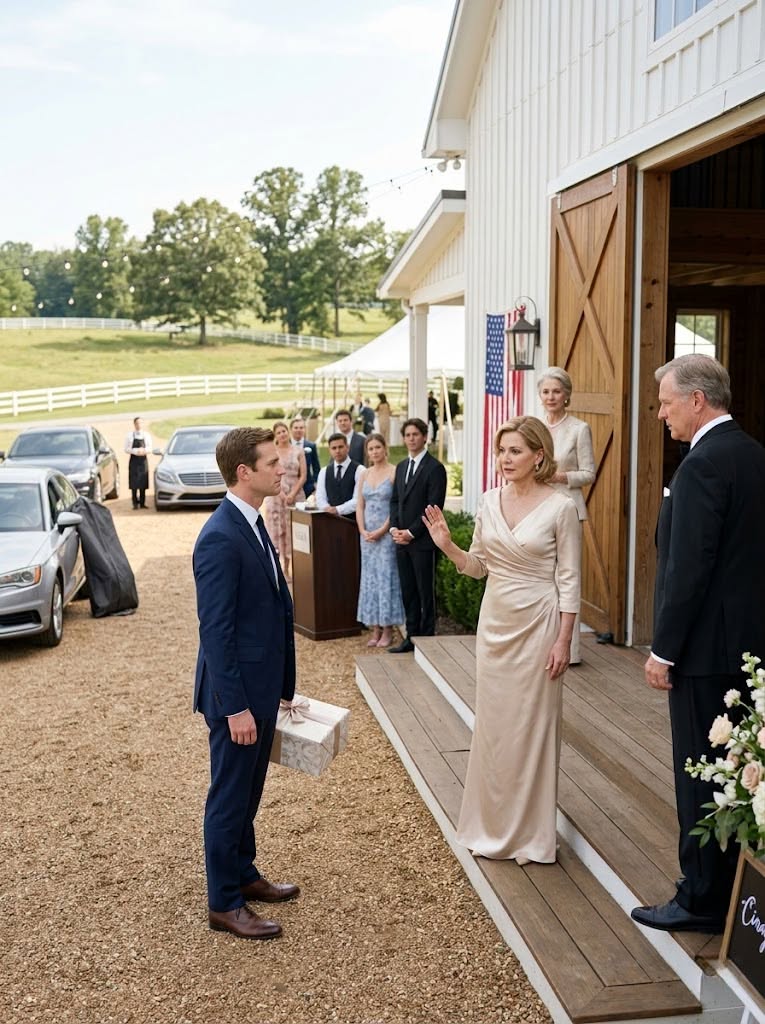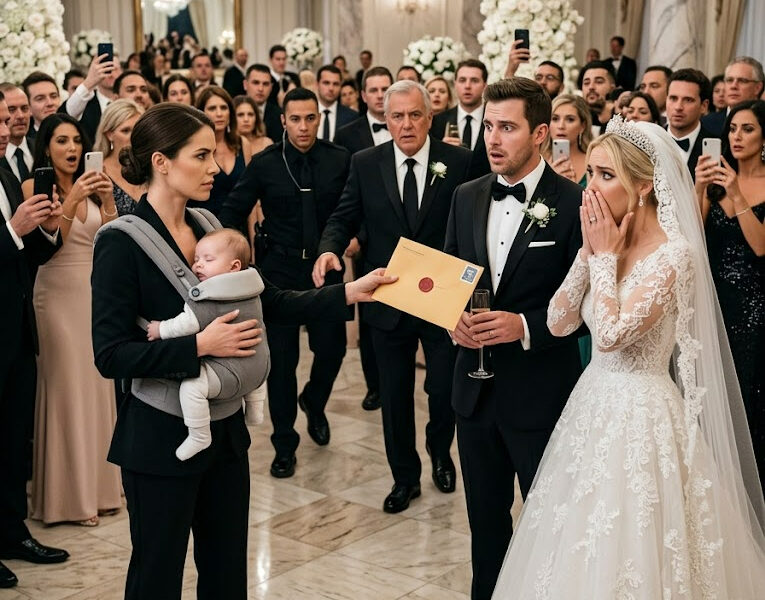
Six semaines après que mon mari m’ait enfermée dehors avec notre bébé de six jours en pleine tempête de neige, il a épousé une riche héritière et a déclaré à tout le monde que j’étais « instable ». Alors je suis entrée dans la salle de bal avec notre fille, une enveloppe scellée et l’enregistrement dont il ignorait l’existence… Puis, toute la salle a entendu exactement ce qu’il avait dit avant de nous laisser transis de froid.
Ce qui s’est passé après la tempête de neige
Première partie : La nuit où il nous a quittés
Six semaines après que mon mari m’ait poussée, moi et notre nouveau-né, dans une tempête de neige, j’entendais encore sa voix chaque fois que le vent frappait les fenêtres.
« Tout ira bien, Vivienne. On finit toujours par s’en sortir. »
Il le disait comme si survivre était une honte. Pas une force. Pas du courage. Un défaut qu’il avait été forcé de tolérer jusqu’à ce qu’il trouve enfin le moyen de me punir pour cela.
Cette nuit-là, la tempête avait englouti la route de montagne en quelques minutes. La neige fouettait le porche avec une telle violence que mes joues étaient à vif. J’étais pieds nus, car Dominic m’avait traînée hors de la chambre du bébé avant même que je puisse trouver mes pantoufles. Un de mes genoux saignait, là où j’avais heurté la marche en pierre. Sous mon manteau, Sophia, âgée de six jours, était blottie contre ma poitrine, enveloppée dans la couverture jaune de l’hôpital que je refusais de lui enlever depuis notre retour à la maison.
Derrière Dominic, la maison irradiait de chaleur. La lueur du feu se déplaçait sur le marbre du hall d’entrée. Le parfum d’une autre femme imprégnait sa chemise.
« S’il vous plaît », ai-je murmuré. « C’est un bébé. »
Dominic regarda le paquet sous mon manteau, puis me regarda de nouveau.
« Alors marchez prudemment. »
La porte claqua.
La serrure a cliqué.
Pendant trois battements de cœur, je suis restée figée, trop choquée pour bouger. Puis Sophia a émis un léger son contre ma peau, et le monde a repris son cours.
J’aurais dû mourir sur cette montagne. Sophia aurait dû mourir avec moi. C’est ce sur quoi Dominic comptait. Un mari éploré. Un épisode tragique de suites de couches. Une femme qui a quitté sa maison confortable en pleine tempête, submergée par le poids de la maternité.
Avant de devenir Mme Dominic Vance, j’ai travaillé comme enquêtrice de crise pour le bureau du procureur. J’ai interrogé des victimes terrorisées et des menteurs aguerris. Je savais comment les hommes puissants arrangeaient leurs versions. Je savais que les preuves disparaissaient le plus vite lorsque les familles étaient aisées.
Et j’avais cessé de faire confiance à Dominic bien avant la tempête de neige.
With one numb hand wrapped around Sophia’s back, I reached beneath her blanket and pressed the button on the emergency recorder clipped inside her diaper bag.
Then I started walking.
A truck driver found us forty minutes later near a service road. I remember the cab heater roaring, the driver saying, “Stay with me, ma’am,” and Sophia’s lips looking faintly blue beneath the dashboard light.
At the hospital, doctors treated us for exposure. Sophia was placed under a warmer. I woke to Dominic standing beside my bed in a camel wool coat, weeping for strangers.
“My wife has been unstable since the delivery,” he told the doctor. “She took the baby outside during some kind of episode.”
His mother, Beatrice, stood beside him with one gloved hand pressed to her pearls.
“Poor Vivienne,” she said softly. “Some women simply break.”
I lay there too weak to lift my head while they buried me alive with concern. Dominic waited until the doctor stepped out. Then he leaned close enough for only me to hear.
“Say one word,” he whispered, “and I’ll make sure they take the baby.”
That was when I stopped being his wife.
I became a witness.
For six weeks, I let them think I was ruined. I let Dominic file an emergency custody petition claiming I had endangered Sophia. I let Beatrice tell her friends I was recovering somewhere private. I let their attorney send letters full of words like instability and supervised access.
Every time I wanted to scream, I remembered the recorder.
My old mentor, Assistant District Attorney Fiona Hale, came to the hospital after a nurse quietly called her for me. She listened to the recording with her jaw locked, then replayed the last ten seconds three times: my begging voice, Sophia’s cry, Dominic’s answer, the door, the lock.
“He put a six-day-old infant outside in a blizzard,” Fiona said.
“Yes.”
“And then filed for custody.”
“Yes.”
Fiona’s expression became very still. “Then we do this properly.”
So we did. We gathered hospital records, weather data, phone logs, a neighbor’s doorbell footage, and financial documents from my inheritance trust. We did not warn Dominic. We did not argue online. We did not give Beatrice the satisfaction of watching me unravel.
Then, in the sixth week after the storm, Dominic announced his engagement to Chloe Whitmore, daughter of one of the richest hospital owners in the county. The invitation appeared online two days later, all white roses and champagne towers, with Beatrice quoted beneath a glossy photo saying her son deserved joy after a painful chapter.
Fiona brought me a printed copy.
“Are you sure?” she asked.
Sophia slept against my chest, warm and alive.
“He wanted me gone quietly,” I said. “So I’ll return with witnesses.”
Fiona folded the invitation once.
“Good,” she said. “Then let’s give him the wedding he earned.”
Part 2: The File Beneath the Flowers
Dominic chose the Whitmore Hotel because the staircase photographed beautifully.
That was what Fiona said three days before the wedding while we reviewed the plan in her office. Photographs of the ballroom, exits, service corridors, and loading dock covered her corkboard. It looked less like a wedding venue than a crime scene waiting for labels.
“He likes spectacle,” Fiona said. “He thinks a room full of expensive witnesses makes him untouchable.”
“It usually does.”
“Not when they hear the right evidence.”
The Whitmore Hotel sat downtown in a restored limestone building with brass revolving doors and balconies trimmed in gold. Chloe’s family used it for hospital galas and donor dinners, the kind where reputations were washed clean under chandeliers. Dominic was not marrying only a woman. He was marrying insulation.
But insulation cracks when pressure hits the right place.
The first document in our file was the life insurance policy. Dominic had increased coverage on me to two million dollars forty-eight hours before the storm. He confirmed the change from his home office while I was upstairs trying to nurse Sophia through a bad latch.
The second document was his custody petition. In it, Dominic swore I had voluntarily left the house with our infant daughter during a postpartum mental health episode and that he feared I might harm Sophia again.
The third was a bank report obtained after my attorney filed an emergency motion to preserve marital and trust assets. Money had been moving from my inheritance into a shell consulting company registered under Beatrice’s maiden name. The invoices were vague and elegant: household transition support, family stabilization services, executive personal planning.
Family stabilization. That was what they called stealing from me while preparing to erase me.
The strongest evidence was still the recording. A court-approved audio technician had enhanced it. Dominic’s voice was clear. Mine was broken by wind. Sophia’s newborn cry threaded through the background until it almost vanished beneath the storm.
I could read every page without shaking.
I could not listen to that recording twice.
“You don’t have to attend,” Fiona told me. “We can execute the warrants without you in the room.”
“If I don’t stand there,” I said, “he’ll tell everyone I was too unstable to face him.”
“He may try that anyway.”
“Then I want the cameras to catch my face when he does.”
Fiona studied me the way she used to study witnesses who were afraid but ready.
“Then you follow the safety plan exactly.”
The safety plan had more moving parts than the wedding itself. Two detectives would attend in hotel security jackets. A family court judge had reviewed the emergency evidence and issued temporary custody orders protecting Sophia until a full hearing. The bank had frozen the shell company. Chloe’s aunt, a retired judge rumored to care more about consequences than appearances, had received the sealed filing through proper channels that morning.
Fiona was strict about the line between justice and theater.
“We are not doing this for revenge,” she said.
I looked at her.
She sighed. “Fine. The public setting is strategically useful.”
On the morning of the wedding, I woke before Sophia in the small protected apartment Fiona had helped me rent. Dawn pressed pale light against the blinds. No snow. No mountain road. Just the sound of traffic, the smell of coffee from downstairs, and my daughter sleeping in a bassinet beside my bed.
I dressed carefully. Not like a grieving woman. Not like a victim. Not like a wife begging to be believed.
I wore a black coat over a navy dress. Sophia wore a cream sweater and the same yellow hospital blanket from the storm. I considered leaving it behind, then folded it around her anyway.
Some objects deserved to testify.
Outside the Whitmore, reporters and society guests gathered behind ropes. Beatrice stood near the entrance giving an interview, every silver hair pinned perfectly in place.
“My son deserves peace after such a painful chapter,” she said into a microphone. “Vivienne has been very troubled. We pray she finds healing.”
I watched from Fiona’s car across the street.
Fiona lowered the volume. “Last chance to stay here.”
Sophia stirred in her carrier.
“No,” I said. “Quiet is how he survives.”
At 3:07 p.m., while Dominic stood beneath an arch of white roses, the ballroom doors opened.
Cold air moved in before I did.
Then I stepped through it.
Part 3: The Wedding He Earned
The music faltered when people noticed me.
It did not stop at first. The string quartet kept playing because professionals recognize disaster before guests do. The violinist dragged one note slightly sharp, recovered, and tried to pretend nothing had changed. Around her, two hundred heads turned in a slow wave.
Dominic saw me when I reached the first row.
For half a second, his face was naked. Not cruel. Not angry. Simply stunned that a person he had discarded could walk back into a room under her own power.
Then the mask returned.
He gave the guests a sad smile and stepped away from Chloe.
“Vivienne,” he said gently. “You shouldn’t be here.”
“You’re right,” I said. “I should be dead.”
Phones rose. Someone near the aisle whispered my name. Chloe turned from Dominic to me, confusion tightening her face.
“Dominic,” she asked, “who is this?”
“His wife,” I said. “Though according to his latest court filing, I am also unstable, dangerous, and missing by choice.”
Beatrice rose so quickly her chair scraped across the marble.
“Security,” she snapped. “Remove her before she humiliates herself.”
“No,” Fiona said from the back of the room.
She stepped into the aisle in a navy suit, followed by two detectives who no longer bothered pretending to be hotel staff. A murmur rolled through the ballroom.
Dominic’s jaw tightened. “Fiona Hale. I should have known.”
“Yes,” Fiona replied. “You should have.”
I held up the sealed envelope beneath the chandelier. The red wax gleamed like a fresh wound.
“Dominic,” I said, “you forgot a few things.”
He smiled again, but only his mouth moved.
“Everyone, please forgive this interruption. My wife has been very ill since giving birth.”
“Temporary custody was granted this morning,” Fiona said clearly. “Sophia Vance remains in her mother’s care pending a full hearing.”
Dominic’s eyes flashed. “That order means nothing.”
“It means you do not touch the baby.”
That landed. The guests understood baby before they understood law.
Chloe stepped backward.
I opened the envelope and handed her the first page.
“Ask him why he increased my life insurance to two million dollars two days before he locked me outside in a sub-zero storm with our newborn daughter.”
Chloe stared at the policy. Color drained from her face.
Beatrice’s voice cut through the room. “That is forged.”
“No,” I said. “But the shell company invoices under your maiden name are very real.”
One detective moved closer to Beatrice.
Dominic looked at him, then at Fiona, then finally at me. I saw calculation turn into rage.
“You ungrateful little—”
“Careful,” I said.
He stopped.
I pointed to the small black recorder clipped beside Sophia’s blanket.
“You’re close to a microphone.”
Dominic looked down at our daughter for the first time all afternoon.
Not because he cared. Because he recognized the device.
The ballroom speakers crackled.
That was Fiona’s doing. Hotel audio had been prepared for vows and sentimental speeches. Instead, it delivered the sound of a mountain storm.
Wind filled the ballroom.
Then Dominic’s voice.
“You’ll be all right, Vivienne. You always survive.”
Several guests gasped. He sounded nothing like a grieving husband. He sounded bored.
My voice followed, thin and shattered beneath the wind.
“Please. She’s six days old.”
Then Dominic again, clear enough to turn the chandeliers into courtroom lights.
“Then walk carefully.”
The door slammed on the recording.
The lock clicked.
No one moved.
Chloe covered her mouth. Tears spilled over her fingers, but she did not look away from him. Whatever story he had told her about me died on her face.
“You did that?” she whispered.
Dominic lunged.
He moved toward the recorder, not toward me, not toward Sophia. That detail was captured by six phones, two hotel cameras, and the professional wedding videographer, who never lowered his equipment.
Detective Marquez caught Dominic’s arm before he reached the carrier and twisted it behind his back. Dominic dropped to one knee beneath the white roses.
“You set me up!” he roared.
I looked down at him. Sophia slept between us, warm and peaceful.
“No,” I said. “I survived you.”
Beatrice tried to slip through the side aisle. The second detective blocked her path.
“Dominic Vance,” Detective Marquez said, tightening the cuffs, “you are under arrest on suspicion of attempted manslaughter, child endangerment, witness intimidation, fraud, and filing false statements with the court.”
The room erupted.
Beatrice shouted about lawyers. Chloe removed her diamond ring and dropped it into a champagne flute. It hit the crystal with a clean, bright sound.
As detectives pulled Dominic upright, he twisted toward me.
“You’ll regret this,” he spat.
For the first time since the blizzard, I smiled.
“No, Dominic. I already regretted loving you. This is what comes after regret.”
Part 4: The Cost of Being Believed
People like to imagine justice as one dramatic moment.
A confession. A verdict. Handcuffs beneath white roses while a ballroom full of people finally sees the truth.
That moment mattered. I will never pretend it didn’t. I had needed someone besides me to hear the lock click. I had needed Dominic’s polished world to fall silent under the weight of his own voice.
But what came after was not clean.
What came after was paperwork, hearings, interviews, pediatric evaluations, and nights when I listened for a storm that was not there.
The wedding video traveled faster than any official statement. By midnight, clips were everywhere. Dominic on his knee beneath the roses. Chloe’s ring dropping into champagne. Beatrice screaming that her son was being persecuted. My voice saying, I survived you.
Fiona hated the attention.
“Publicity helps until it starts making people sloppy,” she warned.
So we got careful again.
I gave a recorded statement the next morning with my attorney present. I described the weeks before the storm: Dominic’s absences, Chloe’s perfume on his coats, Beatrice’s comments about women unsuited for motherhood, and the way my trust statements had stopped arriving by mail after Dominic claimed paper clutter stressed him out.
The hardest part was describing Sophia outside in the cold.
“What was the infant’s condition when the truck driver found you?” the investigator asked.
I looked through the interview room glass at Fiona in the hallway.
“Quiet,” I said. “Too quiet.”
My voice cracked. Nobody told me to calm down. Nobody called me emotional. The investigator slid a box of tissues closer and waited.
That kind of patience can feel like a miracle when every tear has once been used as evidence against you.
Chloe became the witness none of us expected.
Two days after the wedding, she contacted Fiona through her aunt and offered everything Dominic had sent her: emails, hotel confirmations, gift receipts, messages where he described me as unstable and nearly gone, and one devastating thread where he wrote that after the custody issue was resolved, Sophia would be raised in a more suitable household.
“He told me you abandoned the baby,” Chloe said when we met once in Fiona’s conference room.
“I believed him,” she continued. “I wanted to believe him because the alternative meant I had helped ruin another woman’s life.”
“You didn’t put us outside,” I said.
“No. But I stood beside him while he lied.”
Beatrice fought everything. She claimed the trust transfers were repayment for household support. She claimed the shell company was legitimate. She claimed my recording had been edited and my old professional connections weaponized.
Then the bank found the note.
Elle était jointe à une demande de virement envoyée depuis le compte du bureau de Dominic vers l’adresse électronique privée de Béatrice trois jours avant la tempête de neige.
Une fois V stabilisé ou supprimé, transférez le solde final avant toute intervention successorale.
Supprimé.
C’est le mot que les procureurs ont répété sans cesse.
L’avocat de Dominic a plaidé que cela signifiait un départ du domicile conjugal suite à une séparation légale. Fiona a demandé pourquoi la prime d’assurance avait été augmentée deux jours plus tard.
À ce moment-là, la famille de Chloé avait cessé de le protéger. Son père a fourni des documents prouvant que Dominic s’était discrètement renseigné sur les possibilités de placement en psychiatrie pour une conjointe en période post-partum. La tante de Chloé a déposé une déclaration sous serment expliquant que la requête en garde contenait des allégations contredites par des preuves matérielles.
Le monde de Dominic s’est rapidement rétréci.
Les conditions de sa mise en liberté sous caution l’empêchaient de me contacter. Le tribunal des affaires familiales a suspendu les visites en attendant la procédure pénale. Un expert-comptable judiciaire a retracé des centaines de milliers de dollars de transferts tentés et effectués depuis mon fonds fiduciaire. Le juge a gelé les avoirs restants et a confié la gestion de mes comptes à un administrateur indépendant jusqu’à la conclusion de la procédure civile.
Pourtant, le retour de l’argent sur un compte bancaire n’a pas ramené la chaleur de cette nuit.
Six semaines après le mariage, Sophia a attrapé son premier rhume. Un rhume bénin, comme on en attrape tous les jours chez les bébés. Mais quand elle a eu du mal à respirer par le nez, je me suis assise par terre dans la salle de bain, sous la douche chaude, la tenant dans la vapeur, tremblant tellement que j’ai appelé Fiona.
Elle est arrivée en pantalon de survêtement, a pris Sophia délicatement dans mes bras et a dit : « Tu n’es pas dans la tempête. »
Je l’ai répété parce que j’avais besoin d’entendre les mots à voix haute.
Je ne suis pas dans la tempête.
Sophia n’est pas prise dans la tempête.
La porte est ouverte.
C’est ainsi que commença la guérison. Non pas par la victoire, mais par la répétition.
Trois mois après le mariage, Dominic a accepté un accord de plaidoyer. Béatrice a plaidé coupable séparément après que son avocat n’ait pas réussi à justifier l’existence de la société écran.
Avant le prononcé de la sentence, l’avocat de Dominic m’a demandé si j’envisagerais une rencontre privée pour présenter mes excuses.
« Non », ai-je répondu à Fiona.
“Bien.”
« C’était rapide. »
Elle haussa les épaules. « Certaines excuses ne sont que des tentatives pour revenir dans la conversation. »
J’ai donc accepté de faire une déclaration de victime en audience publique.
Dominic serait obligé de m’entendre là, sans porte verrouillée entre nous.
Partie 5 : Ce qui s’est passé ensuite
La salle d’audience était plus petite que la salle de bal. Pas de lustres. Pas de roses blanches. Pas de champagne. Juste des bancs en bois, des néons, le sceau de l’État et le murmure discret des gens qui tentaient de ne pas faire trop de bruit tandis que des vies basculaient sous leurs yeux.
Dominic était assis à la table de la défense, vêtu d’un costume sombre mal ajusté. Il avait toujours accordé une grande importance aux cols, aux menottes, à sa réputation et à l’obéissance. À présent, ses épaules semblaient plus étroites. Béatrice, deux rangs derrière lui, était vêtue de noir, et me regardait entrer, accompagnée de Fiona d’un côté et de mon avocat de l’autre.
Sophia n’était pas là.
That was one boundary I would not bend for symbolism. My daughter had already been made evidence once. She would spend sentencing morning warm, fed, and nowhere near him.
When the judge called my name, I walked to the podium with two folded pages in my hand.
For weeks, I tried to write something powerful. Every draft sounded like I was still trying to win a room.
In the end, I wrote the truth plainly.
“Your Honor,” I began, “my husband did not abandon me in a storm because he lost control. He did it because he believed control was the natural order of our marriage. He believed he could decide whether I was credible, whether I was a good mother, whether my money belonged to me, and whether my daughter and I deserved shelter.”
Dominic stared at the table.
I kept going.
“The night he locked that door, my daughter was six days old. She could not speak. She could not protect herself. She could not understand why the warm house was behind us and the snow was in her face. She only knew the world became cold.”
“For weeks after that, Mr. Vance told doctors, lawyers, friends, and a court that I had endangered my child. He counted on the fact that postpartum women are often doubted. He counted on wealth. He counted on his mother. He counted on my exhaustion. Most of all, he counted on my silence.”
I looked at him then.
He raised his eyes.
“He was wrong.”
The courtroom stayed still.
“I do not ask this court to punish him because I hate him. Hate would require a connection I no longer have. I ask this court to remember that Sophia is alive because a stranger stopped his truck. My daughter should not have needed luck to survive her father.”
Dominic apologized after I sat down. It was polished, tearful, and useless.
If I had not heard him say then walk carefully, I might have believed him.
The judge did not.
Dominic received prison time, restitution, mandatory counseling, and a permanent criminal protective order. His parental rights were heavily restricted.
Beatrice received a suspended portion of her sentence because of her age, but the civil judgment attached to the mansion she loved. Watching her lose it brought me no joy, only a tired sense of balance.
Some things cannot be restored.
Some things can be returned.
By spring, Sophia and I moved into a small house near the coast. It was not grand. The kitchen cabinets stuck in humid weather, and the guest room needed paint. But every room had sunlight. The front door had a lock only I controlled.
Fiona became Sophia’s godmother in everything but paperwork first, then in paperwork too.
For a long time, I avoided cold weather. Even a refrigerator aisle could make my body remember. Therapy helped. So did time. So did the small routines of motherhood: bottles, baths, board books, socks that disappeared in impossible places.
The first time Sophia laughed at the ocean, I cried so suddenly that a woman walking past asked if I was all right.
I was.
That was the strange part.
J’étais debout sur le sable chaud, la main de ma fille enroulée autour de mon doigt, et le fracas des vagues ne ressemblait pas à une tempête de neige.
« Encore », balbutia Sophia en montrant la mousse du doigt.
Nous nous sommes donc approchés. Une vague a déferlé, douce et blanche, autour de nos chevilles. Sophia a poussé un cri, et je l’ai soulevée avant que la suivante ne lui arrive aux genoux.
Ce soir-là, j’ai rangé le dossier judiciaire dans un tiroir fermé à clé. Pendant des mois, ces papiers m’avaient servi de bouclier. À présent, ils prouvaient que j’avais eu confiance en moi suffisamment tôt pour me préparer.
Je suis ensuite allée dans la chambre de Sophia et je me suis tenue sur le seuil, la regardant dormir sous la couverture jaune ornée de canards délavés.
Certains objets méritaient de témoigner.
Certains méritaient d’être rachetés.
Dehors, le vent côtier soufflait dans l’obscurité.
Ce n’était plus la voix de Dominic. Ce n’était plus le bruit d’une porte qui ferme ou d’une serrure qui cliquette.
On aurait dit une respiration.
On aurait dit des vagues.
Cela sonnait comme la liberté incarnée.
LA FIN
Avertissement : Ce contenu est entièrement généré par une IA à des fins de fiction et de divertissement uniquement. Toute ressemblance avec des personnes réelles, vivantes ou décédées, des événements ou des lieux est purement fortuite, et le créateur décline toute responsabilité quant à l’interprétation de ce contenu.
Avertissement : Cette histoire est une œuvre de fiction créée à des fins de divertissement uniquement. Tous les noms, personnages, lieux et événements sont fictifs ou utilisés de manière fictive. Aucune personne ni organisation réelle n’est représentée.