They mistook my calm reply for surrender.What they didn’t know was that the Emerging Culinary Star ceremony would be broadcast live across the country, and the fashionable restaurant my sister had chosen for her private celebration was one of the network’s official viewing partners.
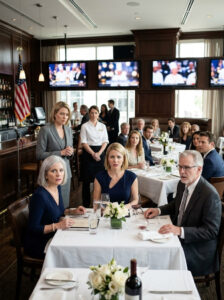
That evening, while I waited backstage with an envelope clutched in my hands, every television in that restaurant switched to the national broadcast. My face appeared above the bar.
Conversation stopped.
My father dropped his wine glass. My mother sat frozen, gripping her menu. My sister demanded that a server change the channel, but the cameras were already rolling, and one microphone near their table was still live.
I had spent years believing my family could make me invisible simply by looking away.
That night, millions of people looked directly at me and then heard something my family never expected the world to hear.
Before I tell you what my father said when the restaurant went silent and what happened after I walked away from them, tell me, what time is it for you right now? Where are you watching from? And what’s the weather like there?
I’m curious to see how far this story will travel.
The morning of the ceremony, I stood over a stainless-steel counter at the small restaurant where I worked and tasted the sauce I had been developing for six months. It began sweet with roasted pear, warmed with cayenne, and ended with a trace of smoke.
My chef called it balanced.
To me, it tasted like my childhood.
Sweetness always arrived first in our house, usually wrapped around my older sister, and the bitterness came later when everyone remembered I was standing there, too.
Her name was Ava, and by the time she was 16, our parents had already decided she was destined for something extraordinary. She was photogenic, confident, and talented at turning ordinary moments into performances.
I was quieter. I measured before speaking, listened before entering a room, and preferred the honest rhythm of a knife against a cutting board to the competition at our dinner table.
My mother, Denise, often said Ava had presence. My father, Mark, said she understood how the world worked.
When they described me, they used words like dependable, practical, and helpful—the language families use when they appreciate what you provide but rarely wonder what you want.
I learned early that food could say what I could not.
Vanilla reminded me of my 12th birthday, when I baked two dozen cupcakes from a library cookbook and piped each one by hand.
Before my friends arrived, Ava announced that she had been selected for a school fashion showcase. My mother moved my cupcakes to the laundry room so the dining table could display Ava’s portfolio.
My father invited neighbors over to celebrate her news, and when one of my friends asked whose birthday it was, he laughed and said, “We’re celebrating both girls tonight.”
There was only one banner, and it had Ava’s name on it.
Dark chocolate reminded me of the summer I created a praline tart for a neighborhood fundraiser. Ava photographed it, posted it online, and wrote that she had spent the weekend experimenting with Southern flavors.
The post went viral locally.
A boutique café asked whether she would collaborate on a limited dessert menu. She accepted before telling me.
When I objected, my mother said, “She gave your little recipe an audience. You should be grateful.”
My father suggested I help because family success benefits everyone.
I developed three desserts, trained the café staff, and received neither credit nor payment. Ava appeared in every promotional image.
I appeared only once, blurred in the background carrying trays.
For years, that photograph sat in my mind like a stain I could not scrub away.
Smoke reminded me of the night her first major brand launch nearly failed. The caterer canceled six hours before the event, and Ava called me crying.
I left my shift early, spent my savings on ingredients, recruited two classmates, and produced food for 80 guests. She promised to introduce me to the brand executives.
Instead, when a guest praised the menu, Ava smiled and said, “I have an amazing little team that handles these things.”
My parents heard her.
Neither corrected her.
My father later told me not to ruin her opportunity over a line in a crowded room.
That line cost me more than credit. One of the executives had been searching for a chef for a hotel residency. He offered the meeting to someone else because he never learned my name.
The pattern might have continued forever if my best friend had not entered my life.
I first met her without knowing her name when she returned an overcooked fish dish at the restaurant where I was an apprentice. Instead of blaming me, she asked to speak with the person who had made the sauce.
She said the seasoning was brilliant, even though the timing was wrong.
Her name was Emily Brooks, a food photographer who had spent years documenting chefs before they became famous.
She came back the next week, then the week after that, and eventually asked why I was hiding behind other people’s menus.
I told her I was not hiding. I was learning.
She looked at me for a long moment and said, “Learning is good. Disappearing is not.”
Emily became the first person who treated my ambition as something real rather than adorable. She photographed my dishes, helped me create a portfolio, and submitted my name for a regional culinary fellowship after I nearly talked myself out of applying.
I won.
My family attended the reception because Ava wanted photographs in the historic hotel.
When a reporter asked my mother how she felt about my achievement, she answered by describing Ava’s upcoming campaign.
I remember holding the fellowship certificate and wondering whether any accomplishment could become large enough to stop being reduced inside my own home.
The Emerging Culinary Star nomination arrived two years later.
By then, I had completed culinary school, worked double shifts, staged in three kitchens, and created a community supper program that provided affordable meals while training adults returning to the workforce.
The award was not for a single dish. It recognized technical skill, leadership, and contribution to the city’s food culture.
National television rarely covered young chefs unless they were already celebrities, but this ceremony had partnered with a major network for a live special.
The producers interviewed me twice, filmed my kitchen, and asked for photographs of the people who had supported my journey.
I sent them pictures of Emily, my instructors, my coworkers, and the volunteers from the supper program.
I did not send a family portrait.
When the producer asked why, I said, “The people in these photographs are the people who showed up.”
Three weeks before the ceremony, I invited my parents and Ava.
Anyway, part of me still hoped the importance of the night would finally reach them.
I told them the award would be televised, but my mother skimmed past that sentence and focused on the date.
Ava had scheduled a dinner that evening to celebrate a potential partnership with a luxury cookware company. It was not a signed contract, not a launch, not even an official announcement.
It was a dinner designed for photographs.
My parents chose it without hesitation.
The old version of me would have explained, pleaded, or offered to change something impossible.
Instead, I confirmed their seats would be released and returned to my sauce.
As I whisked, I noticed the flavor no longer ended in bitterness. The smoke remained, but it had become depth instead of damage.
I packed my knives, closed my station, and left for the ceremony with one question following me out the door.
If the people who raised me had never learned to see me, what would happen when the entire country did?The ceremony was held inside a restored theater near the river, but I barely noticed the chandeliers or the cameras sweeping across the balconies.
I noticed the red light above the main lens. I noticed the names of the nominees moving across a monitor.
I noticed my own hands refusing to stay still.
Emily met me near the stage entrance and pressed a paper bag into my arms.
Inside was one of the vanilla cupcakes from the recipe I had used on my 12th birthday, recreated from memory.
She had written one sentence on the napkin.
This one has your name on it.
I laughed harder than the joke deserved, then nearly cried, and the tension in my chest loosened.
The production coordinator hurried over to attach a microphone to my dress and reminded me that the program would cut to partner restaurants around the country throughout the night.
One of those locations was Maison Durell, a fashionable New Orleans restaurant known for attracting influencers and local celebrities.
I recognized the name immediately.
It was where Ava had scheduled her dinner.
For one second, I considered warning my family that the broadcast would take over the restaurant screens.
Then I remembered my mother calling the ceremony pointless and my father telling me not to expect them everywhere.
They had made their choice with full confidence.
I let them keep it.
Backstage, the host reviewed the order of awards and explained that each winner would have 90 seconds for a speech.
A producer named Julian approached me with an uncomfortable expression. He said the restaurant camera crew had identified a table connected to one of the finalists through public social media posts.
Ava had uploaded a photograph of our parents beneath a caption that read, “Celebrating the daughter who knows how to create a real occasion.”
She had tagged the restaurant, the cookware company, and our mother.
Julian asked whether the people at the table were my family.
I looked at the image, felt the old instinct to protect them rise inside me, and answered honestly.
“Yes.”
He asked whether I wanted the control room to avoid that table if I won.
The question should have been easy.
Instead, I remembered every time my family had used my silence as a curtain behind which they could behave however they wanted.
I did not ask the network to expose them, but I did not volunteer to hide them either.
“Treat them the way you would treat any other table,” I said.
Across town, Ava’s dinner had already begun.
I learned the details later from the unedited restaurant footage.
She had reserved the center table beneath the largest screen and arranged gift bags beside each place setting.
The cookware representative she hoped to impress had not confirmed attendance, but Ava behaved as if a contract were waiting inside every envelope.
My mother wore the pearl necklace she had refused to wear to my culinary graduation because the neighborhood was too inconvenient.
My father ordered a bottle of wine that cost more than my first weekly paycheck.
Ava’s friends filmed the table from every angle.
At 8:00 p.m., the restaurant manager announced that the televisions would switch to the live culinary awards as part of a national viewing event.
Ava complained that she had reserved the space for a private celebration.
The manager pointed to the clause in the booking agreement.
She demanded the sound be muted.
He refused because the network was filming audience reactions.
My parents could have left.
They stayed because Ava wanted the restaurant’s visibility.
In the theater, the first awards passed in a blur.
I applauded, smiled when the cameras turned, and tried not to count the empty seats in the front row.
The cards bearing my parents’ names had been removed, but I could still see the faint spaces where they had rested.
Emily sat in the seat directly in front of me. My culinary instructor sat beside her.
Two volunteers from the supper program had pooled money for formal clothes and waved each time I looked their way.
The absence of my family hurt, but it no longer occupied the whole room.
When the host announced the Emerging Culinary Star category, a montage began.
The screen showed one nominee running a bakery, another leading a hotel kitchen, and another teaching sustainable farming.
Then my face appeared.
The film showed me stirring a stockpot at dawn, guiding trainees through knife skills, and serving meals at our community supper.
My voice played over the images.
“A good kitchen does not ask where you came from before it gives you a place at the table.”
The audience applauded before the montage ended.
At Maison Durell, my family watched the same footage.
Ava tried to continue her toast, speaking louder than the television.
Her friends stopped listening.
One of them whispered, “Wait, that’s your sister?”
My mother stared at the screen as if the producers had committed a personal offense by presenting my work without her permission.
My father told the server the program would be over soon.
Then the host opened the envelope.
I heard my name, but for half a second, I did not understand that it belonged to me.
Emily stood first.
My instructor shouted.
The theater rose around me.
I walked toward the stage while photographs from my journey appeared behind the podium, including the old image from Ava’s launch—the one where I had been blurred in the background carrying trays.
Emily had found the original photograph and sent it to the producers.
In the uncropped version, I was not blurred.
I was at the center of the kitchen team, plating the food Ava had later claimed came from her little team.
The camera at Maison Durell cut to Ava’s table.
My face filled the screens above them while their own reactions appeared in a small live window on the broadcast.
My father reached for his glass without looking and knocked it to the floor.
My mother stopped moving.
Ava signaled furiously for the manager.
The cookware company’s representative, who had arrived late and was standing near the bar, turned from the screen to Ava with a question already forming on her face.
I stepped behind the microphone, holding the award in both hands.
The applause faded.
Before I could speak, the broadcast briefly carried sound from the restaurant.
Ava’s voice came through clearly.
“Turn her off. This is supposed to be my night.”
A silence unlike anything I had ever heard settled over the theater.
I looked at the red camera light, then at the photograph behind me, and understood that I had 90 seconds to decide whether I would protect the illusion that had protected everyone except me.
My first instinct was still the instinct of the dependable daughter.
Smile. Soften the moment. Rescue everyone from the consequences of their own words.
Then I saw Ava’s face on the monitor near the stage.
She was not embarrassed that she had dismissed me.
She was furious that people had heard her do it.
I placed the award on the podium and began without looking at my prepared notes.
“For most of my life, I believed recognition was something another person had to grant me,” I said. “I thought that if I worked harder, gave more, solved enough problems, and stayed useful, the people I loved would eventually decide I was worth celebrating.”
No names. No accusation. Just the truth.
The room became completely still.
“I catered events where my work was introduced as someone else’s idea. I watched recipes I created become content I was never credited for. I was told that asking to be acknowledged was selfish, while giving without acknowledgment was called loyalty.
“Tonight, I understand the difference between family and an audience. An audience may applaud you for a moment. Family is supposed to recognize you before the applause begins.”
Behind me, the screen changed from the old launch photograph to images of my trainees, coworkers, and community volunteers.
“Fortunately, families can also be built through action. Mine includes the friend who put my name on an application when I was afraid to write it myself. It includes teachers who corrected me without diminishing me, coworkers who shared credit, and people who trusted me to feed them.
“They taught me that support is not a seat someone occupies after you become successful. Support is what they do while success is still uncertain.”
The 90-second warning light flashed, but the host gave me a small nod to continue.
I lifted the award.
“So, I accept this for every person who has been treated like the background of someone else’s photograph. You do not need to destroy anyone to reclaim your place. You need to stop shrinking so they can remain comfortable.”
Applause began before I finished.
At Maison Durell, the microphone near my family’s table remained open because the control room was preparing another reaction shot.
My mother whispered, “She is making us look terrible.”
My father answered, “She always has to turn everything into a grievance.”
Then the cookware representative asked Ava whether the desserts featured in her first campaign had really been created by me.
Ava said, “Sophia helps sometimes. She’s being dramatic because she finally has attention.”
That sentence traveled into millions of homes.
The broadcast director immediately cut the restaurant audio, but it was too late.
In the theater, I caught only fragments, but I saw Emily cover her mouth and Julian signal urgently from the wing.
The host stepped beside me and said softly enough that only my microphone caught it.
“You don’t have to answer them.”
For the first time, I realized I truly did not.
I thanked the Culinary Foundation, announced that the award stipend would help expand our workforce training dinners, and walked offstage without defending my family or attacking them.
That refusal said more than an insult could.
Backstage, my phone vibrated continuously.
The clip of Ava demanding that the restaurant turn me off had already been reposted thousands of times.
Viewers matched the uncropped catering photograph with images from her old campaign.
Former event staff began commenting that I had developed the menu. A pastry chef posted an invoice bearing my name.
The story was no longer a private disagreement that my family could rewrite around the dinner table.
It had timestamps, witnesses, and a national audience.
Emily found me near the loading corridor, where I was finally able to breathe. She wrapped her arms around me and asked whether I was all right.
I told her I did not know.
Winning felt enormous, but so did the knowledge that the truth had escaped my control.
“You didn’t expose them,” she said. “They spoke into a live microphone.”
Before we could say more, Julian approached with news that should have thrilled me.
The network wanted me on its morning program. Three restaurant groups wanted meetings, and the foundation had selected me for a six-month national residency.
Then he held out another phone.
My father was calling the production office.
I answered because some part of me still expected concern.
Instead, he said, “You need to get back on that stage and explain that we are a loving family.”
I looked through the curtain at the standing audience, then at the award engraved with my name.
“You had years to demonstrate that,” I replied. “I’m not going to lie on national television because the truth became inconvenient.”
He inhaled sharply.
I ended the call before he could turn my victory into another task I was expected to perform for them.
When I returned to the stage for the final photograph, the empty front-row seats no longer looked like evidence that I was unloved.
They looked like evidence that my family had been offered a place in my life and had chosen not to take it.
By sunrise, the clip had become the most discussed moment of the broadcast.
I did not celebrate that.
Public attention can illuminate what was hidden or burn through every boundary.
I asked the network not to release my family’s contact information and posted one statement.
“I will not encourage harassment. The lesson of last night is not to punish people online. It is to value work honestly, give credit clearly, and believe people before the world applauds them.”
The statement protected my principles, but it did not protect my family from professional consequences.
The cookware company suspended negotiations with Ava before noon.
Its representative had heard her claim that my recipes were hers and requested documentation for every food-related campaign she had presented.
Ava could not provide it.
Her agency placed her account under review, and two clients postponed projects.
My father served on the board of a local foundation that promoted mentorship for young professionals.
Board members received the clip in which he called my achievements grievances.
He was asked to step away from an upcoming public campaign while they reviewed whether his conduct matched their mission.
My mother chaired a fundraising committee for a culinary education gala.
Several chefs withdrew after recognizing me from the broadcast, and the committee replaced her as event spokesperson.
I had requested none of it.
My family had built reputations around support, ambition, and community.
Their own recorded words revealed how selectively they practiced those values.
Ava’s first message arrived at 6:17 a.m.
Fix this.
Her second said, “You know, I didn’t mean it the way it sounded.”
Her third accused me of planning the camera cut.
My mother left a voicemail asking why I had not warned them about the restaurant broadcast.
My father sent a draft statement for me to post, describing the incident as playful family teasing edited without context.
The footage was live and unedited.
I replied once.
“I will not publish anything false. Do not contact my employers, the network, or the foundation on my behalf.”
They ignored that boundary within an hour.
My father called the Culinary Foundation and told an administrator I was emotionally overwhelmed.
My mother emailed the network offering a family interview.
Ava’s publicist contacted Emily and suggested a joint video in which Ava and I would cook together, laugh about sibling rivalry, and redirect attention toward her cookware partnership.
Emily forwarded the proposal without responding.
The proposal clarified everything.
They wanted access to my credibility, not reconciliation.
That afternoon, I attended the meeting for the national residency.
The program would take me to five cities, allow me to study regional food traditions, and end with a televised dinner designed around my own menu.
I signed the agreement.
Then I met an attorney recommended by the foundation and gave her records I had kept almost accidentally: recipe drafts, dated photographs, ingredient invoices, messages in which Ava asked me to develop dishes for her campaigns, and the unpaid catering expenses from her launch.
The attorney sent a formal notice requiring Ava to stop presenting my work as hers and preserve all business records.
I demanded attribution and removal of false claims, not money.
Ava called from a different number that evening.
When I answered, she did not apologize.
She said I was destroying her career over cupcakes and sauces.
“No,” I said. “Your career is being questioned because you built part of it on work you told people was yours.”
She reminded me that our parents had invested in her new lifestyle brand and could lose money if the cookware deal collapsed.
That was the hook she expected to pull me back with.
Responsibility for everyone else’s choices.
“Then you should tell them the truth about the risk,” I answered.
She called me jealous, selfish, and cruel.
I let her finish.
“I hope you rebuild,” I said. “But you will not rebuild on my name.”
I blocked the number.
Later, alone in my apartment, I finally cried.
Not because I regretted my decision, but because protecting myself felt so unfamiliar that my body interpreted it as danger.
Emily sat on the kitchen floor beside me and said nothing until I was ready.
The next morning, the cookware company ended negotiations after confirming that two signature recipes in Ava’s presentation belonged to me.
Her agency dropped the culinary portion of her brand and required a public correction.
My father resigned temporarily from the mentorship foundation rather than answer questions.
My mother’s committee issued a statement supporting proper credit for culinary professionals.
Their carefully maintained image did not collapse because I attacked it.
It collapsed because, for one night, they could not control the camera, the microphone, or me.
Three weeks into the residency, my parents arrived at my apartment without warning.
My mother carried flowers.
My father carried a folder.
Ava was not with them.
I almost refused to open the door, but I chose to hear them once, on my terms.
I placed the flowers on the counter and left the folder unopened.
My father began with the sentence I expected.
“We made mistakes, but this has gone too far.”
I stopped him.
“An apology with ‘but’ is a request for me to share the blame.”
My mother looked down.
My father’s jaw tightened.
Yet he did not leave.
I asked them to tell me exactly what they believed they had done.
Not what television viewers thought, not what their boards objected to, and not what Ava’s agency had documented.
My mother spoke first.
She admitted that praising Ava had become part of her identity. Ava’s visible success made her feel admired by other parents, while my quieter work did not give her the same social reward.
She said she had treated my reliability as proof that I needed less care.
Then she named the cupcakes, the fellowship reception, the unpaid launch, and the ceremony.
Hearing them did not erase them, but it showed she finally saw the pattern.
My father struggled longer.
He said he had believed competition would make me stronger and that Ava needed more active support because her career depended on attention.
I asked why my strength had become an excuse to neglect me.
He had no answer.
Finally, he admitted that he defended Ava because acknowledging her dishonesty would also mean acknowledging how often he had benefited from my silence.
The folder contained repayment for the launch expenses and a written statement confirming that I had created the menus used in Ava’s early food campaigns.
I accepted the documentation but not the money.
I asked them to donate it to the workforce supper program.
“Are we forgiven?” my mother asked.
“I believe you regret what happened,” I said. “I don’t yet know whether you regret what you did or only what it cost you.”
They left without the family photograph they had hoped to take.
Two days later, my father donated the money privately and resigned permanently from the mentorship board, saying he needed to examine how he practiced the values he had publicly promoted.
My mother began volunteering at the culinary education program she had once treated as a social event, working in registration rather than standing at the microphone.
Neither action obligated me, but both continued when nobody was filming.
Ava took longer.Her agency ended its contract after its audit found repeated failures to credit collaborators.
The lifestyle brand our parents had invested in closed before launch, and Ava sold her designer inventory to repay part of their investment.
For several weeks, she posted vague messages about betrayal.
I never responded.
Then the posts stopped.
One night, she sent an audio recording through my attorney.
There was no publicist and no proposal.
She admitted she had taken the praline tart because my talent frightened her.
She had built her identity around being the exceptional daughter, and every time I succeeded, she felt as though something was being stolen from her.
“So I stole first,” she said.
She listed the recipes, events, introductions, and credits she had taken.
She had already published corrections on each archived campaign and transferred the remaining recipe photographs to me.
She did not ask me to defend her.
She asked whether someday she could apologize in person.
I replied through the attorney.
“Someday is possible. Soon is not.”
Meanwhile, the residency transformed my career.
I learned from cooks in Charleston, Santa Fe, Chicago, Seattle, and Oakland, each city teaching me that food carries memory without requiring us to remain trapped inside it.
The network offered me a segment about overlooked culinary workers.
I named it The Seen Table.
Every episode credited every assistant, farmer, dishwasher, photographer, and recipe tester on screen.
On the first episode, I recreated the vanilla cupcakes from my childhood and placed one beneath a small card that read:
Sophia.
I did not mention my family.
I did not need to.
Revenge, I discovered, was not the pleasure of watching them lose what they valued.
It was the freedom of building something they could no longer claim, minimize, or turn into evidence of their own importance.
Six months after the ceremony, I returned to New Orleans for the final residency dinner.
The event raised enough money to double the training program, and the menu told my story without explaining it.
Vanilla and pear for beginnings. Dark chocolate for truths that linger. Cayenne for courage. And smoke for the past transformed into depth.
My parents purchased ordinary tickets.
They did not ask for front-row seats, backstage access, or recognition.
I saw them near the rear of the room, standing when my trainees were introduced and remaining seated when photographers gathered around me.
That restraint was new.
Ava did not attend.
Instead, she spent the evening working a paid shift at a small creative agency that had hired her on probation.
She was starting again without borrowed recipes, family protection, or a manufactured image of effortless success.
Before dinner, I received a handwritten note from her.
It said, “I used to think there was only enough light for one of us. I understand now that I kept turning yours off because I was afraid mine was not real. I am sorry. I will keep correcting what I took, whether you speak to me again or not.”
I folded the note and placed it in my bag.
I was not ready to welcome her back, but I kept the apology.
After the final course, my mother approached and asked whether she could hug me.
She asked.
Another small change.
I said yes.
My father told me the dinner was extraordinary, then stopped himself from adding advice.
I thanked them and returned to my team.
We did not become a perfect family that night.
Trust did not rise like a soufflé simply because everyone followed the recipe once.
I allowed my parents limited visits.
Months later, I met Ava in a quiet café.
She apologized without asking me to reduce the consequences, and I listened without promising closeness.
Forgiveness meant no longer carrying the argument every day.
Reconciliation remained something they would have to earn through consistent action.
The national broadcast opened doors, but the most important change happened before any contract or television appearance.
I stopped measuring my worth by who occupied the seats reserved for me.
My restaurant concept, The Seen Table, eventually found a permanent home in New Orleans.
On opening night, every employee’s name appeared on the menu beside the work they contributed.
My parents waited in line with everyone else.
Ava sent flowers with no company logo and no social media post.
I placed them near the entrance, not at the center of the room.
People asked whether their losses felt satisfying.
The satisfaction was brief.
What lasted was the peace of knowing I had not destroyed them.
I had simply stopped protecting a story that required me to disappear.
Their consequences created the possibility of change, but their choices afterward determined whether change became real.
As I locked the restaurant after opening night, I looked at my name on the glass and remembered the message that had started everything.
Another pointless award.
It had never been pointless.
It was the moment the world saw my work.
My family heard themselves clearly.
And I learned that being loved should never require becoming invisible.
So tell me, would you have let them return slowly, one honest action at a time, or would you have closed the door forever?
Thank you for being here with us until the final line. All events and characters are fictional and created only for entertainment and educational purposes. We hope it reminds you that your worth does not need to be proven through service.
If someone only believes you care when you accept pain silently, they are not asking for love.
They are asking for control.
If you came here from Facebook because of this story, go back to the Facebook post, tap like, and comment exactly “Powerful.” That small action means more than you might think, and it gives the storyteller real encouragement to keep sharing more stories like this with you.