Billionaire Mocked His Wife’s “Cheap” Necklace at His Gala—Then Her $15 Million Collection Exposed the Family That Betrayed Her
“Good God, Nora. You wore that?”
Sebastian Cole’s voice carried farther than he intended.
Or perhaps exactly as far as he intended.
The string quartet was still playing beneath the thirty-foot crystal chandelier of Manhattan’s Armitage Ballroom when several conversations nearby died at once.
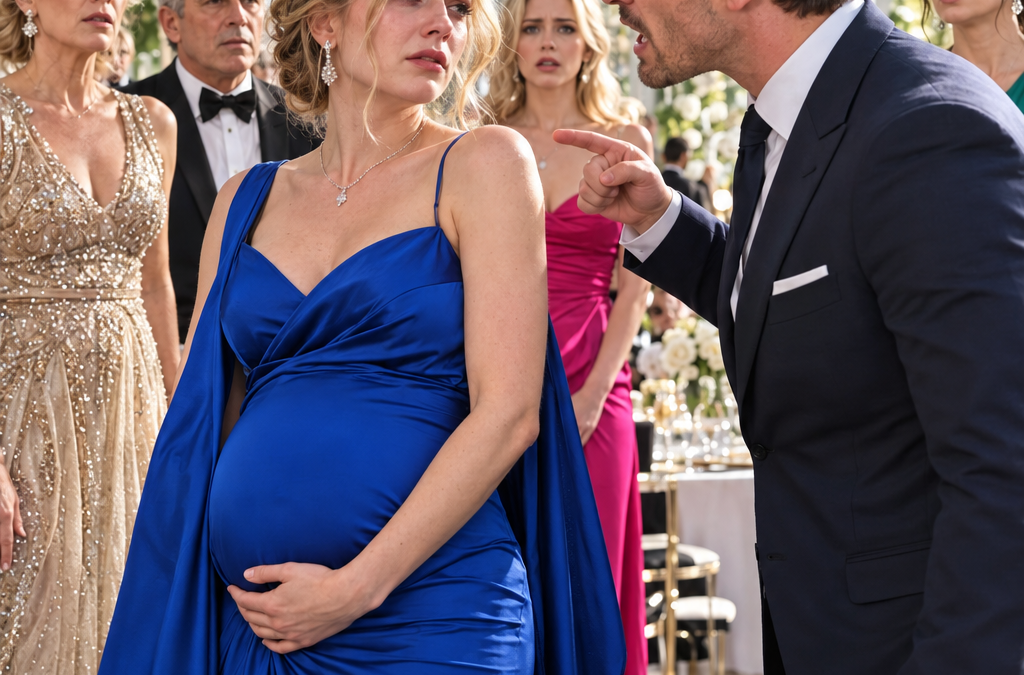
Nora Ellison Cole stood beside her husband in a midnight-blue gown, one hand loosely wrapped around a glass of untouched champagne.
Around her neck hung a small antique pendant.
No giant diamonds.
No emerald collar.
No fashionable designer logo.
Just an oval sapphire no larger than a thumbnail, framed by tiny old-cut diamonds on a thin platinum chain.
Sebastian gave a short laugh and looked toward the investors surrounding them.
“My wife has a sentimental attachment to things that should probably stay in estate-sale boxes.”
A few people smiled because Sebastian Cole was worth almost three billion dollars and men worth almost three billion dollars rarely had to wonder whether their jokes were funny.
His mother, Celeste, laughed openly.
His sister Brooke hid hers behind a champagne flute.
And standing close enough to Sebastian for her perfume to reach Nora was Vanessa Reed, the beautiful vice president of acquisitions whose hand had been resting on Sebastian’s arm twenty minutes earlier.
Vanessa wore a spectacular diamond-and-emerald necklace worth more than most houses in America.
Sebastian leaned toward Nora.
“You knew tonight mattered.”
Nora looked at him.
“I did.”
“Then why come dressed like someone’s underpaid librarian?”
The insult landed harder than the laughter.
Not because it was clever.
Because Nora knew exactly what Sebastian was doing.
He was reducing her publicly before replacing her privately.
The separation papers were already in his attorney’s briefcase upstairs.
She knew that too.
What Sebastian did not know was that Nora had read the papers before he had even arrived at the gala.
And he did not know what was inside the slim blue leather portfolio currently locked inside the coat-check safe.
Nora did not defend herself.
She did not touch her necklace.
She did not look embarrassed.
She simply asked, almost pleasantly, “Do you like Vanessa’s necklace?”
The question amused him.
“Now that is jewelry.”
Vanessa smiled.
Sebastian gestured toward the emerald-and-diamond collar at her throat.
“That piece has history. Provenance. Value.”
“Yes,” Nora said softly.
“It does.”
Something in her tone made Vanessa’s smile flicker.
Sebastian missed it.
He was already turning toward the stage.
Tonight was supposed to be his coronation.
For six months, Cole Crown Holdings had quietly negotiated the acquisition of what Sebastian called the most important private jewelry collection to enter the American market in decades.
Sixty-one pieces.
Victorian diamonds.
Art Deco bracelets.
A Burmese ruby ring.
Three unsigned nineteenth-century rivière necklaces.
An emerald parure once photographed on a European duchess.
A rare sapphire brooch.
And the centerpiece: the Ellison Star, a twenty-seven-carat untreated blue sapphire surrounded by old European-cut diamonds.
Total insured value:
$15.2 million.
Sebastian planned to announce that Cole Crown controlled the collection.
Photographs had already been arranged.
Bankers were already present.
The collection was supposed to strengthen a financing package for Sebastian’s aggressive luxury-hotel expansion.
And Sebastian believed the jewelry belonged to Nora’s family.
More specifically, he believed Nora’s brother Daniel had inherited the right to sell it.
Daniel believed the same thing.
Celeste believed Sebastian had already secured it.
Brooke had privately selected three pieces she intended to “borrow permanently.”
Vanessa had been allowed to wear one tonight.
They had divided the treasure before the legal owner had even been told it had been moved.
Nora looked at the necklace around Vanessa’s throat again.
She knew every emerald.
She knew the tiny scratch near the clasp.
She knew the replacement diamond near the left hinge.
She knew because when she was nineteen years old, she had sat beside her grandmother at a wooden workbench while that exact necklace was cleaned stone by stone.
Her grandmother, Mae Ellison, had held it up beneath a lamp and said, “Never be impressed by people who confuse possession with ownership.”
Nora had been too young to understand.
She understood now.
Sebastian stepped onto the stage.
“Ladies and gentlemen.”
The room quieted.
Behind him, velvet curtains opened.
Gasps spread across the ballroom.
Inside illuminated glass cases lay the Ellison Collection.
Diamonds flashed beneath museum lighting.
Rubies burned crimson.
Emeralds seemed almost black at their centers.
Sebastian stood in front of them smiling like a man who had conquered something.
Nora watched.
Celeste squeezed Brooke’s arm.
Vanessa lifted her chin so the photographers could see the emerald collar she was wearing.
And Daniel Ellison, Nora’s older brother, stood near the front with a look of satisfaction that made Nora’s stomach tighten despite everything she had prepared herself to feel.
Her own brother.
That hurt more than Sebastian.
Sebastian had promised Daniel a seat on Cole Crown’s new advisory board.
Two hundred and fifty thousand dollars a year.
Stock options.
A consulting contract.
All Daniel had needed to provide was cooperation.
And access to Mae Ellison’s home after her death.
“Tonight,” Sebastian announced, “Cole Crown Holdings is honored to become the steward of the legendary Ellison Collection.”
Applause erupted.
Nora remained still.
Sebastian continued.
“For decades, these pieces were hidden away by a family that didn’t truly understand their potential.”
Daniel laughed.
That was when Nora looked at him.
He stopped.
Sebastian raised his glass.
“To bringing forgotten treasures into the future.”
More applause.
Then a man near the display cases stepped forward.
Dr. Malcolm Avery was seventy-one years old, silver-haired, and considered one of the most respected private-jewelry appraisers in New York.
He wasn’t supposed to speak.
Sebastian frowned.
Avery adjusted his glasses.
“Mr. Cole?”
Sebastian smiled tightly.
“Yes?”
“There seems to be an issue with your announcement.”
The ballroom changed.
Not loudly.
But instantly.
Sebastian lowered his glass.
“What issue?”
Dr. Avery looked toward Nora.
“The Ellison Collection was appraised by my firm seventeen months ago.”
Daniel’s face lost color.
“And?”
“And the ownership documentation does not name Daniel Ellison.”
Nora heard Celeste whisper, “What?”
Dr. Avery continued.
“It names Nora Ellison.”
Silence.
Not polite silence.
The kind that seems to swallow oxygen.
Sebastian looked at Nora.
For the first time that evening, he was no longer smiling.
“What is he talking about?”
Nora placed her champagne glass on a passing waiter’s tray.
Then she walked toward the stage.
Slowly.
No shaking hands.
No tears.
No hurried anger.
Just the faint sound of her heels against marble.
Sebastian stepped toward her.
“Nora.”
She stopped beneath the stage lights.
“You laughed at my necklace.”
His face hardened.
“This isn’t the time.”
“I think it is.”
She reached behind her neck and unclasped the small sapphire pendant.
Dr. Avery stared at it.
Then at her.
“May I?”
Nora placed it in his gloved hand.
Avery turned it beneath the light.
His eyebrows rose.
“The Mae Ellison sapphire.”
Someone in the crowd whispered, “Jesus.”
Sebastian looked from the pendant to Nora.
Avery spoke clearly enough for the nearest cameras to capture every word.
“This piece alone was insured for one million, one hundred thousand dollars.”
Sebastian’s face changed.
Vanessa’s hand rose unconsciously to the necklace around her throat.
Nora looked at her.
“And the one Vanessa is wearing?”
Avery’s voice was almost clinical.
“Approximately eight hundred and forty thousand.”
Vanessa went pale.
Nora turned toward the glass cases.
“And everything else?”
“Just over thirteen million, excluding market appreciation.”
The room exploded into whispers.
Nora did not smile.
That would have made it look like revenge.
This was older than revenge.
This was correction.
Sebastian stepped down from the stage.
“You told me your grandmother left that collection to the family.”
“No,” Nora said.
“Daniel told you that.”
Daniel pushed through the crowd.
“Nora, don’t do this here.”
She turned to him.
“You brought my grandmother’s jewelry here without asking me.”
“Our grandmother.”
“Yes.”
“But apparently only one of us remembered her as a person.”
His face hardened.
Daniel lowered his voice.
“You’re embarrassing yourself.”
Nora almost laughed.
Instead, she looked at the relatives, investors, executives and socialites who had spent years seeing her exactly the way Sebastian wanted them to see her.
Quiet wife.
Unambitious wife.
Decorative wife.
Woman lucky enough to marry money.
They had never asked why she had no public career.
They had never asked where she had been before Sebastian became famous.
They had never asked who had taken care of Mae Ellison during the final nine years of her life.
Nora had stayed when Mae’s hands began shaking.
Nora had stayed when the hospital visits became weekly.
Nora had stayed when Daniel moved to Miami because caregiving was “too depressing.”
Nora had stayed when her father complained that selling the jewelry would be easier than paying for another home-care nurse.
Nora had stayed when Sebastian begged her to delay graduate school because his first company was collapsing and he needed someone to handle payroll from their apartment.
Nora had stayed when everyone else discovered that her sacrifice was more convenient than their gratitude.
She had stayed.
She had stayed.
She had stayed.
She had stayed.
She had stayed.
And somehow every sacrifice had been translated into proof that she possessed nothing of her own.
Mae Ellison had noticed.
Everyone else had not.
Nora faced Sebastian.
He looked furious now.
Not frightened.
Not yet.
Powerful men usually experience humiliation as anger before they recognize it as danger.
“This is ridiculous,” he said. “Whatever technical ownership arrangement existed, Daniel had authority from the estate.”
“No,” Nora said.
Daniel stepped forward.
“I signed the transfer.”
“You signed a transfer for property you did not own.”
Daniel stared at her.
Nora’s voice stayed quiet.
“Grandma placed the collection into the Ellison Heritage Trust eleven years ago.”
Celeste frowned.
“What trust?”
Nora looked at her.
“The one none of you bothered to ask about.”
Sebastian’s jaw tightened.
“You’re my wife. If you owned fifteen million dollars in jewelry, you had an obligation to disclose that.”
That finally made Nora smile.
Barely.
“Interesting.”
“What?”
“You told me for twelve years that everything you earned belonged to you because you were the one building the empire.”
Sebastian looked around the ballroom.
“Not here.”
“You told me the townhouse was yours.”
“Nora.”
“The Hamptons property was yours.”
“Stop.”
“The company shares were yours.”
His eyes hardened.
“And tonight, somehow, my grandmother’s jewelry became yours too.”
Vanessa removed the emerald necklace with trembling fingers.
Nora watched her.
“Careful with the clasp.”
Vanessa froze.
There were almost six hundred people in that ballroom.
No one laughed now.
Sebastian stepped very close.
“You’re coming upstairs with me.”
“No.”
“That was not a request.”
Nora looked directly into his eyes.
And then she asked the question that sounded almost too small to matter.
“Are you certain you want to keep pretending those pieces belong to you?”
Sebastian should have heard the trap.
He didn’t.
He smiled coldly.
“Yes.”
Nora nodded.
“Good.”
And she walked away.
Three days later, Sebastian threw her out of the house.
Not metaphorically.
Not through lawyers.
He had her suitcases placed on the sidewalk outside their East Seventy-Fourth Street townhouse while rain struck the stone steps.
Twelve years of marriage reduced to four suitcases, a garment bag, a cardboard box of books and the blue leather portfolio Nora carried beneath her arm.
Sebastian stood inside the doorway.
Celeste stood behind him.
Brooke had come over to watch.
Even Vanessa was there.
That detail almost impressed Nora.
Sebastian had stopped pretending quickly.
“You created a public spectacle,” he said.
Nora looked at the rain gathering on the shoulders of her coat.
“You stole my property.”
“Your brother authorized the transfer.”
“My brother cannot authorize the transfer of my property.”
“We’ll let the attorneys decide that.”
“Yes.”
“We will.”
Sebastian’s expression shifted.
He had expected screaming.
Perhaps bargaining.
Maybe the inevitable line every arrogant man imagines an abandoned woman will say.
How can you do this to me?
Nora never asked it.
Instead she adjusted the strap of her handbag.
Sebastian seemed irritated by her calm.
“You understand the prenuptial agreement leaves you almost nothing.”
“I remember.”
“This house is mine.”
“Yes.”
“The apartment downtown is owned by the company.”
“I know.”
“The cars are leased through Cole Crown.”
Nora nodded.
Sebastian stared at her.
“Do you have anything to say?”
“Yes.”
She looked behind him at Vanessa.
“My grandmother’s emerald necklace should not be exposed to perfume. It damages the setting over time.”
Vanessa’s face reddened.
Brooke muttered, “Unbelievable.”
Nora picked up one suitcase.
A driver waiting across the street hurried forward to help.
Sebastian called after her.
“You won’t get back inside once you leave.”
Nora stopped beneath the rain.
Then she turned.
For one brief second, Sebastian looked almost pleased.
He thought she might beg.
Instead she said, “I know.”
And left.
Her first call was not to a divorce lawyer.
It was to her brother.
That was the last part of herself she had not fully amputated.
Daniel answered after six rings.
“Nora.”
“I need access to Grandma’s house.”
Silence.
“The locks have been changed.”
“I know.”
Another silence.
“You changed them.”
Daniel exhaled.
“You’re making everything harder than it needs to be.”
“I want my personal records.”
“The house is part of Dad’s estate administration now.”
“No, it isn’t.”
“Nora—”
“Grandma gave the house to me four years before she died.”
Daniel said nothing.
Nora closed her eyes.
There it was.
The confirmation.
Sebastian’s betrayal was marriage.
Daniel’s was blood.
It cut differently.
“What did he promise you?” she asked.
Daniel’s voice sharpened.
“This isn’t about Sebastian.”
“What did he promise you?”
“You always do this.”
Nora almost smiled.
“Do what?”
“Act morally superior because you stayed with Grandma.”
“I asked one question.”
“I had a life.”
“So did I.”
“You made your choice.”
“And now you’ve made yours.”
Daniel lowered his voice.
“He’s offering me a position.”
“How much?”
“That’s none of your business.”
“How much, Daniel?”
A long pause.
“Two-fifty.”
“Thousand?”
“Yes.”
“Per year.”
“Yes.”
Nora stared through the hotel window at the rain.
She thought of every winter Mae had asked whether Daniel might visit.
Every birthday.
Every Thanksgiving excuse.
Every phone call ending with Maybe next month.
“You sold Grandma for a salary.”
“Don’t say that.”
“You sold access to her house. You moved her jewelry. You signed papers concerning property you knew she did not leave to you.”
“I’m entitled to part of that collection.”
“No.”
“She was my grandmother too.”
“She loved you.”
Nora’s voice softened.
“That isn’t the same thing as owning what she left behind.”
Daniel swore.
“Sebastian says this can all be handled privately if you stop being difficult.”
That sentence did something final.
It sealed the wound.
Nora opened the blue leather portfolio.
Inside were copies of the Ellison Heritage Trust.
Appraisals.
Insurance documents.
Custody agreements.
Photographs.
A sealed letter.
And one handwritten page from Mae dated eleven days before her death.
Nora had read it only once.
Now she unfolded it again.
Mae’s handwriting had grown uneven near the end.
My darling girl,
If you are reading this because someone has tried to take the collection, do not waste your strength persuading people who have already decided your kindness means weakness.
The collection is yours.
But I did not leave it to you because you love jewelry.
I left it because you understand stewardship.
A beautiful thing in greedy hands becomes a weapon.
A valuable thing in careful hands becomes a responsibility.
If Daniel, your father, your husband, or anyone else claims authority over the collection, remember this:
Possession is not ownership.
Family is not permission.
Marriage is not surrender.
And love does not require you to volunteer for erasure.
There are duplicate trust records with Harriet Lawson.
There is also a protective clause in Section Seventeen.
Do not mention it until someone lies under oath.
Let them choose their own trap.
Love,
Grandma Mae
Nora stared at the final sentence.
Section Seventeen.
She had read it the night of the gala.
That was why she had asked Sebastian whether he truly wanted to keep claiming the collection.
He had said yes.
Three cameras had recorded it.
He still had no idea what he had agreed to prove.
Harriet Lawson’s law office occupied the twenty-ninth floor of an old building overlooking Bryant Park.
Harriet was seventy-three and wore gray suits with the severity of a federal judge.
She had represented Mae Ellison for thirty-two years.
When Nora entered carrying the blue portfolio, Harriet rose and embraced her.
Then she looked at Nora’s face.
“He put you out.”
Nora nodded.
“Three days after the gala.”
Harriet’s mouth became a thin line.
“And Daniel?”
“Changed Grandma’s locks.”
“Of course he did.”
There was no surprise in her voice.
That hurt too.
“You knew?”
“I suspected.”
Harriet opened a drawer and removed an identical blue leather portfolio.
Nora stared.
“Grandma made duplicates.”
“She made three.”
“Where is the third?”
Harriet looked at her.
“Federal storage in Delaware.”
Nora blinked.
“Grandma was dramatic.”
“Your grandmother spent forty years around wealthy people. She understood that rich families call caution dramatic until they need it.”
For the first time in days, Nora laughed.
Harriet opened the trust.
“You remember how the collection works?”
“Ninety percent.”
“Then remember the other ten.”
She turned pages.
“The Ellison Heritage Trust owns every listed piece. You are sole beneficiary and successor trustee. You can sell individual items under limited conditions, but the collection itself cannot be pledged as collateral without independent fiduciary approval.”
Nora nodded.
“Sebastian intends to pledge it.”
“He already tried.”
Nora looked up.
Harriet pushed a document across the desk.
Cole Crown Holdings had included the Ellison Collection in a preliminary collateral schedule supporting a $92 million financing package.
There it was.
Not romance.
Not even greed alone.
Fraud wearing cuff links.
“He used my property to secure debt.”
“He attempted to.”
“And Daniel signed.”
“Yes.”
“Knowing he wasn’t trustee.”
“Yes.”
Nora stared at Daniel’s signature.
Harriet continued.
“Now Section Seventeen.”
Nora’s eyes lifted.
Harriet turned to the clause.
Mae had called it the Misappropriation Protection Provision.
It was unusual.
Not magical.
Not some cinematic sentence that automatically put someone in prison.
Something worse for people like Sebastian.
It was evidence.
Mae had anticipated family pressure.
If anyone knowingly represented themselves as authorized to sell, transfer, encumber or pledge trust property without the trustee’s written consent, the trust required immediate forensic inventory, notification to insurers, financial institutions and any institution relying on the false representation.
More importantly, any beneficiary, officer, adviser or third party who knowingly participated could be sued personally for all losses, fees and reputational damages.
And thirty percent of any civil recovery arising from intentional misappropriation would be directed to the Mae Ellison Foundation for women facing financial abuse, elder exploitation and coercive asset control.
Nora sat back.
That was when she understood what her grandmother had truly left.
Not jewelry.
A mechanism.
Mae had spent half her life watching women surrender property because fathers, brothers, husbands and bankers convinced them resistance was ugly.
She had built a legal trap for exactly that arrogance.
Harriet studied Nora.
“Mae knew what your father was like.”
Nora’s throat tightened.
“She never told me.”
“She knew what Daniel was becoming too.”
“And Sebastian?”
Harriet looked away.
“That part she learned from you.”
Nora went still.
“What did I say?”
“You never complained directly.”
“Then how—”
“You apologized for him constantly.”
Nora said nothing.
Harriet’s eyes softened.
“Women who are safe do not spend that much time explaining why their husbands hurt them.”
The sentence landed quietly.
Nora looked toward the window.
For years, Sebastian had never hit her.
That fact had become his private defense against every other form of cruelty.
He had interrupted her.
Belittled her.
Controlled joint access to money.
Moved assets without consulting her.
Called her dramatic when she objected.
Called her ungrateful when she wanted independence.
Called her lucky when she wanted respect.
And because bruises had never appeared, everyone had called the marriage successful.
Nora closed the trust.
“What happens now?”
Harriet folded her hands.
“That depends.”
“On what?”
“Do you want the jewelry back?”
“Yes.”
“Only the jewelry?”
Nora thought of Vanessa wearing Mae’s emeralds.
Daniel changing the locks.
Celeste laughing.
Sebastian placing her suitcases in the rain.
Then she thought of Mae’s letter.
A valuable thing in careful hands becomes a responsibility.
Nora looked at Harriet.
“No.”
Sebastian Cole spent the following two weeks telling everyone he had won.
His publicist described the gala incident as a “family misunderstanding regarding estate administration.”
His lawyers sent Nora a settlement proposal.
She could receive $600,000.
In exchange, she would affirm that Cole Crown had obtained the jewelry in good faith and would refrain from challenging its commercial use for three years.
Sebastian included a handwritten note.
Take the dignified exit.
Nora read it once.
Then she handed it to Harriet.
“Keep that.”
Harriet smiled.
“Oh, I intend to.”
Daniel called twice.
Nora did not answer.
Her father called once.
That one she answered.
Richard Ellison skipped hello.
“You are destroying your brother’s opportunity.”
Nora stood in the kitchen of the modest furnished apartment she had rented on West Eighty-Sixth Street.
“Daniel stole from a trust.”
“He made a paperwork mistake.”
“He entered Grandma’s house and moved property he did not own.”
“You always loved making him look irresponsible.”
Nora nearly dropped the phone.
Some wounds do not hurt because they are new.
They hurt because they are old enough to have roots.
“When I was twenty-four,” Nora said, “Daniel totaled your Lexus while drunk.”
Richard sighed.
“What does that have to do with this?”
“You told the police I had borrowed the car because you didn’t want his record damaged.”
“Nora—”
“When he emptied Grandma’s emergency account, you called it a misunderstanding.”
“That was years ago.”
“When he missed her surgery, you told me not to guilt him.”
“He lived out of state.”
“When I left my job to care for her, you said I was wasting my education.”
Richard went silent.
“And now,” Nora continued, “he steals her jewelry and somehow I am still the one damaging the family.”
“You have fifteen million dollars in gems.”
There it was.
The sentence behind every other sentence.
“You’re not a victim.”
Nora’s voice became very calm.
“I never said I was.”
“Then stop acting like one.”
“I’m acting like an owner.”
Richard hung up.
Nora stood in silence.
Then she deleted his number.
Not angrily.
Not theatrically.
Just because sometimes dignity is not a speech.
Sometimes it is refusing to leave the door unlocked.
The injunction hearing was scheduled for a Tuesday morning.
Sebastian arrived in a navy Brioni suit with three attorneys.
Daniel arrived separately.
Celeste sat behind them.
So did Brooke.
Vanessa did not come.
Nora suspected Sebastian had finally learned that bringing his girlfriend into a dispute with his wife did not photograph well.
Reporters waited outside.
The courtroom itself was nearly empty.
Harriet sat beside Nora.
Opposing counsel opened aggressively.
They claimed Daniel had acted under the reasonable belief that he inherited managerial authority over Mae’s personal estate.
They described Nora’s ownership claim as “a newly asserted interpretation.”
Then they made the mistake Mae had predicted.
Sebastian testified.
His attorney asked when he first believed Cole Crown had the right to use the collection.
Sebastian answered confidently.
“Before the gala.”
“Based on what?”
“Representations from Daniel Ellison and family documentation.”
“Did you knowingly misrepresent ownership?”
“No.”
“Did your wife ever clearly tell you she was sole legal owner before the gala announcement?”
Sebastian paused.
Nora watched him.
He knew the truthful answer.
Yes.
Hours before the gala, Nora had sent him a text:
Do not display, transfer or pledge Grandma’s collection. Daniel does not own it. I am trustee.
Sebastian had responded:
Stop creating drama. Daniel handled the estate. We’ll talk after tonight.
His attorney did not know about the message.
Harriet did.
Sebastian looked toward Nora.
Then back at his attorney.
“No.”
Harriet touched Nora’s wrist.
The tiniest movement.
Section Seventeen.
Let them choose their own trap.
Sebastian’s attorney continued.
“At the gala, when ownership was questioned, did you understand Mrs. Cole’s objection to be a final legal assertion?”
“No. I understood it to be emotional.”
Several reporters began writing.
Nora felt something cold settle in her chest.
Emotional.
The word Sebastian used whenever she threatened the architecture of his convenience.
When it was Harriet’s turn, she stood slowly.
“Mr. Cole, do you remember your wife asking you at the gala whether you were certain you wished to continue claiming ownership of the collection?”
“Yes.”
“And you answered?”
“Yes.”
“What did you say?”
“That we believed our position was correct.”
Harriet walked toward the screen.
“No, Mr. Cole.”
She clicked a remote.
Video from the gala appeared.
Nora’s voice filled the courtroom.
Are you certain you want to keep pretending those pieces belong to you?
Then Sebastian.
Yes.
Harriet stopped the video.
“You had been specifically warned?”
Sebastian shifted.
“I understood it as an argument between spouses.”
Harriet nodded.
“Let’s discuss the morning of the gala.”
Sebastian’s attorney stood.
“Objection.”
The judge looked over his glasses.
“On what basis?”
Opposing counsel hesitated.
“Relevance.”
Harriet turned.
“It goes directly to knowledge.”
“Overruled.”
A second image appeared.
The text message.
Do not display, transfer or pledge Grandma’s collection. Daniel does not own it. I am trustee.
Sebastian stared at the screen.
The color left his face.
Harriet said nothing for several seconds.
It was devastating.
“Did you receive that message?”
“Yes.”
“So before you publicly announced that Cole Crown had acquired control of the Ellison Collection, the actual trustee explicitly warned you that Daniel did not own it.”
“I did not know she was the actual trustee.”
“Did you investigate?”
“We relied on counsel.”
“Which counsel reviewed the trust?”
Sebastian paused.
“Our corporate team reviewed estate documentation.”
“Which trust?”
Another pause.
“I don’t recall.”
Harriet walked back to her table.
Then she lifted the blue leather portfolio.
Nora felt the room shift.
“Your Honor, may I approach?”
Permission was granted.
Trust documents were entered.
Appraisals.
Custodial records.
Insurance schedules.
Correspondence.
And finally, evidence showing that two days after Nora’s text message, Sebastian’s CFO had attempted to list the collection as collateral for the $92 million financing facility.
The judge looked at Sebastian.
“You attempted to pledge disputed property after being warned?”
Sebastian’s attorney stood.
“The financing was preliminary.”
The judge raised one hand.
“I wasn’t asking you.”
Sebastian swallowed.
“We believed Mrs. Cole was confused about the estate structure.”
Nora almost pitied him.
Almost.
Harriet opened Mae’s letter.
She did not read the emotional portions.
Only the legal warning identifying Daniel, Richard and any future spouse as individuals who might attempt to exert pressure regarding the collection.
Sebastian’s attorney objected again.
The judge allowed limited consideration because the letter corroborated Mae’s intent behind the trust controls.
Then Harriet produced something no one on Sebastian’s side expected.
Security footage from Mae Ellison’s house.
Daniel entering with two employees of Cole Crown.
Cases being removed.
Daniel had insisted Nora abandoned the collection.
The footage showed otherwise.
The insurer had been notified.
The transport records did not list Nora’s authorization.
Then came an email from Brooke.
Can you make sure Nora doesn’t know until after photos? She’ll get sentimental and turn this into a thing.
Brooke lowered her head.
Another email.
Celeste to Sebastian.
Once the collection is tied into the financing, she won’t be able to interfere without hurting the company. Handle it before she understands what she has.
Celeste went completely still.
Nora looked at her.
No triumph.
Just recognition.
A system.
That was what Mae had seen.
Not one bad husband.
Not one greedy brother.
A system of people who had discovered that ignoring Nora was profitable.
Sebastian because she stabilized his private life.
Daniel because she absorbed family duty.
Richard because she accepted blame.
Celeste because Nora’s silence made the Cole family look respectable.
Brooke because anything Nora owned was considered available.
They had not conspired around a table.
They had done something more ordinary.
They had all independently learned that Nora rarely fought back.
And then they built their expectations around it.
The judge ordered the entire collection returned to trust-controlled storage pending final resolution.
Cole Crown was prohibited from representing any ownership interest.
The court also ordered preservation of communications concerning the collection and Sebastian’s financing transaction.
It was not the final victory.
But Sebastian looked like a man who had just heard the first crack beneath an ice sheet.
Outside the courthouse, cameras waited.
Sebastian moved quickly toward a black SUV.
Nora emerged several minutes later.
A reporter shouted, “Mrs. Cole, are you trying to bankrupt your husband?”
She stopped.
Harriet murmured, “You don’t have to answer.”
Nora looked at the cameras.
“No.”
Another reporter called, “Then what do you want?”
Nora thought about it.
“My property returned.”
“Anything else?”
“Yes.”
The microphones moved closer.
“I want people to stop calling theft a family misunderstanding just because the woman being stolen from is related to the thief.”
Then she left.
By evening, the quote was everywhere.
The financing collapsed eleven days later.
Not because Nora asked the bank to punish Sebastian.
Because banks dislike collateral that belongs to someone else.
The $92 million facility was suspended.
Cole Crown’s expansion deal stalled.
Two board members resigned.
One institutional investor demanded an independent review.
Then the insurer discovered that pieces had been removed from approved storage without authorization.
Then a forensic accountant found that Sebastian had valued the collection on internal statements as if Cole Crown controlled it.
Then another problem surfaced.
Sebastian had been using the supposed acquisition to attract outside investors.
The company was not dead.
Sebastian was still rich.
But for the first time in his adult life, wealth could not bully reality into changing shape.
Daniel’s advisory position vanished.
His calls to Nora became more frequent.
She ignored the first six.
On the seventh, she answered.
“What?”
Daniel sounded exhausted.
“Can we meet?”
“No.”
“Nora.”
“No.”
“I made a mistake.”
“You made several.”
“I believed Dad.”
“You were forty-one.”
“That’s not fair.”
She almost laughed.
“Fair?”
“I thought Grandma intended us to share everything.”
“She left you $480,000.”
“That isn’t the same.”
“No. It isn’t fifteen million.”
Silence.
“Nora, Sebastian told me we were protecting the collection by putting it with Cole Crown.”
“You knew my name was on the trust.”
“I thought we could work it out later.”
“That means yes.”
“Yes what?”
“Yes, you knew.”
Daniel’s voice cracked.
For a second, Nora heard the boy he had been.
The brother who once carried her home after she fell off a bicycle.
The teenager who punched a boy for insulting her.
The man who later learned that charm could erase consequences.
“I’m sorry,” he said.
Nora closed her eyes.
She believed he was sorry.
That did not mean he was safe.
“Thank you for saying it.”
“Can you tell Harriet I’ll cooperate?”
“Yes.”
“And after this?”
Nora knew what he was asking.
Are we still family?
Her answer hurt.
“I don’t know.”
Daniel breathed unevenly.
“I’m your brother.”
“I know.”
“That has to mean something.”
“It does.”
Nora’s voice softened.
“That’s why this hurts more.”
She ended the call.
And for the first time since the gala, she cried.
Not loudly.
Not theatrically.
Just enough to grieve someone who was still alive.
The divorce was finalized seven months later.
Sebastian fought almost everything.
Then the discovery process began examining his relationship with Vanessa, internal company communications, unauthorized transfers and the circumstances under which Nora had been removed from the marital home.
His appetite for fighting decreased.
The prenup remained largely enforceable.
Nora did not receive half his billions.
She did not need to.
She retained her separate property.
The trust.
The collection.
Mae’s house.
And a negotiated settlement related to several jointly acquired assets.
Vanessa resigned from Cole Crown two months before the divorce was final.
She returned the emerald necklace the morning after the injunction.
Brooke returned two bracelets she had quietly removed from Mae’s house before the gala.
Celeste claimed she had believed they were gifts.
Nora’s attorneys did not argue with her.
They simply included her email in the civil complaint.
Richard Ellison never apologized.
He sent one letter blaming lawyers, grief, misunderstandings and “family tensions.”
Nora placed it in a drawer.
Some letters do not deserve answers.
Daniel cooperated.
His testimony became important.
He admitted Sebastian knew Nora disputed ownership before the gala.
He admitted Celeste urged everyone to move quickly.
He admitted he had been promised the advisory job.
He admitted changing the locks.
And he admitted something that mattered more to Nora than the rest.
“I knew she had taken care of Grandma,” he said during deposition. “I knew she deserved control. I just didn’t want that to mean I got less.”
There it was.
Ugly.
Human.
True.
Nora did not forgive him immediately.
But truth, unlike apology, gave them somewhere to begin.
One year after the gala, the Ellison Collection appeared in public again.
Not at a Cole Crown event.
Not at an auction.
Not around the neck of a billionaire’s girlfriend.
It was displayed for six weeks at the New York Museum of Decorative Arts as part of an exhibition on women, inheritance and financial independence.
The opening night was quieter than Sebastian’s gala.
No champagne tower.
No giant corporate logo.
No announcement about market potential.
Beside every display case was the history of the craft, the maker and the woman who had preserved the piece.
One room was dedicated to Mae Ellison.
A photograph showed her at age sixty-three wearing white cotton gloves at a jewelry bench.
Another showed Mae with Nora when Nora was nineteen.
Nora hated the photo.
Her hair was terrible.
Mae had loved it.
So Nora used it.
The exhibition helped launch the Mae Ellison Foundation.
The foundation received the portion of civil recovery required by Section Seventeen.
Nora added several million of her own money over the next five years.
Its mission was narrow.
Emergency legal help for elderly people facing asset exploitation.
Temporary housing for women cut off from marital funds.
Forensic accounting for spouses facing concealed assets.
Small grants for caregivers who had sacrificed careers while relatives benefited from their unpaid work.
Nora wanted the money to go exactly where Mae would have sent it.
Into the gap between being mistreated and being able to afford resistance.
The jewelry remained valuable.
But its meaning changed.
The diamonds were no longer proof of wealth.
They were evidence that someone had finally taken Nora seriously.
Sebastian came to the museum on the final evening of the exhibition.
Nora saw him before he saw her.
He had aged.
Not dramatically.
Rich men age expensively.
His suit still fit perfectly.
His watch probably cost more than Nora’s first apartment.
But something in his posture had changed.
Cole Crown survived the scandal.
Barely.
Sebastian remained wealthy, though the abandoned expansion cost him tens of millions.
The board removed him as chief executive for eighteen months.
He later returned as executive chairman with restricted authority.
Vanessa married someone else.
Celeste moved to Palm Beach.
Brooke disappeared from most society pages.
Nora watched Sebastian approach the final display.
Her sapphire pendant rested inside.
The same pendant he had mocked.
The same pendant that had opened the entire story.
Sebastian noticed Nora standing nearby.
For several seconds, neither spoke.
Finally he said, “You displayed it.”
“Yes.”
“I thought you’d keep it locked away.”
“Grandma didn’t want beautiful things buried.”
He looked toward Mae’s photograph.
“She hated me.”
“No.”
Sebastian glanced at Nora.
“She distrusted you.”
“Same difference.”
“Not really.”
He shoved his hands into his coat pockets.
“I heard about the foundation.”
Nora nodded.
“It’s doing well.”
“I donated.”
“I know.”
He seemed surprised.
“You do?”
“We returned it.”
His face tightened.
“Why?”
“Because you sent it anonymously.”
“I thought that was preferable.”
“You sent it through a company connected to your public-relations firm.”
Sebastian almost smiled.
“I should’ve known you’d find out.”
“Yes.”
He looked at her for a long time.
Then the smile disappeared.
“Do you hate me?”
Nora considered the question.
Once, she would have rushed to make him comfortable.
No, of course not.
I understand.
We both made mistakes.
Marriage was difficult.
She had spent years softening reality for men who injured her.
She no longer did.
“I hated what you did.”
Sebastian nodded.
“That isn’t what I asked.”
“No.”
“It isn’t.”
He looked at the necklace.
“I really thought it was cheap.”
“I know.”
“I thought you were trying to embarrass me.”
“You usually thought anything I did without your approval was about you.”
He accepted that.
For once.
The museum lights reflected against the glass.
Sebastian spoke quietly.
“When did you decide to leave?”
Nora thought about it.
“Not when you started sleeping with Vanessa.”
His head turned.
She continued.
“Not when you tried to use the collection.”
“Then when?”
“When you put my bags outside.”
Sebastian looked confused.
“You already knew we were divorcing.”
“Yes.”
“So why did that matter?”
“Because you were standing in a house where I had spent twelve years building your life.”
Nora looked at him.
“I chose the staff. I planned the renovations. I hosted your investors. I cared for your mother after surgery. I organized your father’s memorial. I handled the bills when your first company nearly failed. I slept on the floor beside you when you thought you were going bankrupt.”
Sebastian said nothing.
“And three days after humiliating me publicly, you stood inside that house and told me it was yours.”
His eyes dropped.
“That was when I understood something.”
“What?”
“You did not think I had contributed less.”
She paused.
“You thought contribution without ownership was my natural position.”
Sebastian looked as if she had struck him.
Nora felt no pleasure in it.
Only certainty.
He stared at Mae’s photograph again.
“I was awful to you.”
“Yes.”
“Do you ever miss me?”
That question surprised her.
She could have punished him.
Instead she told the truth.
“Sometimes.”
Sebastian looked at her.
“But I don’t miss myself when I was with you.”
That hurt him more.
She saw it.
Maybe because it contained no hatred.
Only finality.
A museum employee announced closing time.
Sebastian buttoned his coat.
He nodded toward the sapphire pendant.
“You know, I’ve thought about that night a thousand times.”
“The gala?”
“Yes.”
“You asked me whether I was sure I wanted to claim the collection.”
Nora smiled faintly.
“I remember.”
“I thought you were scared.”
“I know.”
“You weren’t.”
“No.”
Sebastian studied her.
“What would you have done if I’d said no?”
That was the first good question he had asked her in years.
Nora considered it.
“I would still have taken the collection back.”
“So it wouldn’t have saved me.”
“It might have saved you from lying under oath.”
Sebastian gave a short, bitter laugh.
“Mae really designed that clause for people like me.”
“No.”
Nora looked at the old photograph.
“She designed it for people like me.”
He frowned.
“Women who keep hoping the people they love will become fair without being forced to.”
Sebastian absorbed that.
Then he nodded.
“Good night, Nora.”
“Good night.”
He walked away.
Nora did not watch him leave.
She turned instead toward the sapphire pendant.
Two weeks later, Nora stood in Mae’s old house for the first time since Daniel had changed the locks.
The rooms smelled of cedar, old books and lemon polish.
Daniel waited in the kitchen.
He had brought coffee.
He looked nervous.
“I wasn’t sure you’d come.”
“I almost didn’t.”
“Fair.”
Nora sat across from him.
Neither touched the coffee.
Daniel glanced toward the hallway.
“I changed the locks back.”
“I noticed.”
“And Harriet has the only extra key.”
“Good.”
He rubbed his hands together.
“I sold the Miami condo.”
Nora said nothing.
“I’m paying back the money I took from Grandma’s emergency account.”
“That was fifteen years ago.”
“I know.”
“Why now?”
“Because admitting one thing made the others harder to pretend didn’t happen.”
Nora studied him.
That sounded like Mae.
Not polished.
Not heroic.
Just honest.
Daniel took an envelope from his pocket.
“I don’t want anything from the collection.”
“I didn’t offer you anything.”
“I know.”
He gave an embarrassed smile.
“Probably important to say it before you did.”
Inside the envelope was a signed waiver of any future claim against the trust.
Nora read it.
Then she folded it.
“Thank you.”
Daniel nodded.
They sat in silence.
Finally he said, “Do you think Grandma knew we’d end up here?”
“Probably.”
“She was terrifying.”
“She was five-foot-two.”
“Exactly.”
Nora laughed.
Daniel did too.
It was the first easy moment between them in years.
Not forgiveness.
Not yet.
Something smaller.
More useful.
A beginning.
As Nora stood to leave, Daniel called after her.
“Nora?”
She turned.
“I’m sorry I let Sebastian convince me you were being emotional.”
Nora nodded.
Daniel swallowed.
“And I’m sorry I already wanted to believe him.”
That mattered.
She walked back and hugged him.
Briefly.
Then stepped away.
“You don’t get instant forgiveness.”
“I figured.”
“You get coffee next Thursday.”
He smiled.
“I’ll take it.”
Five years after the gala, Nora attended another fundraising dinner.
This time, she was the one giving the keynote address.
She wore no diamonds.
No emeralds.
No fifteen-million-dollar display.
Only Mae’s sapphire pendant.
The room held attorneys, advocates, survivors, financial investigators, social workers and donors.
The Mae Ellison Foundation had assisted more than twelve hundred people.
Some had escaped marriages where every dollar was monitored.
Some had recovered homes transferred by relatives.
Some had stopped adult children from draining retirement accounts.
Some had simply needed one month of rent and a lawyer willing to believe them.
Nora stood at the podium.
She looked down at her prepared speech.
Then pushed it aside.
“My grandmother loved jewelry,” she began.
“She loved the workmanship. The history. The patience required to create something that could outlive the person who made it.”
The room quieted.
“But the most important thing she ever taught me about valuable objects had nothing to do with diamonds.”
Nora touched the sapphire.
“She said possession is not ownership.”
A few people smiled.
“I thought she was talking about jewelry.”
Nora looked across the room.
“She wasn’t.”
“She was talking about our time.”
“Our labor.”
“Our loyalty.”
“Our names.”
“Our dignity.”
“And the dangerous habit some people develop of assuming that because we have given something freely for years, they have acquired the right to take it forever.”
No one moved.
Nora saw Mae in her mind.
White gloves.
Silver hair.
Magnifying glass.
The stubborn line of her mouth.
“She left me a collection worth fifteen million dollars.”
Nora paused.
“But that was not the inheritance that changed my life.”
The room became very still.
“She left me evidence that I had never been invisible to her.”
Nora’s voice tightened.
“For years I thought my silence made me gracious.”
“Sometimes it did.”
“Sometimes it made cruel people comfortable.”
She looked toward the first row, where Harriet sat beside Daniel.
Daniel’s eyes were wet.
Harriet gave Nora the smallest nod.
“So if there is one thing I hope this foundation gives people, it is not revenge.”
Nora smiled.
“It is proof.”
“Proof that your work counted.”
“Proof that your sacrifice counted.”
“Proof that your property is still yours even when someone louder says otherwise.”
“Proof that love does not require surrender.”
She stepped back from the microphone.
The audience rose.
Nora looked out at them and suddenly remembered Sebastian standing beneath a chandelier five years earlier, laughing at the tiny sapphire around her neck.
She remembered Vanessa wearing Mae’s emeralds.
Daniel signing away something he did not own.
Celeste whispering that Nora would not understand what she had.
Her suitcases in the rain.
Her father telling her she was destroying the family.
The blue leather portfolio.
Section Seventeen.
Mae’s handwriting.
Let them choose their own trap.
Nora had once thought justice would feel like watching Sebastian lose.
It didn’t.
Justice felt quieter.
It felt like a woman sitting across from a foundation attorney and discovering her husband had not legally taken her house after all.
It felt like an eighty-year-old widow recovering the savings her son had moved without permission.
It felt like a caregiver receiving enough money to rent an apartment after being thrown out by relatives who had expected years of free labor.
It felt like Daniel learning to apologize without demanding immediate forgiveness.
It felt like Nora waking up in a home where no one could threaten to put her suitcases outside.
The applause continued.
Nora touched Mae’s sapphire once.
Then she looked toward the old blue portfolio displayed behind the stage.
It was empty now.
The legal documents were stored securely elsewhere.
But she kept the portfolio because it reminded her how little justice sometimes looked like at first.
A quiet woman.
A small necklace.
A dead grandmother’s letter.
A question asked softly enough for arrogant people to mistake it for weakness.
Years later, Nora still thought about the last question she had asked Sebastian before everything collapsed.
Are you certain you want to keep pretending those pieces belong to you?
At the time, Sebastian had believed it was the question of a wife asking permission to resist.
It wasn’t.
It was the question of an owner giving a thief one final chance to tell the truth.
And when he chose the lie, Nora finally stopped protecting him from the consequences.
Because the fifteen-million-dollar collection had never been Mae Ellison’s greatest gift.
The greatest gift was the sentence Nora understood only after everyone who underestimated her had already stepped into the trap:
You do not need to become cruel to defeat people who mistake your kindness for surrender.
Sometimes you only need to stop saving them from what they chose.
THE END
Disclaimer: This story is fictional and created for entertainment purposes only. Any names, characters, places, or events are fictitious or used fictitiously. No real person or organization is intended to be portrayed.