 HERE’S THE NEXT PART OF THE STORY, ENJOY !! The explosive twist and the final ending of this story !

 Thank you

I had read it before.
Once.
Six years earlier.
I read it again.
Evie,
If you are opening this because I am gone, then I hope you are only being sentimental.
If you are opening it because someone has confused your patience for weakness, read the trust documents before you read the rest of this letter.
I did.
The Bellweather Property Trust named me sole beneficial occupant and controlling trustee.
Grant had no ownership interest.
No survivorship interest.
No marital claim.
No authority to lease, pledge, refinance, transfer, assign, or grant residency to any third party without my written consent.
There was more.
Much more.
A 19.6 percent block of Mercer Holdings voting shares sat in the same protective structure.
I controlled them.
Not Grant.
Not Daniel.
Not the board.
Me.
The trust was valued at approximately $1.3 billion when my father died.
Today, according to the quarterly report, it was worth almost $2.1 billion.
Grant had spent twenty years believing the money belonged to the family.
Technically, it did.
He had simply forgotten which family.
Then I reached the clause my father had insisted upon.
Section 14.7.
The attorneys had called it the Adverse Claim Provision.
If any spouse, dependent, officer, relative, or affiliated party knowingly represented trust property as personally owned, attempted unauthorized transfer, pledged trust assets, or used false claims of ownership for financial advantage, the trustee was required to suspend that party’s access and refer the conduct for independent review.
Required.
Not permitted.
Required.
My father had known me well enough to understand that if he left enforcement to my compassion, I might forgive someone who did not deserve it.
So he made mercy legally inconvenient.
I turned to the final page of his letter.
There was one paragraph underlined.
Evie, I know your instinct. You will protect people long after they stop protecting you. So remember this: a roof can shelter someone without becoming theirs. A seat at the table can honor someone without giving them the table. Love can be generous without being blind. If anyone ever tells you that everything around you exists because of them, ask one question before you believe it:
Whose name is on the deed?
I sat alone in that vault for almost twenty minutes.
Then I took out my phone.
At 12:19 a.m., I called Rachel Levin.
She answered on the fourth ring.
“Evelyn?”
Rachel had been my father’s estate attorney for nineteen years.
“I need you to activate Section 14.7.”
Silence.
Then her voice changed.
Professional.
Calm.
Dangerously awake.
“Against whom?”
“My husband.”
Another pause.
“Is this about Bellweather?”
“Yes.”
“Anything else?”
“Yes.”
I opened the folder containing documents I had not seen before.
One of them was a proposed collateral agreement.
Grant had attempted to use Bellweather House as security for a $38 million bridge loan connected to a company called Harlow Development Partners.
The signature line for trustee approval was blank.
Attached to the proposal was an email from Grant.
My wife doesn’t involve herself in these matters. I’ll handle authorization.
I stared at the sentence.
Rachel heard my breathing.
“Evelyn?”
“There’s more.”
I told her.
When I finished, she said, “Do not go back to the house tonight.”
“I wasn’t planning to.”
“Do not warn Grant.”
“I won’t.”
“Do not contact Vanessa.”
“I won’t.”
“And Evelyn?”
“Yes?”
“I’m sorry.”
That almost broke me.
Not because I needed sympathy.
Because it was the first kindness anyone had offered me that evening.
I swallowed.
“Don’t be sorry, Rachel.”
I looked at my father’s handwriting.
“Be ready.”
Grant called seventeen times before sunrise.
I answered none of them.
At 7:15 a.m., he sent a text.
Stop sulking. We need to discuss appearances before the board dinner Thursday.
At 7:41:
Vanessa will be staying at Bellweather for a few days. Please behave like an adult.
At 8:06:
If you’re going to make this difficult, Daniel agrees we may need to discuss your role in the family companies.
There it was.
Daniel.
My brother.
The boy whose college tuition I had paid when our father temporarily cut him off for gambling.
The man whose lake house I had saved from foreclosure.
The father whose daughter called me before she called him when she got engaged.
Daniel agreed.
I stared at the message until the words lost meaning.
Then I forwarded it to Rachel.
She replied with four words.
Good. Keep everything.
At nine that morning, Grant sat in Bellweather House eating eggs cooked by staff whose salaries came from my trust.
Vanessa sat opposite him in one of my mother’s silk robes.
I know because Grant’s personal assistant, Mia, eventually gave me the security footage.
Vanessa was barefoot.
Her overnight bag was beside the staircase.
Grant was telling her not to worry.
“She’ll come around,” he said.
“What if she doesn’t?”
Grant laughed.
“Evelyn doesn’t leave.”
That sentence stayed with me.
Evelyn doesn’t leave.
That was the version of me they had built their confidence upon.
The woman who stayed.
The woman who absorbed.
The woman who fixed Christmas after arguments she did not start.
The woman who sent flowers after insults.
The woman who protected the family name from the family itself.
Grant buttered toast.
“She has nowhere to go emotionally,” he told Vanessa. “Her entire identity is this family.”
Vanessa smiled.
“And the house?”
Grant looked around Bellweather’s breakfast room.
“This?”
He shrugged.
“It’s ours.”
At 9:17 a.m., the doorbell rang.
Grant didn’t get up.
The house manager answered.
Rachel entered with two representatives from the trust’s outside counsel and a licensed process server.
Grant knew Rachel.
His face changed.
“What are you doing here?”
Rachel remained standing.
“Good morning, Mr. Holloway.”
Vanessa tightened the robe around herself.
Grant stood.
“Where’s Evelyn?”
Rachel handed him an envelope.
“Mrs. Mercer has instructed me to deliver formal notice of revocation of your guest occupancy privileges at Bellweather House.”
Grant stared at her.
Then he laughed.
A genuine laugh.
“That isn’t funny.”
“No.”
“This is my house.”
Rachel’s expression did not change.
“No, Mr. Holloway.”
The room became very quiet.
Grant looked at the paper.
His eyes moved once across the first page.
Then again, slower.
Vanessa stood.
“What does that mean?”
Grant ignored her.
“This is ridiculous.”
“You have seventy-two hours to remove your personal belongings.”
“You cannot evict me from my own residence.”
Rachel gestured toward the envelope.
“The property is owned by the Bellweather Property Trust. Your right to occupy the property has always existed solely through the trustee’s consent.”
“I’m married to the trustee.”
“You are married to the beneficiary and controlling trustee.”
“Same thing.”
“It is very much not the same thing.”
Vanessa turned to Grant.
“You told me this was yours.”
“It is.”
Rachel looked at her.
“Ms. Cole?”
Vanessa stiffened.
“Yes?”
“You are not an authorized resident or guest of the trust.”
Grant stepped between them.
“She is my guest.”
Rachel almost smiled.
“Mr. Holloway, you no longer possess authority to invite guests.”
That was the first crack.
Not in the marriage.
That had happened long before.
The first crack in Grant’s certainty.
For twenty-eight years he had lived surrounded by wealth he had gradually convinced himself he created.
He negotiated deals.
He appeared on panels.
He became CEO of Mercer Strategic Ventures.
Business magazines photographed him in our library.
Journalists called him “the architect behind the Mercer family’s modern expansion.”
I never corrected them.
That was my mistake.
Silence had protected his dignity until he mistook my silence for evidence.
By noon, Grant had called Daniel.
By twelve-ten, Daniel called me.
I answered.
“What the hell are you doing?” he demanded.
No hello.
No concern.
No apology for the night before.
I stood at the window of my Manhattan apartment overlooking Central Park.
It was an apartment Grant did not know I still owned.
Another inheritance.
Another thing he had assumed disappeared into us.
“What do you mean?”
“You sent lawyers to Bellweather.”
“Yes.”
“You served Grant with an eviction notice.”
“Yes.”
“Are you insane?”
“No.”
Daniel lowered his voice.
“This is exactly what Grant warned us about.”
“Us?”
“The board.”
There it was again.
The system.
Not a cheating husband.
Not a mistress.
A system.
Grant had spent months assembling one.
Daniel.
Diane.
Calvin.
Two board members.
A public relations consultant.
Even Louise.
Everyone had been given a version of the same story.
Evelyn was fragile.
Evelyn was old-fashioned.
Evelyn was emotionally attached to outdated management structures.
Evelyn did not understand the complexity of modern capital markets.
Evelyn needed rest.
They had not merely planned to humiliate me.
They had planned to administratively erase me.
Daniel continued.
“You’re jeopardizing the family.”
I laughed softly.
“What family?”
He went silent.
“You were at that table last night.”
“Evelyn—”
“You heard him.”
“I didn’t agree with how he handled it.”
“But you agreed with him.”
“That’s different.”
“No, Daniel. It’s quieter.”
He exhaled sharply.
“Grant says you’ve been obstructing the Harlow transaction.”
“I learned about Harlow last night.”
Another silence.
That interested me.
“How long have you known?”
“Known what?”
“Daniel.”
He had never been good at lying to me.
When we were children, he would blink too often.
At fifty-one, he still did it.
“I knew they were exploring financing.”
“Using Bellweather as collateral?”
“I assumed Grant had authority.”
“You assumed.”
“Everyone did.”
I closed my eyes.
My own brother.
He had known.
Maybe not everything.
Enough.
“What did he promise you?”
“That’s offensive.”
“What did he promise you?”
Daniel’s anger evaporated.
I heard fear underneath it.
Finally he said, “The chairmanship.”
There it was.
Grant planned to become executive chairman after closing Harlow.
Daniel would become CEO.
Calvin would receive an eight-million-dollar retention package.
Diane’s company would receive a hospitality development contract.
Vanessa, through a consulting entity no one believed was really consulting, would receive a two-million-dollar branding agreement.
Everyone had been fed.
All they needed was for me to sign a restructuring agreement surrendering several voting rights.
Grant planned to put the document in front of me Thursday night.
After publicly weakening me Tuesday.
After making me look emotional.
After positioning my objections as jealousy.
It was elegant.
Cruel.
Almost brilliant.
Except for one detail.
They did not own what they were dividing.
I looked at the brass key on the table.
“Daniel?”
“Yes?”
“Do you remember Dad’s funeral?”
“What kind of question is that?”
“Do you remember what he said to you the week before he died?”
Silence.
I knew Daniel remembered.
Dad had been morphine-drowsy but mentally clear.
He took Daniel’s hand and said:
Never sell something before you know who owns it.
Daniel had laughed afterward.
Said Dad was delirious.
Now he wasn’t laughing.
“What are you saying?” he whispered.
I looked out at the autumn trees.
“Nothing yet.”
Then I hung up.
For the next two days, I did almost nothing publicly.
That terrified Grant more than any confrontation could have.
I did not file for divorce.
I did not call the newspapers.
I did not remove him from the company.
I did not freeze his personal accounts.
I did not release the security footage.
I did not tell Vanessa that the emerald necklace around her throat had been borrowed from a family collection owned by another trust.
I simply let them talk.
People reveal extraordinary things when they believe they have won.
Grant told the board I was having “an episode.”
Calvin emailed directors suggesting an emergency governance meeting.
Diane called three relatives and said my father’s death had finally “caught up with me.”
Louise told a friend that Vanessa might actually be “good for Grant.”
Daniel contacted Rachel privately and asked whether a trustee could be removed for emotional incapacity.
Rachel forwarded me the email.
I read it twice.
Then deleted Daniel’s childhood nickname from his contact.
That was the only emotional thing I did all week.
Meanwhile, Rachel worked.
So did forensic accountants.
The Harlow transaction opened like a rotten wall.
Behind it were side agreements.
Consulting contracts.
Expense reimbursements.
Unauthorized representations.
Grant had not stolen money in the traditional sense.
He was too sophisticated for that.
He had simply spent years treating access as entitlement.
Private aircraft used for Vanessa’s trips.
Company apartments.
Foundation events billed as strategic meetings.
A $640,000 renovation of a guesthouse at Bellweather that Grant had described internally as an “executive retreat.”
Vanessa had chosen the wallpaper.
Then came the worst discovery.
My signature.
Or something pretending to be it.
Three years earlier, an amendment had been submitted to a lending package indicating that I had acknowledged Grant’s authority to negotiate against certain family assets.
The signature looked like mine.
It was not.
Rachel stared at the scan.
“Did you sign this?”
“No.”
“Are you certain?”
“I have signed my name for fifty-nine years.”
She nodded.
“That’s enough for me.”
It was more than enough for the forensic document examiner.
Grant had not personally forged it.
At least we could not prove that.
But Calvin’s assistant had transmitted it.
Daniel had witnessed the document.
My brother.
Witnessed.
A signature I had never made.
That was the moment the pain changed.
Until then, Grant’s affair had been humiliating.
Vanessa’s presence had been degrading.
The dinner had been cruel.
But Daniel’s name on that page was something else.
It was betrayal stripped of romance.
A brother knows where the bodies are buried because he helped you bury childhood together.
He knows the house before the additions.
He knows who you were before marriage gave you another last name.
I remembered Daniel at nine years old, hiding beneath my bed during thunderstorms.
I remembered giving him half my allowance because Dad was teaching him some lesson about money.
I remembered flying overnight from London when his first marriage collapsed.
I remembered holding his daughter in the NICU while he shook beside me.
And there was his signature.
Witness.
He had not merely chosen Grant.
He had certified my disappearance.
That afternoon, I cried.
Once.
In private.
For exactly as long as grief required.
Then I washed my face and called Rachel.
“Move the board meeting to Bellweather.”
Rachel was quiet.
“Why?”
“Because Grant still thinks humiliation belongs to the person standing alone.”
She understood.
“You want witnesses.”
“No.”
I looked at the photograph of my parents.
“I want him to understand where he is.”
Friday morning arrived cold and clear.
Grant’s seventy-two hours expired at ten.
At nine thirty, Vanessa was still inside Bellweather.
She had refused to pack.
Security footage showed her pacing the upstairs hallway while speaking on her phone.
“This woman is bluffing,” she said. “Grant says she does this passive-aggressive thing and then folds.”
At nine forty-one, two black SUVs entered the drive.
Not mine.
The trust’s security contractor.
At nine forty-seven, a county officer arrived to supervise removal pursuant to the court order Rachel had obtained after Grant challenged the occupancy revocation.
Grant had assumed being my husband entitled him to delay.
The judge had disagreed.
At nine fifty-five, Grant left for Manhattan, claiming he had an emergency meeting.
He left Vanessa behind.
That surprised her.
It did not surprise me.
Men like Grant often promise women palaces when the doors are unlocked.
They become practical when the locksmith arrives.
At ten-oh-two, the house manager entered the guest suite.
“Ms. Cole?”
Vanessa looked up.
“You need to leave.”
“Grant said I can stay.”
“The trustee says you cannot.”
“This is humiliating.”
The house manager, a woman named Rosa who had worked for my family for twenty-three years, looked at her for a long moment.
Then she said, “Yes.”
Nothing more.
Vanessa’s luggage was carried to the front steps.
Seven designer suitcases.
Three garment bags.
A makeup case.
Two hat boxes.
And one jewelry pouch containing my mother’s emerald necklace.
That last item did not reach the steps.
Rosa removed it from Vanessa’s hand.
“This stays.”
Vanessa’s face turned red.
“Grant gave that to me.”
“No,” Rosa said. “He didn’t.”
“He absolutely did.”
Rosa looked at the green stones.
“Mr. Holloway cannot give away Mrs. Mercer’s mother.”
Vanessa stared at her.
Rosa placed the necklace in the house safe.
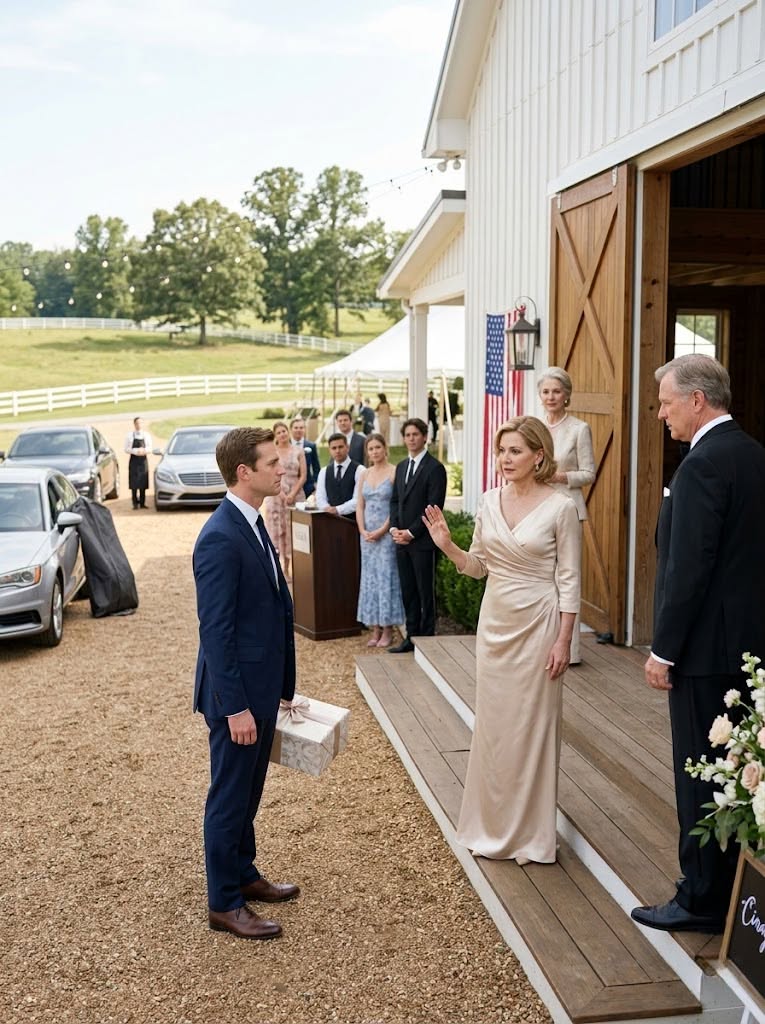
At ten sixteen, Vanessa Cole walked down the limestone stairs of Bellweather House in oversized sunglasses while two staff members rolled her luggage behind her.
No photographers.
No reporters.
No screaming.
I had made sure of that.
Humiliation was what Grant had wanted for me.
I wanted something different.
Consequences.
Vanessa climbed into a hired car.
Before the driver pulled away, she sent Grant a message.
You told me that house was yours.
He did not respond for eleven minutes.
Then:
This is temporary.
It wasn’t.
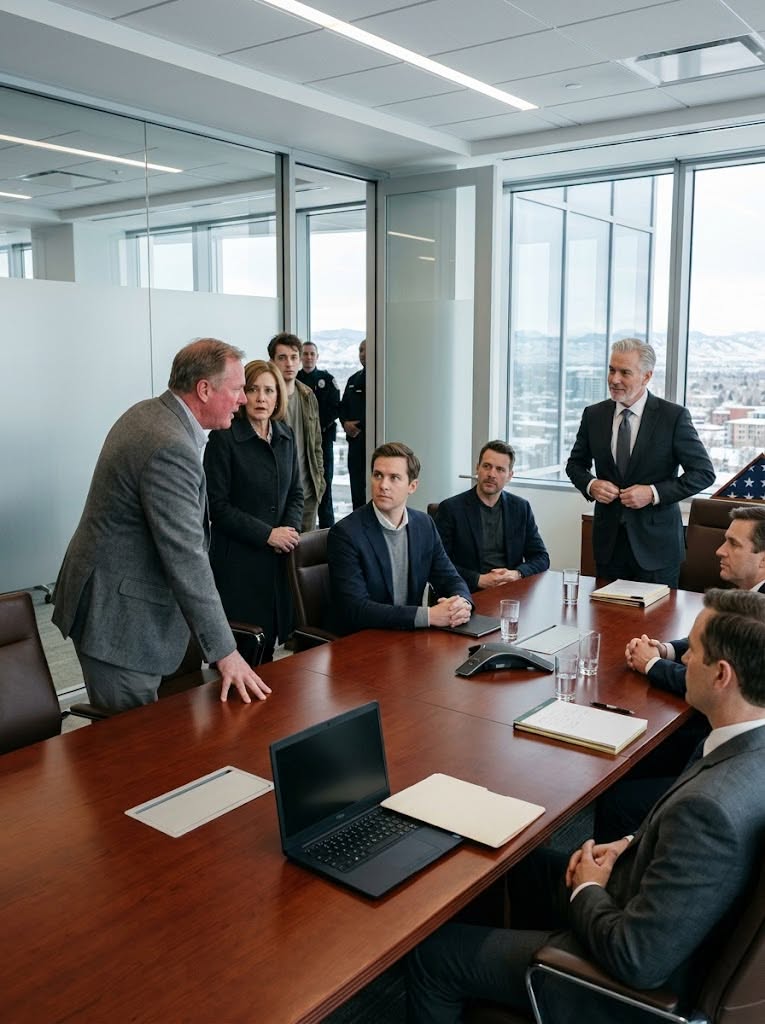
At four that afternoon, the Mercer Holdings directors gathered in Bellweather’s library.
Grant arrived first.
Of course he did.
Men like him arrive early to rooms they believe they control.
He wore charcoal gray and no tie.
Daniel arrived next.
Then Calvin.
Diane.
Louise.
The independent directors.
Outside counsel.
Rachel.
Two representatives of the trust.
And finally me.
Everyone stood when I entered.
Not because I asked them to.
Because something had changed.
I wore black trousers, a cream silk blouse, and my father’s old watch.
No diamonds.
No armor.
Grant looked exhausted.
“You made your point,” he said.
I walked to the far end of the conference table.
“No.”
I placed the brass key on the polished wood.
“I’m about to.”
Daniel looked at it.
His face went pale.
Grant noticed.
“What is that?”
“A key.”
“To what?”
“My father’s patience.”
Nobody laughed.
I sat.
Rachel distributed folders.
Grant did not open his.
“I don’t need a legal performance.”
Rachel replied, “You will.”
He looked at me.
“Evelyn, we can resolve this privately.”
That was almost funny.
Tuesday night he had needed an audience.
Friday afternoon he wanted privacy.
I folded my hands.
“Go ahead, Rachel.”
She began with Bellweather.
Ownership.
Trust structure.
Occupancy rights.
Section 14.7.
Grant interrupted three times.
On the fourth, Rachel handed him the deed.
“Your name,” she said, “does not appear anywhere.”
Grant looked at me.
“We’re married.”
“Yes.”
“I’ve lived here twenty-one years.”
“Yes.”
“I paid for renovations.”
“The trust reimbursed you.”
His mouth opened.
Closed.
Rachel continued.
Then she moved to Mercer Holdings.
The room changed.
Bellweather was forty-six million dollars.
A fortune to most people.
But in that room, the house was only a symbol.
The shares were power.
Rachel explained that the Mercer Stewardship Trust controlled 19.6 percent of the company’s voting stock.
Combined with the foundation bloc and several legacy agreements triggered upon hostile governance action, my voting position could reach 31.4 percent.
Enough to block the Harlow restructuring.
Enough to prevent Grant’s proposed chairmanship.
Enough to remove officers for cause with support from two independent directors.
Enough.
Grant stared at me.
“You told me those shares were locked.”
“They are.”
“You said you didn’t control them.”
“I said I didn’t interfere with them.”
“That is the same thing.”
“No.”
I leaned forward.
“That appears to be a recurring problem for you.”
Daniel closed his eyes.
Calvin finally opened his folder.
That was when he saw the forensic accounting report.
His face emptied.
Grant saw it too.
“What is this?”
Rachel answered.
“An independent review.”
“You had no authority to investigate my office.”
I spoke.
“The trust has authority to investigate any attempted encumbrance involving trust assets.”
“You went through my records?”
“I went through records created on systems owned by companies in which the trust is a controlling voting party.”
Grant slapped the folder shut.
“This is vindictive.”
“No.”
I kept my voice quiet.
“You bringing your mistress into my mother’s home after publicly humiliating me was vindictive.”
Vanessa’s name made Louise flinch.
I continued.
“Investigating whether you used assets you did not own to secure financing you were not authorized to negotiate is governance.”
Daniel finally spoke.
“Evelyn, please.”
I looked at him.
He could barely meet my eyes.
“We should discuss the signature separately.”
I had been waiting for that.
“What signature?”
Daniel swallowed.
Grant turned toward him.
“Daniel.”
Rachel slid the document onto the table.
My false signature rested at the bottom.
Daniel’s real one beside it.
Witness.
I watched my brother shrink.
Diane whispered, “Oh my God.”
Calvin stood.
“I had nothing to do with—”
“Sit down,” one of the independent directors said.
Calvin sat.
Grant pointed at the paper.
“This proves nothing.”
“It proves enough to suspend the transaction,” Rachel replied.
“You’re destroying hundreds of millions in value over a domestic disagreement.”
That sentence did something unexpected.
It freed me.
Because there it was.
The final lie.
That my dignity was domestic.
That my legal authority was emotional.
That fraud became business if a husband committed it while wearing cuff links.
I looked around the table.
“No.”
Everyone became still.
“I am protecting hundreds of millions in value because a group of people became so comfortable using what belonged to me that they stopped asking whether they had permission.”
Grant laughed bitterly.
“Belonged to you.”
“Yes.”
“You sound exactly like your father.”
“Thank you.”
“He built a prison around this family.”
“No. He built a fence.”
I looked at Grant.
“You only discovered it was there when you tried to steal the land.”
Louise inhaled sharply.
Grant rose.
“You want to punish me because I fell in love with someone else?”
“Sit down.”
“I will not.”
“Then stand.”
He did.
For the first time in our marriage, his physical anger did not change the temperature of the room.
I felt no need to calm him.
No need to manage him.
No need to protect him from the consequences of being seen clearly.
Grant pointed at me.
“You spent decades pretending not to care about any of this.”
“I didn’t pretend.”
“You let me run everything.”
“Yes.”
“You let me make decisions.”
“Yes.”
“You let people believe—”
He stopped.
There it was.
I leaned back.
“I let people believe what, Grant?”
His face changed.
Because finishing the sentence would expose him.
I let people believe it was his.
I let people believe he built it.
I let people believe I was ornamental.
But I had never said those things.
He had.
And people believed him because I had been too loyal to embarrass my husband with corrections.
Grant looked around the room.
“This is insane.”
I shook my head.
“No. What’s insane is believing kindness transfers title.”
No one spoke.
Then Rachel opened the final document.
“Effective immediately, pending completion of the independent investigation, Grant Holloway is suspended as CEO of Mercer Strategic Ventures.”
Grant stared at her.
She continued.
“Calvin Reese is placed on administrative leave.”
Calvin went gray.
“Daniel Mercer is removed from the governance succession committee pending review of his role in the disputed authorization.”
My brother lowered his head.
“And the Harlow transaction is terminated.”
Grant looked at the independent directors.
“You can’t support this.”
One of them, Samuel Pierce, a seventy-year-old former federal judge, removed his glasses.
“I already have.”
Grant turned toward the second.
She nodded.
“So have I.”
The room was silent.
My husband looked at me.
Twenty-eight years.
Birthdays.
Funerals.
Flights.
Arguments.
Sunday mornings.
Hospital rooms.
Champagne.
Debt.
Victory.
Loss.
There is no clean way to watch a marriage end.
Even when the other person deserves the ending, some part of you still mourns the beginning.
Grant’s voice dropped.
“What do you want?”
That was the first honest question he had asked me in years.
“I want you to take responsibility for what you did.”
“I made mistakes.”
“No.”
I shook my head.
“A mistake is forgetting an anniversary. A mistake is sending the wrong attachment. You built a story in which I was weak so you could take authority I never gave you.”
He looked away.
“You embarrassed me in my own company.”
“No.”
I paused.
“You embarrassed yourself in mine.”
Daniel covered his face.
Diane stared at the floor.
Louise began to cry.
I did not.
Grant looked at me with something between hatred and disbelief.
“I loved you.”
Maybe he had.
That was the tragedy.
People think betrayal means love was never real.
Sometimes love was real.
Then entitlement ate it.
“I know,” I said.
He seemed startled.
For one second, we were young again.
Then it passed.
Rachel slid another envelope toward him.
Divorce petition.
Grant stared at it.
“You planned all this in three days?”
I looked at the brass key.
“No.”
“My father planned part of it six years ago.”
The news broke Monday.
Not the affair.
I refused to release that.
Grant’s suspension was reported as part of an internal governance investigation concerning unauthorized asset representations and the failed Harlow transaction.
The financial press had a feast.
Vanessa vanished from social media for eleven days.
Then she reappeared in Miami claiming she had left Grant because she “refused to be involved in toxic family conflict.”
That lasted until a journalist discovered her consulting contract.
After that, she stopped giving interviews.
Calvin resigned.
Diane lost the hospitality contract.
Louise wrote me a seven-page letter explaining that she had only supported Vanessa because she feared losing her son.
I replied with two sentences.
I understand that you chose your son.
I finally chose myself.
Daniel was harder.
Blood usually is.
He came to Bellweather six weeks later.
Rosa let him into the sitting room but did not offer him coffee.
He looked older.
For the first time in my life, I did not rush to make him comfortable.
“I’m sorry,” he said.
I waited.
He swallowed.
“I knew Grant wanted control.”
I said nothing.
“I knew he thought you were… slowing things down.”
Still nothing.
“He told me you planned to remove me from succession.”
“Did you ask me?”
“No.”
“Why?”
Daniel looked at his hands.
“Because I was afraid you’d say yes.”
There are confessions that heal.
That one did not.
It simply clarified.
He had betrayed me not because he believed Grant.
He betrayed me because Grant offered him protection from a fear he had never had the courage to bring to his sister.
“I never planned to remove you,” I said.
Daniel closed his eyes.
“But now?”
I looked at him.
“Now I don’t trust you.”
His eyes filled.
“I’m your brother.”
“Yes.”
The word hurt.
It also remained true.
“I can fix this.”
“No.”
“Evelyn—”
“You can rebuild yourself. That is not the same thing.”
He looked toward the windows.
We had played there as children before the east wing existed.
He used to throw acorns at me from behind a stone wall.
“I thought you’d always forgive me.”
I almost smiled.
“That was the problem.”
Daniel cried.
Quietly.
I did not comfort him.
But I didn’t throw him out either.
Some punishments are not doors slamming.
Sometimes the punishment is discovering the person who always rescued you has finally decided to let you swim.
Before he left, Daniel stopped at the doorway.
“Did Dad know this would happen?”
“No.”
“Then why did he set all this up?”
I looked around Bellweather.
The house had become quiet again.
“My father knew something more useful.”
“What?”
“He knew it could.”
Grant fought the divorce for seven months.
Not because he wanted the marriage.
Because he wanted the mythology.
His attorneys argued that decades of marriage created equitable interests in several assets.
Some claims were legitimate.
Most were not.
I did not try to leave him penniless.
Despite everything, Grant had earned significant compensation during our marriage. He had retirement accounts, investments, separate properties, and legitimate equity in ventures he helped build.
He left the marriage wealthy.
Very wealthy.
Just not billionaire wealthy.
That difference seemed to offend him more than divorce.
Bellweather remained mine.
The controlling shares remained in trust.
My mother’s emeralds remained in the family collection.
The investigation ultimately found insufficient evidence to prove Grant personally ordered the forged signature.
But it found ample evidence that he knowingly made unauthorized representations concerning trust assets.
He resigned from all Mercer companies.
Calvin settled civil claims.
Daniel lost the succession role permanently but avoided prosecution after cooperating fully with investigators and admitting he had witnessed a document without seeing me sign it.
That admission destroyed something in him.
It also saved what remained of his integrity.
Two years later, he started a small manufacturing company in Ohio.
No Mercer money.
No family guarantees.
No introductions from me.
When he turned a modest profit, he mailed me the first audited statement with a handwritten note.
This one is mine because I actually built it.
I kept the note.
Forgiveness came slowly.
Trust came slower.
But neither was impossible.
As for Vanessa, I saw her once more.
It happened almost a year after the dinner.
A charity gala in New York.
She approached me near the coat check.
For a moment, neither of us spoke.
She looked different without Grant beside her.
Less theatrical.
More human.
“I didn’t know,” she said.
I knew what she meant.
The house.
The shares.
The marriage.
The lies.
“How much didn’t you know?” I asked.
Her cheeks colored.
“I knew he was married.”
“Then you knew enough.”
She nodded.
I expected anger from her.
Instead she said, “He told me you didn’t love him anymore.”
I looked across the room.
Grant was not there.
“He may have believed that.”
“Did you?”
I thought about it.
Love is a strange witness.
It remembers things dignity would rather erase.
“I loved him longer than I respected myself.”
Vanessa looked down.
“I’m sorry.”
I believed her.
That did not mean I absolved her.
There is a difference.
“You should be,” I said.
Then I collected my coat.
Three years after that dinner, Bellweather changed.
Not ownership.
Purpose.
I converted the east wing into the Mercer Center for Women’s Economic Independence.
The foundation provides legal assistance, temporary housing, financial planning, and business grants to women trapped in marriages or families where money is used as control.
I funded the first phase personally.
Then other women joined.
Widows.
Executives.
Teachers.
Nurses.
Divorced women who had learned too late that their names were not on the accounts.
Married women whose names were on everything but who had still been taught to behave as if permission belonged to someone else.
The center became the best thing Bellweather ever housed.
Better than galas.
Better than political dinners.
Better than portraits of dead men pretending architecture made them immortal.
In the main conference room, we framed one sentence from my father’s letter.
A roof can shelter someone without becoming theirs.
Visitors sometimes ask why.
I never tell them the whole story.
Not because I am ashamed.
Because revenge was never the point.
That took me years to understand.
If I had thrown Grant out only because he cheated, the story would have ended with a broken marriage.
If I had defeated Daniel only because he betrayed me, the story would have ended with a broken family.
If I had kept the trust only because it was worth billions, the story would have ended with money.
But my father’s real inheritance was not the mansion.
It was not the shares.
It was not the trust.
It was the legal architecture that forced me to recognize a truth I had spent most of my adult life avoiding:
Generosity without boundaries eventually becomes permission.
I had spent decades believing strength meant how much pain I could absorb without becoming bitter.
I was wrong.
Sometimes strength means refusing to absorb the next blow.
Sometimes dignity is not standing there beautifully while people insult you.
Sometimes dignity is reading the deed.
Grant came to Bellweather one last time five years after our divorce.
He had requested the meeting through Rachel.
I almost declined.
Then I agreed.
We sat outside beneath the old sycamore tree my mother planted when I was thirteen.
Grant had aged.
So had I.
There was something peaceful about that.
No mistress.
No lawyers.
No board.
No audience.
Just two people who had once promised each other forever and discovered that forever has conditions whether vows admit it or not.
“I was cruel to you,” he said.
“Yes.”
“I kept thinking you were trying to make me feel small.”
“I wasn’t.”
“I know that now.”
He stared toward the house.
“I think I felt small long before you did anything.”
That was probably the truest thing he ever told me.
He had spent his adult life inside a fortune he did not create.
My name was on buildings before his first company existed.
My father could make senators return phone calls.
Even when I never used that power against Grant, he felt it.
Instead of telling me, he tried to outgrow the shadow.
Then he tried to rename it.
The world I built.
I almost felt sorry for him.
Almost.
“Vanessa left because of the house,” he said.
“I know.”
“You knew?”
“Grant, she was removed from the house before the marriage ended. The chronology wasn’t difficult.”
He laughed.
A real laugh.
The first one between us in years.
Then his face became serious.
“Did you ever think about giving me another chance?”
I looked at him.
Once, that question could have rearranged my entire life.
Now it was simply a question.
“No.”
He nodded.
“I figured.”
We sat quietly.
Finally he stood.
At the edge of the terrace, he turned around.
“Your father hated me.”
“No.”
Grant raised an eyebrow.
“My father distrusted the part of you that needed ownership to feel respected.”
“Sounds like hate.”
“It wasn’t.”
I smiled faintly.
“He distrusted that part of me too.”
Grant looked at Bellweather one final time.
“I really thought it was ours.”
“I know.”
“That sounds stupid now.”
“No.”
I considered it.
“It sounds entitled.”
He winced.
Fair enough.
Then he walked down the path toward his car.
I watched until he disappeared behind the trees.
No victory music played.
No champagne arrived.
No one applauded.
Real endings are quieter than that.
I went back inside.
Rosa had retired two years earlier, but her daughter Elena now managed the house.
A group of women from the foundation were meeting in the library.
One was studying for a real-estate license.
One had just opened a bakery.
One was leaving a twenty-three-year marriage with two suitcases and a checking account containing $611.
Another had spent fifteen years doing unpaid bookkeeping for her husband’s construction company and had recently discovered he had listed her in corporate filings as “clerical assistance.”
I stood outside the library and listened to them talk.
Not about revenge.
About credit scores.
Leases.
Equity.
Insurance.
Contracts.
Names on documents.
Names on deeds.
Things that sound boring until your entire life depends on them.
That was when I finally understood what my father had left me.
Not protection from men.
Not protection from betrayal.
No trust can do that.
He had left me protection from my own tendency to disappear inside love.
The brass key now sits in a glass case in my study.
Worthless metal.
Priceless lesson.
Visitors sometimes assume it opened Bellweather House.
It never did.
It opened a bank box beneath Manhattan.
But in every way that matters, that key opened this house for me.
It opened my company.
It opened my future.
It opened the version of my life I had surrendered one compromise at a time.
And occasionally, when someone asks about that terrible dinner years ago, they expect me to describe how humiliated I felt when Grant toasted another woman beneath my chandelier.
I remember the necklace.
The laughter.
My brother looking down.
I remember Grant saying I belonged in the background.
I remember Vanessa smiling as if my silence meant she had won.
And yes, the humiliation was real.
But it did not become the most important part of the memory.
The most important part was what happened afterward.
I stood.
I picked up my bag.
I walked away.
No screaming.
No pleading.
No performance.
For years, everyone around me had interpreted quietness as weakness because quietness had always been convenient for them.
That night, for the first time, my silence belonged only to me.
Three days later, Vanessa was standing beside seven suitcases outside a mansion she thought her lover owned.
A week later, Grant no longer ran the company he believed existed because of him.
Months later, my brother learned that blood does not exempt anyone from consequences.
Years later, a house once used to display power became a place that taught women how to recognize their own.
And the fortune they had fought so desperately to control?
It survived.
But it stopped being the center of the story.
Because money can buy walls.
Money can buy lawyers.
Money can buy time.
What money cannot buy is the moment a person finally understands that being loved poorly is not the price of belonging.
That part I had to earn myself.
People still ask whether I regret waiting so long.
Maybe I do.
But regret is another form of rent, and I have already spent enough of my life paying to live inside the past.
So I keep my father’s photograph on the mantel.
I keep my mother’s emeralds locked away except on special occasions.
I keep Daniel’s handwritten note in my desk.
And I keep the deed to Bellweather House in the black leather folder where my father placed it years ago.
Sometimes, late in the afternoon, sunlight crosses the library floor and reaches the place where Grant once stood telling a room full of people that he had built my world.
When that happens, I remember my father’s warning.
A seat at the table is not ownership of the table.
Access is not authority.
Love is not title.
And patience is not surrender.
Grant had confused all four.
So had Vanessa.
So had my brother.
So had I.
The difference was that I finally checked the paperwork.
And after everything they said about me—after they laughed, lied, forged, schemed, divided my future among themselves, and treated my silence like consent—there was only one question left worth asking.
If I was really the weak one at that table…
why did every one of them need me to believe I had no power?
THE END
Disclaimer: This story is fictional and created for entertainment purposes only. Any names, characters, places, or events are fictitious or used fictitiously. No real person or organization is intended to be portrayed.